What Is a Nanday Conure
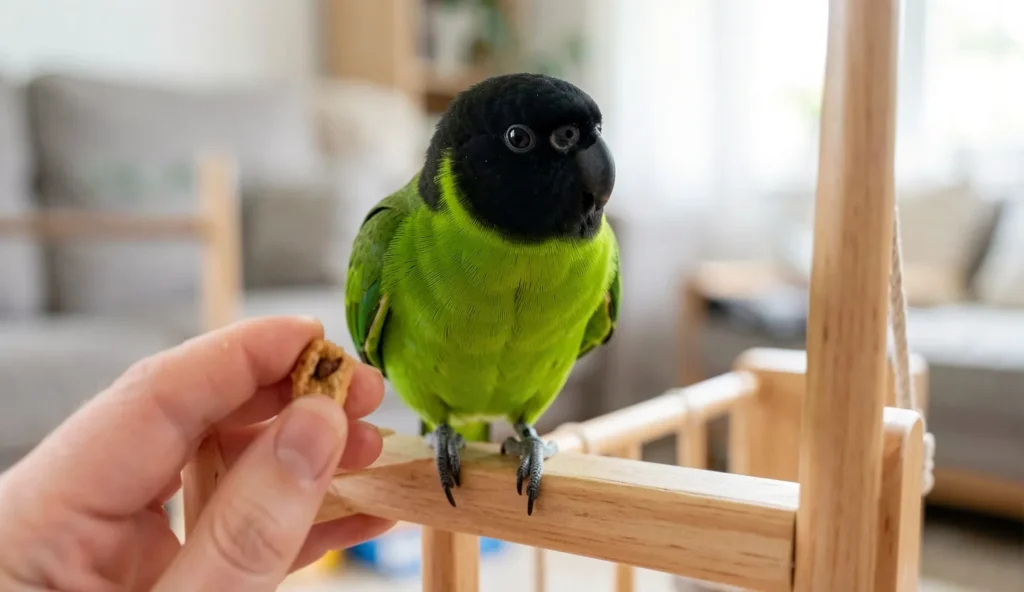
The Nanday Conure is a medium parrot native to South America, known scientifically as Aratinga nenday. This bird originates from the Pantanal region of Brazil, Bolivia, Paraguay, and northern Argentina. Its most recognizable feature is the striking black hood covering the head, contrasting with bright green body plumage. Unlike the larger Scarlet Macaw, the Nanday Conure has a compact, stocky build that makes it a lively companion for intermediate owners.
This species is also called the black-hooded conure due to its dark facial feathers. Nanday Conures are highly social and vocal, requiring dedicated care and consistent socialization. Understanding nanday care begins with recognizing their strong flock instincts and need for daily interaction.
Origin and Species Name
The scientific name Aratinga nenday places this bird in the genus Aratinga, which includes several South American conures. The species was first described in the early 19th century and has since become a popular pet in aviculture. Its natural habitat includes savannas, woodlands, and river edges where flocks forage for seeds, fruits, and insects.
Appearance and Physical Features
The Nanday Conure is a visually striking medium parrot with a length of about 12 inches from head to tail. Its weight ranges from 90 to 120 grams, giving it a sturdy yet agile frame. The following list highlights key physical traits:
- Black hood covering the entire head and face
- Bright green body plumage with a glossy sheen
- Blue flight feathers visible during flight
- Red-orange thighs and lower legs
- Dark gray beak and legs
Distinctive Black Hood
The black hood is the most defining feature of the Nanday Conure. This dark feathering extends from the crown down to the throat, creating a stark contrast with the green body. The hood can appear slightly bluish in certain lighting, adding to the bird’s unique look.
Size and Plumage
In addition to the black hood, the Nanday Conure has glossy green feathers on the back, chest, and wings. The underwing coverts are bright blue, while the tail feathers show a mix of green and blue. Males and females look identical, so DNA testing is required for sex determination.
Temperament and Personality
Nanday Conures are known for their playful, energetic, and intelligent personalities. They form strong bonds with their primary caregivers and thrive on attention. However, their conure behavior includes a loud, piercing call that can challenge apartment dwellers. Similar to the Umbrella Cockatoo, Nanday Conures are vocal and demand consistent interaction.
Playful and Energetic
These birds have high energy levels and require daily mental and physical stimulation. They love climbing, chewing, and exploring their environment. Without sufficient enrichment, they can develop destructive habits such as excessive screaming or feather plucking.
Bonding and Affection
Nanday Conures become deeply attached to their owners and enjoy cuddling, head scratches, and sitting on shoulders. However, they can become possessive if not properly socialized from a young age. This possessive tendency may lead to territorial aggression toward other family members or pets.
Loud Vocalizations
Noise is a key consideration for potential owners. Nanday Conures produce loud, harsh squawks that carry over long distances. These calls serve as contact calls, alarm signals, or expressions of excitement. Morning and evening vocal periods are predictable and often intense.
Socialization Needs
Early and ongoing socialization is essential for a well-adjusted Nanday Conure. Birds that lack exposure to different people, environments, and situations may develop fear-based aggression or chronic stress. Proper socialization as important for a Nanday Conure as it is for a Budgie Parakeet, though the conure’s larger size and stronger beak require more careful handling.
Early Socialization
Introduce the bird to various people, including children and strangers, from a young age. Handle the bird regularly to build trust and reduce fear of human touch. Expose it to common household sounds such as vacuum cleaners, televisions, and doorbells to prevent startle responses.
Introducing New People and Pets
When meeting new individuals, use positive reinforcement with treats and keep initial sessions short. Supervised, calm introductions help the bird associate strangers with good experiences. For other pets, such as dogs or cats, always monitor interactions closely and never leave them unsupervised.
Common Behavioral Challenges
Nanday Conures can develop several behavioral issues if their needs are not met. The most frequent problems include excessive screaming, biting, and feather plucking. Addressing these challenges requires patience, consistency, and an understanding of the bird’s natural instincts.
Excessive Screaming
Screaming often stems from boredom, loneliness, or attention-seeking behavior. Provide ample enrichment such as foraging toys, puzzle feeders, and out-of-cage time. Ignore screaming episodes and reward quiet moments with treats or praise to reinforce calm behavior.
Biting and Aggression
Biting can occur due to fear, territoriality, hormonal changes, or lack of trust. Avoid punishing the bird, as this increases fear. Instead, use redirection techniques such as offering a toy or target training to guide the bird away from biting. Teach the step-up command using a perch to minimize hand contact during training.
Feather Plucking
Feather plucking is a serious sign of stress, illness, or inadequate mental stimulation. First, rule out medical causes through a veterinary check. Then increase interaction time, provide shreddable toys, and introduce foraging activities that mimic natural food-seeking behavior.
Training and Enrichment
Positive reinforcement training is highly effective for Nanday Conures. These intelligent birds learn quickly when rewarded with favorite treats such as sunflower seeds or millet. Training sessions should be short and consistent to maintain focus. Similar to the Blue and Gold Macaw, Nanday Conures respond well to clicker training and target training.
Positive Reinforcement Training
Use a quiet, distraction-free area for training. Teach basic commands like step up, step down, and target training. Keep sessions between 5 and 10 minutes, repeating daily for best results. Always end on a positive note to keep the bird engaged.
Foraging and Toys
Provide a variety of toys that encourage natural behaviors such as chewing, shredding, and manipulating objects. Rotate toys weekly to prevent habituation. Examples include foraging boxes, puzzle toys, wooden blocks, ropes, and bells. Avoid toys with small parts that could be swallowed.
Out of Cage Time
Nanday Conures need at least 2 to 3 hours of supervised out-of-cage time daily. Bird-proof the room by removing toxic plants, electrical cords, and other hazards. Offer a designated play stand or gym with perches, ladders, and toys to keep the bird active and safe.
Communication and Vocalizations
Nanday Conures communicate through a range of vocalizations, each with specific meaning. Owners who learn to interpret these calls can better respond to their bird’s needs. While not as proficient as African Grey Parrots, Nanday Conures can learn a few words and sounds with consistent repetition.
Understanding Different Calls
Contact calls are short, sharp squawks used to locate flock members. Alarm calls are louder and more urgent, signaling potential danger. Soft chattering or purring indicates contentment, especially during preening or cuddling. Pay attention to body language alongside vocalizations for accurate interpretation.
Mimicry and Speech
Nanday Conures can mimic human speech, though their vocabulary is limited compared to larger parrots. Clear enunciation and repetition help the bird learn words. Some birds pick up phrases more easily when they are excited or during morning vocalizations. Patience is key, as not all individuals will speak.
Is a Nanday Conure Right for You
Owning a Nanday Conure requires a significant time commitment, tolerance for noise, and experience with medium parrots. This bird is not recommended for beginners due to its strong personality and high energy. Intermediate owners who can provide daily interaction, enrichment, and consistent training will find a rewarding companion.
Assessing Compatibility
Consider whether your living situation can accommodate loud calls. Apartments or shared walls may not be suitable. Also evaluate your daily schedule: the bird needs at least 2 to 3 hours of supervised interaction. If left alone for long periods, it may develop behavioral problems. Financial readiness for veterinary care, quality diet, and toys is also essential.
Frequently Asked Questions
How do you stop a Nanday Conure from screaming?
Identify the cause, such as boredom or seeking attention, then increase enrichment and out-of-cage time. Ignore screaming and reward quiet moments with treats to reinforce calm behavior.
Are Nanday Conures good for beginners?
They are not ideal for first-time bird owners due to high noise levels and strong personalities. Intermediate owners who understand bird behavior are better suited for this species.
How much attention does a Nanday Conure need?
Minimum 2 to 3 hours of supervised interaction daily is required. More attention is needed if the bird lives alone, as neglect leads to screaming and feather plucking.
Do Nanday Conures talk?
Yes, they can learn a few words and sounds, though their speech is not as clear as larger parrots. Repetition and patience improve vocabulary development.
Why is my Nanday Conure biting me?
Biting often comes from fear, territoriality, or hormonal changes. Avoid punishment and use redirection techniques. Gradual handling and positive reinforcement reduce biting over time.
Can Nanday Conures live with other birds?
They can coexist with similar-sized parrots under supervision, but continuous monitoring is required due to potential aggression. Never house with smaller birds as they may be bullied.
Final Note
A well-socialized Nanday Conure is a lively, affectionate, and entertaining companion for the dedicated owner. With proper nanday care, consistent training, and ample enrichment, this black-hooded conure can thrive and bring years of joy. Commitment to its behavioral needs ensures a harmonious relationship.