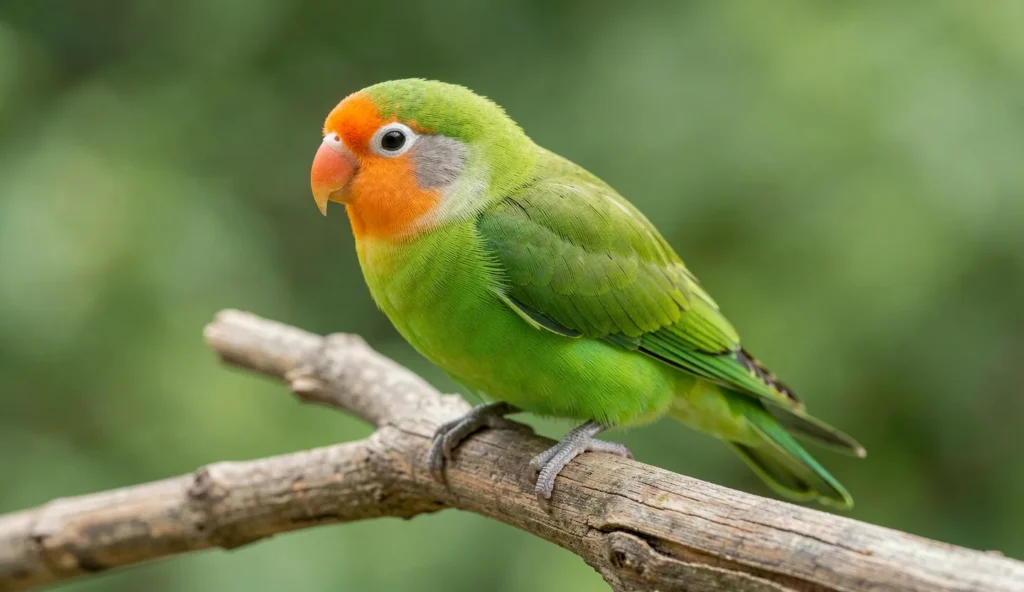
What Is a Fischer Lovebird
Origin and Scientific Name
The Fischer Lovebird (Agapornis fischeri) is a small parrot native to Tanzania. This species belongs to the lovebird group, which includes several related parrots such as the Lovebird Parrots from the same family. Its name honors German explorer Gustav Fischer.
Fischer lovebirds inhabit grasslands and savannas of East Africa. They are one of the nine lovebird species recognized worldwide.
Distinctive Eye-Ring
The most visible feature is the bare white skin around the eyes. This eye-ring is much wider than that of the Peach-faced lovebird. It gives the bird a wide-eyed, alert expression that owners find endearing.
This physical trait helps bird enthusiasts identify the species quickly. The eye-ring is present in both males and females.
Appearance and Physical Features
Size and Weight
Fischer lovebirds measure 5.5 to 6.3 inches in length. They weigh between 42 and 58 grams, making them a true small parrot. Their compact body fits well in smaller cages but still requires ample space for climbing.
- Length: 5.5–6.3 inches
- Weight: 42–58 grams
- Wingspan: approximately 10 inches
Plumage Colors
The body is bright green with a yellow collar and chest. The forehead and face turn deep orange or red. The rump and tail feathers show a vivid blue hue, while the wings are dark olive.
Juvenile birds have duller colors until their first molt. Adult plumage develops fully at around 6 months of age.
Distinctive White Eye-Ring
The white eye-ring is a hallmark of the Fischer lovebird. It stands out against the green and orange face. This ring is larger than that seen in Peach-faced lovebirds.
Many owners use this feature to differentiate Fischer lovebirds from other lovebird species. It also makes the bird appear constantly curious.
Temperament and Personality
Social and Affectionate
Fischer lovebirds are highly social and require daily interaction. They bond closely with their owner or another lovebird. If neglected, they can become nippy or develop behavioral issues.
These birds thrive on attention and will often seek out human companionship. Owners who enjoy interactive birds may also appreciate the Cockatiels Parrots for their whistling ability.
Playful and Active
Fischer lovebirds love toys, climbing, and shredding. They need out-of-cage time to burn energy. Without enrichment, they may become bored and exhibit destructive chewing.
- Climbing ropes and ladders
- Foraging toys for mental stimulation
- Chewable wood and paper toys
Vocalizations
These parrots produce loud, high-pitched calls. They chatter throughout the day but are not known for talking. Some individuals can mimic simple sounds or whistles.
Noise levels are moderate compared to larger parrots. Potential owners should be comfortable with occasional loud squawks.
Exercise Requirements
Daily Out-of-Cage Time
Fischer lovebirds need a minimum of 2 to 3 hours of supervised time outside the cage daily. Provide a safe, bird-proofed room where they can fly. Flying is essential for cardiovascular health.
Perches and play stands placed around the room encourage movement. Always close windows and doors before releasing the bird.
Toys and Enrichment
Offer a variety of toys to prevent boredom. Rotating toys weekly maintains interest. Foraging puzzles mimic natural food-seeking behavior.
- Climbing ropes and ladders
- Foraging toys for mental stimulation
- Chewable wood and paper toys
Training Tips
Hand Taming
Use treats like millet spray to build trust. Begin with short sessions of 5 to 10 minutes. The step-up command is the first behavior to teach.
Repeat the same phrase each time. Consistency helps the bird learn faster. Avoid sudden movements that might startle it.
Behavioral Training
Redirect biting by offering a toy instead. Reward calm behavior with a treat. Never punish or yell at a Fischer lovebird.
Positive reinforcement works best. Training sessions should always end on a positive note to keep the bird engaged.
Grooming and Care
Bathing
Provide a shallow water dish for bathing. Mist the bird with lukewarm water 2 to 3 times a week. Allow it to air dry in a warm, draft-free room.
Bathing helps maintain feather health and reduces dust. Some birds prefer bathing directly in a dish.
Nail and Beak Care
Trim nails every 4 to 6 weeks using proper bird nail clippers. Provide a cuttlebone for beak wear. Consult an avian vet if you are unsure about trimming.
Overgrown nails can cause discomfort or injury. Regular wood perches help file nails naturally.
Cage Maintenance
Clean food and water bowls daily. Change the cage liner every other day. Disinfect the entire cage once a month using bird-safe products.
Good hygiene prevents bacterial growth and illness. Remove any droppings from perches regularly.
Diet and Nutrition
Pelleted Diet
High-quality pellets should form 60–70% of the diet. Choose formulations designed for small parrots. Avoid seed-only mixes, as seeds are too high in fat.
A base of pellets ensures balanced nutrition. Introduce pellets gradually if switching from a seed diet.
Fresh Fruits and Vegetables
Offer leafy greens, carrots, broccoli, and bell peppers. Fruits like apple, berries, and melon are healthy treats. Remove uneaten fresh food after 2 hours to prevent spoilage.
Wash all produce thoroughly before feeding. Cut items into small, manageable pieces for the bird.
Treats and Water
Give small amounts of millet or unsalted nuts as treats. Provide fresh, clean water daily. Never feed avocado, chocolate, caffeine, or alcohol.
Water bottles or bowls both work, but bowls must be cleaned daily. A balanced diet supports overall health. For comparison, the Budgie Parakeet has similar dietary needs.
Common Health Issues
Respiratory Infections
Drafts or poor ventilation often cause respiratory infections. Symptoms include sneezing, nasal discharge, and labored breathing. Immediate veterinary care is required.
Keep the cage away from windows and air vents. Maintain a stable room temperature.
Feather Plucking
Boredom or stress can lead to feather plucking. Provide enrichment and social time to reduce the behavior. If plucking persists, check for underlying illness with a vet.
Owners of African Grey Parrots often stress the importance of avian veterinary care for feather issues.
Obesity
A high-fat seed diet can cause obesity. Limit treats and encourage exercise. Monitor the bird’s weight regularly with a small scale.
Obesity shortens lifespan and leads to other health problems. A balanced diet plus flight time helps maintain healthy weight.
Egg Binding
Female Fischer lovebirds may experience egg binding. Symptoms include straining, lethargy, and a swollen abdomen. This is an emergency requiring immediate veterinary intervention.
Provide calcium supplements during the breeding season to reduce risk.
Is a Fischer Lovebird Right for You
Ideal Owner Profile
Fischer lovebirds suit individuals with daily time for interaction. Owners should be comfortable with moderate noise levels. A large cage and supervised out-of-cage time are essential.
Those considering a small parrot should also explore the Macaw Parrots for a larger alternative.
Considerations
Lifespan ranges from 10 to 15 years with proper care. Single birds require significant human interaction; otherwise a companion bird is recommended. Potential for nippiness exists without proper training.
Commitment to daily socialization and veterinary care is necessary. First-time owners can succeed with thorough research.
Frequently Asked Questions
How long do Fischer lovebirds live?
Average lifespan is 10 to 15 years with proper care. Some individuals can live up to 20 years.
Can Fischer lovebirds talk?
They are not known for talking. Some can mimic simple sounds or whistles but are not considered talking parrots.
What is the difference between a Fischer lovebird and a Peach-faced lovebird?
The Fischer lovebird has a prominent white eye-ring and an orange face. The Peach-faced lovebird lacks the eye-ring and has a pinkish or peach-colored face.
Do Fischer lovebirds need a companion?
Yes, they are social and thrive with another lovebird. Single birds require extensive human interaction to remain happy.
What size cage does a Fischer lovebird need?
Minimum cage size is 24 inches wide, 18 inches deep, and 24 inches tall. Bar spacing should be no wider than 5/8 inch.
Are Fischer lovebirds good for beginners?
Yes, provided the owner does thorough research and commits to daily time. They can become nippy without regular handling.
Final Note
Fischer lovebirds are colorful, active, and affectionate companions. With proper care and attention, they bring years of joy to dedicated owners.