What Is a Gaboon Viper?
The Gaboon Viper is a venomous viper native to Central and West Africa, and it stands out for the extreme length of its fangs. This species matters to herpetology students and venom researchers because fang structure directly shapes envenomation mechanics. Field and lab studies often treat the Gaboon Viper as a model for linking anatomy to delivery performance. The species is medically significant and is not suitable for casual handling.
Taxonomic placement guides how specimens get compared across studies, and consistent identification supports accurate ecological interpretation. For students working on comparative venom work, correct species identification also prevents false correlations. Even small misidentifications can shift reported outcomes in datasets. For a broader frame on venomous snake diversity, students may find value in comparing work across common viper lineages, while keeping focus on the Gaboon Viper as the primary species.
Taxonomy And Species Identification
Within viper taxonomy, the Gaboon Viper belongs to a group defined by long-held traits in hemotoxic and venom delivery systems. Identification in the literature typically relies on scalation patterns and head morphology, including the distinctive head patterning. Researchers often cross-check multiple traits rather than using color alone. This approach reduces error when specimens vary with age and local variation.
Geographic Distribution In Central And West Africa
The Gaboon Viper occurs across several regions in Central and West Africa, where forested landscapes dominate the ecological picture. Distribution records link closely to local study sites and to collection ethics that must follow legal and institutional requirements. When surveys target forest floor reptiles, habitat definitions help explain why captures cluster in certain microhabitats. Researchers also track locality metadata to support comparisons across years and local conditions.
Longest Fangs Of Any Snake
The Gaboon Viper is widely described as having the longest fangs of any snake. This physical trait matters because fang length affects bite depth and the reach of venom into prey tissues. In prey capture, longer fangs can increase the ability to place venom efficiently during a short strike window. For venom studies, that structural advantage can complicate yield comparisons unless sampling events get documented consistently.
Appearance And Unique Fang Anatomy
The Gaboon Viper uses a body plan built for ambush, and its appearance supports low detection in cluttered environments. Beyond color, the jaw and fang system determines how venom gets delivered. Students should treat gaboon viper camouflage and fang anatomy as connected factors rather than separate topics. This connection becomes important when interpreting strike behavior and venom effects.
Researchers often describe the species in terms of both external patterns and internal delivery pathways. That dual focus helps explain why a single bite can still produce strong physiological effects. It also helps clarify why observational data about behavior must pair with controlled venom measurements. For additional context on how other constrictors and venomous species handle feeding strategies, students sometimes compare enclosure or ecology notes from species profiles such as the King Snake care guide, even though the biology differs.
Gaboon Viper Camouflage Features
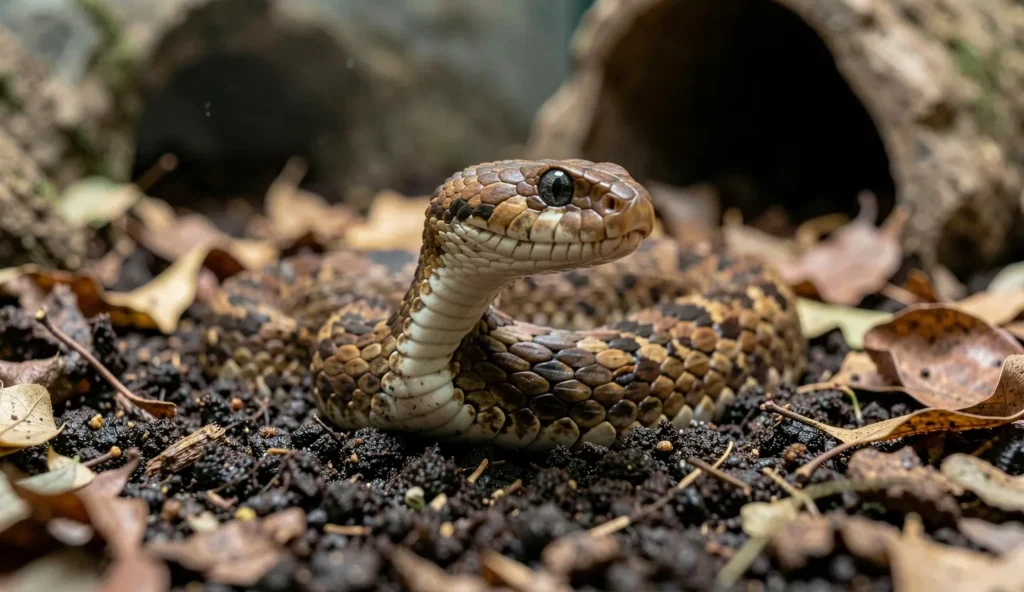
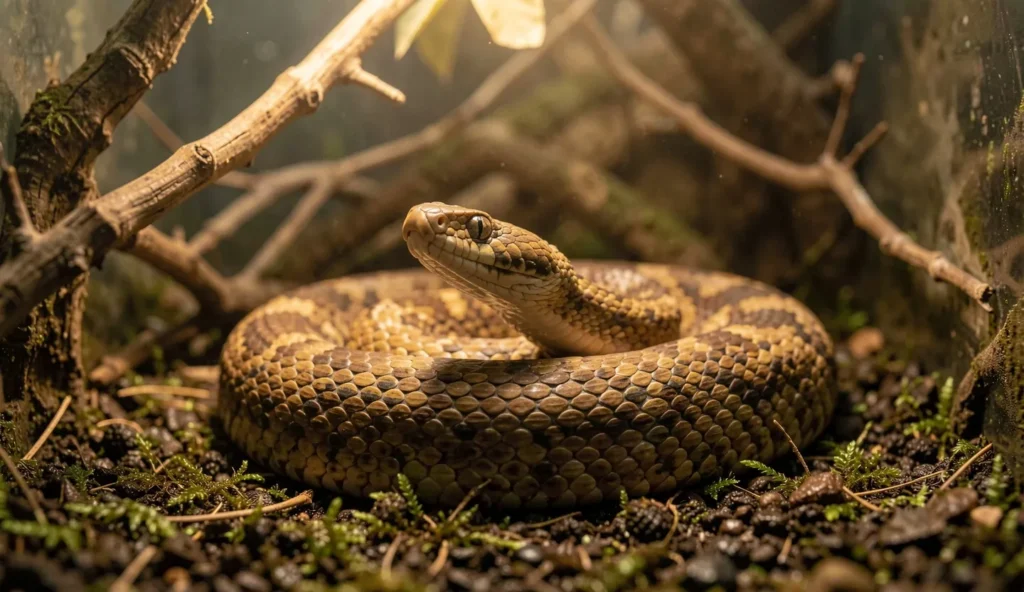
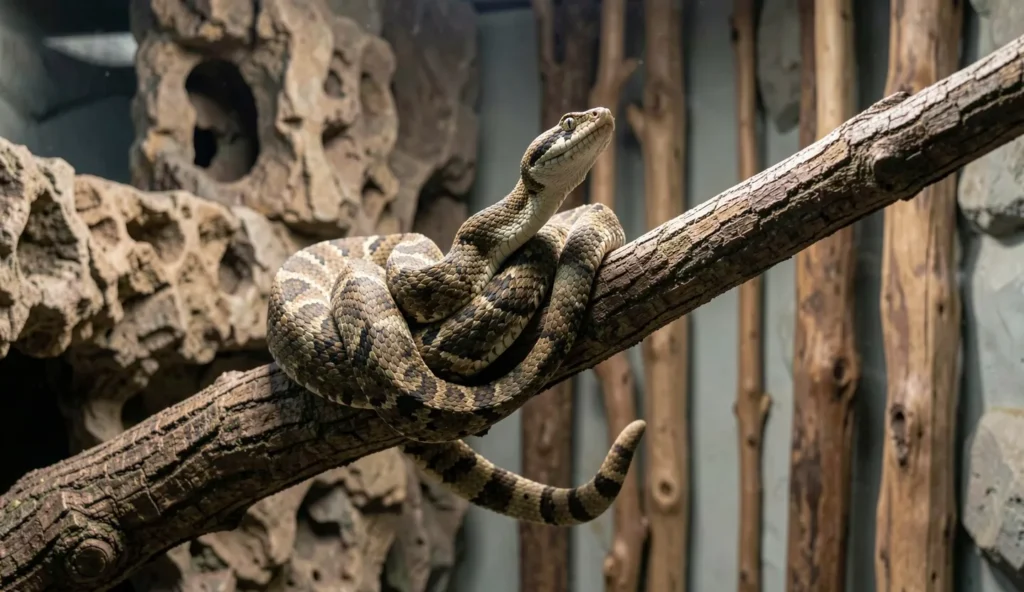
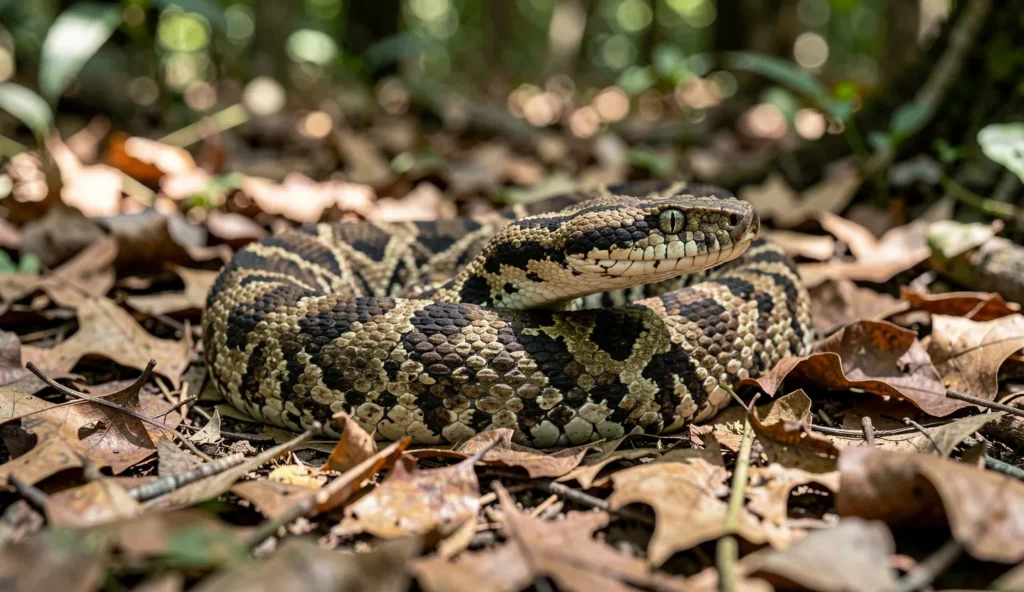
Gaboon viper camouflage depends on mottled coloration and pattern elements that visually match the forest floor. The head and body markings can blend with leaf litter and low vegetation backgrounds. When the snake stays motionless, visual contrast drops and detection risk for prey increases. Researchers also note that posture matters, because coiling and head angle influence the silhouette seen by both prey and observers.
Gaboon Viper Size And Body Proportions
Published reports describe the gaboon viper size as moderate to large among viper species, with adult proportions that emphasize a broad, heavy-bodied build. Exact numbers vary by locality, sex, and measurement method, so studies should report how size got measured. Body girth can correlate with the internal space available for venom glands and the overall mechanical demands of striking. Head size also supports the interface between jaw motion and the delivery route to fang tips.
Longest Fangs And How They Work
The “longest fangs” feature reflects more than size, because the functional placement influences the bite mechanics. During a strike, the fang orientation supports penetration to a depth that can improve venom deposition. Enlarged fangs can also affect how the snake controls bite placement, which influences where venom ends up in tissue. For students, fang length also changes the geometry of the strike, so interpreting bite photographs or video frames needs careful calibration.
Jaw Mechanics And Venom Delivery Pathway
Gaboon viper venom delivery depends on the jaw hinge motion used during a strike and on how fangs align with the targeted tissue. During envenomation, venom channels route secretions toward the fang tip where injection occurs. The bite depth and the time the fang stays engaged can influence the amount of venom delivered into the prey. Because strike mechanics differ between individuals, researchers often treat delivery pathways as variables that require documentation, not assumptions.
Students studying venom systems often compare jaw and fang design principles across different venomous taxa, because fang morphology patterns can predict differences in deposition. For students who also study snake diversity, the Garter Snake profile helps illustrate how many non-venomous species rely on other defense strategies, even though fang function differs dramatically. That comparison can improve conceptual clarity when reporting what “venom delivery” specifically means for the Gaboon Viper.
Gaboon Viper Habitat And Ambush Ecology
The gaboon viper habitat defines how the snake gets positioned for still hunting and how prey likely gets detected. Environmental structure influences concealment, strike angles, and the frequency of successful feeding. Because the snake relies on ambush, small microhabitat differences can change encounter rates. Researchers often treat habitat variables as explanatory covariates in feeding and venom studies.
When venom work gets paired with field observation, habitat context becomes a key part of interpretation. Stillness and camouflage reduce detection, but humidity and ground cover also affect how the snake maintains position and how prey moves through the area. Over time, that can influence bite conditions during sampling. For projects tied to ambush ecology, the Gaboon Viper often gets compared with other ambush predators, even when those species are not venomous or are from different families.
Gaboon Viper Habitat In Forest And Wooded Areas
The Gaboon Viper uses shaded forest environments with dense ground cover and leaf litter that supports concealment. Microhabitats include areas where substrate texture and moisture help maintain stable positioning during still hunting. Ground humidity can also affect sensory performance and the snake’s surface conditions during long periods of waiting. In field notes, researchers often record vegetation density, substrate type, and exposure to direct sunlight for interpretability.
Ambush Hunting Strategy
Ambush hunting relies on prolonged stillness, followed by rapid orientation when prey becomes detectable. The tongue plays a role in prey sampling and orientation, and strike behavior adjusts to how prey moves relative to the snake. Strike timing influences venom use because an efficient hit can reduce the need for repeated bites. For venom researchers, behavior affects venom outcomes, since repeated strikes and variable contact time can change gaboon viper venom yield measurements.
Seasonal And Local Environmental Effects
Rainfall and temperature can shift activity windows, which can change how often the snake engages prey. In more humid periods, substrate conditions may support better concealment, while in cooler times activity may reduce. Researchers connect these patterns to observed feeding frequency and prey availability within the same locality. To avoid overgeneralizing, studies usually treat each site as its own ecological system with local microclimate constraints.
Some researchers compare habitat and ambush patterns across other snake species by reviewing species behavior notes, such as the Milk Snake colors and patterns explained guide. That kind of comparison can help clarify how camouflage functions in different ecological roles, even though the venom system is unrelated. The main goal remains understanding how the Gaboon Viper habitat supports ambush predation and not turning the Gaboon Viper into a generic “camouflage snake” category.
Gaboon Viper Venom Composition And Function
Gaboon viper venom composition supports prey immobilization and digestion processes that align with an ambush feeding strategy. The venom system includes glandular production and delivery components that operate during a bite. For venom researchers, the most useful framing ties venom effects to physiologic targets and links those effects to fang placement and injection depth. Because the species shows high performance in delivery, gaboon viper venom yield becomes an especially important research variable.
When researchers describe venom in broad terms, they typically focus on toxin classes and enzymatic components. Even without going into operational lab details, students should learn how venom functions after injection. That means understanding that venom effects depend on the prey’s physiology, the amount delivered, and the timing of injection. Those factors interact, so interpreting outcomes requires both measurement and context.
Venom Gland Structure And Biochemistry Basics
Venom glands produce injectable secretions that contain multiple bioactive components. Terms like toxins and enzymatic components often describe functional categories rather than a single substance. The gland structure enables secretions to move through channel pathways toward the fangs. In research reports, consistent terminology helps compare findings across studies and species.
How Venom Acts During Envenomation
During envenomation, venom targets prey physiology to disrupt normal function and support immobilization. Fang penetration and venom deposition create the exposure pattern, which can influence both severity and progression of effects. Researchers also account for how quickly venom spreads from the injection site through tissue compartments. These functional links help explain why two bites under different conditions may show different outcomes even with similar venom composition.
Venom Yield Drivers In Natural Conditions
Gaboon viper venom yield refers to the measured amount delivered per event under a given set of conditions. Yield can vary with bite context, strike effectiveness, and the interval between envenomation events. Stress and handling history can also change secretion dynamics in a measurable way. Because the Gaboon Viper relies on ambush strikes, natural bite conditions may differ from controlled scenarios used for research sampling.
Research Methods For Studying Venom Yield
Venom yield research generally uses standardized collection approaches to improve comparability across samples and studies. For safety and ethics, studies require appropriate institutional oversight and trained personnel. Researchers also prioritize sample consistency so differences in results reflect biological variation rather than procedural drift. Without detailed operational instructions, the key concept remains that yield measurements must include metadata that supports statistical interpretation.
When comparing yield concepts across species, it helps to review venom systems in other medically significant snakes, such as the Black Mamba profile for general context on venom research attention. That said, the Gaboon Viper’s fang structure and delivery geometry often make yield studies especially sensitive to event-level details. Maintaining strict sample documentation improves the reliability of gaboon viper venom yield conclusions.
Safety, Risk Context, And Non Pet Status
The Gaboon Viper’s venom and fang system create serious risk, which is why it is not considered a pet species. For students and venom researchers, risk planning must exist before any field or lab work begins. The gap between “observing a snake” and “working with medically significant venom” can be large. As a result, handling requires trained protocols and controlled environments with appropriate emergency readiness.
Safety planning also includes welfare considerations for the animal, because stress can influence both behavior and experimental variables. When safety gets treated as an afterthought, it increases risk for handlers and compromises data quality. Researchers should treat site risk assessment and team competency as prerequisites, not optional steps. This practical view supports both scientific integrity and human safety.
Why This Snake Is Not Suitable As A Pet
The Gaboon Viper is medically significant, and handling requires trained protocols designed for venomous species. Housing and feeding can create repeated high-risk moments, especially when feeding schedules overlap with handling workflows. Even experienced keepers may face safety challenges when the fang system and venom delivery are central to the animal’s biology. Therefore, the species belongs in professional research and regulated display settings only.
Handling And Field Safety Principles For Researchers
General safety planning for venomous species studies includes clear roles, secure containment methods, and rapid communication protocols during handling. Site risk assessment should consider escape potential, terrain hazards, and access to emergency medical care. Team competency matters because procedural consistency reduces risk and stabilizes experimental conditions. Researchers also maintain strict documentation so incidents, even minor ones, can inform procedural updates.
First Aid And Medical Priorities After Envenomation
After envenomation, emergency medical care takes priority and must be initiated without delay. Medical priorities typically include rapid transport and supportive monitoring while clinicians assess systemic effects. High-quality documentation supports medical teams because clinicians need timing, clinical signs, and relevant context. In research settings, preparation often includes pre-identified transport routes and communication plans.
Students sometimes study safety context by reviewing how other venomous species are managed under regulations, including species like the Indian Cobra or King Cobra profiles. Those comparisons highlight why medically significant venom requires professional protocols across multiple taxa. However, the Gaboon Viper’s fang mechanics and ambush behavior can create unique handling challenges, so risk planning must stay species-specific.
Is The Gaboon Viper Suitable For Scientific Study Settings?
The Gaboon Viper can fit scientific study settings when study design controls variables and aligns with regulatory requirements. Suitability depends on project goals, team training, and whether the protocols match the species’ biology. For venom research, the priority is reducing confounding factors that affect gaboon viper venom yield. For herpetology students, the species can also support research questions about ambush ecology and camouflage behavior.
Because ambush predators link behavior and venom delivery, study design often needs to track both event context and animal state. When records remain incomplete, results become difficult to interpret and may not reproduce well. That is why ethical oversight and transparent reporting matter for scientific value. With careful planning, the Gaboon Viper can support rigorous data collection while respecting safety constraints.
Study Design Considerations For Venom Research
Study design should control variables that affect venom yield comparisons across individuals, events, and sampling sessions. Researchers should standardize factors such as timing, bite context documentation, and animal condition indicators that might influence secretion dynamics. Metadata such as size, sex, and collection context also supports stronger analysis. Even when procedures differ across labs, consistent reporting improves cross-study interpretability.
Ethics, Permits, And Institutional Oversight
Ethical approvals and permits are required for venomous species work in most jurisdictions and institutions. Institutional oversight helps ensure safety practices and humane treatment goals get met. Transparency in reporting increases scientific value because it lets other researchers understand what changed between experiments. Compliance frameworks also reduce the chance of missing key safeguards that support both people and animals.
What Data Best Supports Fang And Venom Conclusions
Data categories that link anatomy to function include measurements of fang structure and documented strike or deposition observations. Researchers then connect these anatomy data to venom effect metrics collected under consistent sampling protocols. Reproducibility depends on controls that keep conditions stable or documented, so differences reflect biology rather than method drift. When data supports reproducibility, conclusions about fang and venom relationships become more credible.
For students who also study comparative venom performance, looking at other long-fang systems can improve understanding of morphology function links, even if the outcomes differ by species. Reading structured profiles like Reticulated Python care guides supports the idea that different feeding strategies produce different data requirements. Still, the Gaboon Viper requires a venom-first mindset because the research question centers on venom delivery and risk.
Frequently Asked Questions
How Long Are Gaboon Viper Fangs Compared With Other Snakes?
The Gaboon Viper is known for the longest fangs of any snake, though exact lengths vary by individual and report.
What Factors Affect Gaboon Viper Venom Yield In Research Studies?
Venom yield can change with bite conditions and stress levels, and it depends on consistent sampling methods.
How Does Gaboon Viper Camouflage Support Ambush Hunting?
Its coloration and patterning match forest floor backgrounds, and still body posture reduces detection by prey.
What Gaboon Viper Habitat Features Improve Concealment And Hunting Success?
Leaf litter, shaded microhabitats, and ground cover help concealment, while humidity and substrate support stable positioning.
Why Is The Gaboon Viper Not Considered A Pet Species?
Its medically significant venom requires trained handling, and safety and welfare requirements are demanding.
Final Note On Research Focus And Safety
The Gaboon Viper rewards rigorous study when fang anatomy, habitat context, and venom measurements get treated as connected research variables. With strong oversight and careful documentation, the Gaboon Viper can support clear scientific findings about venom function and ambush ecology.