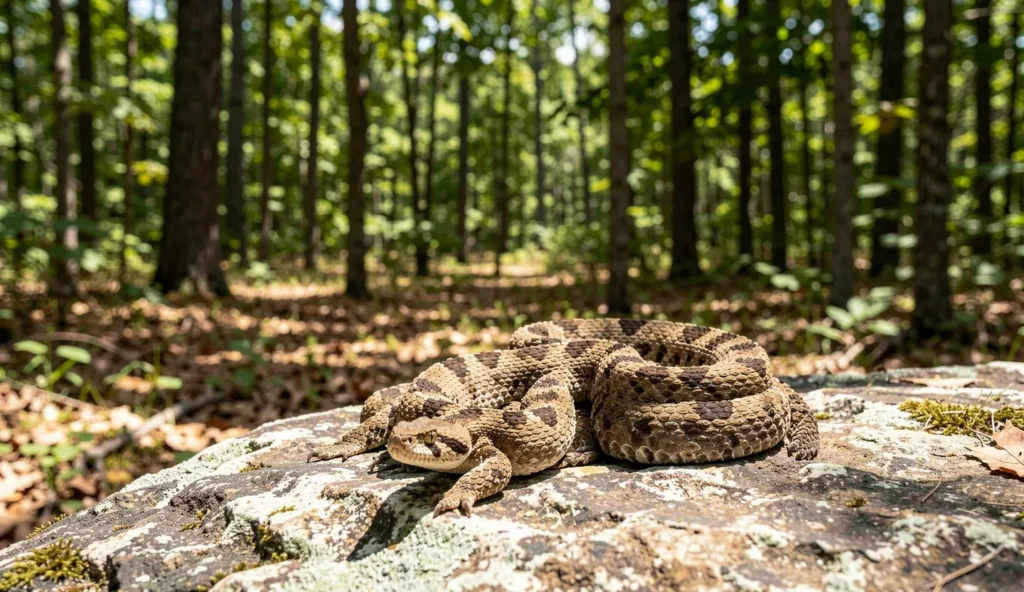
What Is a Timber Rattlesnake
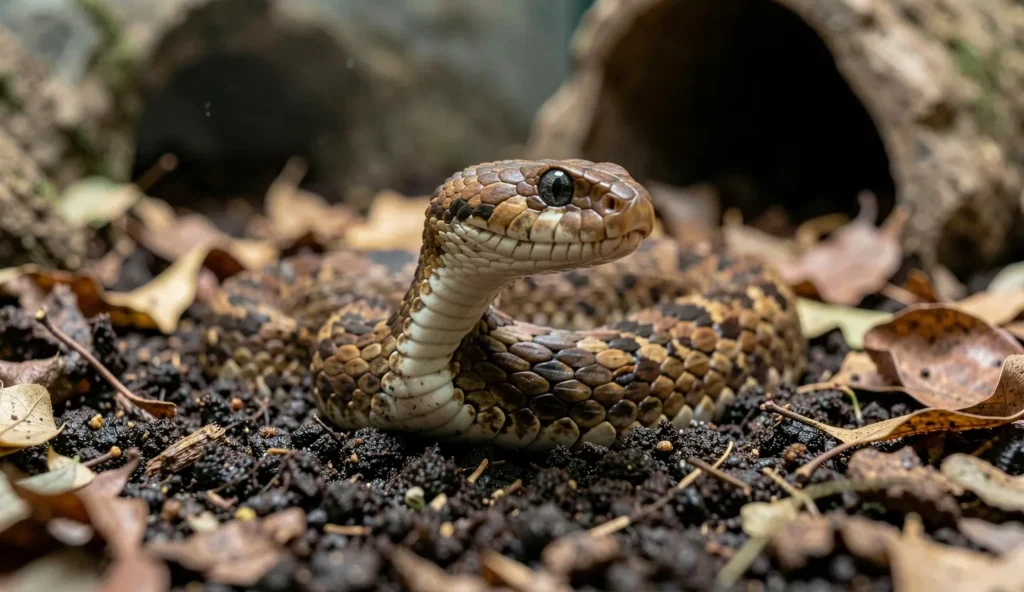
The Timber Rattlesnake is a venomous pit viper found in parts of North America, especially in the eastern United States. This species uses heat-sensing pits and a rattle as part of its defensive toolkit. Outdoor enthusiasts often want clear field context because encounters can happen near rocky woods and forest edges.
Species Overview And Where It Lives
The Timber Rattlesnake is a venomous pit viper in North America. It relies on forests, rocky terrain, and long-term den sites that stay stable through winter. Many sightings connect to eastern US landscapes and mountainous regions where suitable cover and sunning spots are available.
How Identification Works In The Field
The Timber Rattlesnake rattle signals a venomous pit viper, not a harmless snake. Patterning can vary by locality and by age, so visual confirmation often stays uncertain during quick views. Still, the head shape and heat-sensing pit structure support correct pit viper identification when examined carefully from a safe distance.
Why Behavior And Habitat Matter For Safety
Movement patterns change with temperature and daylight, so the same area can look empty one day and busy the next. Defensive behavior also depends on distance, available cover, and how much disturbance occurs. Habitat preferences explain where encounters become more likely, especially along warm rock edges near trails.
Timber Rattlesnake Range And Habitat Preferences
Understanding the Timber Rattlesnake range and habitat preferences helps naturalists predict where responsible observations are possible. This species often stays close to the same denning regions for long stretches. At the same time, fragmented land use can isolate populations and change encounter frequency from one valley to another.
Timber Rattlesnake Range Across North America
The Timber Rattlesnake range concentrates in parts of the eastern United States. Populations can become fragmented when development and land use reduce continuous habitat. In some places, the Timber Rattlesnake conservation status can involve protected or endangered listings, so local rules may apply.
Common Habitat Features It Selects
Timber Rattlesnakes often use rocky outcrops, ledges, and forested slopes for cover and thermoregulation. They typically prefer a mix of sunlight exposure and nearby shelter that supports quick retreat. Because they may stay near dens and travel routes, the same corridors can repeatedly attract attention during warm months.
Dens, Hibernacula, And Seasonal Return Sites
Den sites, also called hibernacula, provide stable winter temperatures for survival. Snakes may travel repeatedly between den areas and feeding zones, which can increase predictable presence along certain travel routes. Disturbing den entrances can reduce survival, which is a major reason conservation guidance urges careful behavior around rocky den regions.
Microhabitats That Increase Encounter Risk
Warm rock edges along trails and forest roads often draw sunning individuals. Edge habitat with sunlight and nearby prey cover creates conditions where small mammals become accessible. Human passage can concentrate sightings because animals may use margins, even though the encounter risk rises when people step too close to cover.
Timber Rattlesnake Behavior You May Observe
Timber Rattlesnake behavior typically follows seasonal timing and daily temperature cycles. Most activity increases during warm periods, then shifts toward shelter when conditions change. Observations made from a distance usually reveal consistent patterns like sunning, resting near cover, and defensive warnings.
Daily Activity Patterns And Weather Triggers
Timber Rattlesnakes typically show more activity during warm periods and daylight hours. Cloudy or cool conditions can reduce surface time, which shifts where snakes choose to bask. Extreme heat may push activity to mornings, shaded edges, or areas with stable ground warmth.
Sunning, Resting, And Shelter Use
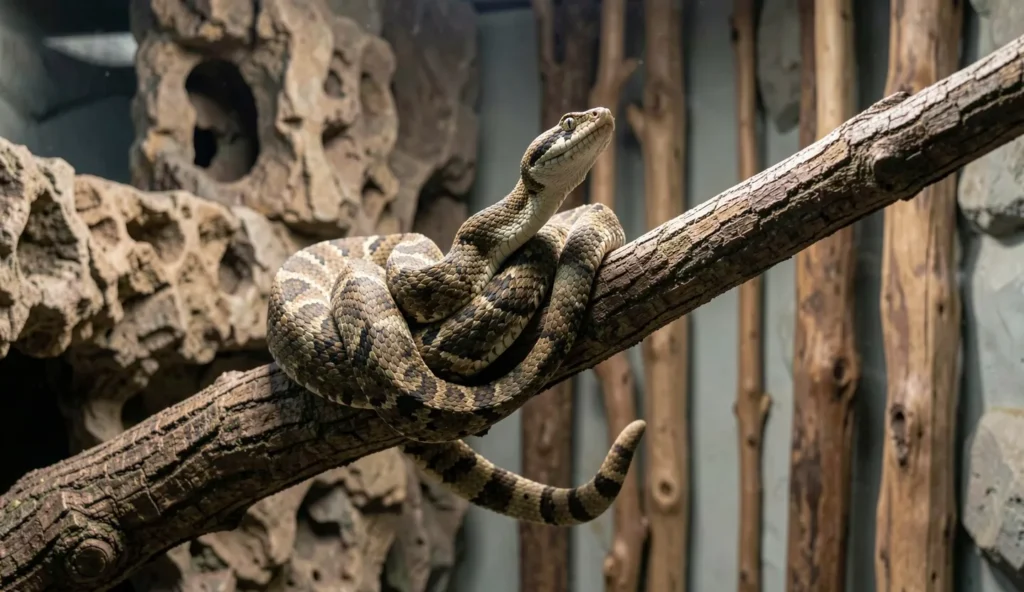
The Timber Rattlesnake suns on rocks or logs to regulate body temperature. Many individuals also coil near cover so they can respond quickly if a threat appears. Shelter choices often provide fast retreat options, which helps explain why snakes may disappear into crevices after minimal disturbance.
Hunting And Prey Strategy
Hunting centers on small mammals and other available prey. Heat-sensing pits help locate warm-bodied targets, even when visibility stays limited by rocks, grass, or leaf litter. Ambush behavior remains common and depends on how much cover blocks movement and sightlines.
Defensive Behavior And What The Rattle Means
Rattling serves as a warning response during perceived threat. A defensive posture may include coiling and head elevation while the body stays ready to retreat. Not all defensive events include rattling, so safety decisions should never depend on whether the rattle sounds first.
Mating Season Movements And Long-Term Site Fidelity
Seasonal movements can increase sightings near travel corridors during mating periods. Many individuals return to the same denning regions year after year, which supports long-term site fidelity. Movement timing continues to depend on temperature and prey availability, so patterns may not align exactly across counties or years.
Timber Rattlesnake Size And Physical Traits
Timber rattlesnake size matters for field expectations, but quick estimates can be misleading during brief encounters. Body length varies with region, age, and sex, so mature animals may appear much larger in some areas than others. Because posture affects perception, the safest approach stays distance-first rather than measurement-based.
Typical Timber Rattlesnake Size Ranges
Adults can vary widely depending on local conditions and maturity stage. Body length often increases with favorable growth and time. Size estimates should remain cautious because light angle, camera perspective, and partial views distort real proportions.
Color, Pattern, And Rattle Development
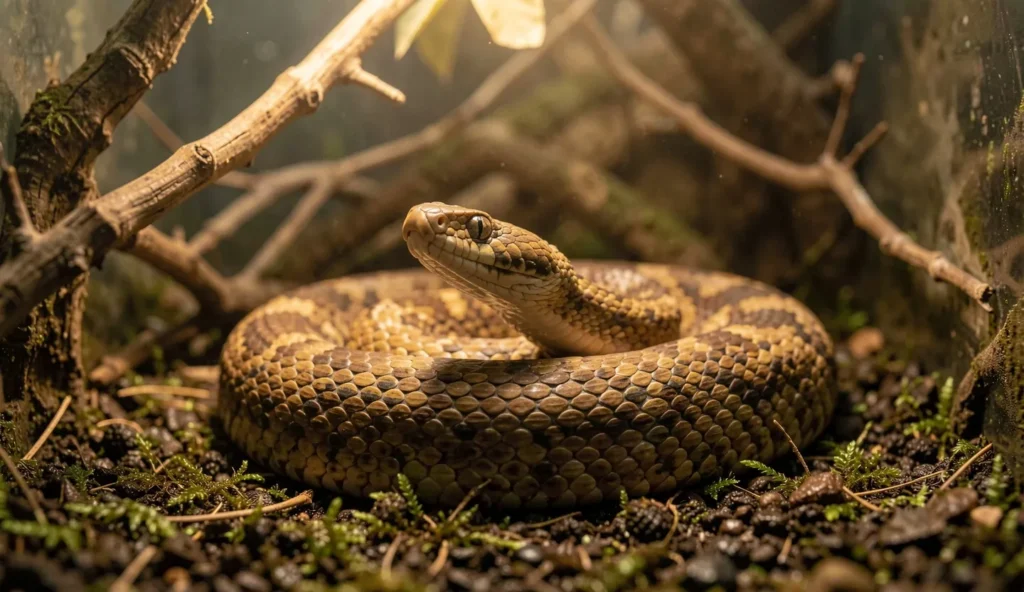
Color patterns can look lighter or darker depending on locality. Juveniles may show different appearance traits from established adults, which can confuse even attentive observers. Rattle segments add over time, but they do not provide a reliable age estimate.
Venomous Pit Viper Features To Know
Heat-sensing pits help detect warm prey and also support threat detection. Specialized fangs deliver venom, and this venom can cause serious injury even when symptoms appear delayed. Handling risks remain real even when the snake looks calm, because defensive behavior can still occur under sudden disturbance.
Safety Around Timber Rattlesnakes While Hiking
Safety around Timber Rattlesnakes starts with distance, slow movement, and clear trail habits. Terrain choices often determine risk more than individual behavior. When outdoors, the goal is to prevent close encounters so observation remains respectful and medically safe.
How To Reduce Chance Of A Close Encounter
Staying on trails helps avoid stepping over fallen logs, rocks, and leaf litter edges where snakes may rest. Giving wide space near rocky areas and sunning sites reduces the chance of being treated as a threat. Keeping attention on the ground ahead while walking steadily supports early detection from a safe range.
What To Do If A Timber Rattlesnake Is Seen
Stopping movement and keeping distance lets the snake choose how to respond. Backing away slowly avoids sudden vibrations and abrupt changes that can trigger defensive behavior. Keeping pets and children farther back than feels necessary adds a buffer because fast movement compresses the snake’s perceived safety margin.
Do Not Attempt These Actions
Do not try to move the snake with tools or hands, even when it appears stationary. Do not approach for photos or to confirm identification up close. Also avoid throwing objects to provoke it into leaving, because this increases the chance of a defensive strike.
Bite Safety Basics And Emergency Planning
Timber rattlesnake venom can lead to medically serious complications, so any bite requires urgent emergency evaluation. Calling emergency services quickly improves outcomes, and immediate medical care stays essential. Removing rings or tight items and keeping the person calm helps reduce circulation complications until care arrives.
Timber Rattlesnake Conservation And Human Impact
Timber rattlesnake conservation depends on the survival of both the animals and the habitat networks they require. Habitat loss, road mortality, and persecution can reduce recruitment and disrupt seasonal routines. Outdoor enthusiasts play a role by following local guidance and preventing avoidable disturbance in rocky regions.
Why Timber Rattlesnake Conservation Is Important
Some populations face pressure from habitat loss and persecution, and some places list the species as endangered or protected. Recovery can be slow because site fidelity and low recruitment can limit rapid population rebound. Even as venomous predators, these snakes support ecological balance by controlling prey species.
Common Threats Including Habitat Fragmentation
Road mortality can become significant where travel corridors cut through habitat. Land clearing reduces denning and hunting areas, which also limits safe refuges during temperature swings. Illegal killing and den disturbance increase mortality and can cause localized declines that persist for years.
How Outdoor Enthusiasts Can Support Protection
Reporting verified sightings to local wildlife authorities when appropriate helps agencies monitor the Timber rattlesnake range and protect key areas. Following posted guidelines in parks and protected lands reduces disturbance near dens and seasonal travel routes. Avoiding off-trail travel in rocky habitats during peak activity reduces both encounter risk and stress on wildlife.
Legal Status And Local Rules To Check Before Visiting
Protected status varies by state and province, and some areas restrict handling, collection, or disturbance. Conservation guidance may appear as park signage, seasonal closures, or agency advisories near known denning zones. Checking local rules before visiting helps keep field behavior aligned with legal and ethical expectations.
Is The Timber Rattlesnake A Good Fit For Outdoor Enthusiasts To Learn From
Timber Rattlesnakes can offer valuable learning for outdoor enthusiasts who focus on respectful observation. Learning works best when staying at a safe distance and treating habitat features like sunning rocks and denning areas as sensitive resources.
What Responsible Learning Looks Like
Responsible learning focuses on observing from a safe distance and studying seasonal patterns without approaching. Using local safety guidance and emergency planning supports safer field decisions. When comparing snake behavior, reading about other regional species like Rat Snake, King Snake, or Garter Snake can help reduce identification errors during casual trail encounters.
Final Note On Safe Observation And Habitat Respect
Careful, factual observation supports both human safety and wildlife stability. Respecting habitat boundaries keeps encounters rare and reduces stress on a species that depends on protected denning regions.
Frequently Asked Questions
When Are Timber Rattlesnakes Most Active?
They are typically most active in warm months and daylight periods.
Where Do Timber Rattlesnakes Usually Den?
They often use rocky hibernacula and return to the same denning areas.
How Can Hikers Stay Safe Around A Timber Rattlesnake?
Stay on trails, keep distance, and back away slowly if one is seen.
Does Timber Rattlesnake Venom Mean A Bite Is Always Fatal?
A bite can be medically serious and needs urgent emergency care.
What Is The Typical Timber Rattlesnake Size?
Adult size varies by region and age, but mature individuals can be quite long.
Why Do Timber Rattlesnakes Need Conservation Efforts?
They face habitat loss and persecution, and some populations are protected.
Final Note On Safe Observation And Habitat Respect
Respectful field behavior helps protect both people and wildlife in timber rattlesnake conservation areas.