What Is a Sea Snake
Sea Snake refers to a group of fully or mostly marine snakes found in warm coastal waters. Many have highly venomous sea snake venom, yet they are seldom encountered by divers. Their anatomy and sea snake habitat needs reflect a long evolutionary shift to ocean life.
Sea snakes live close to shorelines where prey is abundant. They stand out from most land snakes because their bodies and behaviors support underwater movement and frequent diving.
Where Sea Snakes Live in the Ocean
Sea snakes spend their lives in water for hunting and daily movement. Most species occur in warm coastal waters in tropical to subtropical regions.
Some sea snake species range across broad stretches of the Indian and Pacific Oceans. Distribution usually tracks food availability and suitable salinity, which shapes where suitable hunting grounds form.
Because prey and shelter matter, sea snake habitat can include reefs, seagrass, mangrove edges, and deeper coastal zones. Divers often see them when conditions align with local feeding activity.
How Sea Snakes Differ From Land Snakes
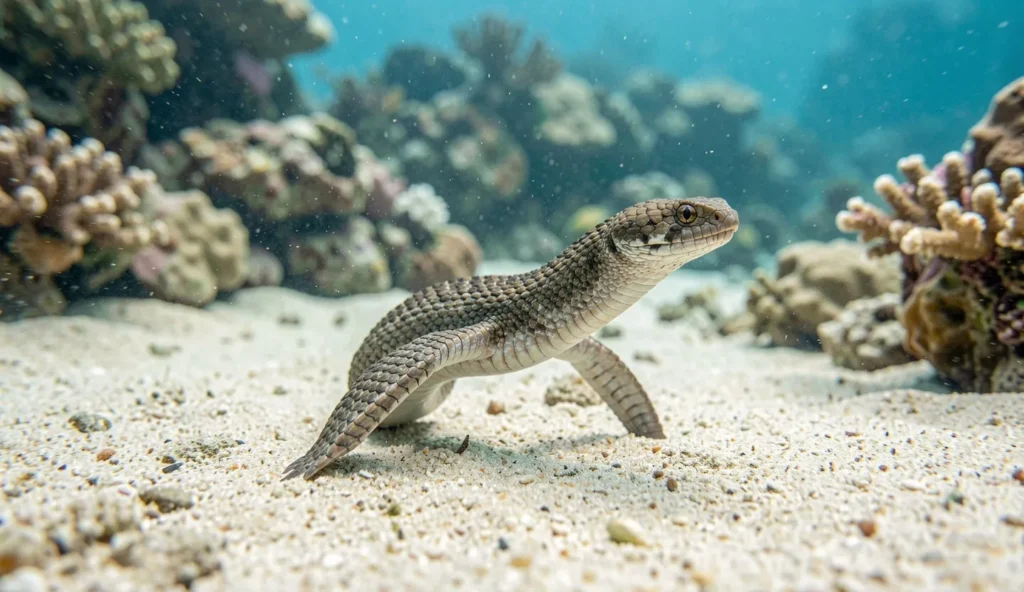
Sea snakes developed adaptations for swimming and saltwater living rather than terrestrial crawling. Many have paddle like tails that improve propulsion with each movement.
Breathing and time underwater also differ. Sea snakes breathe air, and their sea snake behavior includes periodic surfacing cycles that fit their diving needs.
Body shape and scale structure also help movement in water. Efficient swimming reduces energy cost, which supports longer searches for prey within ocean boundaries.
Sea Snake Species and Body Features
Sea snake species vary in color pattern, size, and typical sea snake habitat. A diver may notice differences in banding, body thickness, and tail shape between regions.
These visible traits often help marine biology enthusiasts match a sighting to a local field guide. However, water clarity and depth can change how patterns appear during a dive.
Common Sea Snake Species You Might Encounter
Species differences can show up as uniform coloration or banded patterns. Some sea snakes specialize around reefs and seagrass areas where fish and eels concentrate.
Other species prefer open water or deeper coastal zones. In practice, sea snake distribution often follows prey movement along shorelines and edges of underwater structures.
When identification matters, region specific resources help confirm what a diver likely observed. Comparing sea snake features with closely related marine snakes improves accuracy when photo evidence exists.
Appearance Changes by Species and Age
Many sea snakes display banded or uniform patterns, but the exact look can shift with age. Juveniles can appear different from adults in body thickness and pattern intensity.
Tail shape and overall body form also vary by species. In some sightings, pattern visibility changes with water clarity and depth, which can make animals seem darker or lighter.
For anyone studying sea snake behavior, noting how an individual looks under specific lighting helps interpret the environment. Local conditions influence both appearance and how long the animal stays in view.
Key Physical Adaptations for Swimming
Laterally flattened tails function like paddles during swimming. This design improves propulsion and helps sea snakes hold steady positions near prey-rich areas.
Streamlined bodies reduce water resistance, which supports efficient movement. Valved nostrils help manage breathing exposure while the animal stays underwater for extended periods.
Scales and skin surfaces also support marine life. Skin and scale traits reduce friction and help prevent problems that can occur when animals dry out.
Sea Snake Venom Facts and How It Works
Sea snake venom supports hunting rather than defense for most situations. The venom composition differs across sea snake species, and it can vary by region and genetics.
Because sea snakes are highly venomous, human risk exists even though encounters stay uncommon. Reliable safety habits matter whenever divers see a sea snake nearby.
What Sea Snake Venom Is Made For
Venom helps immobilize prey quickly, which matters underwater where escape routes can be limited. Many species target fish or eels depending on diet and local conditions.
Venom composition differs between sea snake species, affecting how quickly prey reacts. Rapid immobilization supports feeding efficiency when the animal must remain submerged.
Different prey types also shape venom delivery needs. When prey lives near structure, quick effects help reduce thrashing that could pull the prey away.
Why Sea Snake Venom Is Highly Dangerous
Many sea snake venoms are neurotoxic, which means they affect nerve signaling. Some venom effects also involve breathing muscles, which can quickly become life-threatening.
Sea snake venom risk depends on more than toxicity alone. Medical treatment must be time sensitive for any envenomation.
Toxicity can vary between species and even within regions. That variability makes careful handling and distance important for divers and researchers.
How Often Sea Snakes Are Encountered by Divers
Sea snakes are highly venomous but rarely encountered during typical dives. Encounter frequency depends on region, season, and the depth at which divers operate.
Sea snakes often avoid people rather than approaching them. For that reason, a diver may see a single animal, and then the animal moves away without interaction.
Clear identification also reduces risk. Attempts to grab or corner a sea snake can trigger defensive behavior that increases the chance of biting.
What to Do If a Sea Snake Is Nearby
Do not attempt to grab, chase, or corner a sea snake. Instead, increase distance and keep movement calm to avoid sudden contact.
Reducing bubbles and sudden fin kicks also helps minimize stress. Local dive safety guidance for venomous wildlife should guide actions in the field.
Some divers confuse sea snakes with other aquatic snakes, so cautious verification matters. When identification tools fail, treating the animal as potentially venomous supports safer behavior.
Sea Snake Habitat and Ocean Conditions They Prefer
Sea snake habitat includes specific ocean features that support prey and shelter. Conditions like temperature, salinity, and currents shape where sea snakes hunt most effectively.
As a result, sea snake distribution often looks patchy rather than uniform. Divers who understand these variables can interpret why sea snakes appear on some dives and not others.
Sea Snake Habitat Types
Coastal reefs and rocky areas can support prey-rich hunting grounds. Seagrass beds add shelter for fish and invertebrates, which can attract sea snakes that hunt in those zones.
Some sea snakes use mangrove fringes and shallow bays. Deeper coastal waters also host species adapted to lower light and different prey communities.
In many regions, structure defines hunting success. Coral edges and bends in rocky coastlines concentrate prey movement, which also increases the odds of seeing sea snakes.
Temperature, Salinity, and Currents Matter
Sea snakes are mostly found in warm tropical to subtropical seas. Water temperature influences metabolism and how active sea snakes are during a given season.
Salinity stability supports long-term marine life and consistent prey behavior. Currents influence how prey moves along reefs and seagrass, which can affect local hunting opportunities.
Seasonal changes can shift where sea snakes stay active. Divers can notice that sighting rates change with tides, water temperature, and local storms.
Where Prey Availability Drives Sea Snake Distribution
Fish abundance strongly affects whether sea snakes appear in a given area. Some sea snake species target specific prey types near structures, which makes their presence predictable when prey patterns stay stable.
Many hunting events occur close to hiding places for prey. That means benthic zones and coral edges can become hotspots for sea snake activity.
Tracking prey presence also improves interpretation of sea snake behavior. When fish schools shift, sea snakes often shift with them.
Sea Snake Behavior and Hunting Style
Sea snake behavior often remains calm and avoidance focused rather than aggressive. Many divers notice motion that looks smooth and controlled, especially when the animal moves near seafloor cover.
Hunting happens underwater using venom delivery and strategic positioning. The result often looks brief from a diver viewpoint, which makes behavior harder to observe than simple movement.
Daily Activity Patterns and Movement
Activity can vary by species and local conditions. Some sea snakes show more daytime movement, while others change activity with depth or seasons.
Movement efficiency helps conserve energy while searching. Sea snake behavior can also stay closely tied to prey location, which reduces unnecessary travel.
When divers see sea snakes, they often appear near structures where prey gathers. After a short period of movement, the animal may disappear into cover.
How Sea Snakes Hunt Underwater
Venom delivery helps immobilize prey underwater, and it supports feeding when prey cannot quickly escape. Hunting often occurs near reefs, seagrass, or seafloor cover where prey density rises.
Some species may follow odor or detect movement cues, which guides them toward hidden prey. Feeding behavior can be short and difficult to notice from a distance.
This is one reason a diver may record a single sighting without seeing feeding. Close observation without disturbance still limits what can be confirmed safely.
Sea Snake Responses to Threats
Many sea snakes avoid contact with larger animals, including divers. Defensive reactions can include sudden retreat or guarded posture that signals discomfort.
Handling attempts increase the chance of defensive biting, which makes distance a key safety practice. Calm diver behavior reduces disturbance and lowers the chance of provoking a response.
For marine biology enthusiasts, consistent observation from a safe distance improves data quality. It also avoids stress that can change the animal’s normal behavior.
Diet and Feeding Preferences
Many sea snakes primarily eat fish, which fits their coastal hunting style. Some sea snake species feed on eels or other marine prey depending on local availability.
Diet choices can become narrow for certain species. Prey size and hunting location can also affect feeding frequency.
When prey concentrates near structures, sea snake feeding can become more consistent. That link between sea snake behavior and prey supports the idea that habitat and distribution are strongly connected.
How Sea Snakes Adapt to Life in the Ocean
Marine adaptations enable sea snakes to function in saltwater environments. Their breathing schedule, reproduction strategies, and skin and scale features all support time spent underwater.
These adaptations also shape how divers observe them. For example, sea snake breathing includes periodic surfacing, which often determines when an animal comes into view.
Breathing and Time Underwater
Sea snakes breathe air and surface periodically rather than extracting oxygen from water. Some species can hold their breath longer than typical snakes, which supports underwater foraging.
Nostril adaptations help manage water exposure during breathing events. Diving duration depends on activity level, temperature, and the immediate availability of prey.
This breathing pattern helps explain why sea snake behavior may include pauses. When an animal rests, it often aligns with the next surfacing cycle.
Reproduction and Life Cycle in Marine Environments
Many sea snakes have adaptations for breeding at sea. Reproductive timing can vary by latitude, local conditions, and seasonal prey patterns.
Some sea snake species retain developing young internally. That strategy reduces the need for land contact and keeps vulnerable young within the marine environment.
Juveniles face different survival challenges than adults. Their feeding success and shelter availability often change as they settle into specific sea snake habitat zones.
Saltwater Physiology and Skin Function
Saltwater living requires managing salt and water balance in the body. Skin and scale characteristics support underwater life and help maintain function during prolonged dives.
Energy use during swimming influences how sea snakes move and rest. Body temperature and activity level can also affect stamina and hunting range.
These physiological traits connect sea snake habitat to survival. When environmental conditions stay stable, sea snakes can maintain routines that support feeding and breathing cycles.
Is a Sea Snake Something Divers Should Expect to See
Sea snakes exist in many regions, but sightings are never guaranteed. Divers often rely on local surveys and dive logs to estimate when and where sea snake behavior may increase.
Seasonal shifts and tide effects can influence activity, so a single dive does not always represent typical presence. Respecting distance matters because sea snakes remain venomous even if they avoid people.
Realistic Encounter Expectations
Clear dive planning helps set realistic expectations for sea snake habitat and seasonal activity. Some sites may show repeat sightings, while others may remain quiet for long periods.
When documenting a sighting, keeping a safe distance improves both safety and observation quality. Photo or video evidence can support later confirmation of sea snake distribution and identification.
For marine biology enthusiasts, comparing observations with regional species accounts can improve interpretation. For broader context on how coastal snakes vary by region, resources about other marine adapted snakes can help, such as Northern Water Snake when reviewing habitat differences across waterbound snake types.
Why Sea Snakes Are Not Pets
Sea snakes need specialized marine conditions and diets tied to live prey availability. They also require experienced handling knowledge because sea snake venom risk can become severe.
Venomous handling risks apply even when a person thinks an animal is calm. Wild-capture pressure and legal restrictions can also affect availability and welfare in many areas.
Conservation friendly viewing helps avoid harm to both humans and animals. For comparison, seeing how habitat and care differ for other snake types can be useful, such as King Snake and its nonmarine care approach, which highlights why sea snakes should stay in the ocean.
Similarly, understanding other venomous species helps clarify that risk is not only about aggressiveness. A venom scale example like King Cobra shows why medical readiness and avoidance remain core principles across venomous snakes.
Frequently Asked Questions
How Venomous Are Sea Snakes Compared With Other Snakes?
Sea snake venom is highly toxic in many species.
Do Sea Snakes Chase Divers Underwater?
Most sea snakes avoid contact and do not hunt humans.
What Do Sea Snakes Eat in the Ocean?
Many species eat fish or eels depending on habitat.
Where Do Sea Snakes Live Most Often?
They commonly occur in warm coastal waters with prey.
How Do Sea Snakes Breathe If They Are Underwater?
They breathe air and surface periodically.
Are All Sea Snakes Equally Dangerous to Humans?
Venom toxicity varies by species and context.
A Final Note on Sea Snake Viewing and Safety
Sea snakes fit ocean life through strong swimming adaptations and air breathing cycles. Safe, noncontact observation helps marine biology enthusiasts learn more while keeping risk low.