King Cobra – The Regal Ruler of the Reptile World
Introduction
The King Cobra (Ophiophagus hannah) is the world’s longest venomous snake, capable of reaching lengths of up to 18 feet and standing tall enough to look an adult human in the eye. Found throughout Southeast Asia and parts of India, this majestic reptile plays a vital role in its ecosystem by controlling populations of other snakes, including highly venomous species. With its hooded display, sharp eyesight, and unique hissing growl, the King Cobra stands out as a symbol of both power and elegance in the snake kingdom.
Origin and Habitat
King Cobras inhabit a variety of tropical environments, including:
- Dense forests and bamboo thickets
- Mangroves and swamps
- Grasslands near water sources
They are found in countries like India, China, Thailand, Malaysia, Indonesia, and the Philippines. These snakes prefer habitats where they can hunt, hide, and breed in peace. While they share some range with the Indian cobra, King Cobras typically inhabit more forested and remote areas.
Physical Characteristics
The King Cobra has a distinct and recognizable appearance:
- Length: Up to 18 feet (average 10–13 feet)
- Weight: 13–20 pounds
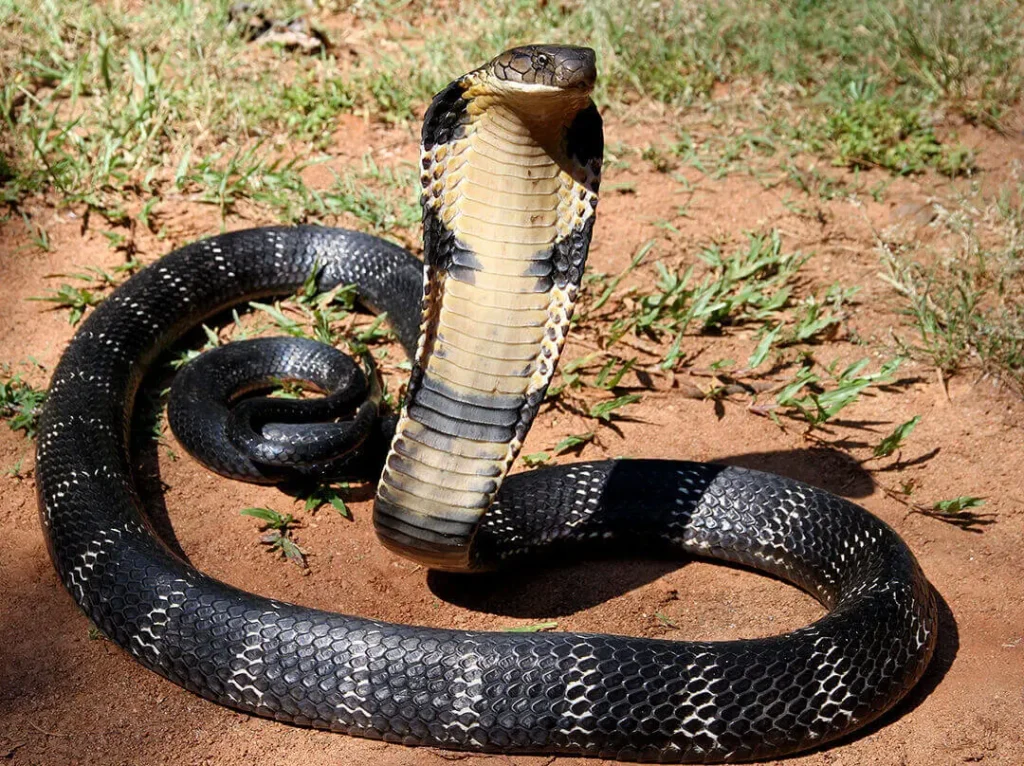
- Color: Olive, brown, or black with pale yellow crossbands
- Hood: Flattened neck ribs used to intimidate threats
Despite their size, King Cobras are agile and fast-moving, especially when hunting or threatened. Their size and build are quite different from the more slender black mamba, which relies on speed rather than intimidation.
Behavior and Intelligence
King Cobras are solitary, alert, and incredibly intelligent for reptiles. They are known for:
- High problem-solving ability for a snake
- Producing a deep, growling hiss
- Standing upright and expanding their hood when threatened
Unlike many snakes, they are deliberate and calculated, avoiding conflict unless provoked. This intelligence sets them apart from constrictors like the boa constrictor, which relies more on ambush and physical strength.
Diet and Feeding Habits
The King Cobra is a specialist predator with a unique diet:
- Feeds primarily on other snakes, including venomous ones like kraits and other cobras
- Occasionally eats lizards and small mammals
- Eats large meals and may not feed again for weeks
Its scientific name, *Ophiophagus hannah*, literally means “snake eater,” highlighting its preference for serpentine prey. This ophiophagous diet is rare among snakes and makes the King Cobra a top predator in its ecological niche.
Venom and Danger
The King Cobra’s venom is not the most toxic among snakes, but the quantity it delivers is what makes it dangerous:
- Can inject up to 7 mL of venom in a single bite
- Neurotoxic venom affects respiratory centers in the brain
- Without treatment, bites can be fatal within 30 minutes
Thankfully, they are not aggressive by nature and usually try to escape unless cornered. When compared to the reticulated python, which kills by constriction, the King Cobra’s venomous strike is a more immediate and chemical form of defense and predation.
Reproduction and Parenting
King Cobras are one of the few snake species known for maternal care:
- Females build nests out of leaves and guard the eggs
- Breeding season: January to April
- Clutch size: 20–40 eggs
The female remains near the nest until the eggs hatch, showcasing rare nurturing behavior in reptiles. This level of parental investment is almost unheard of among other large snakes, including the green anaconda, which gives birth to live young and offers no further care.
Conservation and Threats
Despite their fearsome reputation, King Cobras face significant threats:
- Habitat destruction due to deforestation and urbanization
- Declining prey populations
- Hunting and illegal wildlife trade
They are classified as Vulnerable on the IUCN Red List. Conservation efforts focus on habitat protection, education, and anti-poaching laws. Recent studies in 2024 have shown that community-based conservation programs in parts of India and Thailand are helping reduce human-snake conflict through education and relocation training.
Interaction with Humans
While often misunderstood, King Cobras are not naturally aggressive toward people. They usually avoid humans and strike only in self-defense. Local cultures have both revered and feared them:
- In some cultures, they are considered sacred symbols of protection and wisdom
- Often featured in documentaries and films due to their majestic presence
- Keeping them as pets is highly discouraged and often illegal
Respectful coexistence and education are key to reducing conflict between King Cobras and humans. Unlike docile species such as the corn snake, which is a popular pet, King Cobras are wild animals that demand space and respect.
Fascinating Facts About King Cobras
- The “King” in King Cobra refers to its dominance over other snakes
- Their hiss resembles a growl and can be heard from several meters away
- They can control the depth and tone of their hiss depending on the threat level
- A standing King Cobra can look an adult human in the eye
Frequently Asked Questions
Q1: Are King Cobras the most venomous snakes?
A: Not by venom toxicity alone. However, their ability to inject a large volume of venom makes them incredibly dangerous.
Q2: Can King Cobras recognize people?
A: They may recognize consistent human presence but do not bond or socialize like pets. They are intelligent and responsive to surroundings.
Q3: Are King Cobras endangered?
A: They are listed as Vulnerable, meaning they are at risk but not critically endangered. Habitat loss and human conflict are major concerns.
Q4: What should I do if I see a King Cobra?
A: Stay calm, back away slowly, and do not attempt to handle or provoke the snake. Contact local wildlife authorities if necessary.
Q5: How can we help protect King Cobras?
A: Support conservation organizations, avoid purchasing exotic wildlife, and help raise awareness about the importance of protecting snake habitats.
Conclusion
The King Cobra is more than just a legendary serpent—it’s an essential part of its ecosystem and a living symbol of reptilian royalty. By understanding and respecting its role in nature, we can help ensure that future generations continue to marvel at this remarkable species. Whether you’re a wildlife lover or a curious learner, the King Cobra stands as a testament to nature’s power, mystery, and balance. Its intelligence, maternal care, and specialized hunting behavior make it one of the most fascinating snakes on the planet.