Indian Cobra – The Iconic Snake of the Subcontinent
Introduction
The Indian Cobra (Naja naja), also known as the spectacled cobra, is one of the most famous and culturally significant snakes in the world. Found throughout the Indian subcontinent, this highly recognizable species is admired for its graceful hood, striking markings, and role in traditional folklore. Despite its reputation, the Indian Cobra plays an essential part in the ecosystem and is more shy than aggressive when left undisturbed. While often confused with the larger king cobra, the Indian cobra is a distinct species with its own unique behaviors and ecological role.
Habitat and Distribution
Indian Cobras are widely distributed across South Asia and are most commonly found in:
- Grasslands
- Forests
- Agricultural fields
- Rural and suburban areas
They often take shelter in rodent burrows, tree hollows, rock piles, and abandoned buildings. Their adaptability allows them to thrive in close proximity to human settlements, much like the corn snake, though the corn snake is a non-venomous species popular in the pet trade.
Physical Characteristics
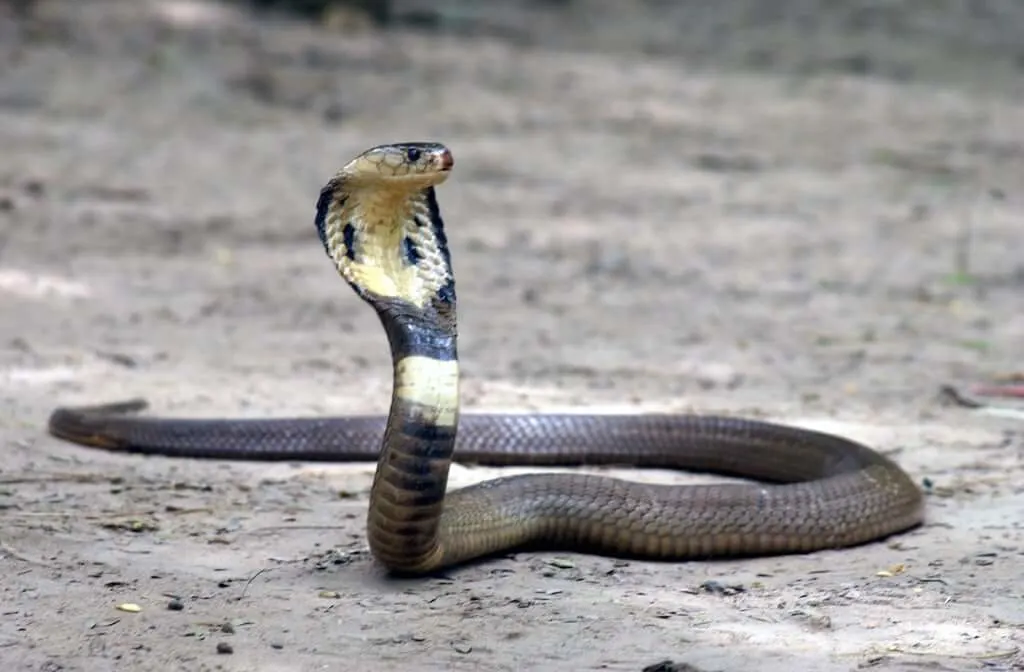
Indian Cobras are medium to large snakes, easily identified by their signature hood. Key features include:
- Length: 4 to 6 feet on average
- Color: Varies from yellowish, brown, to black
- Hood Markings: Two circular, eye-like patterns that resemble spectacles
- Build: Slender yet strong body with a broad head
When threatened, the cobra expands its hood to appear larger and more intimidating, a natural defense mechanism. In contrast, the black mamba relies on speed and repeated strikes rather than hood display when threatened.
Behavior and Temperament
Indian Cobras are intelligent, alert, and solitary by nature. They avoid confrontation and are more likely to flee unless provoked.
- Defensive posture includes hood flaring and hissing
- Generally shy and non-confrontational if not threatened
- Most active at night, but also seen during the day
These snakes typically strike only when cornered or surprised. Unlike the boa constrictor, which subdues prey through constriction, the Indian cobra relies entirely on its venom for hunting and self-defense.
Venom and Medical Importance
The Indian Cobra possesses powerful neurotoxic venom that can affect the nervous system:
- Symptoms may include difficulty breathing, blurred vision, and muscle paralysis
- Medical attention should be sought immediately after a bite
- Antivenom is effective and widely available in areas where cobras are native
Despite their venomous nature, Indian Cobras rarely bite unless provoked. With prompt treatment, most bites are survivable. The Indian cobra is one of the “Big Four” venomous snakes in India, alongside the Russell’s viper, saw-scaled viper, and common krait, responsible for the majority of snakebite cases in the region.
Diet and Feeding Habits
Indian Cobras are carnivorous predators and play a key role in controlling rodent populations. Their diet includes:
- Rats and mice
- Birds and bird eggs
- Lizards
- Other snakes (occasionally)
They rely on their keen sense of smell and heat detection to locate prey. This rodent-control service is invaluable to farmers, making cobras an important natural pest management ally in agricultural areas.
Reproduction and Life Cycle
Indian Cobras are oviparous, meaning they lay eggs. Key reproductive traits include:
- Females lay 10–30 eggs in warm, hidden locations
- Incubation lasts 6–8 weeks
- Hatchlings are independent and venomous from birth
Females may remain near the eggs to guard them, a behavior uncommon among many snake species. This maternal care is one of the more fascinating aspects of cobra behavior, setting them apart from most other venomous snakes.
Threats and Conservation
While not currently endangered, Indian Cobras face several threats:
- Habitat destruction due to urbanization
- Road mortality
- Illegal wildlife trade for skins and snake charming
Conservation efforts focus on habitat preservation, education, and responsible coexistence with local communities. Unlike the green anaconda, which inhabits remote Amazonian waterways, the Indian cobra lives in close quarters with millions of people, making human-snake conflict mitigation a conservation priority.
Cultural and Ecological Significance
The Indian Cobra holds deep cultural and religious symbolism in South Asia. It is revered in Hinduism and associated with deities like Lord Shiva. Ecologically, cobras help maintain balance by controlling pest populations and contributing to biodiversity. Their presence in agricultural landscapes reduces the need for chemical rodenticides, benefiting both farmers and the environment.
Fun Facts About Indian Cobras
- The “spectacle” on their hood is unique to each individual, much like a human fingerprint
- Snake charmers do not hypnotize cobras—snakes respond to movement, not music
- They can flatten up to one-third of their body to display their hood
- Cobras can be found even near populated human settlements
- Indian cobras are excellent swimmers and often hunt near water sources
Frequently Asked Questions
Q1: Are Indian Cobras aggressive toward humans?
A: No. They are typically shy and prefer to avoid conflict. They only strike when provoked or threatened.
Q2: What do I do if I see a cobra near my home?
A: Stay calm, keep a safe distance, and contact a local wildlife expert or snake rescue organization for safe removal. Never attempt to handle or kill the snake yourself.
Q3: Is snake charming harmful to cobras?
A: Yes. Snake charming often involves removing fangs or venom glands, which harms the animal. Ethical wildlife practices are crucial.
Q4: Are cobras protected by law?
A: Yes. In many countries, including India, cobras are protected under wildlife protection acts, and harming them is illegal.
Q5: How can I help with cobra conservation?
A: Support education, avoid killing snakes, and promote safe, humane relocation practices. Respect their space and role in the ecosystem.
Conclusion
The Indian Cobra is a symbol of beauty, power, and ecological balance. While caution is necessary due to its venom, understanding and respecting these snakes can replace fear with appreciation. As guardians of the food chain and subjects of deep cultural significance, Indian Cobras deserve protection and thoughtful coexistence in a changing world. By learning about their behavior and ecological contributions, we can foster a healthier relationship with one of the subcontinent’s most iconic reptiles.