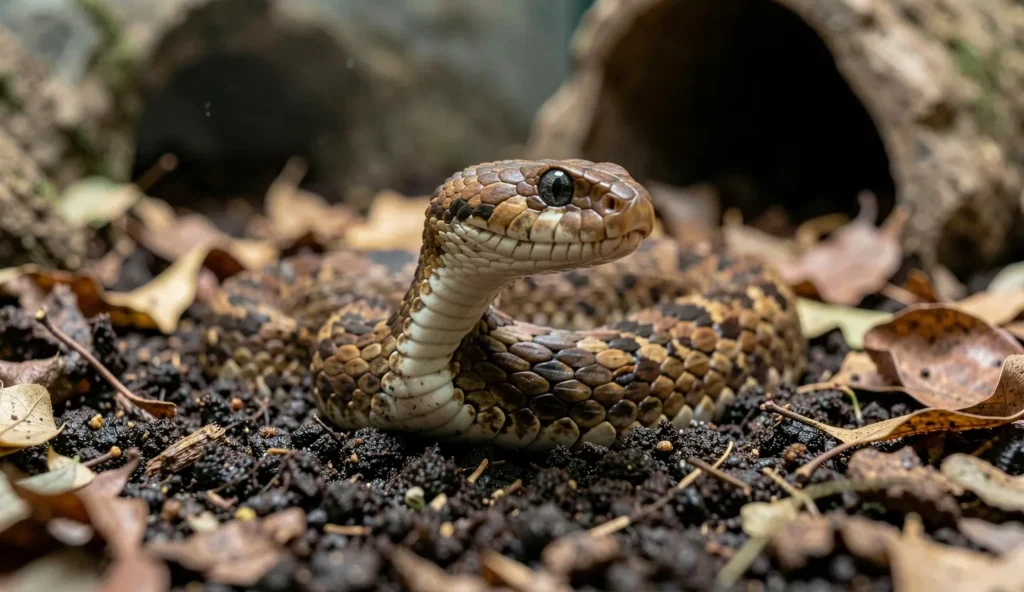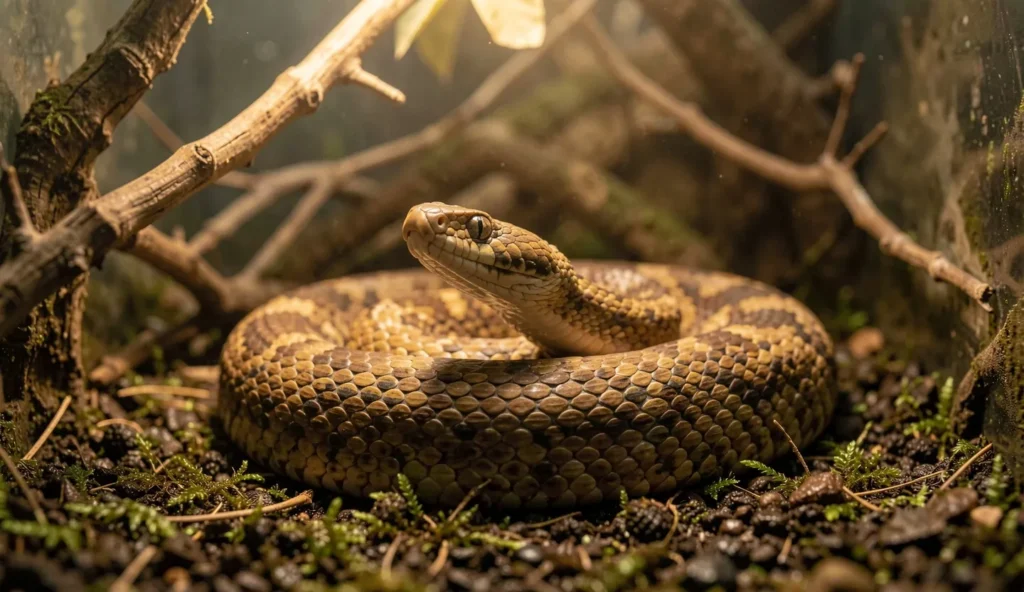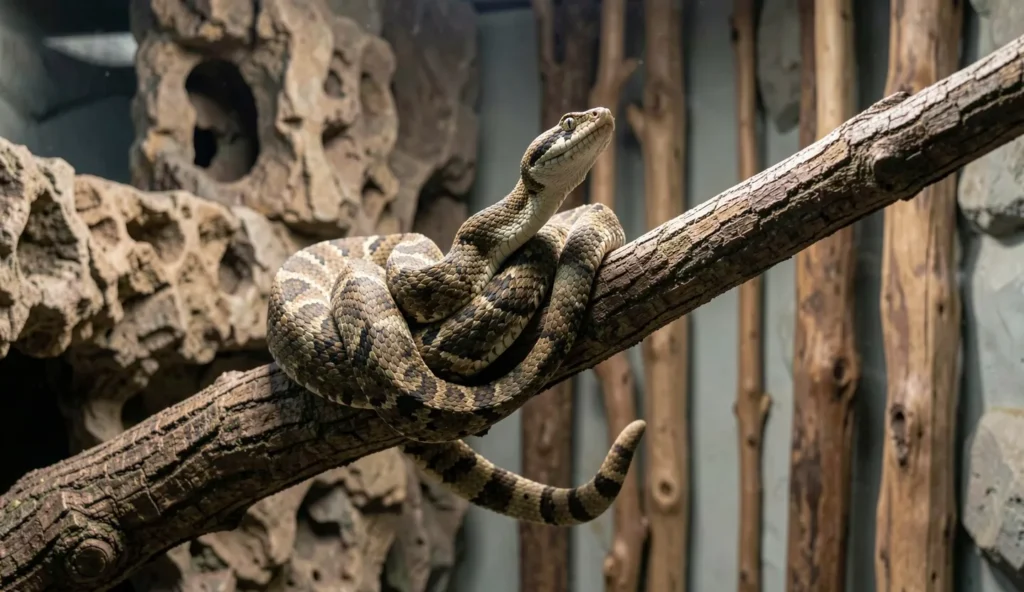
What Is a Coral Snake?
The Coral Snake is a venomous snake known for bright banding and a reclusive style. It comes from parts of North and South America, with different coral snake species living in different regions. One standout trait is the high-contrast color pattern that supports fast recognition for hikers.
Because the Coral Snake often avoids people, encounters are uncommon. Still, misidentification can happen when other snakes share similar colors. For that reason, safe, distance-based identification matters on trails.
Where Coral Snakes Are Found
Coral Snake range spans parts of the Americas, including areas of the southern United States, Mexico, and regions further south. Specific coral snake habitat depends on the species and local climate. In practice, hikers notice patterns more than locations because banding remains the most consistent clue.
Local sightings depend on what species lives nearby, so some regions show stronger resemblance to specific mimic types. Habitat types also shape where the snake spends time, such as sheltered forest edges or brushy ground cover. Therefore, coral snake habitat clues help narrow where an observation is likely to occur.
Why Coral Snakes Stand Out
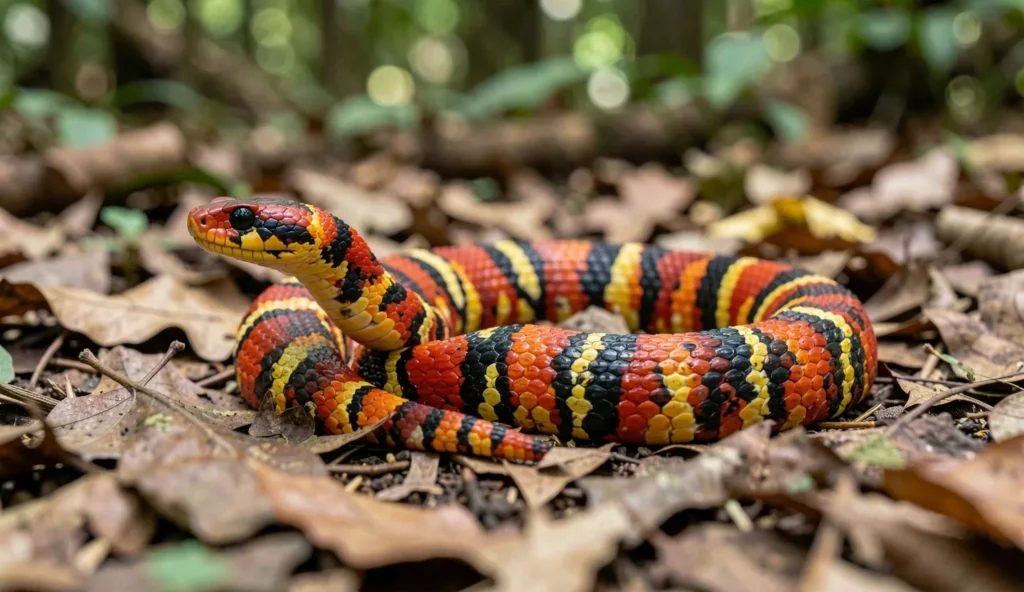
Coral Snakes stand out for their bright bands that typically show red, yellow, and black in repeating order. The snake often behaves in a reclusive, non-confrontational way and usually avoids open trail exposure. Despite low encounter frequency, the bite risk stays medically serious.
That combination of vivid pattern and danger is why many hikers learn a simple rhyme rule. Yet no single clue works perfectly everywhere, so careful visual checks provide the best safety value. The goal stays identification from a distance, not confirmation by closeness.
Coral Snake Identification With a Rhyme
Coral Snake identification works best when the eyes focus on band order and spacing. A rhyme helps people remember the rule under stress, especially when a snake appears briefly. The Coral Snake most often matches the classic pattern rules, but variation exists by region.
With that in mind, the safest method uses visual confirmation from far enough away. Hikers should watch without approaching, because close contact increases risk and reduces accuracy. Also, a quick review of multiple cues beats relying on one feature.
The Classic Red Yellow Black Rhyme
The most repeated guideline is the phrase “red touches yellow” for separating Coral Snakes from many lookalikes. The key idea focuses on adjacency, meaning which colors touch each other across a band boundary. When red sits next to yellow along the body, it supports the classic Coral Snake pattern check.
That rule helps explain coral snake vs milk snake confusion because some mimics use similar band colors. However, the band order can shift in mimics, even when the colors look close at a glance. Therefore, band order stays the first check, not body shape or head size.
Still, “red touches yellow” is strong but not universal for every region and every local snake pattern. Conditions like lighting, motion, and partial views can make bands appear merged. For that reason, identification should combine the rhyme rule with additional pattern checks.
The Blue Red and Yellow Pattern Checks
Some Coral Snake patterns include subtle tonal differences that can look bluish at certain angles. Banding still follows the main structure, but color intensity may change with lighting and age. Therefore, observers should focus on band order rather than trying to match a single exact shade.
Next, check side-by-side spacing and continuity by looking at how many bands repeat. A stable band rhythm helps separate snakes when one band appears interrupted or broken. To do this safely, the snake should remain at a distance where the full body band sequence can still be viewed.
Several visual cues can help without approaching, including whether the bands wrap consistently around the body and whether the red and yellow adjacency stays clear. Also, keep attention on what the snake is doing, since reclusive movement may keep it low and partly hidden. If the pattern cannot be read confidently, the safest choice is to avoid identification certainty.
What To Avoid When Identifying
One common error is using body length or head shape as the main ID method. Those traits vary widely even among coral snake species, and many nonvenomous snakes share similar silhouettes. Therefore, a band-based approach gives better results.
Another mistake is assuming every red yellow black snake must be a Coral Snake. Many nonvenomous species show colorful bands, and mimic patterns can overlap. As a result, the “red touches yellow” rule should stay primary, with careful review as the backup.
Finally, avoid handling or trying to confirm by touch. A venomous bite can happen even when a snake looks calm, and close contact removes the distance advantage for accurate observation. When an identification cannot be made safely, observers should treat the snake as potentially dangerous.
Coral Snake vs Milk Snake Key Differences
Coral Snake vs milk snake confusion is one of the most frequent identification problems on trails. Both groups can show red, yellow, and black banding, so a quick glance may seem convincing for either. The difference usually comes down to band adjacency and how the bands align across each boundary.
Milk snakes can vary by region, and local patterns can look close to venomous mimics. Still, careful viewing can sort many cases without approach. This section focuses on the most practical checks hikers can use from a safe distance.
Band Order Comparison That Changes the ID
The most useful concept is that Coral Snakes typically show “red touches yellow,” while many milk snakes show a different adjacency where red usually does not touch yellow. That means black commonly sits between red and yellow bands in many milk snake patterns. When band boundaries show that separation clearly, coral snake vs milk snake identification becomes more reliable.
Even when both snakes look similar, the order of colors remains the critical signal. Therefore, the visual job is to locate the red yellow boundary and decide whether the colors touch. If that boundary is unclear, observers should avoid guessing based on other traits.
For extra pattern context, it can help to compare with a known example like the Milk Snake. Understanding that milk snakes can carry bold color bands makes it easier to see why adjacency checks matter most.
Behavior and Habitat Clues You Can Observe From a Distance
Coral Snakes often behave reclusively and may move slowly, then pause in leaf litter or cover. Milk snakes also prefer cover, but they may show more willingness to move through visible ground cover depending on conditions. That said, behavior is a supporting clue, not a primary ID rule.
Coral snake habitat often includes sheltered microhabitats where the snake can hide, such as warm leaf litter, brushy edges, and areas with ground cover. If the snake appears in a place with heavy hiding cover, it fits the general expectation for a reclusive, banded snake. However, many nonvenomous snakes use the same spaces.
The safest method uses observation without closing distance. Watch for how much of the band sequence becomes visible as the snake shifts posture. Then compare adjacency using the rhyme rule while keeping hands and feet away from the area.
Common Lookalike Confusions Beyond Milk Snakes
Coral snake lookalikes can include other red banded snakes that share color intensity and band width. Some of these snakes can be nonvenomous, while others may also be venomous depending on region. That makes it risky to rely on a single pattern match, especially in zones with multiple banded species.
In every case, band order remains the first check because it connects directly to the coral snake vs milk snake rule set. If a snake’s band pattern cannot be confirmed, it should be treated as potentially dangerous. Also, local field guides and regional resources can correct for exceptions that happen outside the most taught examples.
For another comparison point, some snake enthusiasts study the King Snake because it can show banding patterns that confuse quick scans. Pattern diversity across colubrids explains why band adjacency must stay the central method.
Coral Snake Species and What Changes Between Them
Coral snake species share the bright band concept, but details can change between regions. Band pattern intensity can shift, and band width can vary across local populations. That variation is why the same rhyme can still require flexible interpretation when viewing conditions are poor.
Even so, practical identification still succeeds when multiple cues support the decision. Instead of trying to memorize every local version, hikers should treat band adjacency as the anchor and add pattern continuity as a second check. Then observers can decide whether the snake fits Coral Snake expectations.
Major Coral Snake Species Categories
Coral snakes include multiple species, and each one can show slightly different banding layout. Some specimens look more saturated, while others appear lighter depending on age and lighting. Therefore, “looks similar” does not equal “is Coral Snake,” unless band adjacency matches the key rule.
Also, a species may appear in different habitat types even within the same broad region. That means coral snake habitat clues can support the context, but they cannot replace pattern checks. When both band order and habitat align, identification confidence increases safely.
To keep identification practical, hikers should focus on what changes and what stays consistent across coral snake species. What stays consistent is the high contrast banding and the repeatable order across segments. What changes is brightness, band width, and how clear the bands look when the snake curls.
Regional Pattern Variation and Why It Matters
Local populations may look slightly different due to geography and the specific species present. Lighting in forests, shadow across bands, and partial views can further hide the exact boundaries. As a result, a single photo-like moment might not show the red yellow relationship clearly enough.
Variation matters because coral snake habitat often overlaps with other colorful snakes in the same microhabitats. Those overlaps can increase mimic confusion when multiple species share similar cover types. Therefore, hikers should use region-specific reference material when available.
For broader understanding of how habitat and behavior influence identification, many keepers also compare similar ground-cover snakes like the Bull Snake. While not a coral snake species match, behavior and concealment habits can explain why trail sightings can look brief. That perspective supports slower, safer observation rather than rushed certainty.
Coral Snake Venom and Safety on Trails
Coral snake venom is highly dangerous, and any bite should be treated as a medical emergency. The snake’s reclusive habits reduce the chance of encounters, but danger does not disappear. Therefore, trail safety depends on distance, restraint, and correct action if a bite occurs.
This guidance focuses on risk reduction and medical reality, not on provoking or handling snakes. Hikers can control their approach speed and their body placement. Those decisions often matter more than perfect identification in the moment.
What Coral Snake Venom Is Like
Coral snake venom can cause serious medical effects, and it can be dangerous quickly. Because Coral Snakes avoid people, bites typically occur when a person disturbs the snake. That reclusive behavior can create a false sense of security, but venom risk stays real.
Any suspected coral snake bite requires urgent medical care. Even if symptoms seem mild at first, delaying treatment can worsen outcomes. Therefore, the safest rule is simple and strict.
When safety decisions come first, identification becomes a support tool rather than a last-second gamble. If the snake cannot be read with confidence, staying away and reporting the location to nearby companions can help keep situations calm. Coral snake venom risk should guide behavior more than curiosity.
How To Reduce Risk While Hiking
Staying on established trails reduces the chance of stepping near cover where a reclusive snake may hide. Also, footwear helps protect against accidental contact, especially when terrain includes leaf litter or loose ground cover. Another key step involves watching where hands land when climbing over fallen logs.
Use deliberate movement in brushy areas, since reaching under cover can place fingers near the snake. When a Coral Snake is spotted, it should not be cornered or blocked by body position. Instead, hikers can pause at a distance and allow the snake to choose an exit route.
These habits also help with identification accuracy because they keep observers stable and at a clear viewing distance. If the snake stays partly hidden, the best response is to move away slowly rather than trying to “get one more look.”
What To Do If a Coral Snake Is Spotted
If a Coral Snake is spotted, the first action is to back away slowly without sudden movements. Sudden actions can increase defensive behavior, especially when someone steps closer or tries to reposition suddenly. Also, keep distance and give the snake an unobstructed route.
Next, focus on observing the pattern and location safely. The observer’s goal is to note band order, not to touch the snake or confirm details. If other people approach, encourage them to stop and create space.
If a bite occurs, emergency medical response should start immediately. Since symptoms can progress, medical care should not wait for visible changes. When safety protocols guide actions, risks to trail teams decrease.
Coral Snake Habitat Clues for Hikers
Coral snake habitat clues help hikers understand where a Coral Snake might spend time. Rather than focusing on exact coordinates, habitat thinking uses features like ground cover, temperature, moisture, and shelter availability. Those features support the reclusive behavior that reduces frequent trail encounters.
Habitat knowledge also improves identification from afar by narrowing what to expect visually. When the snake appears in the expected type of cover with matching band adjacency, the observation becomes more useful and safer. Still, habitat should never override band order checks.
Common Coral Snake Habitat Types
Coral snakes often use habitats with strong cover such as leaf litter, thick understory, and brushy ground edges. Warm microhabitats can matter because they help support movement and feeding patterns. In many areas, sheltered forest floor conditions create ideal hiding spots.
These habitat features connect directly to reclusive behavior because the snake can remain low and concealed. Leaf litter also affects visibility, which means band patterns may appear incomplete until the snake shifts. Therefore, patience matters, but approaching still does not.
When habitat looks suitable, hikers should still keep distance and scan for band order only when the snake is clearly visible. If the bands cannot be read, the most responsible approach is to move on and avoid contact.
Seasonal Timing and Trail Conditions
Activity can shift with temperature and moisture, which affects where a Coral Snake might be moving. Warmer and more humid periods can increase surface activity in many regions, though local conditions vary by species. On trails, seasonal timing influences how often leaf litter cover is disturbed.
Trail conditions matter because moisture can change visibility, and dry leaves can hide or reveal bands quickly when the snake moves. In cooler parts of the day, snakes may stay in sheltered spots. Therefore, cautious observation should match the season and weather patterns for the region.
If conditions suggest increased movement, hikers can take extra care with footing and hand placement. That way, risk reduction does not depend on identification certainty. When in doubt, treat the environment as potentially hazardous.
How To Spot Without Approaching
Use distance-based observation as the default, especially when banded snakes appear in leaf litter. Look for motion and banding only when the snake’s body becomes visible enough to see adjacency. If the head and the next band boundary cannot be seen, avoid guessing.
Observers can scan calmly from a standing position and avoid stepping closer to “help” the view. Binoculars can improve pattern clarity without breaking distance rules, when available. The main safety advantage is that the snake remains free to move away without being threatened.
As a reminder, coral snake identification should remain a visual task, not a hands-on exercise. When the snake disappears into cover, stop searching and retreat to a safe position. Safety first keeps hikers from turning a brief sighting into a risky situation.
Is a Coral Snake Right for Trail Enthusiasts
Coral snakes are not suitable for handling and are best treated as wildlife sightings rather than subjects for close approach. Trail enthusiasts can focus on identification education, safe viewing distance, and knowledge of coral snake habitat. That approach supports better risk awareness during outdoor time.
Who Should Focus on Identification Only
People who want to learn coral snake identification should focus on observation and avoidance, not contact. Coral Snakes are venomous and reclusive, so handling increases danger without improving safety. Learning the rhyme and difference checks helps recognize risk quickly from a distance.
This education goal also benefits group hikes because confusion spreads when someone tries to confirm by moving closer. When everyone uses the same band adjacency rule, the group stays safer. Therefore, identification learning supports safe trail behavior.
Final Note for Safe Identification
Safe identification relies on band order, clear viewing distance, and calm retreat when a Coral Snake is spotted. With consistent checks and respect for coral snake venom risk, trail observers can stay prepared without taking unnecessary chances.
Frequently Asked Questions
How Can Coral Snake Identification Rhyme Help With Milk Snakes?
Use the red next to yellow pattern rule as the first check.
What Does Coral Snake Venom Mean for Trail Safety?
Treat any bite as an emergency and avoid any close contact.
Are All Red Yellow Black Snakes Coral Snakes?
No, many non-venomous snakes share similar colors and band patterns.
Where Do Coral Snakes Live Most Often?
They are found in areas that match local coral snake species habitat needs.
What Is the Best Way to Tell a Coral Snake From a Milk Snake?
Compare band order and look for red next to yellow with careful viewing.
Final Note for Safe Identification
Safe observation stays the priority, especially when banded snakes appear briefly on the ground.