What Is The European Lion
European lion information focuses on extinct lion lineages that lived in parts of Ice Age Europe. Fossil finds support scientific names such as Panthera leo fossilis, but older museum labels and popular terms can blur the picture. Because the evidence comes from bones and teeth, accurate identification depends on careful comparisons and dated deposits.
For readers comparing fossil lions to living lions or exploring historical naming, confusion often starts with the phrase “cave lion.” That label gets used for multiple extinct lion forms, not only one European lineage. With that in mind, European lion information stays anchored in specimen-level taxonomy and published descriptions.
Basic Identity And Naming Used In Science
European lion refers to an extinct lion lineage described from European fossil material. In many references, Panthera leo fossilis appears as a key scientific reference point. Some sources also use regional labels that require verification against the original specimen description.
Older literature sometimes uses “European lion” in a broader sense, covering more than one fossil population. Therefore, European lion information works best when the fossil taxon and the dated site context are checked together. When the taxon name is unclear, it is usually safer to follow the most recent classification used for that specimen.
How Researchers Link Fossils To A Lion Lineage
Researchers connect fossils to a lion lineage by examining shapes of teeth, jaws, and limb bones. Diagnostic features come from both gross anatomy and measurements reported in paleontology papers. Teeth often offer strong taxonomic signals because carnassial morphology links to feeding style and lineage.
Still, fragmentary finds limit confidence, especially when only one bone or a partial tooth is available. Dating also matters, since a fossil’s age helps determine which Ice Age Europe population it best represents. When stratigraphy and radiometric methods align, the timeline becomes more reliable.
Where Ice Age Europe Fits In The Timeline
Ice Age Europe includes alternating glacial and interglacial periods that shaped habitats and prey availability. European lion fossils typically come from deposits formed during these climate swings. Cave contexts appear in many records, but cave presence does not automatically mean the same “cave lion” form across regions.
Deposit types can include cave sediments, rock shelters, and open-air accumulations shaped by water or predators. Also, not every fossil found in a cave represents a lion that lived in the cave full time. Taphonomy can move bones and mix time horizons, so European lion information stays careful with context.
Appearance And Physical Traits Of Panthera Leo Fossilis
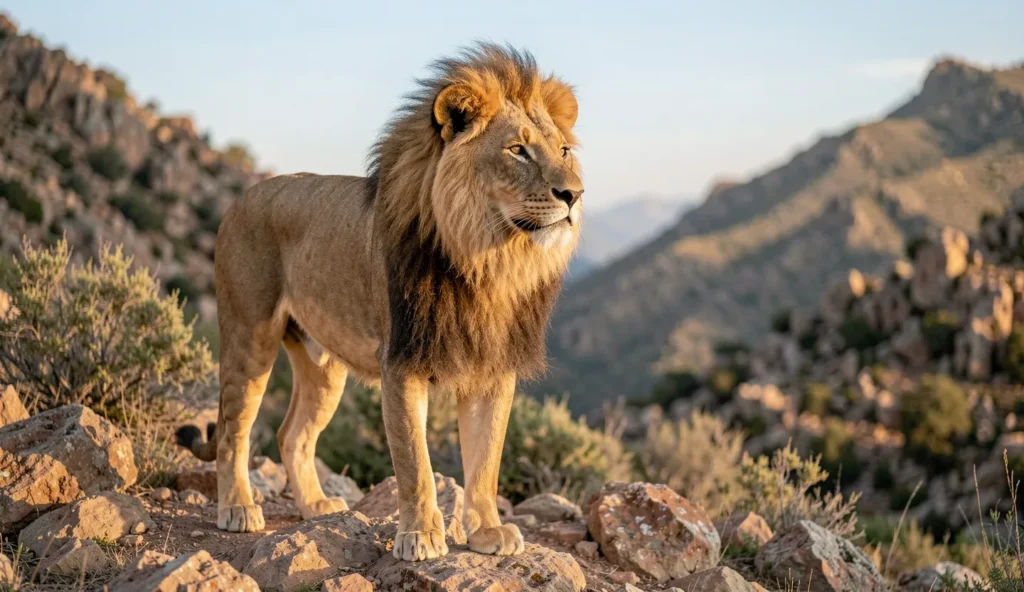
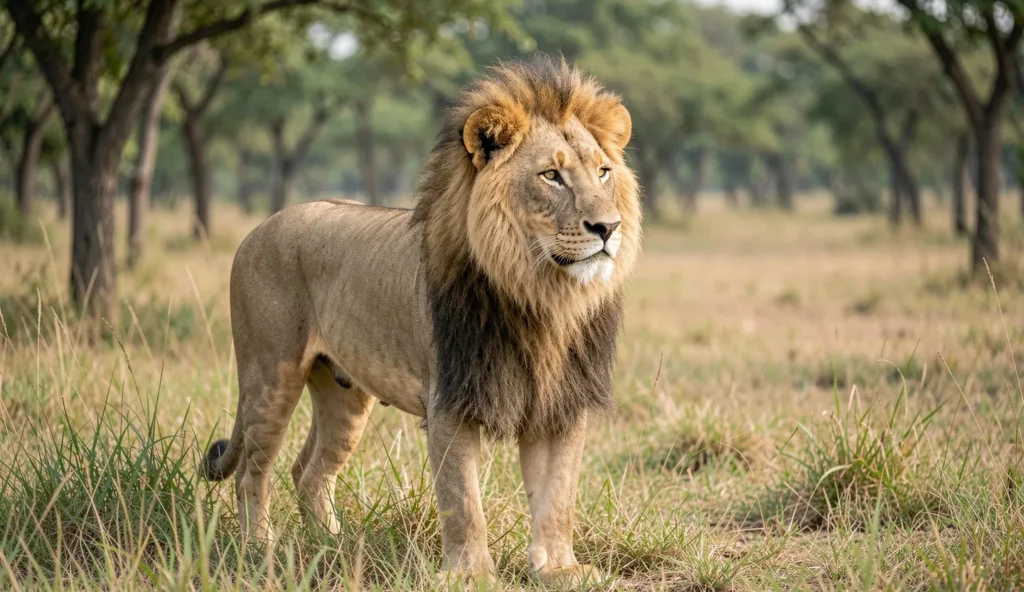
Physical traits inferred from European lion information come from skeletal remains, especially skull and limb elements. Estimates can vary because specimen quality differs and because a single skeleton rarely represents the full population. Even so, most descriptions aim to characterize overall size, build, and functional traits without guessing too far beyond the bones.
To understand how researchers interpret fossils, comparing anatomy to modern big cats can help. At the same time, taxonomic differences remain crucial, so direct “same as a living lion” assumptions usually fail. When relevant, modern reference points such as Panthera leo biology get used for functional interpretation, not for claiming identical bodies.
Body Size And Build From Skeletal Remains
Skull size and limb proportions help paleontologists estimate body size and robust build. Thickness of long bones and the form of joints provide clues about locomotion and muscle attachment areas. Because individual fossils differ, one specimen’s measurements cannot always represent the entire European population.
Comparisons among extinct lion-like forms also use cautious language when traits overlap. In many cases, researchers treat estimates as ranges rather than single values. That approach improves how European lion information matches the uncertainty built into the fossil record.
Where relevant, readers may also see how subspecies variation in living lions is discussed, such as in African Lion records. That comparison can clarify why fossil size estimates should not be treated as exact one-to-one matches. The fossil evidence and the modern reference frame serve different purposes.
Skull And Teeth Traits Used In Identification
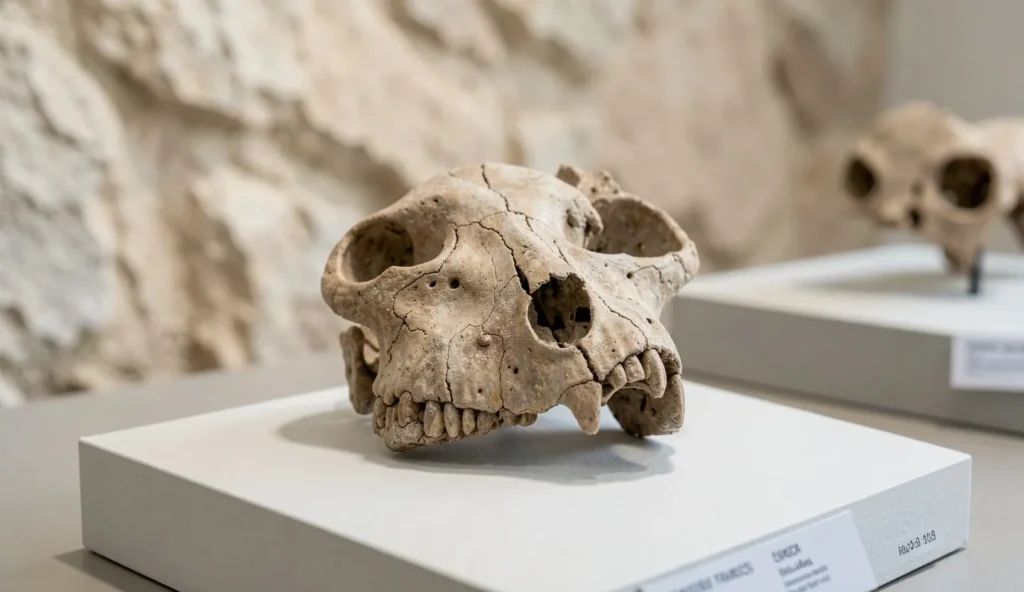
Teeth support feeding and taxonomic placement, especially through carnassial blade proportions. Jaw and premolar details can also help differentiate lion lineages when combined with skull fragment features. When teeth are preserved, researchers often treat dental traits as among the most informative evidence.
However, partial teeth make ID harder, since a missing portion can remove a diagnostic measurement. Also, worn teeth can complicate comparisons because abrasion changes the outline. European lion information therefore relies on what is measurable and repeatable across described specimens.
Posture And Locomotion Inferred From Bones
Limb bone thickness and joint structure inform how animals likely moved and how weight was distributed. Researchers use biomechanics reasoning by comparing fossil bone form to modern felids. At the same time, fossil range of motion cannot be directly measured, and soft tissue cannot be preserved.
For that reason, functional statements usually stay general, such as indicating a strong pattern for cursorial movement. If an article or museum display claims precise hunting speed from fossils alone, the claim usually overreaches the evidence. Better European lion information emphasizes what bones can support and what remains unknown.
Temperament And Hunting Behavior Deduced From Evidence
Temperament and hunting behavior get inferred indirectly in European lion information because fossils do not preserve behavior. Instead, researchers use prey patterns, site evidence, and the context of carnivore remains. Even then, conclusions remain probabilistic rather than direct proof.
When fossil sites contain both predator and prey material, interpretations can gain plausibility. Yet a key caution remains that bone association can occur long after death through scavenging and water movement. Therefore, hunting behavior discussions focus on what the evidence supports and how strong the connection is.
What Fossils Can Tell About Lifestyle
Behavior is inferred, not directly preserved, so lifestyle ideas must connect to the broader Ice Age Europe fauna. Prey availability shifts with climate, and predators may track those changes over time. If cut marks appear on bones or if carnivore remains cluster in a consistent way, researchers treat that as supportive evidence.
Still, weak associations can create circular arguments if predators are simply assumed to have caused all damage. A careful approach checks whether damage patterns match known carnivore processing marks. In cases with limited samples, European lion information keeps conclusions restrained.
How Roar, Sociality, And Movement Are Addressed Indirectly
Roaring cannot be proven from lion fossils because sound production depends on soft tissue and anatomy not preserved in fossils. Sociality also remains uncertain since group behavior leaves no direct skeletal signature. Researchers use analogies with modern Panthera leo and rely on broader site patterns to suggest possible behavior.
Movement and hunting can be framed more safely through limb anatomy and chase potential inferred from bone structure. If biomechanics analyses show a robust running posture, that supports general hunting mechanics without predicting specific tactics. As with all behavioral claims, European lion information treats uncertainty as part of the evidence.
European Lion Versus Eurasian Cave Lion How To Tell Them Apart
One of the most searched topics in European lion information involves how to distinguish it from Eurasian cave lion labels. The phrase “cave lion” can refer to multiple extinct lion forms, and the European lion lineage is not the same as every cave-associated taxon. For accurate research, specimen-level features and dated context matter more than a broad site label.
To reduce confusion, readers should separate terminology from classification. “Cave lion” describes a common association with cave deposits in many regions, but it does not guarantee the same evolutionary lineage across time and geography. That distinction helps keep European lion information aligned with fossil evidence rather than vague naming.
Why The Term Cave Lion Causes Confusion
“Cave lion” often acts as a catch-all label used in older collections and popular references. Museum labels may drift across time, with “cave lion” applied to specimens later recognized as different lineages. As a result, not every “cave lion” description matches the same taxon as European lion findings.
Because the label can appear in excavation reports and exhibit text, searchers may assume it means one specific species. In reality, European lion information emphasizes how paleontologists revisit identifications using improved comparisons and better measurements. Focusing on the specific fossil taxon and the published diagnosis avoids many errors.
Key Fossil Differences In Skull And Teeth
Skull and dental traits provide the most practical way to separate different lion lineages. Researchers compare diagnostic dental and cranial characters that recur in published descriptions. Relative tooth dimensions and shape patterns can help separate lineages, even when individual traits overlap.
Measurement approaches usually require the same tooth or skull regions across specimens. When only one or two traits are available, overlap can produce uncertain classification. European lion information therefore treats identifications as stronger when multiple characters and chronology support the same conclusion.
Different Likely Habitats And Site Contexts
In many records, cave lion labels connect with cave bear dens and repeated use of caves by predators and prey. That association can come from how bones accumulate in cave sediments over long periods. European lion fossils can also occur in cave deposits, so context alone cannot define which lineage is present.
Instead, taphonomy becomes central for interpretation, including how predator activity, scavenging, and reworking affect the deposit. When predator and prey bones cluster in ways consistent with repeated use, confidence increases. Otherwise, European lion information keeps habitat preference claims cautious.
Chronology And Geographic Range Patterns
Dates often differ across regions and sites, even within the same Ice Age Europe interval. Different glacial layers can represent different populations, and the fossil record may preserve them unevenly. Distribution maps therefore reflect sampling bias as well as true range.
To test range hypotheses, researchers rely on new finds, revised dating, and consistent taxonomy across collections. When new specimens match established diagnostic traits and align with a specific time window, the geographic picture becomes sharper. European lion information remains careful when interpreting maps built from limited specimens.
For readers who also study living lion variation, comparing how lineage names stay consistent in records can be helpful. Articles on Asiatic Lion illustrate how scientific names support clarity, not just storytelling. The same principle applies to fossil lions even though breeding and DNA are not available for extinct taxa.
Fossil Evidence And How Paleontologists Study It
European lion information becomes convincing only when the evidence base is explained. Paleontologists evaluate both the type of fossils found and the study methods used to interpret them. Confidence levels also matter, because taxonomy can change when new specimens appear or when comparisons improve.
Different fossils preserve differently, and that shapes what questions can be answered. Teeth and skull fragments often carry more taxonomic signal than isolated limb fragments. Still, even strong evidence can shift with better dating or improved classification.
Types Of Fossils Found In Europe
Common fossil categories include teeth, skull fragments, and limb bones. Complete skeletons are rare, which limits reconstruction of the whole body. Teeth often provide strong taxonomic signals because the carnassial region holds lineage-specific traits.
Isolated bones can also represent different time horizons if deposits mix material. That risk matters for interpreting European lion information from cave contexts or reworked sediments. When multiple fossil types come from the same stratigraphic layer, interpretations gain reliability.
Dating Methods Used For Ice Age Deposits
Dating uses stratigraphy as a backbone, with radiometric approaches applied when suitable materials exist. The goal is to connect fossils to specific glacial and interglacial timing. If dating uncertainty is large, it can affect claims about how long a lion lineage lasted or how far it ranged.
Multiple lines of evidence usually improve age estimates. Cave deposits can also be reworked by water or sediment movement, which can blur original layering. For European lion information, that means the safest conclusions link specimens to well-characterized stratigraphic contexts.
What Confidence Levels Mean In Species Assignments
Species assignments can be assigned, probable, or tentative depending on how well the fossil matches published diagnostic characters. A new specimen can revise earlier interpretations if it includes missing characters. Reclassification can also happen when better comparisons or updated taxonomy change the criteria.
As a practical approach, readers can treat older “cave lion” identifications as starting points rather than final answers. When possible, European lion information encourages checking whether identification relied on teeth, skull measurements, or broader skeletal traits. Primary descriptions in technical reports often provide the most transparent confidence reasoning.
Is The European Lion A Real Possibility For Pet Research
European lion information often attracts pet breed researchers who want to connect history to biology. However, extinct lion lineages cannot become living pets, and the fossil record cannot directly recreate a breeding population. The scientific value lies in comparative anatomy, evolutionary history, and how traits evolve across time.
With that in mind, pet research using European lion fossils should focus on historical and comparative questions. Modern lion management and care studies may use evolutionary context, but they cannot use fossils to produce living European lion animals. That limit applies regardless of whether the fossils are labeled Panthera leo fossilis or cave lion forms.
Why Extinct Lion Lineages Cannot Be Kept Or Bred Today
European lions are extinct and cannot exist as living pet animals. Fossil DNA is not guaranteed, and even when biomolecules exist, that does not enable breeding a whole extinct population. Conservation status tools also cannot apply in the same way because the living target does not exist.
Some people use “breed research” to mean historical comparison rather than actual husbandry. In that sense, European lion information can support research into anatomy and lineage relationships. Still, practical pet care research must remain focused on living lions and other extant felids.
How Lion Fossils Still Help With Modern Lion Genetics And Care Research
Fossil anatomy informs evolutionary relationships and trait change over time. Biogeography can also explain how climate and prey shifts likely influenced selection pressures. These insights can support interpretive studies about modern Panthera leo variation.
Modern lion comparisons can frame functional hypotheses, including how jaw and limb anatomy relate to hunting and locomotion. For example, comparisons discussed in profiles like Masai Lion can show how living subspecies names connect to real anatomical and ecological differences. Fossils still support the timeline of change, even if they do not provide husbandry methods.
Final Note On European Lion Evidence
European lion information rests on fossil teeth, skull parts, limb bones, and dated Ice Age Europe deposits. When terminology like cave lion is treated as a label rather than a single taxon, the evidence becomes clearer and more accurate.
Frequently Asked Questions
Is Panthera leo fossilis The Same As Cave Lion?
They refer to different fossil lion forms in most classifications.
What Fossils Prove European Lion Existence In Ice Age Europe?
Fossil teeth, skull pieces, and limb bones from dated European deposits.
How Do Paleontologists Tell European Lions Apart From Eurasian Cave Lions?
They compare diagnostic tooth and skull features and check chronology and site context.
Why Does The Label Cave Lion Create Confusion?
It is often used for multiple extinct lion forms associated with cave contexts.
Can Any European Lion Fossils Be Linked To Specific Habitat Preferences?
Habitat is inferred from deposit type and Ice Age faunas, with uncertainty.
Is There Any Way To Keep Or Breed European Lion Animals Today?
No, European lions are extinct and cannot be kept or bred as living pets.