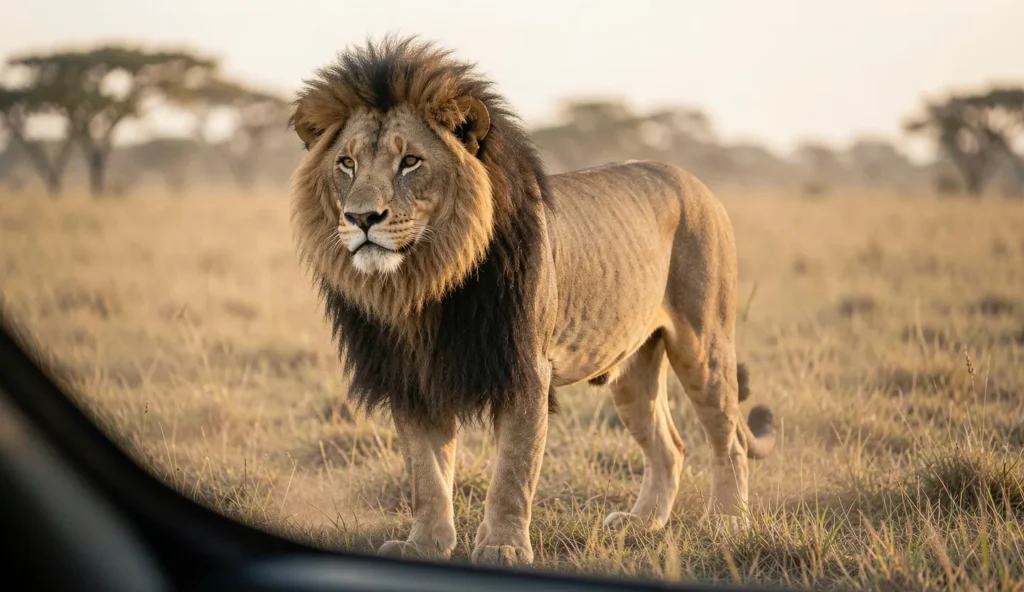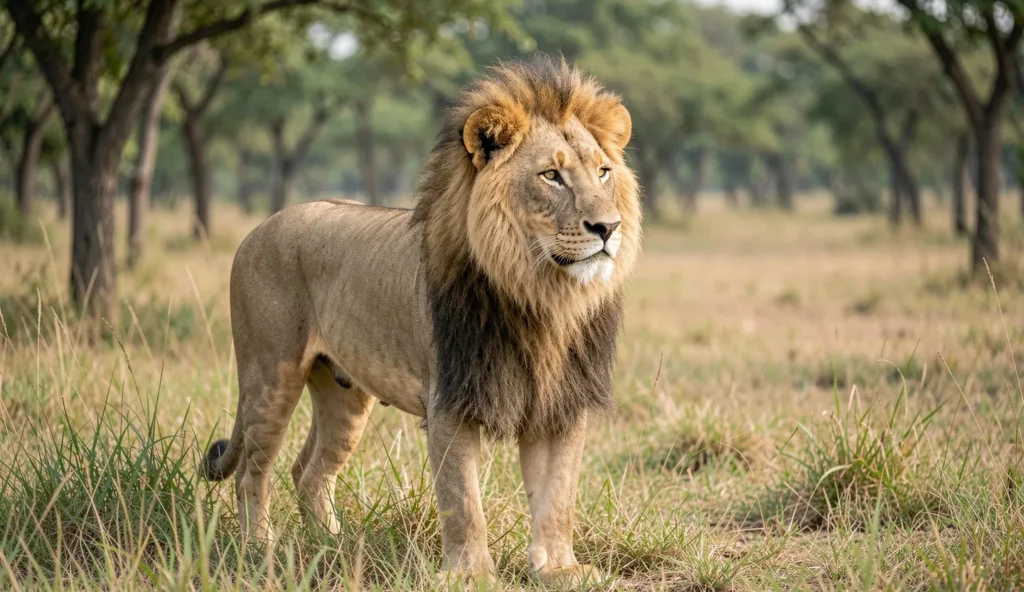
What Is a Gir Forest Lion
The Gir forest lion refers to lions associated with the Gir landscape in India and recognized under the Asiatic lion species context. In scientific terms, Asiatic lions are commonly listed as Panthera leo persica. These lions represent the last major wild stronghold for their genetic line, with population survival tied to habitat protection and careful management.
Within conservation discussions, the phrase “Gir forest lion” helps distinguish this geographic population from lions in other regions. It also connects field observations to sanctuary planning and genetic record keeping. For readers comparing lion types across regions, terms like Asiatic lion and Gir National Park often appear together for a reason.
Where the Gir Forest Lion Lives in India
The Gir forest lion is native to Gujarat, India, with a strong link to the Gir landscape and surrounding protected areas. Wildlife managers focus on survival trends, territory use, and movement patterns to understand how the population persists over time. As a result, monitoring data supports decisions about sanctuary rules and conservation priorities.
Protected-area boundaries shape daily lion movement, since lions need suitable terrain, prey, and cover for resting. If visitors want a high-level overview of lion geography and regional differences, comparing the broader species context with information like Asiatic Lion can improve clarity. That context also helps when reading about the last wild population and how sanctuaries support ongoing survival.
Relationship to the Asiatic Lion Species
The Gir forest lion is often used as a reference point for Asiatic lions found in the Gir region. The name Panthera leo persica appears in conservation materials because it aligns taxonomy with management goals. Clear labeling matters when comparing wild lineages and captive lineages that may be managed in different ways.
When reading conservation reports, the same core species frame often repeats, but location-based terms still matter for genetics. A lion described as part of the Asiatic lion population can still have a distinct local genetic pool depending on the subpopulation history. That is why Gir-based records support long-term genetic planning.
Why the Last Wild Population Matters
Gir holds the last major wild stronghold associated with this lion type, which increases conservation urgency. Small wild numbers raise the stakes for genetic planning, because low diversity can affect long-term resilience. Habitat protection helps lions express natural behaviors while reducing risky encounters with people and livestock.
Additionally, the Gir forest lion has become central to conservation success stories because management programs can track results. In practical terms, steady monitoring, anti-poaching work, and sanctuary rules aim to keep deaths low and reproduction stable. Over time, these measures also inform decisions about genetic diversity and whether population expansion efforts remain safe.
Appearance And Physical Features That Stand Out
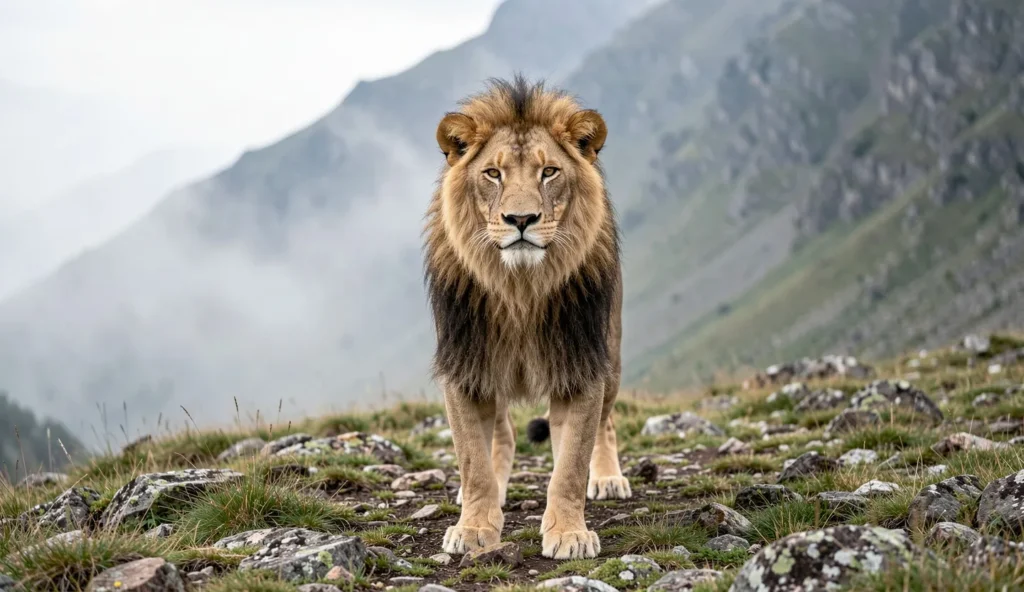
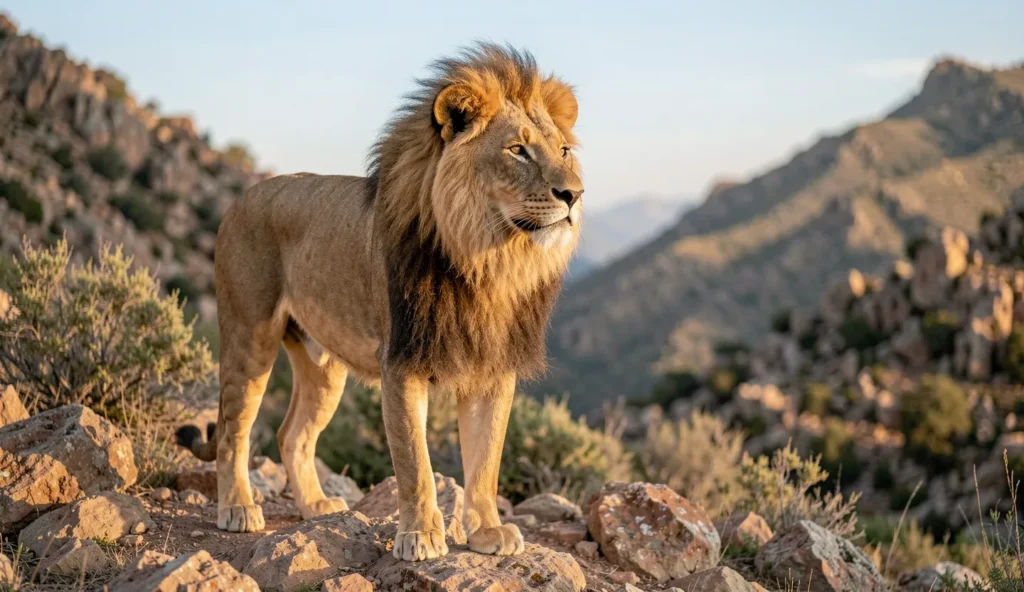
Appearance helps people recognize the Gir forest lion in field settings, but it should not become the only identification method. For example, males often appear larger and heavier, while females typically look more compact with similar body proportions. Variation occurs with age, health, and local conditions, so two lions can look different even within the same population.
Also, readers should remember that the Gir forest lion fits the Asiatic lion morphology described in wildlife references. When comparing lions from other regions, checking species and geography details avoids common mix-ups. For broader comparisons, a reference like African Lion can help readers see why geography changes management and appearance descriptions.
Body Size And Build Differences
Males usually look larger and heavier, with a stronger shoulder presence and a body build suited to long-range movement during hunting and guarding. Females tend to appear more compact, which supports coordinated hunting within a pride. These differences reflect role-based behavior and physical demands across seasons.
Age also affects how a lion looks, since body condition changes with prey access and seasonal temperatures. Health and injury history can further influence how thick a shoulder looks or how steady the gait appears. For that reason, observers rely on multiple traits rather than one visual cue.
Coat Color And Typical Markings
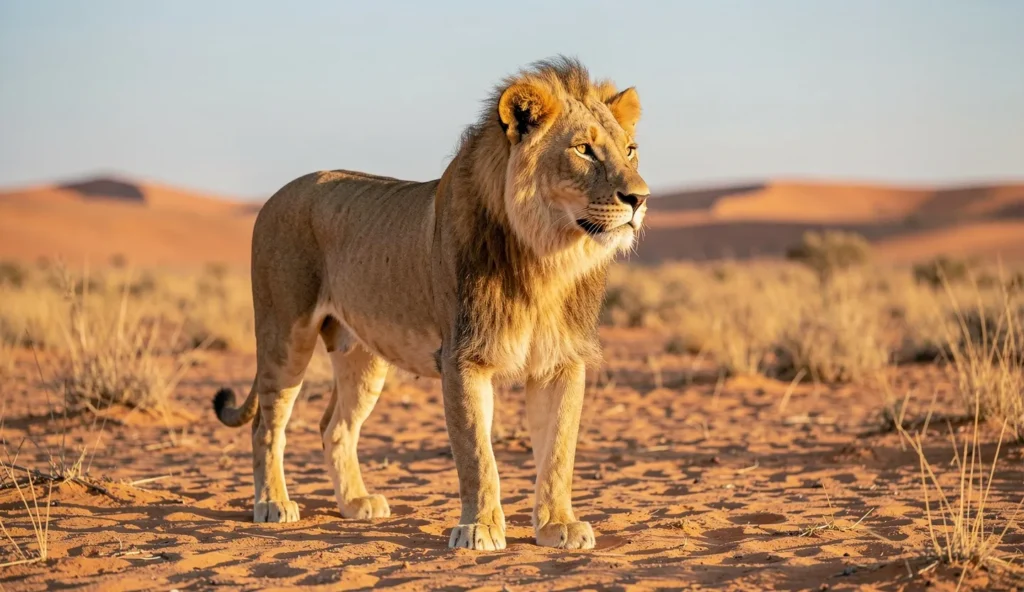
Coat color often ranges from sandy to tawny shades, with individual variation that can shift across seasons. Dark-tipped hairs can create subtle texture differences, and mane coverage can vary between individuals. Because no single color defines every lion, identification works best when multiple features align.
Markings can also include scarring patterns that reflect past fights, territorial disputes, or hunting encounters. Those scars may heal over time, but they still provide visual history for trained observers. Still, scar patterns alone cannot prove origin, since similar injuries can occur in different populations.
Manes, Facial Structure, And Other Common Traits
Mane development can differ by individual, and it may appear lighter, darker, or more patchy depending on genetics and age. Facial structure follows Asiatic lion morphology, which helps distinguish the general lion type. Observers often use facial shape along with mane traits to support identification.
In addition, natural variation can produce noticeable differences in fur thickness around the neck and chest. When lions interact, mane presence can also look more impressive due to posture and head angle. For research and sanctuary reporting, trained teams document these traits consistently to avoid drift in records.
Temperament And Social Behavior In The Wild
Gir forest lions follow the same basic social framework seen in lion species, with pride structure and roles that influence movement and hunting. Temperament in the wild connects to context, since lions respond to food availability, territorial boundaries, and human presence rules. For conservationists, understanding social behavior supports welfare and reduces conflict during viewing.
In protected areas, behavior also reflects management choices, including vehicle routes and distance limits. When visitors follow sanctuary instructions, lions can remain calmer and less stressed. This is one reason why public viewing policy often includes strict guidance.
Pride Structure And Roles
Lion prides commonly center on related females and their offspring, while adult males often associate through rotating patterns. Territory boundaries influence where prides travel and when males encounter rivals. Mating access can change based on which males successfully hold influence at a given time.
Because social roles matter, researchers track pride stability, cub survival, and male turnover when possible. These factors connect directly to conservation success and future genetic diversity. If a pride shifts suddenly, it can signal changes in prey supply, risk levels, or male presence.
Hunting Patterns And Daily Activity
Daily activity often peaks during cooler parts of the day, since heat affects both prey movement and lion energy use. Hunting success depends on group coordination, which influences prey selection and the chance of a successful chase. Water access also shapes routes because prey often concentrates near reliable sources.
Seasonality creates further shifts, since prey movement can change with rainfall and vegetation patterns. When prey shifts away from certain areas, lion travel routes follow. Managers interpret those routes to understand territory quality and to assess where conflict could rise.
How Lions Respond To People And Vehicles
Protected-area rules shape distance and exposure during viewing, which reduces risk for wildlife and humans. Habituation can develop in some settings, but it should not be treated as an automatic safety guarantee. Management tries to avoid risky patterns that could increase harm for either lions or people.
Human presence can also change lion behavior if people ignore distance limits. That is why sanctuary staff focus on consistent enforcement rather than informal visitor behavior. When reading about lion viewing in India, it helps to compare general policy goals with other lion populations, such as Ethiopian Lion as a taxonomy reference, even though the Gir context remains distinct.
Habitat Essentials And Sanctuary Conditions
Habitat determines whether the Gir forest lion can hunt, rest, move safely, and reproduce. In practical terms, terrain must balance open-to-mixed areas for movement with cover that supports stalking and resting. Prey stability remains the main driver of territory quality, so habitat protection and prey conservation typically move together.
Sanctuaries and national parks help by reducing threats and controlling risky human interactions. Those protections often include anti-poaching work, monitoring programs, and clear rules for visitors and local communities. When these systems work, conservation success becomes measurable rather than symbolic.
Key Habitat Features Lions Need
Open-to-mixed terrain helps lions move efficiently and improves hunting chances when prey travels across accessible routes. Dense cover supports resting and stealth approaches, especially for coordinated hunts. Reliable prey base and suitable shelter drive long-term territory stability.
Habitat quality also influences conflict levels, since lions that must travel farther for prey may approach edge areas more often. For that reason, managers focus on landscape connectivity and protection of prey habitat. The same logic supports sanctuary design and conservation planning across years.
Sanctuary Management And Protection Measures
Sanctuary management uses anti-poaching efforts to protect survival and reproduction. Monitoring supports health checks and movement tracking, which helps identify when lions face injury or unusual risks. Clear rules for human activity reduce risky interactions with people and livestock.
In many protected regions, staff also implement community-based support to reduce retaliation. When conflict risk drops, lion movement becomes safer and calmer. This approach supports long-term persistence of the last wild population rather than short-term conflict control.
Genetic Pool Protection Through Conservation Programs
Long-term genetic planning aims to maintain diversity within the Asiatic lion context, including the Gir forest lion population. Conservation programs use records to support pairing decisions and to reduce repeated close-relative pairing. When translocation or carefully managed exchanges occur, they typically follow genetic targets rather than random movement.
Managers also measure conservation success through viable populations, stable growth trends, and improved habitat outcomes. Genetic records help teams interpret population health beyond visible body condition. Over time, this focus on genetic diversity aims to protect Panthera leo persica from long-term decline linked to small numbers.
Diet And Nutrition For Asiatic Lions In Protected Settings
The Gir forest lion diet relies on wild prey available inside protected landscapes. Feeding logic centers on prey density, prey movement, and the energy needs of lions for hunting, cub rearing, and territorial defense. Even in sanctuaries, diet planning connects to natural hunting opportunities rather than replacing them.
When conservationists discuss lion nutrition, they also discuss ecosystem health. If prey populations decline, lions face nutritional stress, which can change behavior and increase conflict risk. Therefore, prey management often becomes part of broader conservation success strategies.
Wild Prey Base And How It Supports Survival
In the wild, diet depends on hunting wild ungulates within the protected landscape. Prey density affects how often lions can hunt successfully and how many cubs survive. Seasonal movement of prey also changes lion travel routes and hunting times.
As temperature and vegetation patterns shift, prey may move to different areas. Lions follow those movements, which can bring them closer to habitat edges. Managers use this pattern to plan monitoring and to support coexistence strategies where livestock may be nearby.
What Lion Diet Looks Like In Sanctuaries
In some settings, feeding plans may supplement prey during shortages or emergency periods. Nutritional needs include adequate protein and energy for reproduction and recovery after injury. However, feeding practices often aim to avoid dependence that could reduce natural hunting skills.
Sanctuary teams also consider how supplementation affects pride behavior and movement. If food becomes too predictable, lions may reduce hunting effort, which can create longer-term ecosystem imbalance. For that reason, supplementation is usually targeted and time-limited.
Water Needs And Environmental Drivers
Water access influences daily movement because prey also seeks reliable water points. In hotter months or during drought conditions, limited water availability can increase pressure around key areas. That pressure can change how far lions travel and how frequently they encounter people.
Where possible, management supports water availability for wildlife more broadly. This includes maintaining natural water sources and managing access safely. When water distribution improves, prey disperses more naturally and lion movement becomes more predictable for monitoring teams.
Health Issues, Risk Factors, And Conservation Threats
Health outcomes shape the future of the Gir forest lion population, especially because small wild numbers increase vulnerability. Risks include injuries, parasites, disease pressure, and nutritional stress when prey access drops. Conservation threats also include human conflict, habitat pressures, and genetic risks over time.
Monitoring helps teams identify issues early, and protective management helps reduce recurring dangers. When a program tracks injuries, movement, and population trends, conservation decisions become evidence-based. That evidence approach supports long-term genetic diversity goals.
Common Health Risks In Wild And Semi Protected Areas
Injuries from fights and hunting attempts can affect mobility and reduce hunting success. Parasite loads and disease risks require ongoing monitoring to keep health risks under control. Nutritional stress can follow when prey availability declines due to seasonal changes or ecosystem disruptions.
Health stress can also influence cub survival and pride stability. When adults lose condition, they may spend more time resting and less time hunting. That shift can increase pressure on the rest of the pride and affect reproductive timing.
Human Wildlife Conflict And Livestock Pressures
Human wildlife conflict can rise when prey becomes scarce or habitats shrink. In those periods, lions may target livestock more frequently, leading to retaliatory harm. Mitigation programs aim to reduce retaliatory harm and improve coexistence around sanctuary boundaries.
Livestock protection also supports tolerance because it reduces the incentive for harmful responses. Education and practical protective measures can lower conflict risk during times when lions roam closer to villages. This practical layer supports conservation success beyond patrols and monitoring alone.
Genetic And Population Risks From Small Numbers
Small population size increases inbreeding risk over time if genetic exchange remains limited. Habitat fragmentation can restrict gene flow, which can slow natural mixing between subgroups. Conservation genetics planning supports long-term viability by aiming to maintain genetic diversity targets.
Managers also consider the pace of population growth and the sustainability of habitat resources. If population growth outpaces prey recovery, health can decline, which indirectly affects genetic health too. For conservationists, integrating habitat management with genetics planning protects the long-term future of Panthera leo persica.
Is The Gir Forest Lion Right For You
The Gir forest lion belongs in conservation and wildlife research contexts, not standard pet ownership. For most readers, the right role involves observation, education, or professional support for sanctuaries. That framing matters because big cat welfare requires specialized facilities and strict legal oversight.
At the same time, responsible interest can still fit a wide audience, including conservationists, wildlife enthusiasts, and pet breed collectors who study animal lines. The key is choosing ethical participation that supports sanctuary standards rather than private collecting. For another regional lion context, Masai Lion provides a comparison point for how geography and taxonomy appear in references.
For Conservationists And Wildlife Professionals
Conservation work focuses on monitoring, genetics, and conflict mitigation impact. Standardized data collection supports population health decisions across years and seasons. Supporting programs that protect habitat quality and prey stability strengthens outcomes for the last wild population.
Teams also interpret behavior and movement data to estimate risk and to plan management actions. Those actions can include habitat-focused measures, enforcement adjustments, and targeted support when health issues rise. The goal remains stable survival while maintaining genetic diversity within Panthera leo persica.
For Wildlife Enthusiasts And Viewers
Wildlife viewing should follow sanctuary rules and keep safe distances at all times. Responsible tourism reduces stress and supports natural behavior rather than altering lion routines. Using credible sources for location and identification helps reduce misinformation.
When enthusiasts share sightings, the best approach uses permitted observation notes such as date, time, and location. This supports researchers who track movement patterns and pride stability. It also reduces rumor-driven claims that can mislead conservation planning.
For Pet Breed Collectors And The Reality Of Ownership
Gir forest lions are not typical pet animals and require specialized, accredited facilities for welfare. Legal requirements and animal welfare standards for big cats are substantial in most jurisdictions. Ethical collecting prioritizes accredited conservation or sanctuary work rather than private keeping.
When collecting is discussed in private settings, it can blur genetics and conservation goals. For that reason, responsible enthusiasts should focus on conservation-aligned data and credible institutions. That approach keeps Panthera leo persica protections centered on the wild population and the genetic pool it represents.
Starter Checklist For Responsible Observation And Research
A practical checklist helps readers behave responsibly during visits and when collecting information. It also supports research quality by encouraging consistent recording and credible source selection. The items below align with real-world sanctuary behavior and typical monitoring practices.
Before planning any trip, readers should review official visiting rules and keep expectations realistic. Lions in protected areas remain wild animals, and safety depends on rule-following. This checklist supports observation that does not interfere with natural behavior or cause extra stress.
Before Visiting A Sanctuary Or Planning Research
- Use official sanctuary guidance for visiting hours and routes.
- Check vehicle and walking rules before any viewing activity.
- Bring binoculars or a long lens if permitted.
- Avoid feeding or attracting wildlife near viewing areas.
- Record sightings with date, time, and location when allowed.
Also, reading about lion management context can reduce confusion during visits. If visitors want a broader comparison of regional lions in captivity and the wild, references like Barbary Lion can clarify how naming differs across regions. The core need remains the same, which is to respect sanctuary rules and keep wildlife behavior undisturbed.
How To Evaluate Sources About The Gir Forest Lion
- Prioritize peer-reviewed studies and official conservation reports.
- Verify Panthera leo persica taxonomy in credible references.
- Look for population trend data, not single anecdotes.
- Avoid sources that promote harmful handling of big cats.
When sources mention the last wild population, check whether they provide monitoring methods and time frames. Reliable conservation communications usually include how data was gathered, which supports better trust. This helps readers understand how the Gir forest lion genetic pool stays protected through real programs rather than claims with no evidence.
FAQs: Gir Forest Lion
Is The Gir Forest Lion The Same As The Asiatic Lion?
Gir lions are commonly referenced within the Asiatic lion Panthera leo persica population.
Where Is The Last Wild Population Of The Gir Forest Lion Found?
The last major wild stronghold is associated with Gir and protected areas in Gujarat, India.
What Makes The Gir Forest Lion Genetically Unique?
The Gir population is valued for its distinct genetic pool within Panthera leo persica conservation planning.
Do Gir Forest Lions Live In Sanctuaries Year Round?
They primarily live in protected habitats that can include national parks and sanctuaries.
What Do Gir Forest Lions Eat In The Wild?
They hunt wild ungulates, and their diet depends on prey availability in the habitat.
Additional Notes On Responsible Interest
The Gir forest lion story highlights how habitat protection, monitoring, and genetic planning can create measurable conservation success. When interest stays evidence-based and rules-focused, it supports the long-term survival of the last wild population.