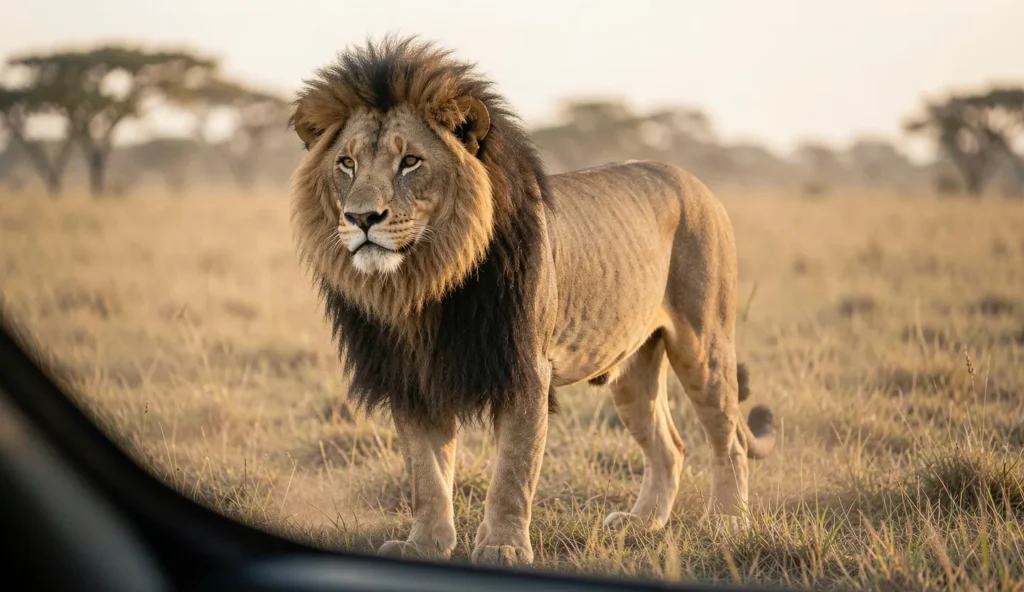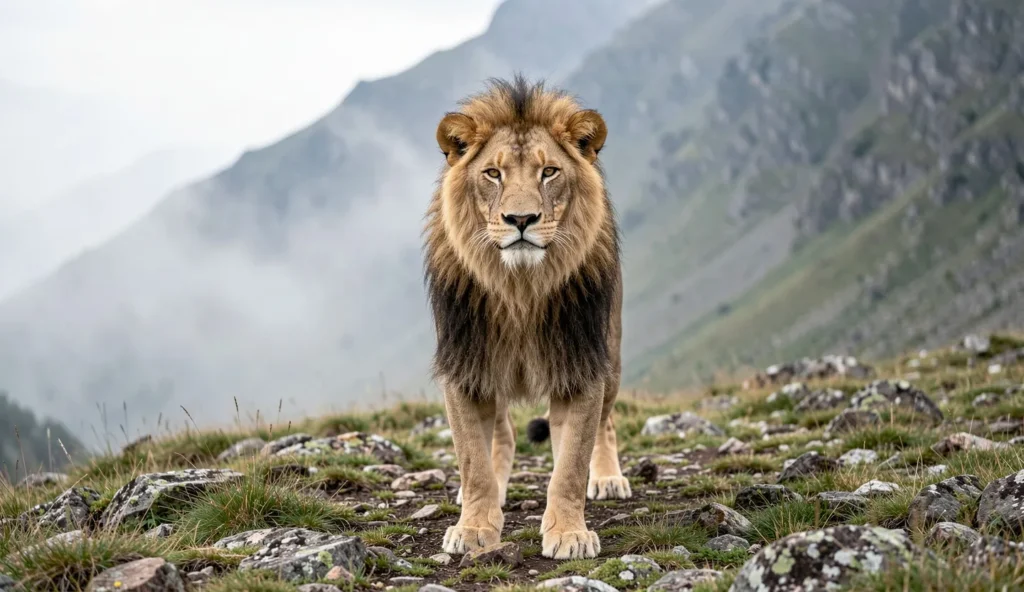
What Is the Ethiopian Highland Lion?
The Ethiopian highland lion refers to a lion population linked to Ethiopia’s upland regions, with field work often centered on the Bale Mountains. Researchers use the term to describe local lions that show signs of living under cooler, high-elevation conditions. This rare population is discussed alongside related naming categories that can feel confusing at first.
Because lion classification has changed over time, terminology in the literature can vary by study and year. For readers comparing sources, the most useful approach is to track what location and genetic evidence a study used. Some writeups also connect the topic to the broader term Abyssinian lion, even when they focus on highland ecotypes.
Where the Population Lives in Ethiopia
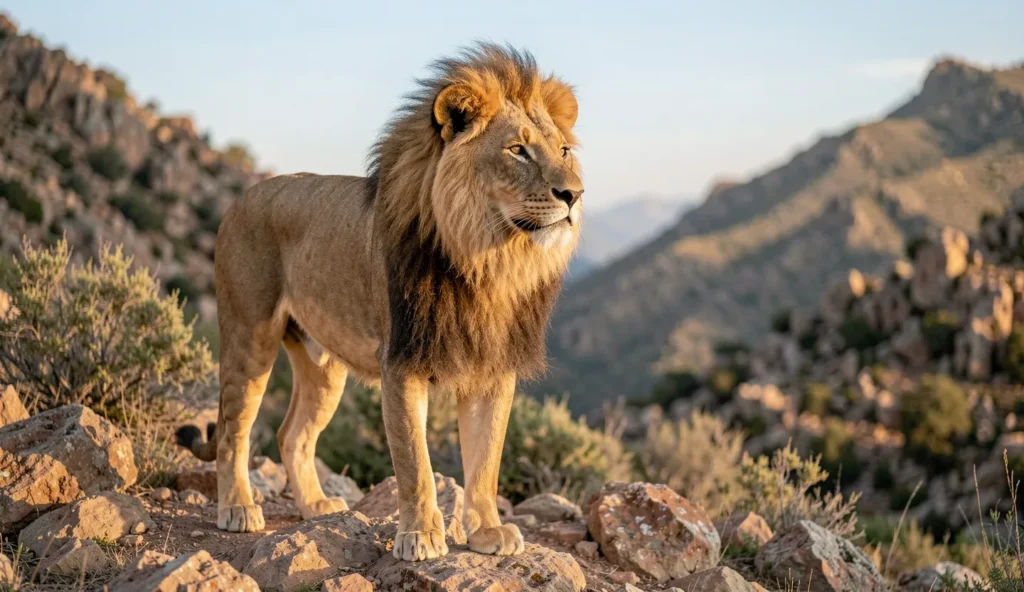
The best-known study area connects Ethiopian highland lion presence to the Bale Mountains and nearby highland habitat. This region includes steep slopes, rocky ground, and grassland patches that shift seasonally. Those conditions influence both where lions travel and where researchers can reliably detect them.
High elevations bring cooler nights and strong daily temperature swings. Seasonal changes also affect cover density, which can alter movement and hunting routes. Rugged terrain further limits sightings, so field data often comes from indirect evidence like tracks and camera detections.
How Researchers Use Names and Classifications
Different authors sometimes use overlapping names when describing regional lion groups, including terms that resemble Abyssinian lion. Older classification discussions have also referenced Panthera leo roosevelti in some regional contexts, which contributes to the confusion. In practice, modern studies usually separate populations by geography and then test identity using genetic sampling.
Research teams then decide whether a label best matches the data. Sometimes the same common name appears in different papers, but the sampling area may not match. That is why comparing study methods matters when evaluating claims about Ethiopian highland lion traits.
Why the Breed Is Considered Rare
Ethiopian highland lion is considered rare because the population has limited distribution and reduced long-term numbers in study areas. Detectability also drops in steep terrain, so even if lions remain present, they may not be seen often. Researchers then treat camera trap rates and repeated detections as key inputs for estimating presence.
Rarity directly affects research feasibility, since small sample sizes can increase uncertainty. It also raises the urgency for conservation planning that protects both lions and their prey. For context on how regional lion populations differ, readers may also review the way African Lion patterns are described in other settings, such as the African Lion overview.
How High Altitude Shapes the Ethiopian Highland Lion
High-altitude living creates adaptive pressures that influence how an Ethiopian highland lion survives, moves, and hunts. Research questions focus on what changes can be measured under cooler temperatures and uneven ground. Over time, populations that persist in these areas may show traits linked to cold tolerance, efficient locomotion, and stable hunting behavior.
These pressures also shape how studies must be designed. Equipment performance, animal activity timing, and field accessibility can shift with weather and elevation. As a result, researchers often combine camera traps, GPS, and health scoring rather than relying on one method.
Environmental Pressures at Elevation
Cold nights and cooler daily temperature swings can influence when lions choose to travel and when they rest. Thin-air effects can also matter for activity patterns, especially during energetically demanding movement. In upland zones, lions often rely on a mix of open areas and sheltered cover.
Rugged terrain changes movement routes and can alter hunting success. Steep slopes, rocky ground, and uneven footing influence how quickly a lion can pursue prey. These factors also affect where the most likely ambush and stalking opportunities occur.
Physical Trait Changes That Research Looks For
Researchers pay attention to coat and fur density as a possible response to cooler climates. Fur that appears denser during colder seasons could support warmth retention and comfort during nighttime rest. However, seasonal variation must be accounted for because lighting and weather can change how coat traits look on camera.
Body size and body condition may also vary with prey availability and competition pressure. Limbs and paw characteristics can matter for movement across uneven ground, though researchers usually approach these observations cautiously. The goal remains to connect measurable traits with credible field evidence.
Behavior Patterns Linked to Highland Survival
Behavior often shifts in timing and route planning across seasons. Lions may adjust hunting windows based on temperature, daylight, and prey movement patterns. In some highland settings, group use of cover and travel corridors becomes more important when exposed routes become costly.
Shelter selection can also increase in importance during colder periods. Dens, rock shelters, and protected grassland pockets may provide better thermal conditions. When researchers interpret behavior, they therefore consider how habitat features support both rest and hunting.
What Field Studies Measure in These Areas
Field studies frequently rely on camera trap surveys to record presence and activity timing across days and seasons. Researchers then pair that with GPS tracking to estimate movement and home range use. Health and body condition scoring during observations helps connect behavior with survival needs.
Because altitude affects both animals and equipment, study design must include weather-proofing and careful scheduling. For example, battery life and signal strength can drop in cold conditions. That is why repeated sampling often matters more than short visits when studying an Ethiopian highland lion.
Appearance and Physical Features to Look For
Appearance reporting for Ethiopian highland lion populations often focuses on traits visible in the field or on camera. However, the evidence base can be limited, so descriptions should avoid overconfident claims. Instead, researchers and observers usually track variation ranges that can be rechecked across multiple detections.
Photographs taken in different seasons can show the same animal with a different coat look. Lighting, camera angle, and distance can also change perceived color. For these reasons, consistent observation notes support better comparisons than single-event impressions.
Coat Color and Fur Texture
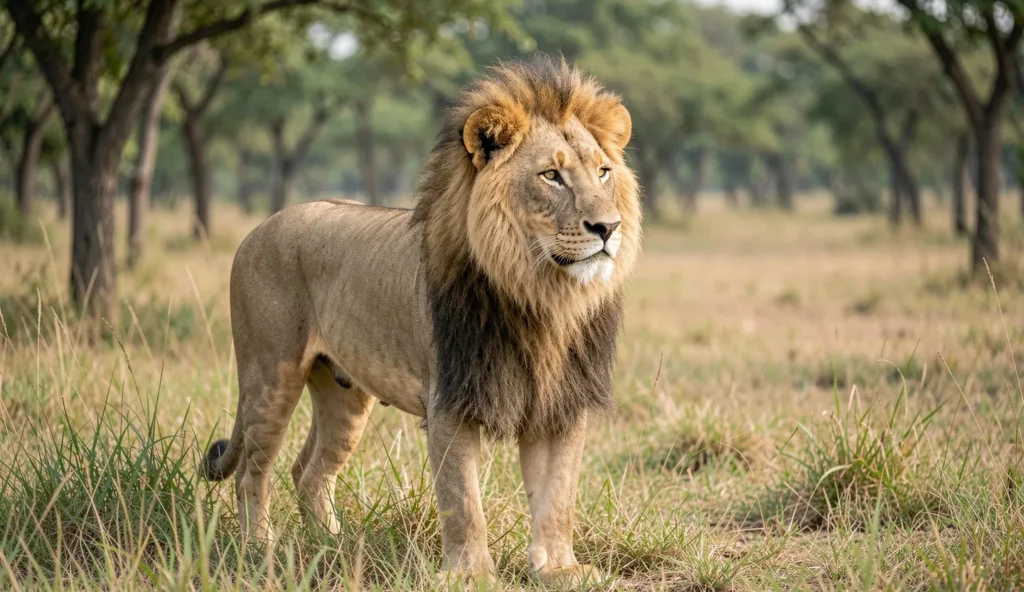
Coat color in highland areas can show variation in tone, often influenced by seasonal conditions. Some coats may look darker or richer under certain light angles, while others appear lighter when humidity and mist shift. Fur texture can also look denser during cooler months.
When recording coat features, observers typically document what camera settings and weather conditions were present. That practice helps separate real trait differences from visual artifacts. It also supports later comparisons between Ethiopian highland lion individuals and other regional lions discussed in literature.
Mane Differences and What to Record
Mane thickness can vary by age, sex, and individual growth patterns. In field work, researchers record mane traits as supporting details rather than a sole identifier. That approach helps when face angles and coat overlap limit clear views.
Simple observational traits can still improve consistency in notes. For example, mane coverage across the neck, visible density at rest, and overall grooming condition can be recorded from multiple angles. Observers should avoid using mane appearance alone to match an Ethiopian highland lion to a specific identity.
Body Size, Build, and Condition
Body condition often links to prey base and competition in a given season. When prey becomes less available, body condition can shift even if the lion remains healthy. Researchers then use scoring methods to estimate condition rather than relying on casual guessing.
Seasonal fluctuations can also occur, with animals sometimes looking leaner after demanding periods. Field notes often include a brief condition score along with date, location, and detection context. This makes it easier to compare health trends over time.
Claw, Paw, and Ground Movement Indicators
Paw structure can matter when lions move across steep, rocky ground. Tracks and ground wear can offer clues about how often animals use certain routes. Still, track quality depends on soil type and weather, so interpretation must account for conditions.
Researchers also watch movement style in camera footage when possible. Uneven ground can lead to different stepping patterns, especially during pursuit or quick turns. These indicators are supportive signals, not proof of any single adaptation.
Temperament, Social Structure, and Hunting Style
Social structure and hunting style influence how an Ethiopian highland lion uses space. In highland terrain, group movement and cover choices can differ from lowland regions. While lion temperament varies by individual, study teams usually focus on patterns that can be measured and repeated.
For conservation monitoring, consistent behavior measures also help separate true population presence from short-term chance encounters. Over time, that improves mapping accuracy and supports protection decisions for both lions and prey.
Lion Pride Organization in Rugged Landscapes
Pride organization can support cooperative hunting and shared rearing of young in a range of habitats. In rugged landscapes, pride movement can become more constrained by safe travel corridors. Boundaries may still exist, but the shape of those boundaries can reflect terrain features.
During harsh seasons, some lions may show more solitary behavior or reduced group contact. That can reduce detection rates and increase uncertainty for short-term surveys. Therefore, monitoring programs often extend across multiple months to capture seasonal shifts in Ethiopian highland lion behavior.
Hunting Timing and Prey Availability
Temperature and daylight shape activity windows, which affects when hunting attempts occur. Cooler conditions may shift both lion movement and prey behavior, changing the most productive hunting times. In highland areas, route familiarity and cover density often guide stalking decisions.
Prey types can vary across regions, and researchers avoid naming prey with certainty when direct confirmation is limited. Instead, they describe prey presence in broad ecological terms based on available observations and habitat assessments. This cautious approach prevents incorrect assumptions about what drives survival.
Response to Human Presence and Monitoring
Researchers typically avoid predictable behavior patterns because they can change animal responses. Habituation can also influence observation quality, especially when repeated visits occur from the same route. That can affect camera placement and the reliability of activity timing.
Vehicle traffic and tourism pressure can add risk in certain areas. Monitoring programs often adjust protocols to reduce disturbance while still collecting useful data. These constraints matter because Ethiopian highland lion populations are already difficult to detect.
Communication and Territory Marking
Lions use scent signaling and visual cues to communicate identity and reproductive status. Territory overlap can affect conservation planning, since different prides may use the same corridors. Marking intensity can also vary with season and food stress.
Researchers then connect territorial behavior to observed movement patterns from GPS data and camera detections. When territory use shifts, the likely causes include prey shifts, seasonal weather, and disturbance levels. Understanding these drivers helps explain why Ethiopian highland lion sightings cluster in some habitats.
Research Methods Used to Study Ethiopian Highland Lions
Conservation science studies Ethiopian highland lion traits through a combination of field ecology, genetics, and health monitoring. The priority stays on noninvasive methods that can work in rugged highland terrain. Results then inform what protections are most likely to benefit both lions and prey.
Because direct observation can be limited, the research workflow often begins with presence data. It then expands into identity, movement, and body condition measures to answer specific adaptation questions. Where classification overlaps appear, genetics helps clarify what populations are truly distinct.
Genetics and Population Identity Studies
Genetic sampling helps clarify regional identity and can test whether a local group matches older names. Limited samples increase uncertainty, so researchers interpret results with careful confidence limits. Comparative work may reference lineages discussed in relation to Abyssinian lion labels or other regional terms.
In some discussions, researchers contrast local populations against categories associated with Panthera leo roosevelti. These debates matter because correct identity supports accurate conservation planning. For additional background on lion lineage discussions, reviewing a Ethiopian Lion overview can help readers understand how naming and research questions have evolved.
Camera Traps and Photo Based Identification
Camera traps provide repeated detections that support presence and activity timing estimates. Photo based identification can also build individual recognition records when markings stay visible over time. Researchers then compile consistent visual traits like mane shape and coat markings across multiple images.
Altitude and weather can affect camera performance, including exposure and battery life. That is why field crews often use multiple units and rotate placement to cover key movement corridors. For highland populations, careful placement can determine whether an Ethiopian highland lion is recorded enough times to estimate patterns.
GPS Tracking and Movement Analysis
GPS tracking helps identify movement corridors by mapping location points over time. The data also support estimates of home range size and habitat use patterns. Because travel speed and resting time can shift with elevation and cold, movement analysis includes seasonal segments.
Researchers also use movement metrics to evaluate whether highland corridors connect important feeding areas. When corridors become fragmented, movement becomes harder and long-term survival can decline. That connection is central to how researchers interpret Ethiopian highland lion adaptation in the Bale Mountains.
Health Screening and Body Condition Monitoring
Health screening often uses noninvasive scoring during field checks. Researchers track body condition, visible injury signs, and signs of parasites when possible. Stress markers can also be indirectly evaluated through condition trends and observed behavior in cold periods.
Injury and parasite tracking matter because survival depends on maintaining mobility and hunting efficiency. Even when lions look healthy at first glance, repeated checks reveal longer-term changes. This health information helps conservation teams prioritize areas where Ethiopian highland lion survival is most fragile.
Conservation Priorities and What Protection Looks Like
Conservation work for Ethiopian highland lions focuses on habitat function, prey stability, and reduced conflict risk. Research findings often translate into practical steps that protect highland corridors and minimize disturbance. Because the population remains rare and hard to detect, protection planning must use strong evidence and long-term monitoring.
Protection also depends on local land use patterns. When highland areas lose connectivity, prey movement can change and lion survival becomes more challenging. Therefore, conservation strategies often treat lion protection as part of broader ecosystem management.
Habitat Protection in the Bale Mountains
Habitat protection centers on maintaining highland corridors and refuges that lions use across seasons. These areas support both hunting and shelter during cooler nights. Land pressure can fragment hunting grounds, which raises energy costs and can reduce successful hunts.
Prey conservation links directly to lion survival, since prey availability determines body condition and reproductive success. When prey declines, lions may roam farther into marginal areas. Habitat protection then becomes the foundation for stabilizing Ethiopian highland lion populations.
Reducing Threats From Conflict and Human Expansion
Human expansion can increase the chance of livestock depredation in highland margins. When depredation events occur, conflict risk rises for both people and lions. Conservation programs typically aim for rapid response strategies that reduce harm and support coexistence.
Nonlethal deterrence approaches can reduce repeat conflict while keeping lions alive. Community based monitoring and education also help align local reporting with research needs. Readers interested in how different regions manage lion pressures can compare with other lion populations, such as the West African Lion context where detection and protection challenges also matter.
How Breeding Style Research Supports Long Term Survival
Lions reproduce through natural pride dynamics shaped by food availability and safe habitat. Long-term survival depends on maintaining stable social groups and connectivity across the landscape. When corridors remain intact, the chance of maintaining genetic diversity improves.
Breeding style research supports conservation by tracking how seasonal conditions affect reproduction timing and survival rates. Ongoing monitoring also helps detect changes early, before declines become obvious in camera trap logs. That is especially important for a rare Ethiopian highland lion population.
What Responsible Wildlife Enthusiasts Can Support
Responsible wildlife enthusiasts can support conservation by respecting protected area rules and keeping safe distances. Safe distance reduces stress and helps researchers maintain reliable observation conditions. Enthusiasts can also support research funding for field teams that conduct camera and GPS work in-region.
Credible sightings, when reported through appropriate channels, can improve mapping of habitat use. Enthusiasts should avoid spreading uncertain identification claims that may confuse future surveys. For readers comparing how other big cats are discussed in population research, an Katanga lion overview shows how regional descriptions can vary across study contexts.
Is the Ethiopian Highland Lion a Good Fit for Research and Conservation Focus?
Ethiopian highland lions attract research attention because they sit at the intersection of rarity and measurable environmental pressures. High-altitude adaptation offers specific questions about coat traits, movement strategy, and health outcomes under cooler conditions. At the same time, limited encounter rates and complex naming history increase the need for careful evidence.
For conservationists, this focus can support practical priorities like corridor protection and conflict mitigation in highland margins. For pet breed researchers, the key value comes from careful naming and evidence based classification rather than assuming simple breed equivalents. The topic therefore fits best when clarity and field methods drive the interpretation.
Who Should Focus on This Population
- Wildlife enthusiasts interested in high-altitude adaptation
- Conservationists prioritizing habitat fragmentation and conflict mitigation
- Pet breed researchers using careful naming and evidence
What Makes It Challenging to Study
- Rugged terrain limits access and continuous monitoring
- Low encounter rates reduce sample sizes
- Naming and classification debates need strong genetic evidence
FAQs: Ethiopian Highland Lion
Where Do Ethiopian Highland Lions Live In Ethiopia?
They are associated with the Bale Mountains and surrounding highland habitats.
Are Ethiopian Highland Lions The Same As Abyssinian Lions?
They are often discussed with older regional names, but classification depends on research evidence.
What High Altitude Adaptations Do Researchers Look For?
Researchers examine coat and fur traits, movement patterns, and health measures under cooler conditions.
Why Is The Ethiopian Highland Lion Considered Rare?
Rarity is linked to limited distribution, fewer animals, and low detectability in rugged terrain.
How Do Camera Traps Help Study Ethiopian Highland Lions?
Camera traps provide repeated detections and activity timing used to estimate presence and movement.
Final Note on Ongoing Ethiopian Highland Lion Research
Ethiopian highland lion research continues to improve as field methods and genetic tools become more precise. Better data supports stronger conservation decisions for rare lion populations in high-elevation habitats.