What Is The Eurasian Cave Lion
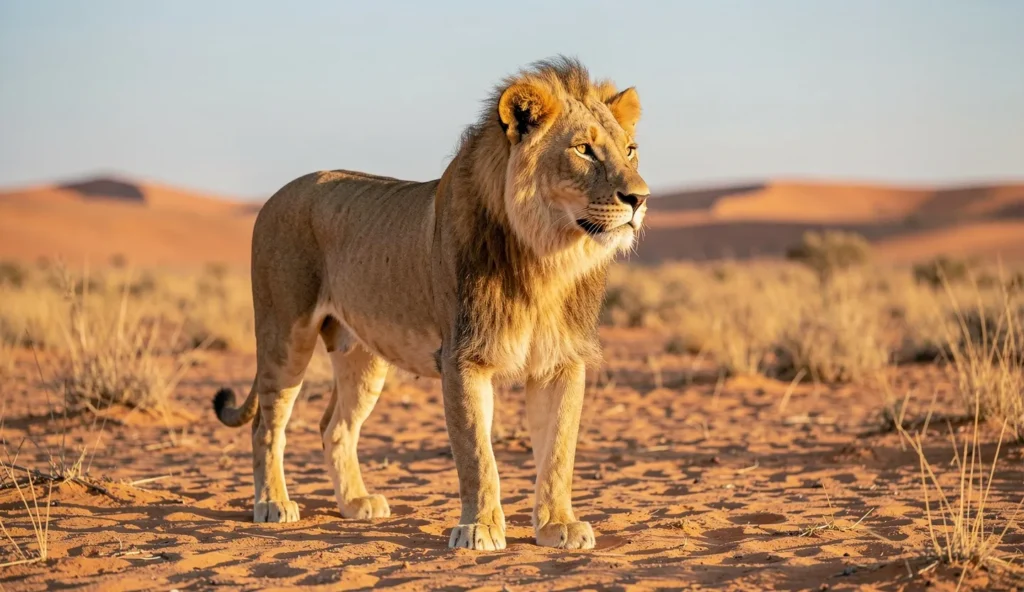
The Eurasian cave lion profile focuses on an extinct big cat tied to the lion lineage in the genus Panthera. The species is commonly cited as Panthera leo spelaea, and it is often described as an Ice Age lion across Eurasia. Fossils and cave art provide the main evidence used to reconstruct its look and ecology.
Because the animal no longer exists, every statement must rely on measurable evidence. Researchers weigh fossil anatomy, the spacing of remains, and the consistency of cave depictions. That evidence approach helps keep the cave lion profile grounded in what can be supported.
Scientific Name And Common Names
Panthera leo spelaea is the commonly used scientific name for the cave lion form in Eurasian regions. Popular sources also call it cave lion or Ice Age lion. It belongs to Panthera, which includes modern lions and other big cats in the same broad lineage.
Where It Lived In Eurasia
Fossil records connect this extinct lion form to Eurasia during cold phases of the late Pleistocene. Remains have been reported in multiple areas of Europe and neighboring Eurasian regions. The broader ecosystem likely included steppe-like grasslands and colder open habitats.
Those landscapes supported large herbivores, which in turn created hunting opportunities for big cats. However, fossil sites do not map the entire range with perfect accuracy. Instead, they show where preservation happened and where sampling occurred.
How Researchers Know About It
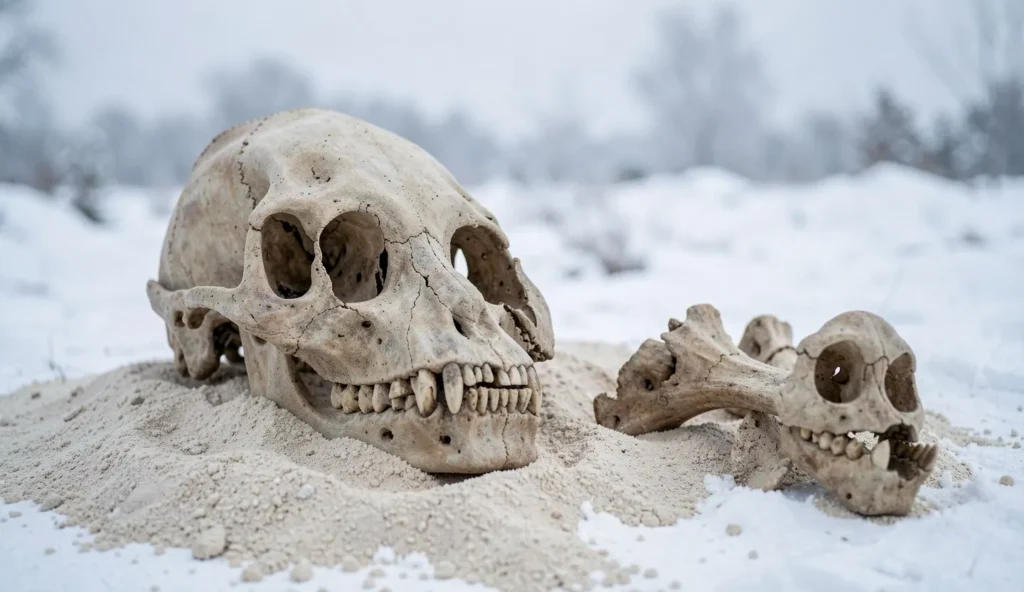
Researchers rely on fossils, fragmentary remains, and comparative morphology to build a cave lion profile. Bones and teeth allow scientists to estimate body proportions, feeding mechanics, and overall build. When bones are dated using geologic and radiometric approaches, they help narrow the time window.
In parallel, cave paintings offer visual clues about mane and body posture. Those depictions can match the general silhouette of large maned felids, but they rarely provide enough detail for strict species-level ID alone. Therefore, fossil evidence usually carries more weight for anatomy and size.
Appearance And Physical Traits From Fossils And Cave Art
Physical traits in a cave lion profile come from two imperfect sources: fossils and cave art. Fossils allow direct measurements of skull size, limb proportions, and tooth form. Cave paintings help confirm whether artists portrayed lions as large and maned, but they cannot prove fur texture or exact species identity.
To avoid overreach, researchers typically prioritize what bones and teeth can demonstrate. Then they compare that anatomy with repeated motifs in cave art, looking for consistency rather than isolated details.
What Fossils Reveal About Body Size And Build
Fossil measurements suggest a large felid build with robust limb and shoulder features. Skeletal proportions often indicate a substantial body mass for hunting and movement across open terrain. Bone structure also supports strong locomotion, which matters in wide, cold landscapes.
Because specimens can differ in age and preservation quality, estimates range rather than producing a single fixed number. Still, the overall morphology aligns with a big-cat form that could take large prey in Eurasian habitats.
Coat And Mane Clues From Visual Evidence
Cave art frequently depicts thick manes on large lions, and that motif matches a lion-like head and neck impression. The repeated presence of maned heads in artwork supports the idea that the animals were often portrayed with a prominent mane. Fossils cannot show fur texture directly, yet they can support the body shape that would carry that head and neck mass.
Even so, artistic choices may exaggerate traits for visibility. That means mane depiction should be treated as supportive rather than definitive proof of coat thickness. In the cave lion profile, mane evidence works best as a pattern across multiple sites.
Skull, Teeth, And Jaw Features
The skull shape is consistent with the lion lineage in Panthera, including the overall arrangement of cranial features. Teeth show adaptations for meat slicing and strong biting in a predator that consumed large vertebrate prey. Jaw and tooth patterns help explain feeding mechanics such as kill bites and processing jaw movement.
Compared with smaller carnivores, big cats usually show a combination of canines for grasping and specialized cutting teeth. That feeding design fits a late Pleistocene predator living where herbivore biomass could support repeated hunts.
Tail, Legs, And Overall Silhouette In Cave Paintings
Many cave depictions present the animal in crouched or standing postures that emphasize power and readiness to spring. Leg proportions shown in artwork suggest a heavy, stable stance rather than a narrow or high-striding body. Artists also often highlighted the head profile and maned shape to communicate lion identity visually.
Researchers treat silhouette comparisons as clues, not direct measurements. When fossil limb proportions and art motifs align, the cave lion profile gains strength. When they conflict, scientists usually trust fossil anatomy more.
Common Misinterpretations And What To Verify
One common issue involves assuming every cave drawing equals a specific extinct species. Some cave imagery may mix animals, symbols, or exaggerated traits that do not reflect anatomy exactly. Another risk is using art to claim coat or fur texture, since drawings rarely provide enough detail for fur-level accuracy.
To verify claims, researchers prioritize fossil evidence for size and skeletal anatomy. Then they test whether cave paintings consistently portray the same general features, such as a maned head and lion-like posture, across regions.
Temperament And Likely Behavior In Ice Age Environments
Behavior in the Eurasian cave lion profile must be reconstructed indirectly because no direct observation exists. Scientists infer likely behavior by comparing the species’ ecology with modern lion behavior and other big-cat patterns. That said, extinct lions may have differed in social behavior, hunting frequency, and movement patterns.
Therefore, behavior statements should stay probabilistic and tied to evidence. Fossil context can hint at hunting range and habitat use, while broader comparisons with living big cats help fill in likely options.
Social Structure Possibilities
Modern lions often form social groups called prides, but social flexibility varies with environment and prey distribution. For an extinct cave lion, direct fossil proof of social structure does not exist. Some fossil distributions can suggest repeated use of areas that might fit group behavior, yet such patterns cannot confirm prides.
Researchers often treat social structure as a spectrum rather than a single fixed model. In cold open habitats, group living could reduce individual risk and improve hunting efficiency. However, it could also increase competition for prey during harsh seasons.
Hunting Strategy In Cold Open Habitats
Ice Age landscapes supported large herbivores across many Eurasian regions, which likely shaped predator hunting opportunities. Open habitats can favor ambush or coordinated hunting depending on prey movement and seasonal clustering. Predator success depends on prey density, the ability to approach undetected, and how often kills can be made efficiently.
Large body size helps big cats manage energy demands, but cold also increases the cost of movement. As a result, hunting strategy likely shifted with snow cover and the seasonal movement of prey herds.
How Environmental Stress May Have Shaped Behavior
Cold climates can affect energy needs, time spent active, and the efficiency of long-distance movement. A large body can help retain heat relative to smaller carnivores, which may support more consistent hunting windows. Competition with other Ice Age carnivores also likely influenced where lions hunted and how often they defended kills.
When multiple predators overlap, scavenging and opportunistic feeding can become more common during lean periods. Those pressures help explain why behavior may have looked different across regions with different climates and prey abundance.
Diet And Feeding In The Late Pleistocene
The Eurasian cave lion profile for diet relies on predator anatomy, known lion feeding mechanics, and reconstructed prey communities. Fossils show teeth and jaw features built for processing meat, and those traits point toward a carnivorous lifestyle. Direct stomach contents never appear for this extinct lion form, so the diet must be inferred.
When multiple evidence lines match, the likely prey list becomes more convincing. When evidence conflicts, scientists usually stay cautious and describe broader prey categories rather than specific species claims.
Likely Prey Types In Eurasia
Late Pleistocene Eurasia held many large herbivores, and those populations often defined predator diets. Predation likely focused on prey sizes within what a large lion could bring down and handle. Seasonal migrations may have concentrated animals into corridors or grazing hotspots, which would make hunting more predictable.
Instead of a single prey species, the diet likely included multiple herbivore types across the range. That pattern matches how modern large predators adjust feeding when prey abundance changes.
Evidence From Teeth And Feeding Mechanics
Carnassial teeth in big cats help slice meat, supporting efficient consumption during active feeding sessions. Strong canines and jaw mechanics support killing bites followed by processing with cutting teeth. Those traits fit a predator that targets large vertebrate prey rather than relying mainly on small animals.
In harsh seasons, scavenging may have complemented hunting when kills were harder to make. Even in lions, opportunistic feeding can help stabilize energy intake when prey becomes scarce.
What Caution Is Needed When Assigning Exact Diet
Assigning an exact prey list depends on context that fossils rarely provide for this species. Stable isotope analysis can help in some projects when samples are available, but isotopes do not always reach every specimen. Food web reconstructions also require multiple lines of evidence, such as herbivore abundance estimates and site-specific environmental data.
Therefore, the cave lion profile typically describes diet in prey categories and ranges. That approach stays aligned with the strength of the available evidence.
Habitat And Climate Adaptations During The Ice Age
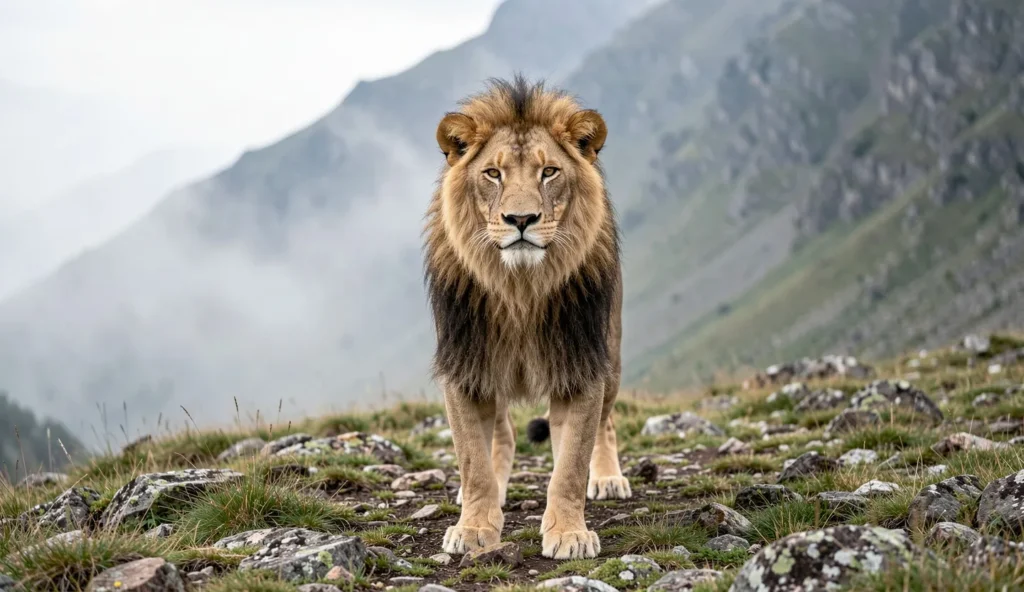
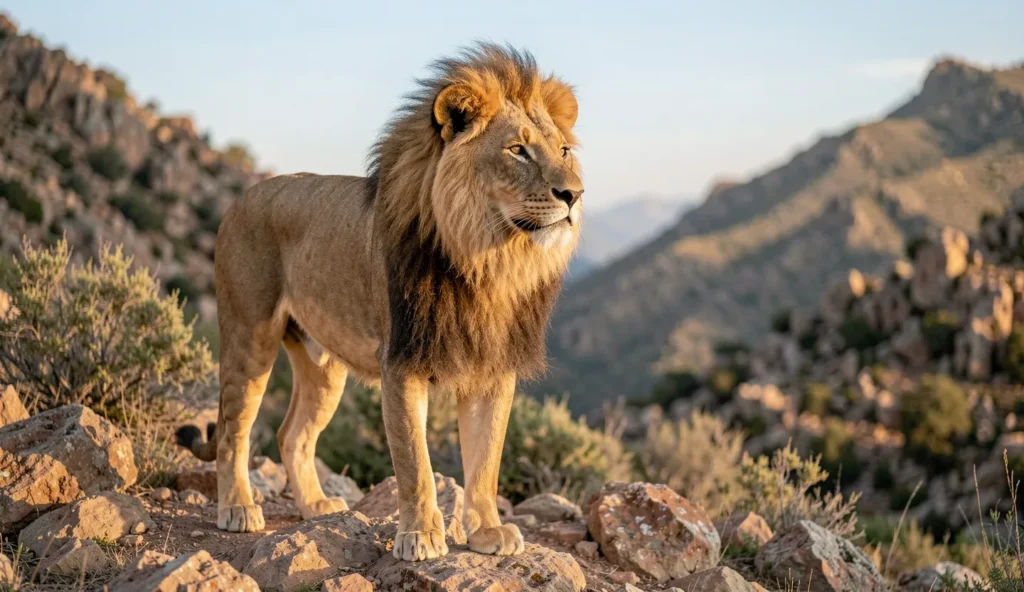
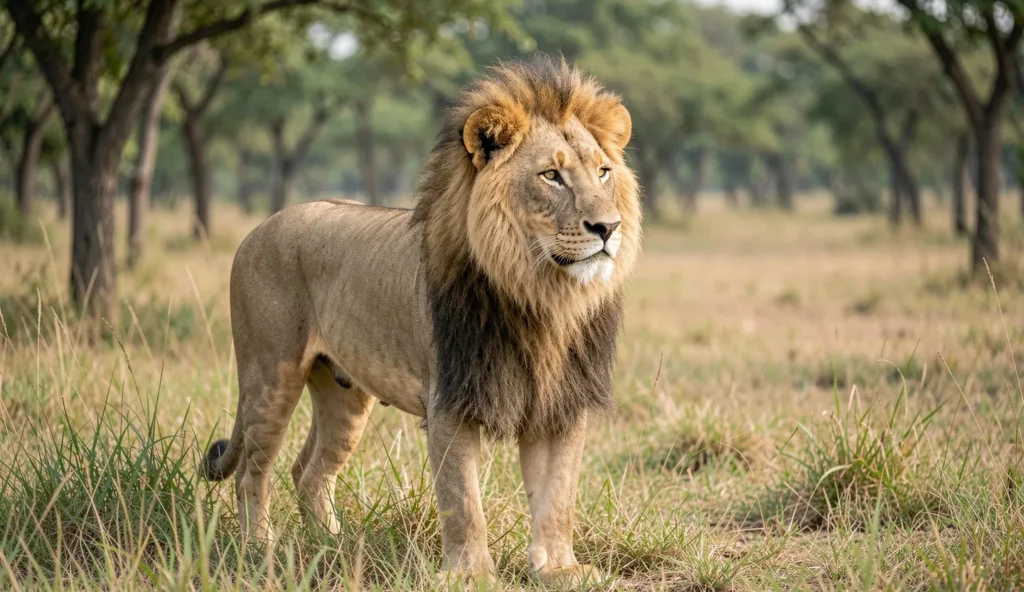
Habitat reconstruction places the cave lion within cold, open Eurasian ecosystems shaped by Ice Age conditions. Those environments can include grassland, steppe, and areas influenced by seasonal snow and wind. The setting matters because it changes how prey moves and how predators need to approach and hunt.
Physical traits in a cave lion profile likely reflect that lifestyle, even though fur texture and behavior details remain limited. Researchers instead rely on body form and broad functional interpretations to describe climate adaptations.
Cold Steppe And Grassland Living Conditions
Eurasian Ice Age ecosystems often included steppe and grassland elements that supported high herbivore biomass. Wind and low temperatures increase energy demands for animals with large bodies and active hunting schedules. Snow cover and seasonal shifts can also change prey movement and visibility.
In turn, predator strategy can shift from short surprise ambushes to timing hunts around times when prey compresses into accessible terrain. That timing effect becomes more important when snow deepens or when weather restricts movement.
Potential Physical Adaptations For Cold Weather
Large body size can reduce heat loss compared with smaller animals by lowering surface area relative to volume. Mane depiction in cave art suggests that artists saw a prominent head and neck display, which could also relate to insulation in cold conditions. Still, fossil evidence supports overall big-cat form more clearly than it supports fur-level insulation claims.
When insulation is discussed, researchers usually treat it as plausible rather than proven. The safest statements link climate pressures to general body size and functional build.
Competition With Other Ice Age Carnivores
Overlap with other Ice Age predators likely occurred because large carnivores often share landscapes when prey densities rise. Resource partitioning can reduce direct competition by shifting prey size targets or changing hunting times. In cold regions, competition pressure can also vary by local prey availability.
Where prey became abundant, large predators could coexist more easily. Where prey declined, larger competitors could push others toward scavenging or alternative hunting strategies.
Understanding how multiple big cats competed in Eurasia also helps compare extinction patterns across lion relatives. For example, examining how other lion forms adapted or persisted can provide context, such as differences discussed in the African Lion ecology and its relationship to prey-rich habitats.
Why It Went Extinct And What Its Legacy Shows About Evolution
Extinction explanations for the Eurasian cave lion profile involve multiple hypotheses, since no single cause can be proven from fossils alone. The most discussed drivers involve climatic shifts that changed prey availability and habitat structure across the late Pleistocene. Other hypotheses include human interaction impacts, though the strength of evidence varies.
Even with uncertainty, the cave lion profile supports broader evolutionary lessons about how climate can reshape traits in Panthera lineages across Eurasia.
Climatic Shifts And Changing Prey Availability
The end of Ice Age conditions altered ecosystems and changed how herbivores distributed across the landscape. Loss of steppe-like environments could reduce predictable hunting grounds and affect prey herd movement. Rapid ecological change can also stress large predators that depend on stable prey access.
As habitats shift, populations can fragment, and small groups may struggle to maintain genetic diversity. That process can raise extinction risk when combined with additional pressures like disease, competition, or low prey density.
Human Interactions As A Hypothesis
Humans coexisted with Ice Age large carnivores, and that overlap can create multiple pressure pathways. Cave art indicates cultural attention to large felids, but art alone cannot prove hunting or cause-and-effect extinction. Researchers typically describe human interaction as a possible stressor rather than a confirmed driver.
To support a strong link, evidence would need to show direct damage on remains, consistent kill patterns, or other site-based proof. Without that, the cave lion profile keeps human influence as a hypothesis within the wider set of explanations.
Evolutionary Takeaways For Panthera In Eurasia
Extinct lineages show how climate change can reshape trait expression within lion relatives over time. Morphological differences across lion forms may reflect local adaptation to prey types, habitats, and seasonal constraints. Comparative work across lion populations helps place these changes into a broader evolutionary framework.
Comparisons also highlight that different lion forms across Africa and Eurasia faced distinct environments. For context on regional variation, the Asiatic Lion profile can help frame how habitat and prey structure influence behavior and morphology in the lion lineage.
Is The Cave Lion Profile Useful For Modern Breed History
Some pet breed historians use extinct animal profiles to understand how symbols and human attention may shape cultural records. The Eurasian cave lion profile can support zoology and evolutionary learning, but it cannot connect directly to modern domesticated dog or cat breed ancestry. It shows how Panthera changed and how humans depicted large predators during Ice Age periods.
That distinction matters for accuracy. Fossil evidence can inform evolution and past ecosystems, while domestic breed lineages follow separate genetic routes.
What Can And Cannot Be Concluded For Domesticated Breeds
Extinct lions are not ancestors of modern domestic animal breeds. Cultural depictions of lions may influence art styles or symbols, yet they do not provide evidence for genetics or breeding history. The cave lion profile serves as historical context for evolution rather than a bridge to pet breed origins.
How Fossil Based Profiles Help Zoology And Evolution Studies
Fossil-based profiles support ecosystem reconstruction and help scientists compare past predator traits across time. In evolutionary studies, comparative morphology strengthens the understanding of how lion traits can change under different environmental pressures. It also teaches how to evaluate claims when evidence sources differ in certainty.
When similar extinct or rare carnivore forms appear in the record, researchers often use the same evidence standards. That approach also appears in profiles such as the Ethiopian Wolf, where distinguishing lineages requires careful review of fossil or morphological evidence.
Final Note On Interpreting Evidence For The Eurasian Cave Lion
The Eurasian cave lion profile works best when fossils guide the anatomy and cave paintings support general visual traits. When uncertainty exists, the evidence approach keeps interpretations grounded in what can be checked. That method lets paleontology fans and evolutionary biologists learn from the Ice Age lion without forcing unprovable details.
Frequently Asked Questions
How Do Scientists Confirm That Panthera Leo Spelaea Is A Distinct Cave Lion Form?
Researchers compare fossil bone measurements with other Panthera lions.
Do Cave Paintings Prove The Eurasian Cave Lion Existed?
Paintings support the presence of large maned felids but do not prove species identity alone.
What Did The Cave Lion Likely Eat During The Ice Age?
Diet is reconstructed from predator anatomy and Ice Age prey availability.
Where Have Eurasian Cave Lion Fossils Been Found?
Fossils are reported from multiple regions across Europe and Eurasia.
Why Did The Cave Lion Go Extinct?
Major hypotheses focus on climate change and shifting prey ecosystems.
Final Note On Interpreting Evidence For The Eurasian Cave Lion
The Eurasian cave lion profile shows how Ice Age ecosystems shaped lion evolution, using fossils and careful interpretation of cave art. Evidence limits still matter, and they help keep the picture accurate.