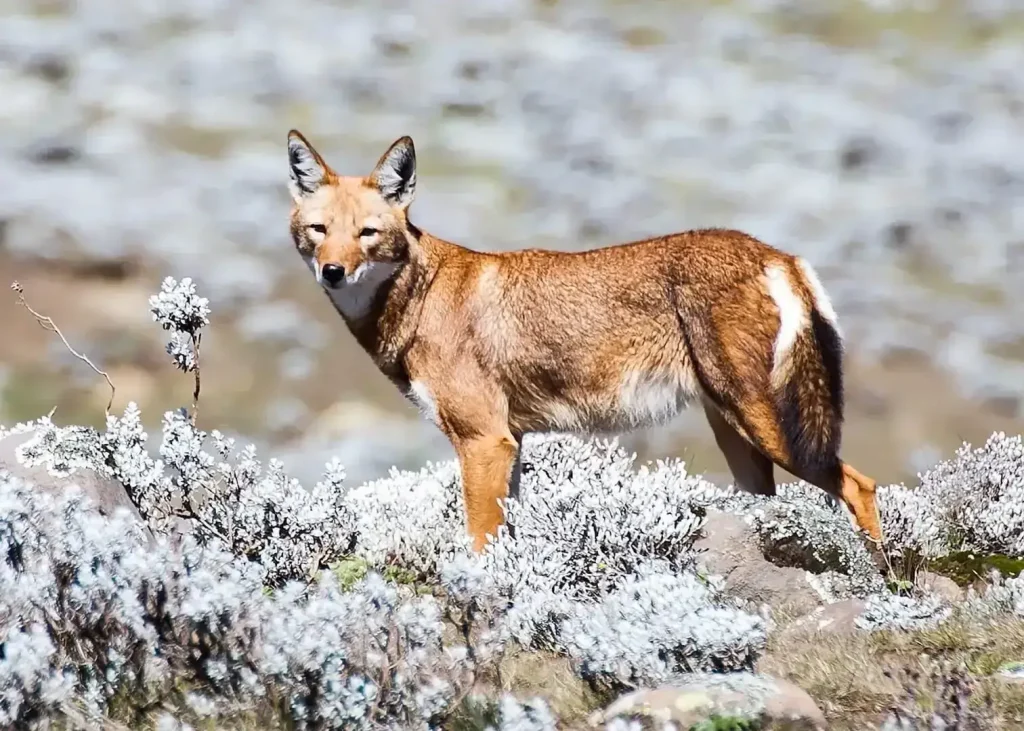
Ethiopian Wolf – Africa’s Rare Mountain Guardian
Meet the Ethiopian Wolf
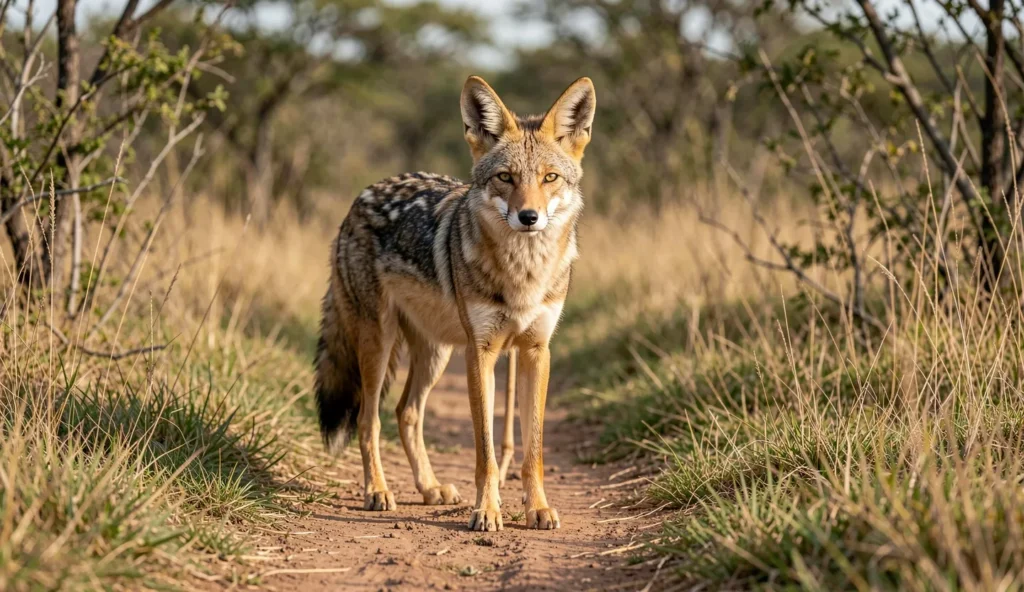
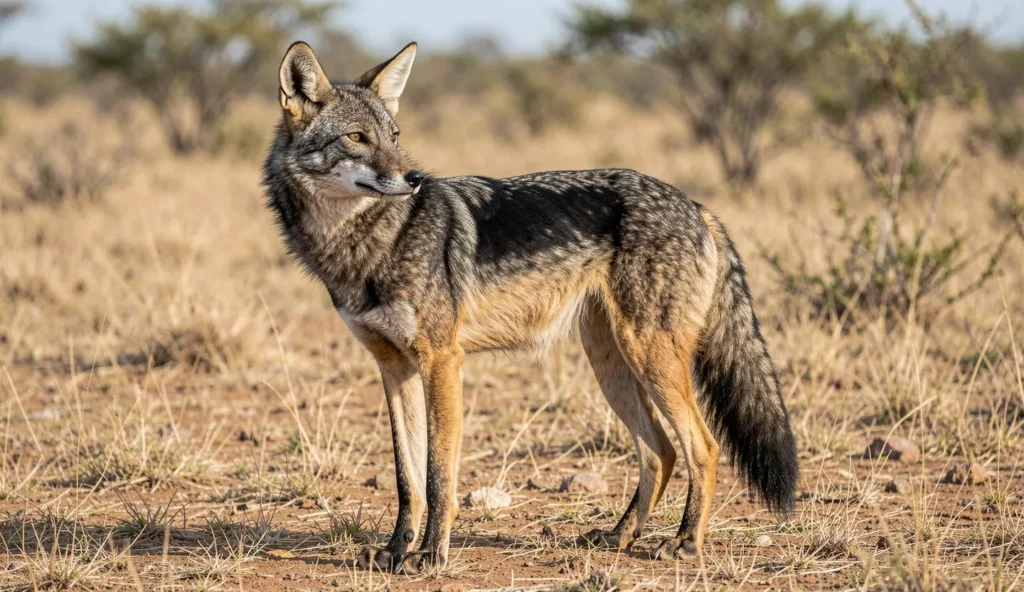
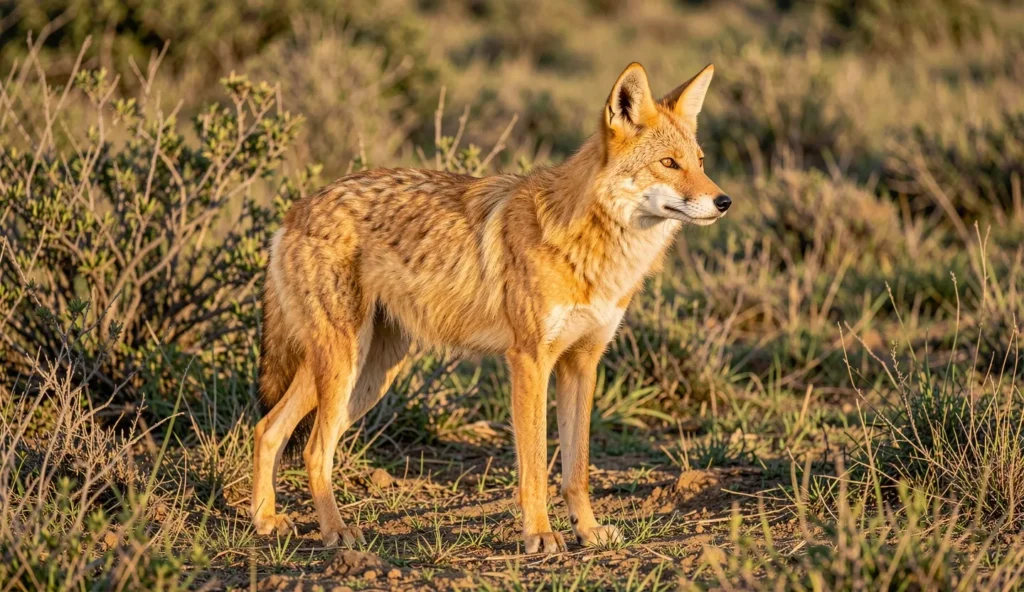
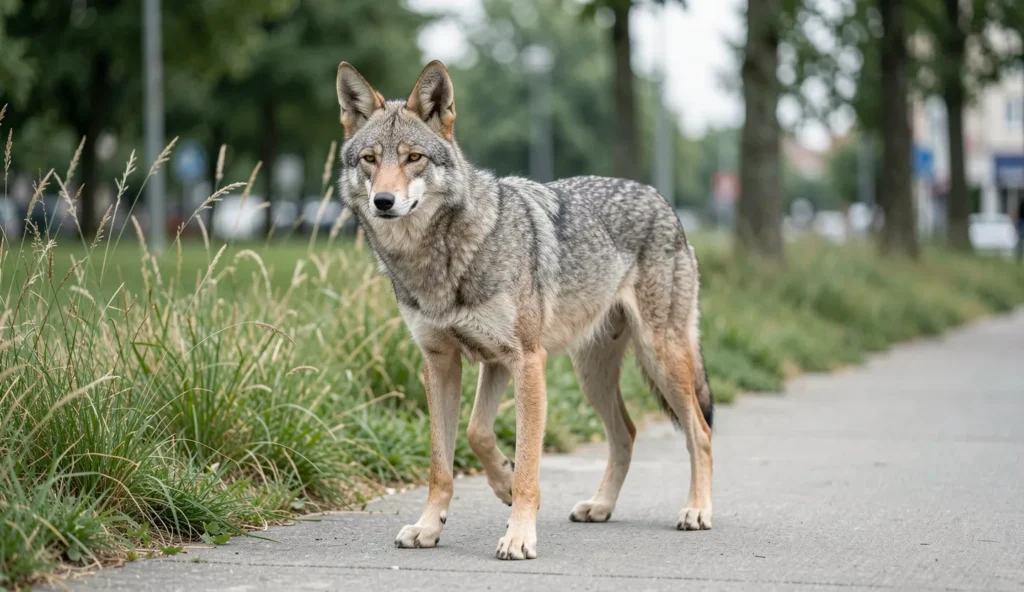
The Ethiopian Wolf (Canis simensis) is Africa’s most endangered carnivore and the rarest wild canid on Earth. Found only in Ethiopia’s breathtaking highlands, this fiery-coated predator thrives in cool alpine meadows. Unlike many other wolf species that hunt in large packs, the Ethiopian Wolf has evolved a unique solitary hunting style to catch small rodents. It plays a vital role in keeping rodent populations under control, maintaining nature’s balance in one of the most fragile ecosystems on the planet.
Quick Facts
- Scientific Name: Canis simensis
- Also Known As: Simien Jackal, Red Jackal
- Family: Canidae
- Status: Endangered (IUCN Red List)
- Location: Ethiopian Highlands
Unique Appearance
- Color: Bright reddish-orange with white underparts
- Length: 85-100 cm; Tail: 30-40 cm
- Weight: Males: 14-19 kg | Females: 11-14 kg
- Features: Long legs, slender body, narrow face, pointed ears
Life in Packs
- Pack Size: 6-13 members, usually led by one dominant breeding pair
- Communication: Through howls, barks, scent marks, and body gestures
- Territory: Each pack protects an area of 6-13 km2
- Hunting: Unlike most wolves, they hunt solo
Habitat in the Highlands
- Altitude: 3,000-4,500 meters above sea level
- Habitat: Open moorlands, grasslands, and Afroalpine meadows
- Regions: Bale Mountains, Simien Mountains, and five other highland zones
Diet and Hunting Skills
- Main Prey: Giant mole-rats, grass rats, and other alpine rodents
- Other Foods: Occasionally birds, young antelopes, and carrion
- Technique: Stalks silently and digs rodents out of burrows
Life Cycle
- Breeding Season: October to January
- Gestation: ~60-62 days
- Birth: 2-6 pups per litter, raised by the whole pack
- Lifespan: Up to 10 years in the wild
Major Threats
- Habitat Loss: Agriculture and expanding human settlements
- Diseases: Rabies and canine distemper from domestic dogs
- Hybridization: Interbreeding with domestic dogs
- Human Conflict: Persecution by farmers protecting livestock
Conservation Actions
- Legal Protection: National laws and endangered species status
- Protected Areas: Bale Mountains National Park and more
- Dog Vaccination: Prevents disease transmission
- Community Engagement: Education and local conservation support
Ethiopian Wolf vs Gray Wolf
| Feature | Ethiopian Wolf | Gray Wolf |
|---|---|---|
| Scientific Name | Canis simensis | Canis lupus |
| Size | Smaller (11-19 kg) | Much larger (30-80 kg) |
| Habitat | Ethiopian highlands only | Various habitats worldwide |
| Diet | Mostly rodents | Diverse prey (deer, livestock, etc.) |
| Population | ~500 left | Tens of thousands |
Fun Facts
- Africa’s Only True Wolf: The only wolf species native to the continent
- Fox-like Appearance: Often mistaken for a fox due to its slim body
- Ancient Lineage: Separated from gray wolves over 100,000 years ago
- Distinct Howls: Their haunting calls echo across the mountains
Cultural and Ecological Importance
- Highland Emblem: Deeply rooted in Ethiopian folklore
- Rodent Control: Keeps harmful pest populations in check
- Evolutionary Value: Offers clues about speciation and adaptation
Why They Matter
- Environmental Balance: Crucial predator in fragile highland ecosystems
- Indicator Species: Reflects the health of mountain habitats
- Conservation Symbol: Represents successful coexistence and stewardship
Frequently Asked Questions
Q1: Are Ethiopian Wolves dangerous?
A: Not at all. They are shy and avoid human contact.
Q2: How many are left?
A: Around 500 individuals remain, mostly in the Bale Mountains.
Q3: Can they be kept as pets?
A: No. They are wild and legally protected animals.
Q4: What’s being done for conservation?
A: Vaccination, habitat protection, education, and community programs.
Q5: How are they different from gray wolves?
A: Smaller, more specialized, and restricted to high-altitude Ethiopia.
Final Thoughts – Highland Heroes
The Ethiopian Wolf is not just rare – it is irreplaceable. As a keystone species of the African highlands, its survival ensures the well-being of countless others. Protecting this elegant predator means safeguarding an entire ecosystem. For comparison, the Himalayan Wolf faces similar high-altitude challenges in Asia, while the Red Wolf of North America shares a critically endangered status. Understanding these rare canids helps us appreciate the delicate balance of mountain ecosystems worldwide. Let us stand with Ethiopia’s mountain guardian.