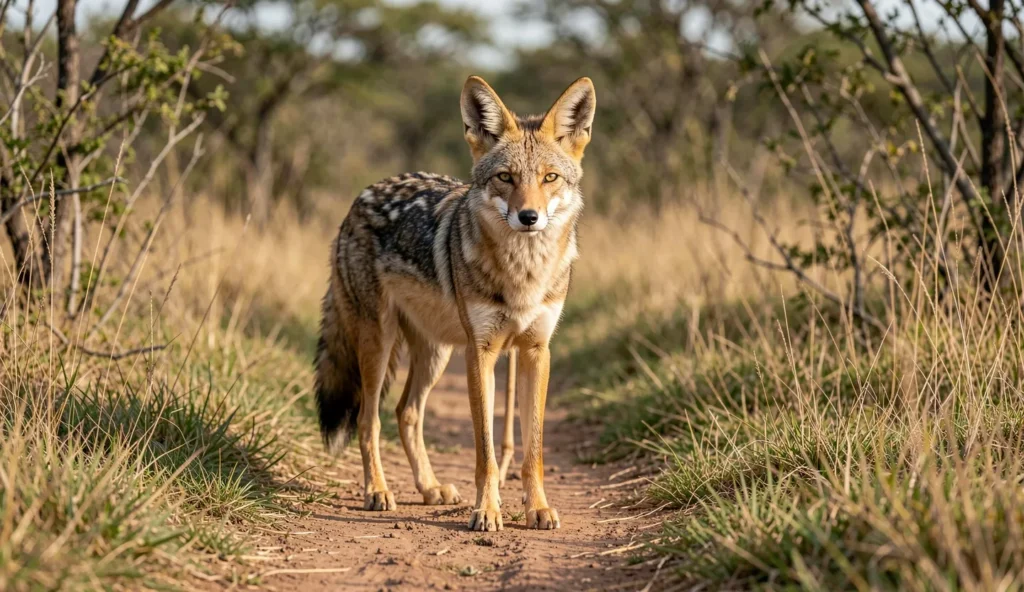
What Is The Side-Striped Jackal?
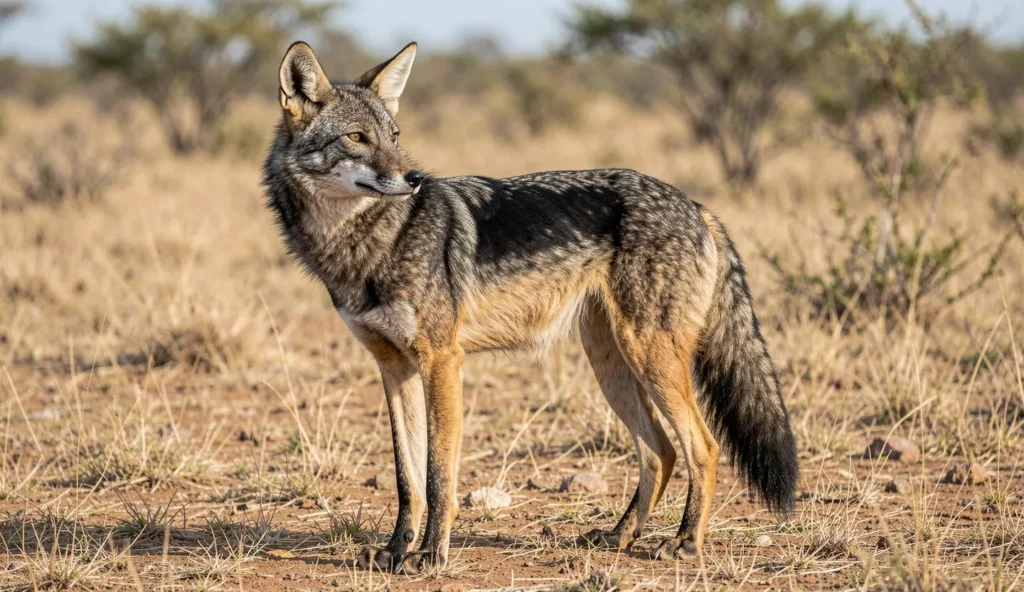
The side-striped jackal is a striped African canid known as Canis adustus. This species belongs to the jackal group within wolf-like canids, and it often shows clearer striping on the body than some nearby forms. Field work benefits from knowing the side-striped jackal’s baseline traits because it is sometimes described as less common than the black-backed jackal. When researchers start with accurate context, habitat and behavior observations become more reliable.
Scientific Classification And Common Names
The side-striped jackal uses the scientific name Canis adustus. The common name reflects visible striping patterns along the body, which can guide first-pass identifications in the field. It is frequently grouped with African jackal species under the broader striped canid concept because several jackals share similar builds and hunting roles. Compared with black-backed jackal work, encounter rates for this species can be lower, which affects survey planning and detection goals.
Key Field Identifying Traits
Identification starts with side striping and coat texture in good light. Researchers should note body size and overall silhouette, since small differences in stance and proportions can reduce misclassification. Face pattern and tail appearance also help, especially when a clear profile appears in camera images. For re-checks, the same photo angles should be captured and archived when feasible, because consistency supports verification among observers.
Where The Species Fits In The Ecosystem
In many sites, the side-striped jackal functions as a mid-sized mesopredator. It interacts with carrion, small mammals, and fruiting plants, which links it to both scavenging and active hunting. After seasonal changes, it may track prey availability as resource patches shift. It also shares habitat space with other canids and scavengers, so competitive and opportunistic behaviors can overlap in the same survey plots.
Where Does The Side-Striped Jackal Live
Knowing where the side-striped jackal lives lets researchers convert range ideas into measurable study variables. Habitat mapping should focus on vegetation structure, water proximity, and seasonal changes that affect prey. Because the species may occur in patchy distributions, study boundaries should reflect both administrative units and habitat categories. With clear definitions, data collection becomes more comparable across sites and seasons.
Geographic Range Across Africa
The side-striped jackal occurs in parts of Sub-Saharan Africa, with local presence varying by habitat suitability. Field comparisons should include how local abundance differs from the black-backed jackal in the same region. Recent survey occurrence records help define practical study windows for camera placement and transect routes. When study area boundaries remain stable over time, researchers can attribute detection changes to ecology rather than shifting methods.
Because striped canids face similar confusion risks during identification, range notes should also include known jackal distributions. For example, comparing canid ecology across systems can help clarify expectations for movement patterns. Researchers sometimes use broader canid context by reviewing related wild canids such as the arctic wolf adaptations overview to understand how different environments shape behavior. Although the ecology differs by continent, those frameworks can still inform how to think about habitat constraints during field planning.
Habitat Types And Vegetation Structure
Habitat selection often favors cover for resting and denning. Edge habitat can support movement and hunting because it provides cover and visibility cues for prey. During habitat recording, grass height and shrub density should be documented using consistent scoring rules. When water occurs nearby, proximity to water sources should be noted because it may influence foraging routes and timing.
- Record vegetation type and dominant cover layer
- Note shrub density using a simple percent cover estimate
- Document grass height along travel corridors
- Mark water distance when detections occur
- Classify edge habitats near denning cover
Elevation Climate And Seasonal Effects
Elevation bands and temperature gradients influence activity windows and prey movement. Rainfall seasonality can change foraging opportunities, including access to carrion and the availability of small mammals. Surveys should separate wet season and dry season observations to prevent mixing different ecological conditions. Weather effects such as humidity and heat stress indicators should also be documented so behavior shifts can be interpreted correctly.
Seasonal context also helps interpret camera trap outputs, since false absences may come from weather rather than real range contraction. The same caution applies to track and scat sampling, since substrate softness and drying rates change detectability. Therefore, field logs should keep weather notes consistent so that detection probability can be modeled during analysis. This approach improves confidence in any habitat-behavior relationships that emerge later.
Territory Layout And Home Range Use
Territory structure can be assessed using repeated detections across space and time. Researchers should estimate home range size using repeated detections rather than single snapshots. Core areas and travel corridors deserve special attention because they show where animals consistently move. Den sites and scent marking hotspots provide additional structure for interpreting territory use. Finally, land cover changes can alter movement, so the habitat map should match the exact survey period.
If other wolf and jackal systems are already studied nearby, movement ideas can benefit from comparing methodological approaches. For example, some researchers draw on wolf study designs described in the eurasian wolf behavior material to think about how corridors and habitat features can structure movement. While the species and environment differ, the logic for tracking repeated routes supports stronger side-striped jackal home range estimates. That comparison can improve the design of camera grids and transect spacing.
What Does The Side-Striped Jackal Eat And How Does It Forage
The side-striped jackal diet often includes small mammals and opportunistic foods, with carrion and plant matter appearing when conditions allow. For field work, the key value comes from linking diet categories to observed behavior and sampling methods. Seasonal shifts matter because prey cycles and fruiting events can change what animals target. When researchers structure diet observations around those shifts, findings become easier to interpret in ecological models.
Diet Composition And Seasonal Shifts
Diet typically includes small mammals and opportunistic foods, which can vary with prey abundance. Carrion can appear as an energy-rich option when it is available in the landscape. Fruit and plant matter may also appear seasonally, especially where fruiting plants form predictable resource pulses. Researchers should therefore expect diet variation tied to rainfall and prey cycles across the study year.
To document diet, field protocols should match the likely feeding contexts. Scat samples can reflect recent prey use, but careful labeling and consistent timing reduce ambiguity. In some projects, researchers also review related mesopredator diet methods from other canids, such as work described in the Mackenzie Valley wolf study context to understand how prey remains and spatial patterns can be linked. That kind of methodological awareness supports better sampling decisions for striped canid ecology.
Foraging Strategies And Microhabitat Choice
Foraging strategies often include using cover to reduce detection risk. Researchers should look for hunting attempts near edge cover where visibility and concealment overlap. Scan sampling can help when the animal pauses for listening or brief looks, since that timing reflects prey detection behaviors. Time spent moving versus stationary listening should be recorded when possible, and substrate type for tracks and spoor persistence should also be noted.
- Use scan sampling for active hunting attempts
- Record whether animals forage near shrubs or edges
- Note time spent moving versus listening
- Mark substrate type for track visibility
- Record distance to cover when foraging starts
Signs Researchers Can Record
Presence confirmation can come from tracks, scat, and feeding remains. Scat location relative to paths and vegetation helps interpret travel routes and territory boundaries. Prey remains at kill or feeding sites can indicate diet categories and feeding duration. Trackways and resting beds show where animals pause between foraging events. In addition, scent marking spots near boundaries can help map territory structure over time.
For comparative ecology, researchers sometimes review how other canids show diet-linked movement. The African jackal framework becomes useful when researchers need a quick reference for jackal-like scavenging and small prey targeting patterns. Even when species-specific details differ, the idea of linking signs to movement still strengthens side-striped jackal habitat interpretation. The same discipline should apply when translating field signs into categorized data.
How Do Side-Striped Jackals Behave Day To Day
Side-striped jackal behavior supports study designs that separate activity, spacing, and communication. Day-to-day patterns can differ across weather, moon conditions, and season, so consistent observation schedules matter. For researchers, behavior documentation becomes more useful when categories remain stable and definitions are written before fieldwork starts. With those controls, camera data and direct observations become comparable.
Activity Timing And Activity Levels
Activity timing should be recorded as diel activity, using camera traps or focal watches. Moon phase comparisons can be included if feasible, because visibility can influence vigilance and movement decisions. Seasonal shifts across wet and dry periods often change the timing of foraging and resting. Weather effects such as temperature and precipitation can also influence calling and movement, so those conditions should be included in daily logs.
Social Structure And Pair Or Group Use
Most detections may appear solitary, but the study should not assume a single pattern. Researchers should document whether observations show solitary use or coordinated movement by more than one individual. Spacing distances between individuals can support inferences about pair use or tolerance levels. Where sex and age can be identified, they should be recorded using the clearest visible cues. Shared hunting events, if observed, should be logged with times and locations.
Because striped canid behavior can be confused with other jackals, careful verification reduces bias. Some teams also apply lessons from wolf research methods to ensure activity timing is not over-interpreted from sparse events. For broader canid context, the Alexander archipelago wolf material can highlight how island and resource constraints influence movement decisions. That comparison is methodological rather than directly ecological, but it can sharpen the way spacing patterns are handled during analysis.
Communication And Territorial Behavior
Scent marking helps indicate boundary areas and possibly seasonal territory adjustments. Vocalizations can assist in maintaining contact, especially when individuals stay separated by cover. Researchers should observe approach and retreat behaviors because they show how animals respond to contact attempts. Intrusions by other canids should also be recorded, including whether the side-striped jackal retreats, calls, or continues foraging. These reactions can reveal how territoriality changes during high resource periods.
Anti Predation Responses And Vigilance
Vigilance can be measured through scan frequency and head-up duration during direct observation sessions. Flight distance in response to observers should be recorded to quantify risk sensitivity. When animals hide under dense cover, those refuge choices provide additional behavioral data. Researchers should also track how predator presence shifts foraging, since risk can reduce time spent hunting and increase resting time.
- Record scan frequency during stops
- Document head-up duration during listening
- Measure flight distance when approached
- Note refuge use under dense cover
- Track foraging changes with predator cues
Breeding Ecology Dens And Juvenile Behavior
Breeding ecology links habitat structure to seasonal behavior shifts. For researchers, den studies require careful planning because disturbance can influence outcomes. Observations around suspected breeding windows help interpret adult behavior changes that may indicate reproduction. In addition, juvenile monitoring needs timing control so emergence and independence estimates remain consistent across the field season.
Breeding Timing And Reproductive Constraints
Surveys should be planned around likely breeding windows based on local climate and prey abundance. Local rainfall and prey availability can help infer timing when direct observations are limited. Adult behavior changes such as increased vigilance or altered travel routes can suggest reproductive activity. Where suspected dens exist, surveys must avoid disturbance and reduce prolonged lingering near den areas.
Den Selection And Den Site Characteristics
Dens are commonly associated with covered, well-drained areas that limit exposure. Researchers should search for dens in habitats with adequate shelter and suitable substrates. Den orientation and surrounding vegetation should be recorded because those details can reveal microhabitat preferences. Mapping approaches used by adults can also show how animals access the den without exposing juveniles. Distance to food sources and water should be logged so den placement can be tested against resource availability.
Juvenile Development And Family Interactions
Juvenile monitoring should track emergence timing and independence as the young age. Adult provisioning and carry behavior can indicate how often juveniles rely on adults for food. Short-distance escorting and play behavior provide evidence of growing mobility and social learning. Researchers should also document survival risks during early juvenile stages because vulnerability often increases during exposed periods. Any disturbance recorded during den visits should be logged immediately so it can be considered in later analysis.
How Do Researchers Study The Side-Striped Jackal In The Field
Study design for the side-striped jackal should treat detection probability as a core variable. Because encounter rates can be lower than for black-backed jackal in some regions, surveys must use methods that increase reliability. Camera traps, tracks, and scat data should be combined with consistent time windows to reduce sampling bias. When identification protocols are clear, behavioral interpretations become stronger and more defendable.
Survey Methods And Detection Probability
Camera traps placed along travel corridors and scent hotspots can capture movement and activity timing. Track and scat surveys should use standardized transects to reduce variability between observers and days. Opportunistic sightings should still be recorded, but structured sampling provides the core dataset for analysis. Because detectability may differ from black-backed jackal, models should account for lower or patchier detection for side-striped jackal.
When camera coverage differs across sites, effort should be logged using consistent spacing and deployment durations. For example, comparing camera grids to each other requires careful metadata about placement height and lure use, if any. Researchers can also learn from broader canid study frameworks, such as how the Caspian sea wolf work describes habitat-linked detection differences across regions. That kind of planning thinking supports better planning for striped canid detection, even if the species differs.
Identification Versus Similar Jackal Species
Identification should rely on striping and coat features for side-striped jackal. Multiple angles during a camera event improve confidence, because face and tail posture can differ between jackals. When faces are visible, researchers should record facial pattern cues and tail appearance details. Teams should maintain a photo verification checklist that supports consistent decision-making. This process reduces misidentification across jackal species and prevents inflated activity records for the wrong target.
For additional comparison thinking, field teams can reference how other canids are separated by visible features. For instance, the Italian wolf traits material highlights how coat and markings can matter for identification frameworks. That knowledge transfers as a general principle, even though the side-striped jackal uses different traits than wolves. The same disciplined approach should guide review of side-striped jackal photos and any ambiguous events.
Ethical Handling And Non Invasive Data Collection
Non invasive methods should drive diet and movement research whenever possible. Observer interference near dens can change behavior, so teams should minimize proximity and time. Fixed observation distances reduce bias because it limits the range of reactions caused by different observer behavior. Camera heights should avoid repeated disturbance, since frequent repositioning can create new cues and alter animal movement. Data collection should therefore prioritize stability and minimal disruption.
Field Data To Collect For Habitat And Behavior Analysis
Researchers should record coordinates and habitat class for each detection event. Vegetation cover, soil type, and water distance can support habitat-use analysis beyond simple range mapping. Group size and behavior category should be documented using predefined codes. Time, weather, and moon phase should be recorded when available, because those variables help explain variation in activity levels and vigilance.
- Log GPS coordinates and habitat class
- Record vegetation cover and soil type
- Measure water distance when relevant
- Use behavior codes for foraging and resting
- Record time, weather, and moon phase
Common Pitfalls And How To Reduce Bias
One frequent issue is misidentification across jackal species, especially when images are partial or motion-blurred. Trap placement can also bias activity records, since some corridors attract more detections than others. Consistent time windows are essential for comparisons across sites and weeks. Finally, researchers should separate feeding, traveling, and resting events because mixing behavior categories can distort activity budget estimates.
If fieldwork also includes other canid study targets, method transfer can help reduce bias. For example, the arctic wolf adaptations discussions often emphasize how environmental factors shape behavior reporting. That reminder can help when deciding whether to label an absence as true absence or weather-driven non-detection. Applying that decision logic can improve confidence in side-striped jackal results.
Starter Field Checklist For Habitat And Behavior Work
A starter checklist supports consistent effort during side-striped jackal habitat and behavior studies. Researchers can adapt the list to local conditions, but the goal stays the same: collect comparable data across time. When field notes match camera metadata, it becomes easier to build robust datasets for analysis. The checklist below focuses on equipment, habitat measurement, and behavior coding choices.
Planning And Equipment
Camera traps should target travel corridors and scent hotspots where movement is likely. Field guides and reference images help teams confirm striping details consistently. A GPS device supports stable geotagging for each camera or transect. A notebook system should support behavior codes and weather notes so observations remain traceable. For scat collection, appropriate tools and labeled bags should be prepared before surveys start.
- Camera traps placed on travel corridors
- Reference images for striping identification
- GPS device for consistent geotagging
- Notebook system for behavior codes and weather
- Scat tools and labeled bags
Habitat Measurements To Include
Habitat structure should include vegetation type and percent cover estimates. Shrub density and grass height notes can support tests of cover preference. Distance to water sources should be recorded when detections occur near hydrological features. Soil and substrate type near detections matters because it affects tracks, scat visibility, and den suitability. Using consistent measurement methods avoids gaps that later analysis cannot fill.
Behavior Observation Codes To Prepare
Observation codes should cover foraging, traveling, resting, scent marking, and vigilance. Group size and adult juvenile indicators help separate solitary events from potential pair use. Approach or avoidance behavior toward intruders can support inferences about territoriality and risk. Vocalization presence and context should be coded separately from visual detections. With those codes ready, observers can record events quickly without guessing definitions on the spot.
Frequently Asked Questions
Where Can A Side-Striped Jackal Typically Be Found In Africa?
It occurs across parts of Sub-Saharan Africa in habitats with cover, but local presence varies with prey and water availability.
How Does The Side-Striped Jackal Differ From The Black-Backed Jackal?
Use coat striping and facial features for identification, and expect that it may be less commonly detected in some areas.
What Does A Side-Striped Jackal Eat In The Wild?
Diet includes small mammals and opportunistic foods, with carrion and seasonal fruit sometimes forming part of the diet.
When Is The Side-Striped Jackal Most Active?
Activity varies by season and weather conditions, and camera traps or timed watches help document diel patterns.
Final Note
Strong side-striped jackal field results depend on consistent habitat recording, careful identification, and systematic behavior sampling. When those steps stay steady across seasons, the ecology signals become easier to interpret for research analysis.