What Is a Gimpel Pigeon
Breed Origin and History
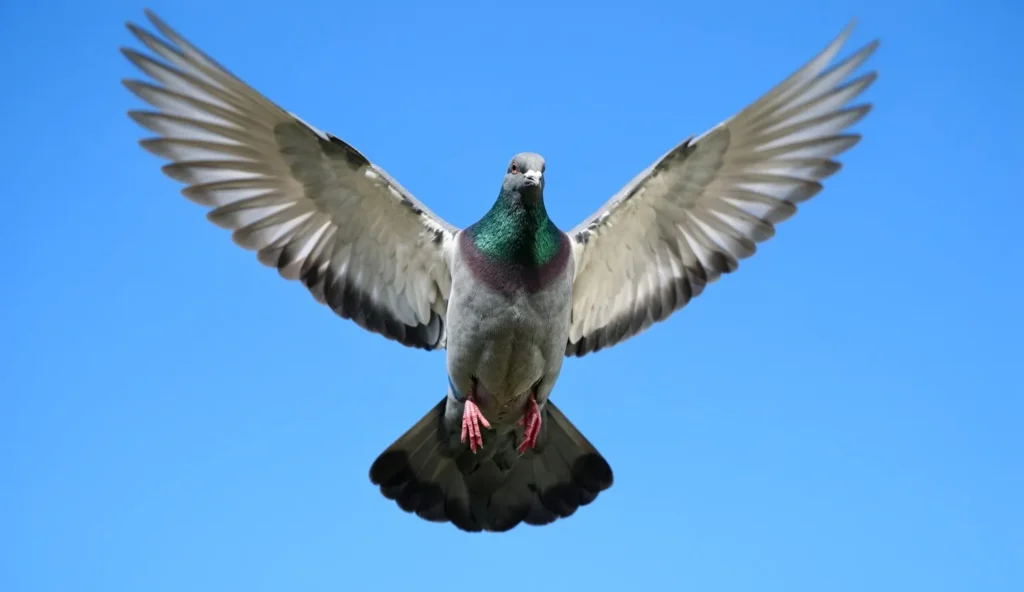
The Gimpel pigeon is a rare German fancy breed known for its distinctively rounded head and short beak. This breed originated in Germany during the 19th century and remains highly sought after by rare breed enthusiasts. Its unique appearance and calm temperament make it a rewarding bird for dedicated keepers.
The Gimpel was developed through selective breeding of local German pigeon stock. Breeders focused on exaggerating the head shape to create a distinctive silhouette. Other German fancy breeds like the Old German Owl share similar origins but differ in head structure and feathering.
Today the Gimpel is classified as a rare breed by pigeon fancy organizations. Enthusiasts preserve it primarily for exhibition and genetic diversity. The breed appears in very few collections outside Europe.
Appearance and Physical Features
Head Shape and Beak
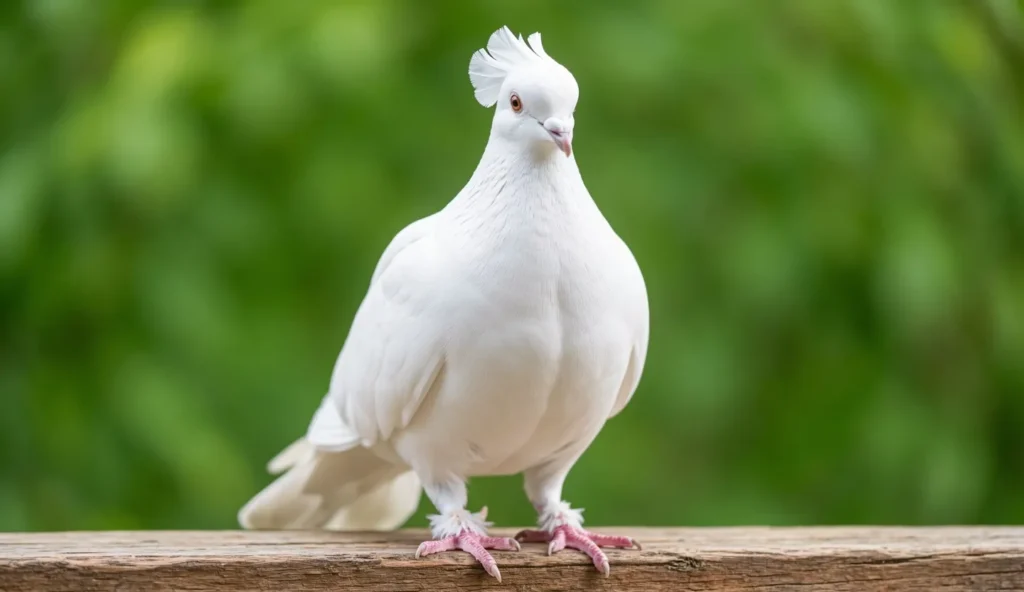
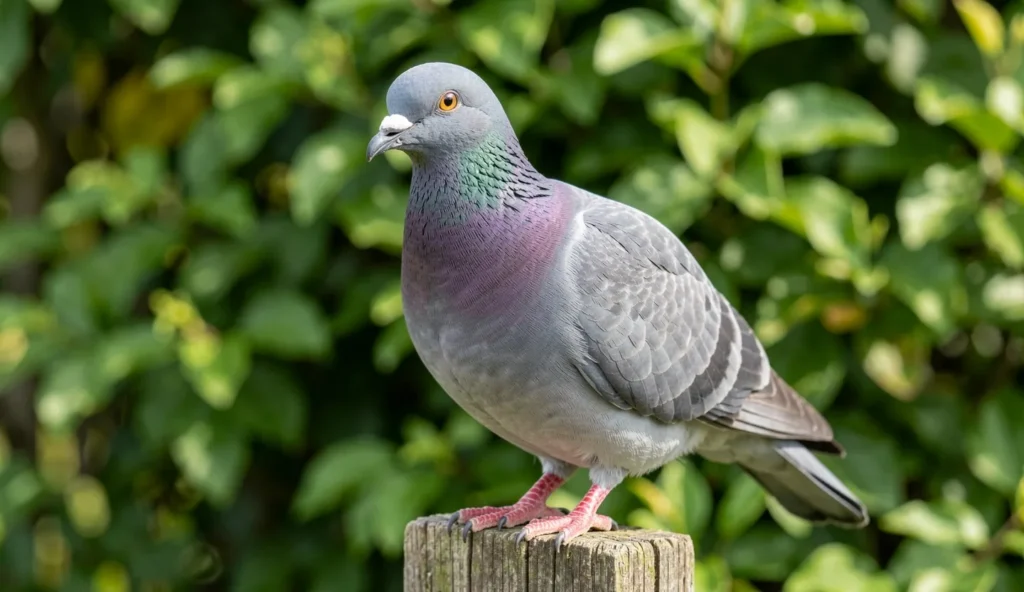
The most striking feature of the Gimpel pigeon is its head. The skull is rounded and broad, creating a nearly spherical appearance when viewed from the side. The beak is short and thick, blending seamlessly into the forehead.
This head shape is unique among fancy pigeons. While the frillback pigeon is known for curled feathers, the Gimpel relies on its cranium for distinction. The prominent forehead and full cheeks give the bird a soft, gentle expression.
Body Structure and Size
Gimpel pigeons are medium-sized with a compact, sturdy body. They have a broad chest and a strong, short back. The legs are short and the tail is wide, contributing to a balanced overall appearance.
Males and females look similar, though males tend to be slightly larger. The breed standard calls for a well-proportioned bird without any exaggerated length. This solid build supports their calm, steady demeanor.
Color Variations
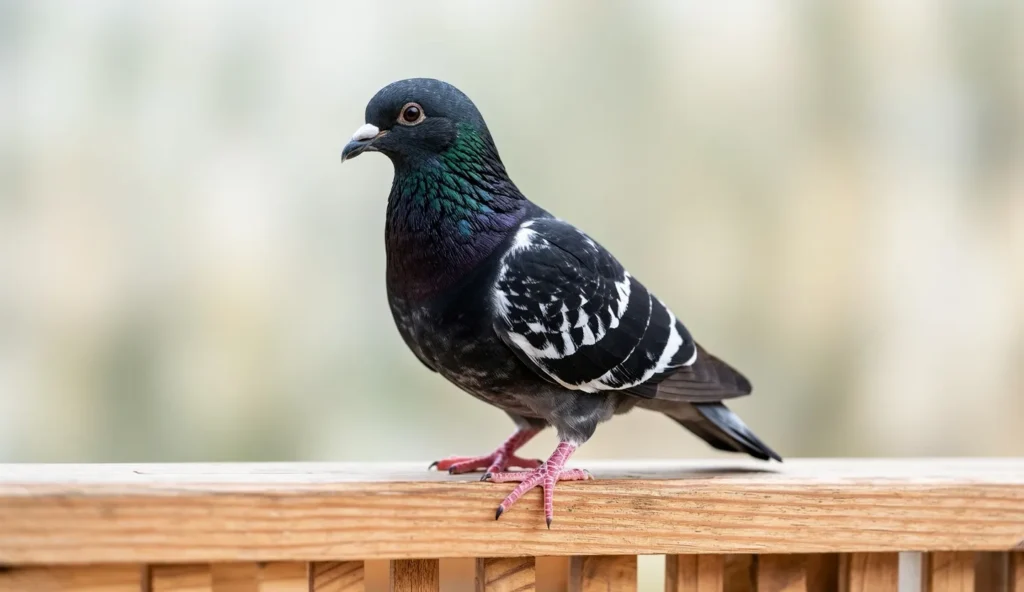
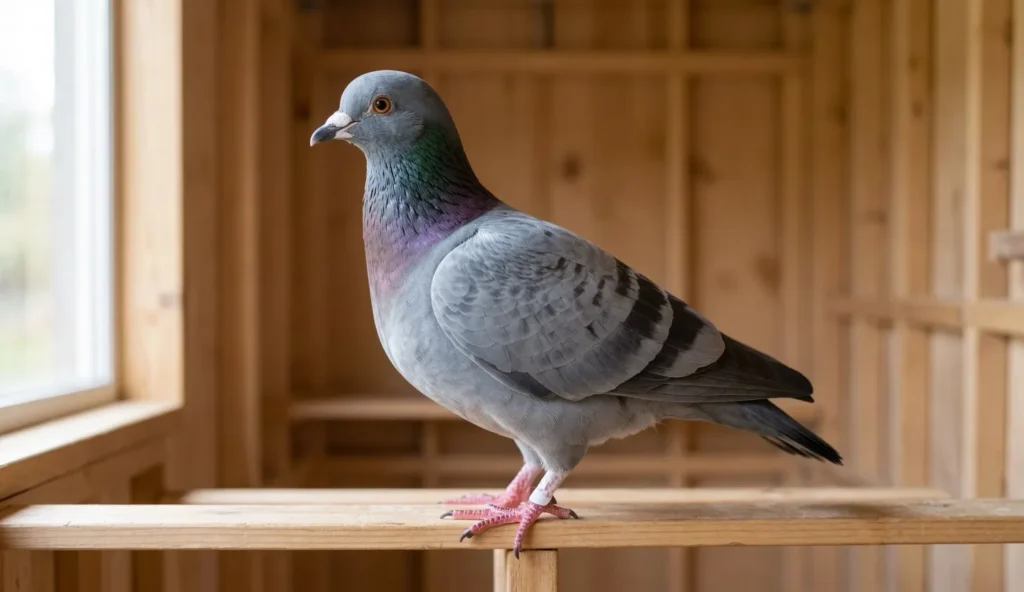
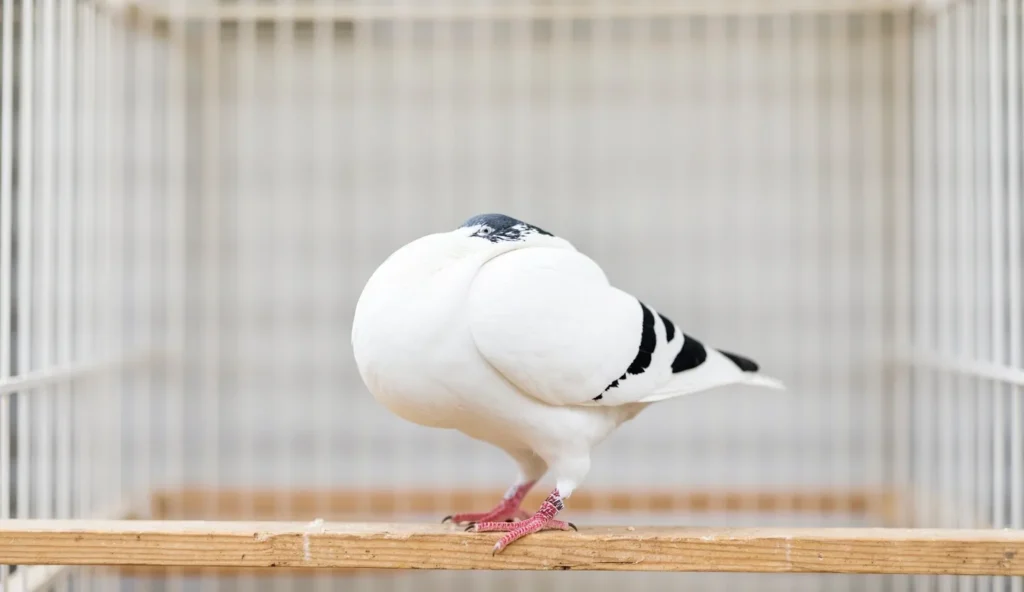
Gimpel pigeons come in several solid colors. The most common are black, blue, red, and yellow. Pattern variations include self, pied, and grizzle, though solid colors are preferred for shows.
Feather quality is dense and smooth, with a tight fit against the body. The plumage should be free of excessive fluff or loose feathers. Breeders select for even color distribution and glossy sheen.
Temperament and Personality
Typical Behavior Traits
Gimpel pigeons are known for their calm and placid nature. They move slowly and do not startle easily, making them pleasant to handle. Compared to the energetic Maltese pigeon, the Gimpel is more subdued and less flighty.
These birds adapt well to confinement if provided with adequate space. They rarely show aggression toward other pigeons and can coexist in mixed aviaries. Their gentle temperament makes them suitable for hobbyists who value a relaxed bird.
Exercise and Flight Requirements
Flight Recommendations
Gimpel pigeons need daily access to flight space to maintain health. A secure aviary should allow free flight for at least one hour per day. The minimum loft size for a pair is 8 feet by 6 feet, with vertical room for short flights.
Excessive confinement leads to obesity and muscle weakness. Owners should provide perches at different heights and encourage movement. Outdoor flights in a covered run are ideal, but indoor lofts with adequate width work as well.
Training and Show Preparation
Taming and Socialization
Start taming young Gimpel pigeons with gentle hand-feeding. Offer treats like small seeds from the palm to build trust. Use calm, consistent interactions to avoid startling the bird.
Socialize pigeons from an early age by exposing them to handling and human presence. Regular, short sessions develop a confident bird that remains relaxed on a show bench. Patience is key, as Gimpels are naturally reserved.
Show Training
Show training for the Gimpel is similar to that of the English Pouter, requiring patience and consistent handling. Accustom the bird to being posed on a flat surface. Practice standing still while a judge examines the head and body.
Condition feathers for optimal presentation by encouraging regular bathing. Avoid over-handling during the days before a show to prevent feather damage. A calm, well-trained Gimpel performs better under competition stress.
Grooming and Feather Care
Bathing
Provide shallow water baths two to three times per week. Use lukewarm water in a safe container that allows the pigeon to immerse comfortably. Allow natural drying in a draft-free area to avoid respiratory issues.
Bathing removes dust and loose feathers, keeping the plumage glossy. During molt, increase bathing frequency to help new feathers emerge cleanly. Always supervise baths to prevent accidents.
Feather Maintenance
Check for broken or soiled feathers regularly. Trim any damaged feather shafts carefully with scissors. Supplement the diet with grit to support healthy feather growth from within.
Avoid over-handling during the molt period when new feathers are sensitive. Provide a balanced diet rich in protein and amino acids. Clean loft conditions prevent feather staining and parasite attraction.
Diet and Nutrition
Staple Grain Mix
The core diet for Gimpel pigeons is a mix of wheat, barley, maize, and peas. This combination provides balanced carbohydrates and protein. During show season, add a pigeon conditioner mix to enhance feather quality and energy.
Unlike utility breeds such as the Hungarian Giant, the Gimpel requires a more moderate diet to maintain show condition. Too much fat leads to obesity and poor feather texture. Offer fresh water at all times and change it daily.
Supplements and Treats
Provide grit and oyster shell in a separate container for digestion and calcium. Add a multivitamin and mineral supplement once a week, especially during breeding and molt. Limit oily seeds like hemp and sunflower to avoid weight gain.
Treats such as small amounts of millet can be used during training. Avoid overfeeding treats, as Gimpels have a low activity level. Consistent feeding schedules help maintain steady body condition.
Common Health Issues
Respiratory Infections
Drafts and poor ventilation are the primary causes of respiratory infections in Gimpel pigeons. Symptoms include sneezing, wheezing, and nasal discharge. Keep the loft dry and well-aired, especially during cold months.
Isolate affected birds immediately and consult a veterinarian. Clean water and a stress-free environment support recovery. Preventive hygiene is the best defense against outbreaks.
Parasite Infestations
Lice and mites can affect feathers and skin, causing irritation and feather damage. Use approved aviary dust treatments and clean the loft thoroughly on a regular basis. Inspect birds weekly for signs of external parasites.
Mite infestations often occur in crevices of wooden lofts. Seal cracks and use removable perches for easier cleaning. Treat all birds in the aviary simultaneously to prevent reinfestation.
Obesity and Crop Issues
Overfeeding combined with insufficient exercise leads to obesity in Gimpel pigeons. Obese birds have difficulty flying and may develop joint problems. Monitor food intake and adjust portions based on activity level.
Crop impaction happens when grit intake is inadequate or when birds consume coarse material. Provide fine grit and ensure fresh water is always available. Symptoms include a swollen, hard crop and loss of appetite. Seek veterinary care if impaction persists.
Is the Gimpel Pigeon Right for You
Suitability for Owners
The Gimpel pigeon is best suited for experienced pigeon keepers who appreciate rare breeds. Its calm nature makes it a pleasure to observe, but its rarity means finding breeding stock can be challenging. Dedicated enthusiasts with space for a proper aviary will find this breed rewarding.
Beginners may struggle with the specialized care and show preparation. However, those willing to learn from breed clubs and experienced breeders can succeed. The Gimpel is not a high-maintenance bird, but its needs are specific.
Final Note
Encouragement for Breeders
Preserving the Gimpel pigeon requires commitment and attention to detail. Breeders who invest in proper housing, nutrition, and healthcare will enjoy this unique German fancy breed for many years. With limited numbers worldwide, every responsible keeper helps ensure its survival.
Frequently Asked Questions
What does a Gimpel pigeon look like?
The Gimpel pigeon has a distinctively rounded head, short thick beak, and compact body. It comes in solid colors like black, blue, red, and yellow.
How rare is the Gimpel pigeon?
The Gimpel is a very rare German fancy breed with limited numbers worldwide. It is primarily kept by dedicated hobbyists and show breeders.
What is the lifespan of a Gimpel pigeon?
With proper care, a Gimpel pigeon can live 10 to 15 years. Lifespan depends on diet, housing, and veterinary care.
How do you care for a Gimpel pigeon?
Provide a spacious aviary with daily flight time. Feed a balanced grain mix, offer grit, and keep the loft clean.
Can Gimpel pigeons be kept as pets?
Yes, they are calm and can become hand-tame with regular handling. They are best suited for experienced pigeon keepers due to their rarity.
Where can I buy a Gimpel pigeon?
Contact specialty pigeon breeders or rare breed associations. Online pigeon forums and breed clubs may list available birds.