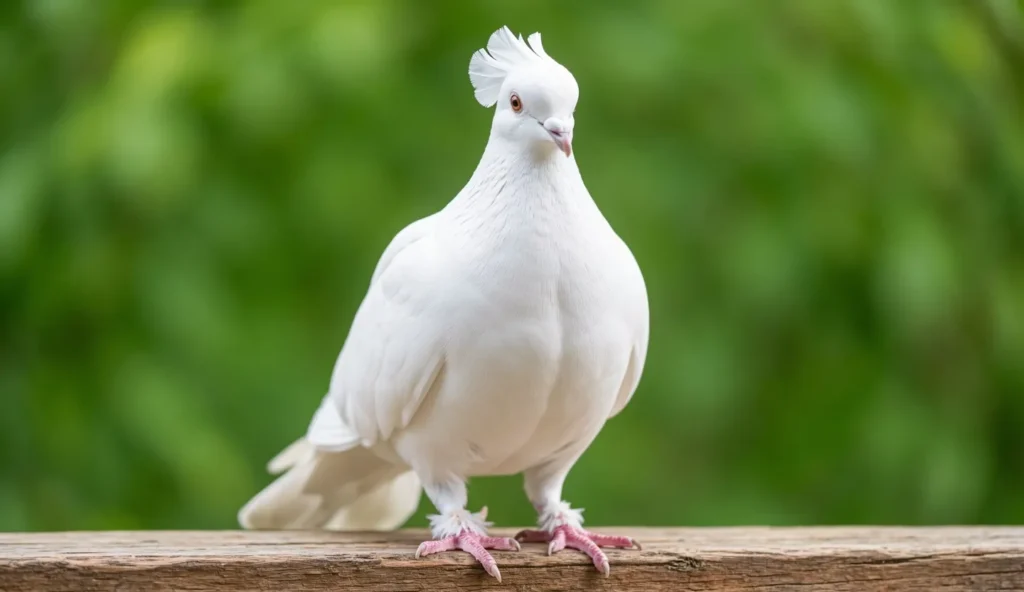
What Is an English Trumpeter Pigeon
Origin and Defining Trait
The English Trumpeter is a domesticated breed that originated in England from selectively bred trumpeter pigeon stock. Its most distinctive feature is the prolonged cooing that can last five to ten seconds, far longer than the usual one-second coo of common pigeons. This breed belongs to the group of trumpeter pigeons, known for deep vocalizations that resemble a trumpet sound. Breeders and fanciers prize the English Trumpeter for its calm temperament and striking appearance, making it a favorite for both exhibition and hobby keeping.
The trumpeter pigeon group includes several varieties, but the English Trumpeter stands out for its refined crest and feathered feet. Understanding the origin of this breed helps owners appreciate its unique vocal heritage.
Appearance and Physical Features
Head and Crest
The English Trumpeter has a prominent shell crest that curves backward from the forehead. This crest is well-defined and sits atop a short, stout beak. The eyes are large and expressive, often surrounded by a narrow cere. A rose comb may also be present on some individuals, adding to the breed’s ornamental value.
Body and Feathering
The body is compact and robust, giving the bird a sturdy, balanced silhouette. Feathering is smooth and glossy, with tight feathering on the wings and tail. The legs are covered with long, abundant muffs (feathered feet) that require regular maintenance.
- Compact robust body
- Feathered feet (muffs)
- Smooth glossy plumage
Color Variations
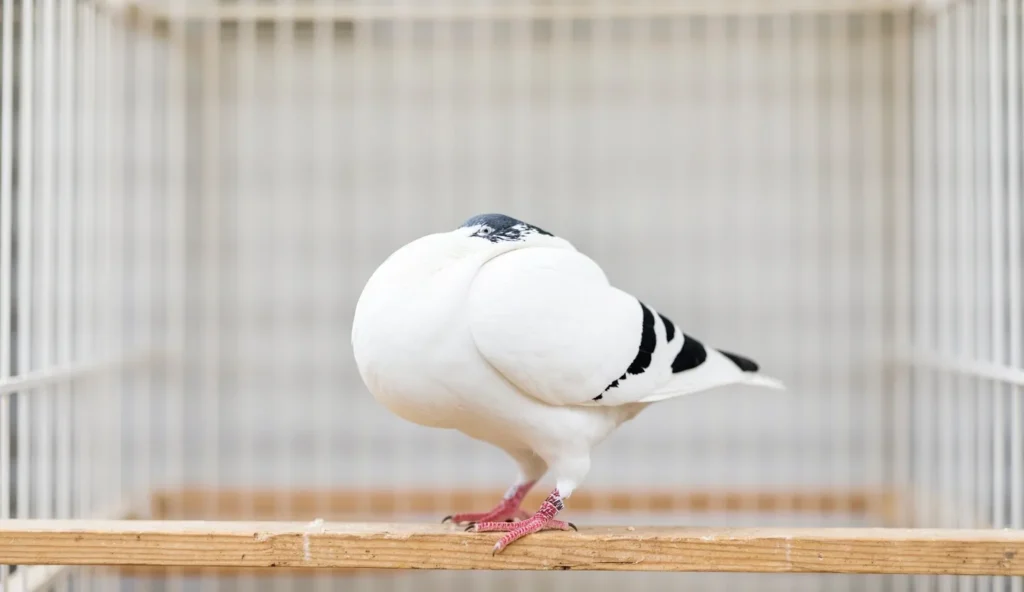
English Trumpeters come in a wide range of colors and patterns. Solid colors include white, black, red, and yellow. Patterned varieties include grizzle, pied, self, and saddle markings. The diversity of colors makes each bird unique. Other fancy breeds, such as the Italian Owl, also offer similar color variations, but the English Trumpeter’s crest and muffed feet distinguish it clearly.
- Solid white, black, red, yellow
- Patterned grizzle and pied
- Self and saddle patterns
Temperament and Vocal Behavior
Personality and Cooing Characteristics
The English Trumpeter is calm, gentle, and rarely aggressive toward other pigeons. This breed bonds well with its owners and adapts easily to handled environments. The most notable aspect of its personality is the vocal behavior. Males typically coo more than females and produce a deep, prolonged call that can last several seconds.
Compared to other vocal breeds like the English Pouter, the Trumpeter delivers a more sustained and resonant sound. The prolonged cooing is a natural trait, but environmental factors can influence its length and frequency. Owners who appreciate a singing pigeon will find this breed especially rewarding.
Housing and Exercise Requirements
Indoor or Outdoor Housing
English Trumpeters need a spacious loft or aviary with adequate ventilation and natural light. Perches should be placed at different heights to allow roosting. Protection from predators, drafts, and extreme temperatures is essential. A clean, dry floor with absorbent bedding prevents foot problems.
- Spacious loft with perches
- Protection from predators and drafts
- Good ventilation and natural light
Exercise and Free Flight
Daily free-flight time in a safe, enclosed area is recommended for physical and vocal health. Flying helps strengthen the respiratory muscles that support the prolonged coo. Overcrowding can cause stress and suppress vocalization, so provide at least eight cubic feet per bird.
Vocal Training Techniques
Understanding the Trumpet Call
The natural coo of a common pigeon lasts one to two seconds. In contrast, the English Trumpeter can sustain its call for five to ten seconds. Males are more vocal than females, and young birds begin cooing at four to six months. Full vocal maturity takes one to two years.
Creating a Stimulating Environment
To encourage longer cooing, play recordings of trumpeter calls during training sessions. Place a mirror inside the loft, as many males will coo at their reflection. Introducing a hen can also motivate a male to display more elaborate vocalizations.
- Play recordings of trumpeter calls
- Place mirrors to encourage display
- Introduce a hen for motivation
Reinforcement and Practice
Reward longer coos with small treats such as sunflower seeds. Repeat training daily for five to ten minutes. Be patient; the tone and stamina develop over months. The Old German Owl responds similarly to mirror stimulation, making these techniques effective across multiple fancy breeds.
Grooming and General Care
Bathing and Feather Care
Provide a shallow water bath weekly to keep feathers clean and healthy. Check muffed feet for dirt or droppings that can cause matting or infection. Use clean grit to support feather quality.
- Weekly shallow water baths
- Check muffed feet for dirt
- Use clean grit for healthy feathers
Nail and Beak Maintenance
Trim nails if they become overgrown to prevent discomfort. Provide cuttlebone or mineral block to allow natural beak wear. Inspect feet regularly for injuries or signs of scaly leg mites.
Diet and Nutrition
Staple Feed
Feed a high-quality pigeon mix containing grains like wheat, barley, maize, and peas. Add small seeds such as hemp or canary seed for variety and energy. Avoid dusty or moldy feed to prevent respiratory issues.
Supplements for Vocal Health
Vitamins A and E support the respiratory system and are essential for sustained cooing. Provide grit and oyster shell for digestion. Fresh water must be changed daily to prevent bacterial growth.
- Vitamin A and E for respiratory health
- Grit and oyster shell for digestion
- Fresh water changed daily
Common Health Issues
Respiratory Infections
Cold drafts, damp bedding, or poor ventilation can trigger respiratory infections. Symptoms include wheezing, nasal discharge, and lethargy. Isolate sick birds immediately and treat with appropriate antibiotics under veterinary guidance.
Feather and Foot Problems
Muff feather matting occurs from wet litter or dirty conditions. Scaly leg mites cause crusty, thickened legs. Regular inspection and a clean environment prevent these issues. The English Shortface Tumbler requires similar foot care, making this advice applicable to many crested breeds.
- Muff feather matting from wet litter
- Scaly leg mites cause crusty legs
- Regular inspection and clean environment
Is the English Trumpeter Pigeon Right for You
Suitability Assessment
This breed suits owners who enjoy a calm, elegant pigeon with a vocal personality. They need a spacious loft and daily free-flight time. The prolonged cooing can be loud, so consider neighbors if housing in an urban area. Beginners can successfully keep English Trumpeters with proper preparation and consistent care.
English Trumpeters coexist with other pigeon breeds if space is adequate. Monitor for aggression from more dominant varieties. Provide separate feeding stations to reduce competition.
Frequently Asked Questions
How do I teach my English Trumpeter pigeon to coo longer?
Play recordings of long trumpet calls, provide a mirror or a hen for motivation, and reward extended cooing with treats daily.
What is the difference between an English Trumpeter and other pigeon breeds?
It has a distinctive prolonged cooing that can last several seconds, feathered feet, a prominent crest, and a calm temperament that makes it popular for exhibition.
Do English Trumpeter pigeons need a lot of space?
They require a spacious loft or aviary with daily free-flight exercise, and overcrowding can cause stress and health issues.
How long does it take for an English Trumpeter to develop its voice?
Young birds start cooing around four to six months, but full vocal maturity takes one to two years with consistent training and stimulation.
Can English Trumpeter pigeons live with other pigeon breeds?
They can coexist if space is adequate, but monitor for aggression from dominant breeds and provide separate feeding stations to reduce competition.
What health problems are common in English Trumpeter pigeons?
Respiratory infections from damp conditions, scaly leg mites, and obesity from overfeeding high-fat seeds are the most common issues.