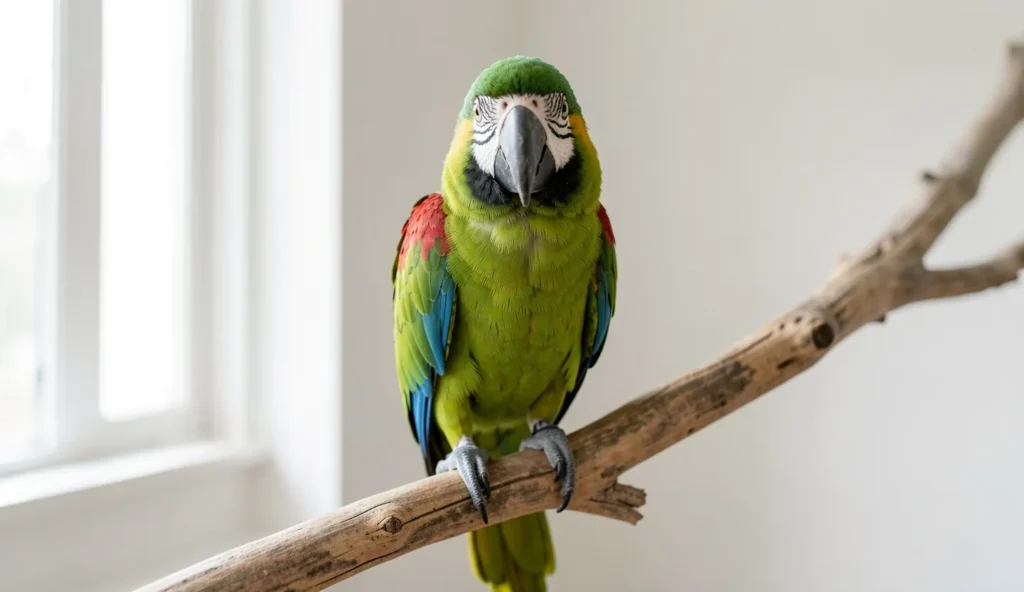
What Is a Hahn Macaw
The Hahn Macaw, also known as the red-shouldered macaw or Diopsittaca nobilis, is the smallest true macaw species. This small macaw originates from northern South America and belongs to the group of miniature macaws. Its compact size and big personality make it an appealing choice for parrot enthusiasts with limited living space.
Origin and Classification
The Hahn Macaw is native to parts of Venezuela, Brazil, Guyana, and Suriname. Its scientific name Diopsittaca nobilis reflects its noble appearance within the parrot family. This species is also called the noble macaw due to its elegant markings.
Unlike larger macaws such as the Scarlet Macaw, the Hahn Macaw stays under 12 inches in length. It is one of the few true miniature macaws recognized in aviculture.
Why They Are Considered Miniature Macaws
The Hahn Macaw measures about 12 inches from head to tail and weighs 130 to 170 grams. This makes it the smallest of all macaw species. Despite the small body, it retains the full macaw temperament including high intelligence and strong bonding tendencies.
This species is often described as a big parrot in a little package. Owners get the personality of a large macaw without the space demands of a Hyacinth Macaw.
Appearance and Physical Features
The Hahn Macaw displays a mostly green plumage with darker green on the wings. Bright red shoulder patches and underwing coverts give the species its common name red-shouldered macaw. Blue flight feathers and a blue tail tip add striking contrast.
Plumage and Color Patterns
The bird has a bare white face patch with dark lines that resemble a mask. This facial pattern is unique among miniature macaws. The beak is black and the eyes are orange with a white eye ring.
Young birds have less distinct facial markings until they mature. The red shoulder patches become more vibrant with age.
Size and Weight
Average length is 12 inches from head to tail tip. The tail is long but slender, accounting for about half the total length. Weight ranges from 130 to 170 grams depending on diet and genetics.
This size makes the Hahn Macaw significantly smaller than a Blue and Gold Macaw. It is one of the lightest macaws to handle.
Sexual Dimorphism
Males and females appear identical in color and size. Visual sexing is impossible even for experienced breeders. DNA testing or surgical sexing is required to determine gender with certainty.
Temperament and Personality
The Hahn Macaw has a bold and confident personality that resembles larger macaws. It is highly intelligent and curious, always investigating its surroundings. This small macaw forms strong bonds with its owner and can become a devoted companion.
Intelligence and Playfulness
The Hahn Macaw loves interactive toys and puzzles that challenge its mind. Without mental stimulation, it may develop destructive behaviors. Owners should provide foraging toys and rotate them weekly to maintain engagement.
Training sessions using positive reinforcement work well because the bird learns quickly. Short sessions of 10 to 15 minutes are most effective.
Social Behavior and Bonding
This miniature macaw thrives on social interaction and can be very affectionate. It enjoys shoulder time and cuddling with trusted people. Poorly socialized birds may become territorial or nippy.
Exposure to different people and environments from a young age reduces aggression. The Hahn Macaw can get along with other pets if introduced gradually.
Noise Level and Vocalizations
The Hahn Macaw produces high-pitched squawks and screeches that carry through walls. Noise levels are moderate compared to larger macaws but still significant for apartment living. Some individuals learn to mimic sounds and a few words.
Speech is less clear than that of a Green Winged Macaw, but they can imitate whistles and household noises. Providing plenty of toys reduces excessive screaming.
Housing Essentials for Apartment Living
Apartment dwellers can keep a Hahn Macaw if they plan the setup carefully. The cage must be large enough for the bird to stretch and climb. Noise management requires thoughtful placement and routines.
Cage Size and Setup
The minimum cage dimensions are 24 inches wide, 24 inches deep, and 36 inches tall. Bar spacing should be 1 inch or less to prevent escape. Include multiple perches of varying diameters to exercise the feet.
Add foraging toys, shreddable materials, and sturdy rope perches for enrichment. Place the cage in a quiet corner away from drafts and direct sunlight.
Managing Noise in Close Quarters
Hahn Macaws are not silent birds. Establish a consistent daily routine to reduce spontaneous outbursts. Provide enough toys and out-of-cage time to keep the bird occupied.
Soundproofing the cage area with thick curtains or acoustic panels may help. Talk to neighbors about the bird’s schedule so they are not surprised.
Out of Cage Time
This small macaw needs at least 2 to 3 hours of supervised out-of-cage time each day. Create a safe play area with no toxic plants or exposed wires. Bird-proof windows, doors, and ceiling fans before allowing freedom.
A play gym or dedicated perch near the cage works well for daily exercise. Supervise interactions with other household pets at all times.
Diet and Nutrition for Hahn Macaws
Proper diet is essential for macaw care and longevity. A balanced feeding plan prevents obesity and nutritional deficiencies. The Hahn Macaw requires a pelleted base with fresh produce.
Base Diet
High-quality pellets should make up 60 to 70 percent of the daily intake. Pellets provide consistent vitamins and minerals that seeds lack. Choose a brand formulated for small macaws or medium parrots.
Offer pellets in a morning feeding and remove uneaten portions after a few hours.
Fresh Foods and Treats
Leafy greens like kale and Swiss chard, chopped carrots, bell peppers, and broccoli are excellent choices. Fruits such as apple, berries, and melon can be given in moderation due to sugar content. Sprouted seeds and whole grains add variety.
Offer fresh foods in the afternoon to encourage foraging behavior. Rotate vegetables weekly to provide different nutrients.
Foods to Avoid
Avocado, chocolate, caffeine, and alcohol are toxic to parrots. High-fat seeds and nuts should not be the primary diet. Avoid salty snacks, sugary treats, and processed human food.
Always wash fruits and vegetables thoroughly before serving. Remove uneaten fresh food after two hours to prevent spoilage.
Training and Socialization
Training a Hahn Macaw requires patience and consistency. Positive reinforcement methods work best because the bird is eager to please. Early socialization prevents behavioral problems later.
Basic Training Techniques
Start with step-up and step-down commands using a perch or hand. Use small treats like sunflower seeds as rewards. Keep training sessions short, about 10 to 15 minutes, to maintain focus.
End each session on a positive note with praise and a treat. Repeat commands daily until the bird responds reliably.
Socialization with People and Pets
Introduce the Hahn Macaw to different people in a calm setting. Allow the bird to approach strangers at its own pace. Supervise interactions with dogs, cats, and other birds closely.
Respect the bird’s body language and avoid forcing handling. A well-socialized Hahn Macaw is less likely to bite or develop fear aggression.
Trick Training and Enrichment
Hahn Macaws enjoy learning tricks such as waving, spinning, or retrieving objects. Target training using a stick and treat reinforces focus. Rotate toys weekly to prevent boredom and encourage natural behaviors.
Foraging puzzles that hide treats inside paper cups or cardboard tubes provide mental exercise. These activities reduce the risk of feather plucking.
Grooming and Health Care
Routine grooming keeps the Hahn Macaw healthy and comfortable. Regular bathing, nail trims, and beak maintenance are part of basic macaw care. Annual veterinary checkups catch problems early.
Feather Care and Bathing
Provide a shallow water dish for bathing several times a week. Misting the bird with warm water helps maintain feather condition. Check for abnormal feather loss, plucking, or dullness.
Healthy feathers are smooth, glossy, and lie flat against the body. Consult an avian vet if feather problems persist.
Nail and Beak Maintenance
Nails may need trimming every 8 to 12 weeks depending on wear. Provide cuttlebone and mineral blocks for natural beak filing. An avian vet can demonstrate safe nail trimming techniques.
Overgrown nails can snag on toys or cause foot discomfort. Beak abnormalities should be examined by a specialist.
Regular Veterinary Checkups
Schedule annual wellness exams with an avian veterinarian. Fecal tests detect internal parasites, and blood work monitors organ function. Early detection of illnesses improves treatment outcomes.
Quarantine new birds for at least 30 days before introducing them to an existing flock.
Common Health Issues in Hahn Macaws
Like all parrots, the Hahn Macaw is prone to certain health conditions. Awareness helps owners recognize signs early. Many issues are preventable with proper care.
Respiratory Infections
Drafts, poor ventilation, or bacterial infections cause respiratory problems. Symptoms include sneezing, nasal discharge, wheezing, and tail bobbing. Immediate veterinary attention is required.
Keep the cage away from air conditioning vents and open windows to reduce risk.
Feather Plucking and Self-Mutilation
Boredom, stress, or medical issues can lead to feather plucking. Environmental enrichment, social interaction, and a vet check are necessary. This behavior is often a sign of an underlying problem.
Address triggers such as lack of out-of-cage time or changes in routine.
Obesity and Malnutrition
High-fat seed diets cause obesity and fatty liver disease. Monitor the bird’s weight weekly and adjust portions accordingly. A balanced pellet-and-vegetable regimen prevents malnutrition.
Limit treats and avoid feeding table scraps.
Psittacine Beak and Feather Disease
This viral disease affects the immune system, feathers, and beak. It is contagious and often fatal. Testing new birds and quarantining prevents spread.
Only acquire Hahn Macaws from reputable breeders who test for PBFD.
Is a Hahn Macaw Right for You
The Hahn Macaw suits intermediate owners who have time for daily interaction. Its small size fits apartments, but the noise level may trouble close neighbors. Dedicated space for a large cage and play area is essential.
Space and Noise Considerations
A Hahn Macaw requires a large cage plus a play gym or bird-safe room. The bird’s vocalizations carry through walls, so consider soundproofing. Owners who work from home or spend evenings at home can provide the needed attention.
If noise is a primary concern, a quieter species like a Green Cheek Conure may be better.
Time and Financial Commitment
This small macaw lives 25 to 30 years with proper care. Daily out-of-cage time, training, and enrichment demand several hours. Costs include a quality cage, toys, fresh food, and annual vet visits.
Budget for unexpected medical expenses as parrots can become ill suddenly.
Alternatives for Smaller Spaces
Other miniature macaws such as the Severe Macaw or Yellow-collared Macaw are similar in size. For even quieter birds, consider a parakeet or lovebird. Research each species thoroughly before committing.
Larger macaw parrots require significantly more space and are less suited for apartments.
Frequently Asked Questions
How big does a Hahn Macaw get?
The Hahn Macaw reaches about 12 inches in length from head to tail. It weighs between 130 and 170 grams.
Are Hahn Macaws good for apartments?
They can live in apartments if owners manage noise and provide enough out-of-cage time. Their vocalizations are louder than some small parrots, so neighbors may be disturbed.
Do Hahn Macaws talk?
Yes, they can learn a few words and phrases. Their speech is not as clear as larger macaws but they can mimic sounds.
What is the lifespan of a Hahn Macaw?
With proper care, a Hahn Macaw can live 25 to 30 years or longer.
How loud is a Hahn Macaw?
They have a high-pitched squawk that can be heard through walls. Noise levels are moderate compared to other macaws but still significant for apartments.
What should I feed my Hahn Macaw?
A high-quality pelleted diet should make up 60 to 70 percent of the diet. Supplement with fresh vegetables, fruits, and occasional sprouts.
Final Note
The Hahn Macaw is a rewarding companion for dedicated owners who understand its needs. With proper housing, diet, and daily interaction, this miniature macaw thrives in apartment settings.