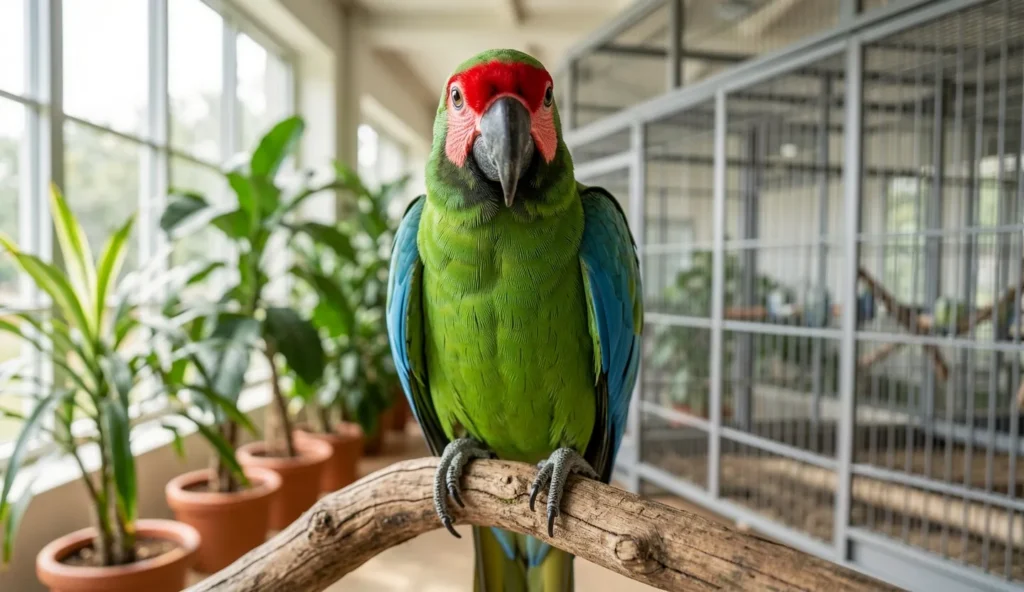
What Is a Military Macaw
The Military Macaw (Ara militaris) is a large green macaw native to the mountainous forests of Mexico and South America. This species stands out for its olive-green body, red forehead, and blue flight feathers. Slightly smaller than other macaws, such as the blue-and-yellow macaw, it still requires an equally demanding commitment from owners. The Military Macaw is one of the more robust members of the macaw family and a popular choice among experienced bird keepers.
Origin and Species Overview
Three subspecies of Ara militaris exist, all found in fragmented ranges from Mexico to Argentina. They inhabit humid montane forests and canyons, often at elevations above 1,000 meters. In the wild, these parrots travel in small flocks and feed on fruits, seeds, and nuts. Their conservation status is listed as Vulnerable due to habitat loss and poaching. For enthusiasts of rare parrots breeds, the Military Macaw represents a species worth understanding before acquisition.
Appearance and Physical Features
The Military Macaw is a visually striking bird with a predominantly green body. Its name comes from the military-like olive-green plumage, reminiscent of a soldier’s uniform. The red patch on the forehead and chin provides a bold contrast, while the blue feathers on the wings and tail add depth.
Size and Weight
- Length: 70 to 75 cm (27 to 30 inches)
- Weight: 900 to 1,100 grams
- Slightly smaller than the blue-and-yellow macaw but larger than many parrot species
Plumage and Markings
- Body: Bright olive-green with a slightly paler underside
- Forehead and chin: Red patch
- Wings: Blue primaries and secondaries
- Tail: Long, pointed, with blue and red undersides
- Facial skin: White with fine black feather lines
Temperament and Personality
Military Macaws are intelligent, curious, and social birds that form strong bonds with their owners. They can be vocal and demanding, producing loud squawks and calls that carry over long distances. Potential owners must be prepared for a bird that requires consistent daily interaction. Without enough attention, these macaws may develop destructive behaviors. Compared to African Grey Parrots, Military Macaws are less renowned for talking ability but are equally engaging in their own way.
Understanding Temperament
These parrots are playful and enjoy problem-solving activities. They can be cautious around strangers but warm up with gentle exposure. Hand-raised individuals tend to be more trusting and adaptable. Biting is possible when the bird feels threatened or hormonal, so reading body language is essential.
Housing Essentials for a Military Macaw
Setting up a proper parrot habitat is critical for a Military Macaw’s well-being. The enclosure must accommodate the bird’s active nature and powerful beak. Spaciousness, safety, and enrichment are the three pillars of a successful setup. Owners of other large macaw parrots will find similar requirements apply here.
Cage Size and Placement
- Minimum cage dimensions: 36 x 24 x 48 inches (91 x 61 x 122 cm)
- Bar spacing: No wider than 1 inch (2.5 cm) to prevent escape or head entrapment
- Location: A busy area of the home with stable temperature, away from drafts and direct sunlight
- Outdoor aviaries: Suitable in warm climates if secure from predators
Perches and Substrates
Natural wood perches of varying diameters promote foot health and grip strength. Avoid smooth dowels and sandpaper covers, which can cause pressure sores. The cage floor can be lined with newspaper, paper pellets, or other non-toxic absorbent materials. Change the liner daily to maintain hygiene.
Toys and Enrichment
Foraging toys, puzzle feeders, and destructible wood blocks are essential for mental stimulation. Rotate toys weekly to prevent boredom. A shallow water dish should be provided for bathing, as Military Macaws enjoy splashing. Chewing activities also help keep the beak trim. Without enrichment, feather plucking may develop.
Diet and Nutrition
A balanced military macaw diet is based on high-quality formulated pellets supplemented with fresh produce. Seeds and nuts should be limited due to their fat content. Proper nutrition directly influences macaw health and longevity. For guidance on safe human foods, refer to the article Can Parrots Eat Human Food Safely.
Staple Foods
- Pellets: 60 to 70 percent of the total diet
- Vegetables: Dark leafy greens (kale, spinach), carrots, bell peppers, broccoli
- Fruits: Limited portions of apples, berries, and melon (remove seeds)
- Grains: Cooked quinoa, brown rice, or whole-wheat pasta in moderation
Foods to Avoid
- Avocado, chocolate, caffeine, and alcohol (toxic to parrots)
- High-fat seeds and nuts given as treats only
- Salty, sugary, or processed human foods
- Rhubarb and raw beans
Common Health Issues in Military Macaws
Even with excellent care, Military Macaws can experience health problems. Early detection and regular avian veterinary checkups are vital. Many issues stem from improper diet, poor habitat, or lack of stimulation. The following conditions are frequently seen in this species.
Respiratory Infections
Drafts, dusty environments, or poor air quality can trigger respiratory illness. Symptoms include sneezing, nasal discharge, labored breathing, and tail bobbing. Immediate veterinary attention is needed to prevent pneumonia. Keep the cage away from kitchen fumes and aerosol sprays.
Feather Plucking and Self-Mutilation
Boredom, stress, or dietary deficiencies often cause feather picking. A full physical exam is necessary to rule out skin infections or parasites. Enrichment, social interaction, and a proper diet usually resolve mild cases. If the behavior persists, consult an avian behaviorist.
Nutritional Deficiencies
An all-seed diet leads to Vitamin A deficiency, causing dull feathers, lethargy, and respiratory issues. Calcium imbalances can result in egg binding in females. Symptoms of deficiency include flaky skin, poor feather quality, and weakness. A diet rich in pellets and vegetables prevents these problems.
Exercise and Mental Stimulation
Military Macaws need several hours of daily out-of-cage exercise. This large green macaw requires space to stretch its wings and climb. A dedicated play stand with ropes, ladders, and toys encourages physical activity. Flight should be allowed in a safe, supervised area if the bird is flighted. Owners of the Kakapo Parrot might recognize similar needs for spacious enclosures, though the two species have different temperaments.
Exercise Needs
At least 2 to 4 hours of supervised time outside the cage each day. Provide opportunities for walking, climbing, and flapping. Foraging activities count as both mental and physical exercise.
Grooming and Hygiene
Regular grooming keeps a Military Macaw comfortable and healthy. Nail trimming, wing clipping (if chosen), bathing, and beak maintenance are part of routine care. Many owners learn to perform these tasks at home with proper guidance.
Grooming Routine
- Nail trimming: Every 4 to 6 weeks using a bird-safe nail clipper or file
- Wing clipping: Optional; consult an avian vet for proper technique
- Bathing: Offer a shallow dish of water or a gentle misting 2 to 3 times per week
- Beak care: Provide cuttlebone, mineral blocks, and wooden toys to wear down excess growth
Is a Military Macaw Right for You
Owning a Military Macaw is a long-term commitment spanning 50 to 60 years. These birds demand daily interaction, a spacious home, and significant financial investment. Their loud vocalizations and powerful chewing capabilities are not suitable for apartments or noise-sensitive households. Experienced bird owners who can provide consistent enrichment and a balanced diet will find this species rewarding. For those interested in similar yet smaller parrots, the Spotted Ground Parrot a fascinating avian species offers a different care profile.
Ownership Commitment
Before acquiring a Military Macaw, evaluate your lifestyle, budget, and future plans. Research local avian veterinarians and ensure you have access to a suitable habitat. This species is not a starter bird; it thrives with owners who understand parrot behavior and health needs.
Frequently Asked Questions
How long do Military Macaws live?
Military Macaws can live 50 to 60 years in captivity with proper care. Some individuals may reach 70 years.
How big of a cage does a Military Macaw need?
A minimum cage size of 36 x 24 x 48 inches is recommended. Bar spacing should not exceed 1 inch to prevent escape or injury.
What do Military Macaws eat in the wild compared to captivity?
In the wild they eat fruits, seeds, nuts, and berries. In captivity a high-quality pellet diet with vegetables and limited fruit is best.
Are Military Macaws good talkers?
They are capable of learning a few words and phrases but are not known as the best talkers. Their vocalizations are more often loud squawks and calls.
Do Military Macaws need a companion?
They are social and thrive with daily human interaction. A second macaw can provide companionship but requires more space and time.
How much does a Military Macaw cost?
Purchase price ranges from $2,000 to $4,000 depending on breeder and age. Ongoing costs for food, toys, and vet care add several hundred dollars per year.
A Final Note on Military Macaw Care
Providing a proper diet, spacious habitat, and daily enrichment forms the foundation of healthy Military Macaw ownership. With consistent care, these intelligent birds become devoted companions for decades.