What Is a Superb Parrot
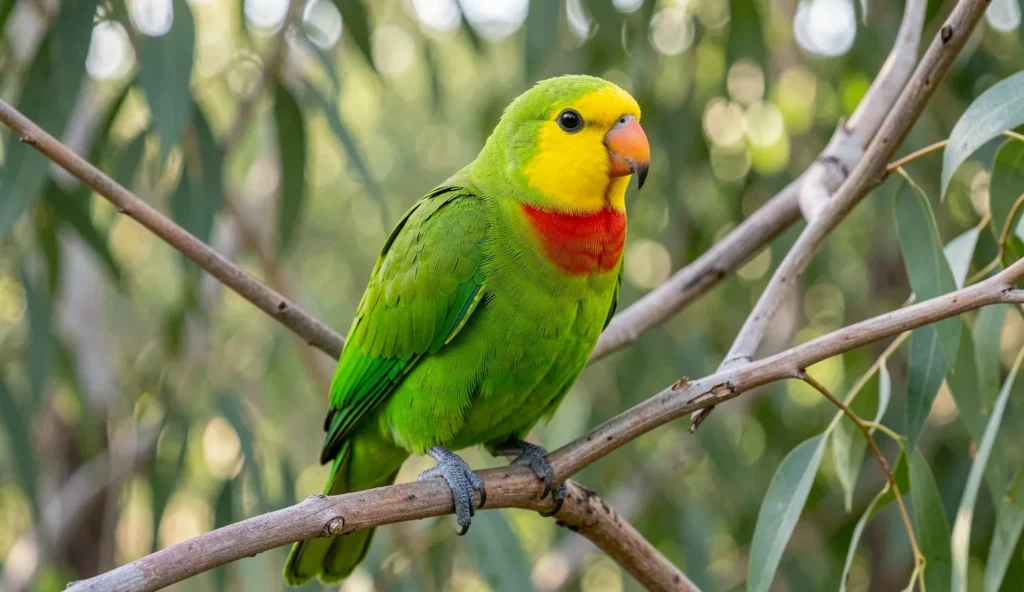
The Superb Parrot (Polytelis swainsonii) is a medium-sized Australian parrot with bright green plumage and a vibrant red chest band in males. This bird, also called the superb parakeet, belongs to the genus Polytelis and is endemic to southeastern Australia. Its striking appearance and vulnerable conservation status make it a species of interest for conservation-minded owners and bird enthusiasts alike.
Unlike more common parrots such as the Senegal Parrot, the Superb Parrot occupies a specialized niche in temperate woodlands. Its survival depends on a few key eucalypt species for nesting and feeding. Understanding this bird’s biology and threats is essential for effective protection efforts.
What Is a Superb Parrot
The Superb Parrot is a distinct parrot species first described by John Gould in 1838. It is closely related to other Australian parrots in the genus Polytelis, including the Regent Parrot. Males and females show strong sexual dimorphism, with males being far more colorful. The species is sometimes confused with the Australian Ringneck, but its longer tail and red chest band are diagnostic.
Appearance and Physical Features
The Superb Parrot is a medium parrot, larger than a budgerigar but smaller than a cockatoo. Its physical traits are adapted for life in open woodlands and riverine forests.
Size and Weight
Adults measure 36 to 42 centimeters in length from beak to tail tip. Average weight ranges from 120 to 160 grams. The tail alone accounts for nearly half the total length.
Plumage and Color Patterns
Males display a bright green body, a yellow face, and a distinctive red band across the chest. Females are duller green overall, with a pale blue rump instead of the red band. Both sexes have long, pointed tail feathers that aid in agile flight through dense foliage.
Natural Habitat and Geographic Range
The Superb Parrot relies on a narrow range of habitats in the wild. Its distribution is centered on the inland river systems of southeastern Australia.
Preferred Ecosystems
This species inhabits temperate woodlands, riverine forests, and Box-Ironbark forests. It depends heavily on River Red Gum and Yellow Box eucalypts for nesting hollows and food resources. Parrots are often found near inland waterways in New South Wales and Victoria.
Range and Distribution
The Superb Parrot is endemic to southeastern Australia. Its main range lies within the Murray-Darling Basin. Small isolated populations exist in southern Queensland, though these are considered vulnerable to local extinction.
Seasonal Movements
These birds are partial migrants, moving locally in response to food availability. Breeding season concentrates along river corridors in spring and summer. Non-breeding flocks can travel up to 50 kilometers between roosting and feeding sites each day.
Conservation Status and Population Trends
The Superb Parrot is listed as endangered in New South Wales and vulnerable in Victoria. At the national level, it is protected under the Environment Protection and Biodiversity Conservation Act 1999. The International Union for Conservation of Nature (IUCN) classifies the species as Vulnerable on its Red List.
IUCN and Australian Listing
Listed as Vulnerable on the IUCN Red List. Classified as Endangered in New South Wales and Vulnerable in Victoria. Protected under the Australian Environment Protection and Biodiversity Conservation Act 1999.
Population Estimates
Total wild population estimated at 6,000–10,000 mature individuals. Numbers have declined by more than 30% over three generations. Ongoing population decline due to habitat loss and fragmentation remains the primary threat.
Major Threats to the Superb Parrot
Several interrelated threats drive the Superb Parrot’s decline. Habitat loss, predation, competition, and climate change all contribute to the species’ vulnerability.
Habitat Destruction and Fragmentation
Clearing of Box-Ironbark woodlands for agriculture and urbanization removes nesting and foraging trees. Loss of mature eucalypts reduces the number of natural hollows available for breeding. Fragmentation isolates populations, limiting gene flow and increasing extinction risk.
Predation
Introduced predators such as foxes and cats target eggs, chicks, and even adult parrots. Native raptors occasionally prey on fledglings. Nest predation increases near forest edges where predators are more abundant.
Competition for Nesting Sites
Feral honeybees occupy tree hollows needed for breeding, often displacing parrots. Common Mynas and starlings also compete for cavities. Scarcity of suitable hollows reduces reproductive success and limits population growth.
Climate Change Impacts
Increased frequency of drought reduces food and water availability. Higher temperatures cause heat stress during the breeding season. Altered rainfall patterns shift flowering times of key food trees, disrupting the parrots’ food supply.
Conservation Actions and Protective Measures
Government agencies, NGOs, and local communities undertake several actions to protect the Superb Parrot. These efforts focus on habitat restoration, monitoring, and legal protection.
Habitat Restoration Projects
Planting native trees and shrubs helps reconnect fragmented woodlands. Artificial nest boxes are installed in areas lacking natural hollows. Controlled grazing management protects understory vegetation that provides food and cover.
Monitoring and Research
Annual surveys track population size and breeding success. GPS tracking studies reveal movement patterns and habitat use. Genetic research informs conservation management of small populations by assessing genetic diversity.
Legislation and Land Management
Critical habitat areas are designated for protection under state laws. Environmental impact assessments are required for developments near key sites. Landholders receive incentives to retain hollow-bearing trees on farming properties.
How to Support Superb Parrot Conservation
Individuals can contribute directly to Superb Parrot conservation through donations, citizen science, and habitat-friendly gardening. Every action helps reduce the pressures on this vulnerable species.
Donate to Conservation Organizations
Support BirdLife Australia and local landcare groups. Funds directly assist habitat restoration and monitoring programs. Donations can also support artificial nest box installation efforts.
Participate in Citizen Science
Report sightings to eBird or local wildlife databases. Join community planting days to regenerate riparian woodlands. Citizen science data helps researchers track population trends and identify priority areas for action.
Create a Parrot-Friendly Garden
Plant native eucalypts, bottlebrushes, and grevilleas. Provide a clean water source and avoid using pesticides. Retain dead standing trees with hollows if safe to do so. Gardens near wild habitat can serve as supplementary feeding areas.
For those interested in other rare parrot species, the kakapo parrot and the rarest parrot breeds in the world offer further examples of parrot conservation challenges. Similarly, the spotted ground parrot a fascinating avian species faces threats in its own unique habitat.
Frequently Asked Questions
What is the main reason the Superb Parrot is endangered?
Habitat loss from clearing Box-Ironbark woodlands is the primary threat. Fragmentation reduces nesting hollow availability and isolates populations.
Where can wild Superb Parrots be found?
Wild populations occur in southeastern Australia, mainly in the Murray-Darling Basin. Key areas include river red gum forests in New South Wales and Victoria.
How many Superb Parrots are left in the wild?
The estimated population is 6,000 to 10,000 mature individuals. Numbers continue to decline despite conservation efforts.
Are Superb Parrots protected by law?
Yes, they are protected under Australia’s Environment Protection and Biodiversity Conservation Act. They are also listed as endangered or vulnerable under state legislation.
What can I do to help conserve Superb Parrots?
Donate to organizations like BirdLife Australia that fund habitat restoration. Report sightings to citizen science platforms and plant native trees.
Do Superb Parrots migrate?
They are partial migrants, moving locally based on food and water availability. Breeding areas are used in spring and summer, while winter flocks roam more widely.
Final Note
The Superb Parrot remains a symbol of Australia’s unique woodland biodiversity. With continued conservation efforts and public support, this beautiful parrot can recover and thrive in its natural habitat.