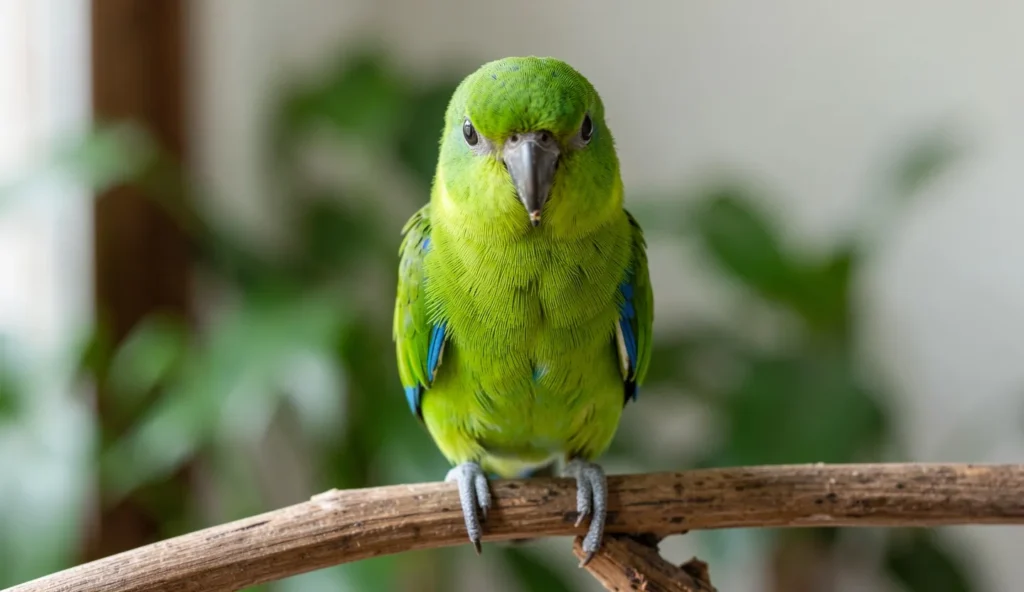
What Is a Pacific Parrotlet
The Pacific Parrotlet, scientifically known as Forpus coelestis, is the smallest parrot species in the world. This tiny bird originates from the dry woodlands and scrub forests of western South America, specifically Ecuador and Peru. Despite its compact size, this feisty bird possesses a bold and energetic nature that rivals much larger parrots.
Many beginner parrot owners are drawn to the Pacific Parrotlet because of its manageable size and striking green and blue plumage. However, prospective owners should understand that this small parrot requires consistent attention, proper socialization, and a structured environment. With the right care, a Pacific Parrotlet becomes a delightful and interactive companion.
Appearance and Physical Features
The Pacific Parrotlet measures only 4.5 to 5 inches in length and weighs between 28 and 35 grams. Its base color is bright green, with vibrant blue feathers on the wings and rump. Sexual dimorphism is easy to spot: males have a bright blue rump and a blue streak behind the eye, while females lack these markings and remain mostly green.
Several color mutations exist, including blue, yellow, and pied varieties. These mutations are bred in captivity and can make individual birds even more distinct. The beak is pale horn-colored, and the eyes are dark with a subtle ring. Feather texture is smooth and tight against the body.
For comparison, other small parrots like the Budgie Parakeet also show sexual dimorphism but with different markings. The Pacific Parrotlet’s compact build and short tail give it a stocky appearance compared to budgies.
Temperament and Personality
The Pacific Parrotlet is known for its feisty, intelligent, and territorial personality. This bird often bonds strongly with one person and can become nippy with others if not properly socialized. Owners must expose the parrotlet to different people and situations early to prevent one-person attachment.
Territorial behavior is common, especially around the cage. The parrotlet may guard its food bowl or favorite perch. Respecting this space and using positive reinforcement helps manage aggression. Despite its small size, this small parrot has a big voice and will chirp, whistle, and sometimes mimic sounds.
Handling a territorial bird requires patience. The Pacific Parrotlet is not a lap pet; it prefers interactive play and exploration. Owners who provide consistent training and enrichment will find a loyal, entertaining companion. Those interested in similar personalities might also consider the Senegal Parrot, which shares an intelligent but sometimes stubborn nature.
Exercise and Enrichment Needs
Daily out-of-cage time is essential for a Pacific Parrotlet. A minimum of 2 to 3 hours of supervised freedom allows the bird to stretch its wings and explore. Flight exercise keeps muscles strong and prevents obesity in this active species.
Mental stimulation is equally important. Provide a variety of toys: foraging toys, shreddable paper, bells, and wooden blocks. Rotate toys weekly to maintain interest. Parrotlets enjoy solving puzzles to earn treats, which mimics natural foraging behaviors.
A bird-proofed room or play gym works well for out-of-cage sessions. Ensure windows are covered, electrical cords are hidden, and other pets are secured. The Pacific Parrotlet’s curiosity can lead to accidents if the environment is not safe.
Training a Pacific Parrotlet
Basic Commands and Socialization
Training should begin the day the bird comes home. Use short sessions of 5 to 10 minutes, two to three times daily. Positive reinforcement with millet spray or sunflower seeds works best. Clicker training is highly effective for teaching step-up, recall, and target training.
- Start training early with short sessions
- Use treats and clicker training
- Socialize with multiple people to reduce one-person bond
Socialization involves handling by different family members. Let the bird approach new people on its own terms. Reward calm interactions. Over time, the parrotlet learns that other humans are safe and rewarding. The Meyer Parrot also responds well to similar training methods and is another beginner-friendly African parrot.
Dealing With Biting and Territoriality
Biting is a common challenge with this feisty bird. Recognize body language such as pinning eyes, raised head feathers, or hissing. These signals indicate discomfort or overstimulation. Never punish a bite; instead, redirect the bird to a toy or step away calmly.
- Recognize body language like pinning eyes and raised feathers
- Never punish; redirect to a toy
- Respect personal space during hormonal periods
Hormonal seasons may increase territorial aggression. Provide extra sleep hours and limit dark, enclosed spaces that trigger nesting instincts. Avoid petting the bird on the back or under the wings, as this can stimulate reproductive behavior.
Grooming and Care Tips
Bathing and Hygiene
Pacific Parrotlets enjoy bathing. Offer a shallow dish of lukewarm water or mist the bird with a spray bottle 2 to 3 times per week. Bathing helps maintain feather condition and prevents dust buildup.
Keep the cage clean by removing droppings daily and performing a deep clean weekly. Use bird-safe disinfectants. A clean environment reduces the risk of respiratory infections and feather plucking.
Nail and Beak Maintenance
Nails should be trimmed every 4 to 6 weeks using bird nail clippers. Sand perches can help wear nails naturally, but they must not be the only perch type. Provide cuttlebone and mineral blocks for the bird to self-maintain its beak.
If the beak becomes overgrown, consult an avian veterinarian. Beak overgrowth can indicate underlying health issues like liver disease. Regular inspection of the beak and nails is part of routine parrotlet care.
Diet and Nutrition
Pellets and Seed Mixes
A high-quality pellet formulated for small parrots should make up 70 to 80 percent of the daily diet. Seeds are high in fat and should be offered only as occasional treats. A mixed seed diet alone leads to obesity and nutritional deficiencies.
- Pellets should make up 70-80% of daily intake
- Seeds are high in fat; offer as treats only
- Choose a brand formulated for small parrots
Many owners ask if this small parrot needs additional calcium. Yes, especially for egg-laying females, provide cuttlebone or calcium supplements. Fresh water must always be available.
Fresh Foods and Supplements
Offer chopped dark leafy greens like spinach and kale, plus carrots, bell peppers, and broccoli. Fruits such as berries, apple slices, and melon can be given in small amounts. Avoid avocado, chocolate, caffeine, and high-salt foods.
- Offer chopped dark leafy greens, carrots, bell peppers
- Fruits like berries and apple in moderation
- Provide a cuttlebone for extra calcium
Introduce new foods gradually. Parrotlets can be picky, so persistence is key. Sprouted seeds are a nutritious addition that mimics natural foraging. The Lovebird Parrots have similar dietary needs and can benefit from the same fresh food variety.
Common Health Issues
Pacific Parrotlets are generally hardy, but they face typical avian health problems. Respiratory infections occur due to drafts, poor ventilation, or bacterial exposure. Signs include sneezing, labored breathing, and tail bobbing. Egg binding in females is serious and requires immediate veterinary attention.
Obesity is common if the diet is too high in seeds and fat. A balanced diet and regular exercise prevent weight gain. Beak overgrowth can result from improper wear or liver issues. Annual checkups with an avian vet are recommended for early detection.
Other concerns include feather plucking due to stress or boredom, and bacterial infections from unclean cages. Observe the bird daily for changes in droppings, appetite, or activity level. Prompt action improves outcomes. For a broader perspective on common parrot health issues, reading about cockatiels parrots offers insight since they share similar susceptibility to respiratory problems.
Is a Pacific Parrotlet Right for You
The Pacific Parrotlet suits beginner owners who can commit to daily interaction and a structured routine. This small parrot needs a cage at least 18 inches wide, with bar spacing no more than half an inch. It also requires 2 to 3 hours of supervised out-of-cage time each day.
Consider the territorial nature. Owners who want a cuddly lap bird should look elsewhere. However, those who enjoy an active, intelligent, and entertaining companion will find the Pacific Parrotlet rewarding. Space constraints and noise tolerance are also factors; while quieter than large parrots, they can still chatter persistently.
Budget for quality food, toys, vet visits, and cage upgrades. Lifespan averages 15 to 20 years, so this is a long-term commitment. Compare with other beginner options like the Jardine Parrot, which is slightly larger but also requires strong socialization.
Final Note
The Pacific Parrotlet offers the rewards of parrot ownership in a compact package. With proper training, diet, and enrichment, this tiny bird becomes a confident and engaging pet. Responsible ownership ensures a happy life for both bird and owner.
Frequently Asked Questions
How big do Pacific Parrotlets get?
Adults measure 4.5 to 5 inches in length and weigh 28 to 35 grams, making them the smallest parrot species.
Are Pacific Parrotlets good for beginners?
Yes, but they require daily attention and socialization. Their feisty nature can be managed with proper training.
How long do Pacific Parrotlets live?
Average lifespan is 15 to 20 years with good care, and some individuals live up to 25 years.
Do Pacific Parrotlets talk?
They can learn a few words and phrases with repetition, though vocabulary is typically small compared to larger parrots.
What is the difference between male and female Pacific Parrotlets?
Males have a bright blue rump and a blue eye streak, while females lack these markings and are mostly green.
Why is my Pacific Parrotlet biting?
Biting often indicates fear, territoriality, or hormonal behavior. Respect body language and avoid forceful handling.