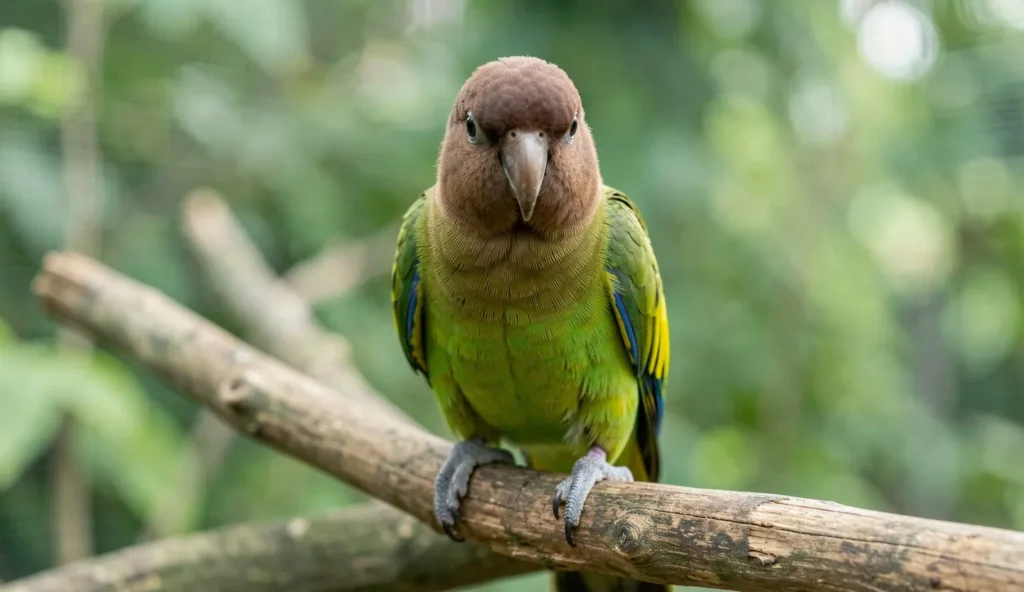
What Is a Meyer Parrot
The Meyer Parrot, scientifically known as Poicephalus meyeri, is a small parrot native to sub-Saharan Africa. This species belongs to the Poicephalus genus, which also includes the Senegal parrot and the red-bellied parrot. The Meyer Parrot stands out for its calm disposition and relatively quiet nature, making it a suitable choice for apartment dwellers.
Origin and Natural Habitat
Meyer parrots originate from the savannas and woodlands of sub-Saharan Africa, ranging from Sudan and Ethiopia down to South Africa. They inhabit dry, open forests and often nest in tree hollows. Their wild diet consists of seeds, fruits, and berries foraged across their home range.
Appearance and Physical Features
The Meyer Parrot is often mistaken for the Senegal parrot, but a few distinct features set them apart. The most notable difference is the brown head, which gives the Meyer its common nickname “brown parrot.” This section covers size, body shape, and plumage details.
Size and Body Shape
An adult Meyer Parrot measures 20 to 23 cm (8 to 9 inches) in length and weighs 80 to 120 grams. It has a stocky build with a short tail, typical of Poicephalus parrots. The wings are rounded, and the beak is horn-colored and strong.
Plumage and Coloration
The head and neck are a uniform brown, while the body is predominantly green. Yellow patches appear on the crown and shoulder areas, and the wing edges show subtle blue highlights. The eyes are dark brown, and the legs are grey. This coloration provides excellent camouflage in the dappled light of African woodlands.
Temperament and Personality
The Meyer Parrot is known for its gentle and steady personality. It bonds closely with its owner but is not as demanding as some larger parrots. Understanding its social needs helps owners provide a harmonious environment.
Noise and Vocalizations
Compared to other parrots, the Meyer is relatively quiet. It produces soft whistles, chirps, and occasional mimicry of household sounds. With patient training, some individuals can learn a few words, but they are not prolific talkers like African grey parrots.
Social Behavior
Meyer parrots are affectionate with their bonded owners and enjoy being part of daily activities. They can become territorial during breeding season, especially around their cage. Daily interaction of at least one to two hours is necessary to prevent boredom and behavioral issues.
Housing and Cage Setup
Providing a suitable cage and environment is critical for the Meyer Parrot’s well-being. A properly set up home reduces stress and encourages natural behaviors like climbing and foraging.
Cage Size and Bar Spacing
A cage measuring a minimum of 24 x 18 x 24 inches is recommended. Bar spacing should not exceed 5/8 inch to prevent escape or injury. Horizontal bars allow the bird to climb easily, which is important for exercise.
Essential Accessories
Perches: Natural wood perches of varying diameters help maintain foot health. Bowls: Stainless steel food and water bowls are easy to clean and resist bacteria. Toys: Durable toys for chewing and foraging keep the bird mentally stimulated. Rotate toys weekly to maintain interest.
Location and Environmental Needs
Place the cage in a warm, draft-free area away from direct sunlight and kitchen fumes. The room should be at a temperature between 65 and 80 degrees Fahrenheit. Provide 10 to 12 hours of uninterrupted sleep each night to support the bird’s immune system.
Diet and Nutrition
A balanced diet is the foundation of good health for any poicephalus care regimen. The Meyer Parrot thrives on a varied menu that includes pellets, fresh produce, and limited seeds.
Pellets and Seed Mix
High-quality pellets should form the base of the daily diet, making up about 60 to 70 percent of food intake. Seed mixes can be offered as a small portion, no more than 20 percent of the total diet. Avoid all-seed diets, as they are too high in fat and can lead to obesity.
Fresh Fruits and Vegetables
Offer dark leafy greens like kale and spinach, along with chopped carrots, bell peppers, and broccoli. Safe fruits include apple, mango, berries, and melon. Remove any uneaten fresh food after two hours to prevent spoilage. This variety provides essential vitamins, especially vitamin A.
Supplements and Treats
A cuttlebone or mineral block supplies calcium for beak and bone health. Sprouted seeds make a nutritious occasional treat. Never feed avocado, chocolate, caffeine, alcohol, or salty foods, as these are toxic to parrots.
Handling and Training
Training a Meyer Parrot builds trust and prevents unwanted behaviors. Consistency and positive reinforcement are key to successful handling.
Step-Up Training
Teach the bird to step onto a finger or perch by using the command “step up.” Immediately reward with a small treat and praise. Keep training sessions short, about 5 to 10 minutes, several times a day.
Socialization Tips
Introduce the parrot to different people, sounds, and environments gradually. Speak softly and move slowly to avoid startling the bird. A well-socialized Meyer Parrot is more confident and less prone to biting or fearfulness. For additional guidance, the care approach is similar to that of a Green Cheek Conure, though the Meyer is generally quieter.
Common Health Issues
Meyer parrots are generally hardy, but they can develop problems related to diet, environment, or stress. Routine veterinary checkups help catch issues early.
Feather Plucking and Stress
Feather plucking often results from boredom, lack of attention, or insufficient cage space. Provide foraging toys and daily out-of-cage time to keep the bird occupied. If plucking continues, consult an avian veterinarian to rule out medical causes.
Obesity and Nutritional Deficiencies
A high-fat seed diet can quickly lead to obesity in this small parrot. Offer plenty of vitamin A-rich vegetables like carrots and sweet potatoes. Weigh the bird weekly to monitor changes.
Respiratory Infections
Symptoms include sneezing, nasal discharge, and tail bobbing. Keep the cage clean, avoid drafts, and isolate any new birds for at least 30 days before introducing them. Prompt veterinary care is essential.
Meyer Parrot vs Senegal Parrot – Key Differences
Many owners compare the Meyer Parrot with the Senegal parrot due to their similar size and care needs. However, several traits clearly distinguish the two species.
Head and Neck Coloration
The Meyer Parrot has a solid brown head and neck, while the Senegal parrot displays a grey head and a distinct yellow-orange patch on the chest. The Meyer’s chest is mostly green with yellow underparts, lacking the bright bib of the Senegal. This difference is the most reliable way to tell them apart.
Personality and Noise Level
Meyer parrots are generally calmer and quieter than Senegal parrots. Senegals can be more playful and occasionally nippy, especially during adolescence. Both species bond strongly with their owners, but the Meyer’s relaxed demeanor makes it slightly more adaptable to apartment living. The Peach Faced Lovebird also shares a gentle temperament, though it is a different genus.
Care Considerations
Diet, housing, and general poicephalus care are nearly identical for both species. Meyer parrots may be a little less prone to feather plucking than Senegals. Owners should still provide ample enrichment and a consistent routine. For those interested in similar small parrots, the Budgie Parakeet is another beginner-friendly option with different vocal habits.
Is a Meyer Parrot Right for You
Deciding to bring home any parrot requires honest assessment of time, space, and commitment. The Meyer Parrot fits well into many homes, but it is not a low-maintenance pet.
Best Owner Profile
This species suits first-time parrot owners who are willing to learn and spend time daily with their bird. Its quiet nature makes it excellent for apartments. Owners should be prepared to provide at least one to two hours of supervised interaction each day.
Lifespan and Commitment
A Meyer Parrot can live 20 to 30 years in captivity with proper care. This long-term commitment includes regular vet visits, a suitable diet, and consistent social interaction. Families with very young children may find the bird’s delicate nature challenging.
FAQs: Meyer Parrot
How can you tell a Meyer parrot from a Senegal parrot?
Meyer parrots have a brown head and neck, while Senegal parrots have a grey head. Senegal parrots also feature a distinct yellow and orange chest patch that Meyer parrots lack.
Are Meyer parrots good for beginners?
Yes, their calm temperament and quieter nature make them suitable for first-time parrot owners. They still require daily interaction and proper care, so commitment is necessary.
What is the lifespan of a Meyer parrot?
With proper care, Meyer parrots typically live 20 to 30 years in captivity.
Do Meyer parrots talk?
They can learn to mimic a few words and sounds, but they are not as talented talkers as larger parrots. Their vocalizations are usually soft whistles and chirps.
What should I feed my Meyer parrot?
A balanced diet includes high-quality pellets, fresh vegetables, fruits, and limited seeds. Avoid avocado, chocolate, and high-fat treats.
How much space does a Meyer parrot need?
A cage of at least 24x18x24 inches with horizontal bars is recommended. Daily out-of-cage time for exercise and social interaction is essential.
Final Note
Meyer parrots make wonderful companions for those who appreciate a calm, intelligent, and visually distinct small parrot. With proper care, attention, and a well-planned environment, these birds reward their owners with years of gentle affection.