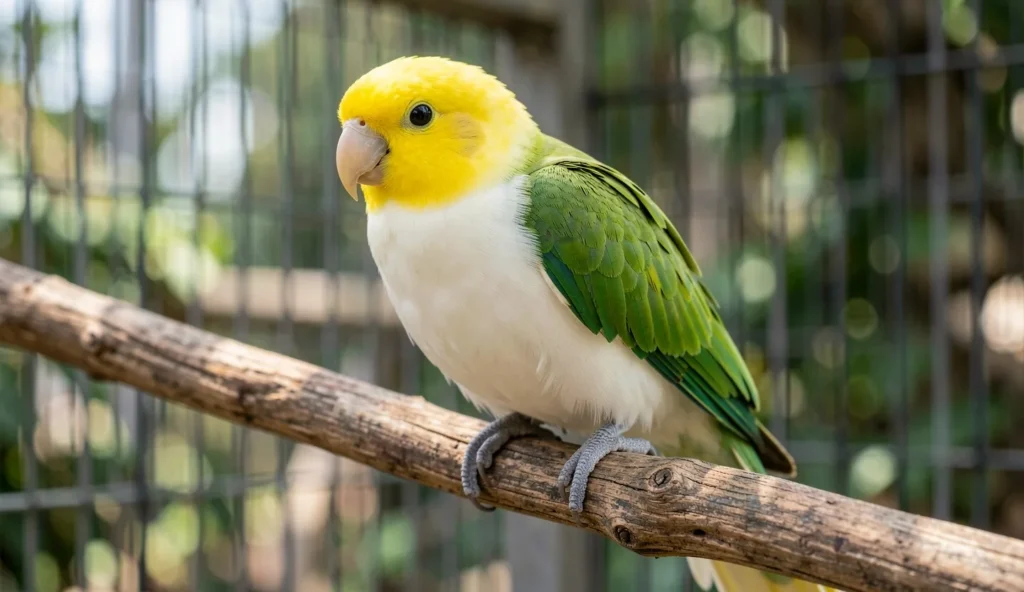
What Is a White Bellied Caique
The White Bellied Caique, scientifically known as Pionites leucogaster, is a small medium parrot native to the Amazon Basin in South America. This bird is instantly recognizable by its white belly and chest, bright yellow head, and green wings. The White Bellied Caique stands out for its energetic, playful personality and strong bond with owners.
Physical Appearance of the White Bellied Caique
Size and Weight
Adult White Bellied Caiques reach a length of about 23 centimeters and weigh between 150 and 170 grams. They have a stocky, compact body with a short tail. Their build makes them agile climbers and acrobatic fliers within the cage.
Plumage and Color Patterns
The plumage of a White Bellied Caique is vivid and distinctive. Key color features include:
- White belly and chest
- Bright yellow head and neck
- Green wings and back
- Orange thighs and crown
- Pinkish feet and beak
These colors make the White Bellied Caique one of the most visually striking South American parrots. Juveniles have slightly duller feathers until their first molt.
White Bellied Caique Temperament and Personality
Playful and Energetic Nature
The White Bellied Caique is extremely active and acrobatic. It loves climbing, hopping, and wrestling with toys or human hands. This bird needs several hours of out-of-cage time daily to burn off its abundant energy.
Social and Affectionate Behavior
This caique forms strong bonds with its owners and enjoys cuddling and physical contact. It seeks attention constantly and thrives on interactive play. Similar to the Green Cheek Conure, the White Bellied Caique craves daily engagement and can become frustrated if ignored.
Intelligence and Curiosity
White Bellied Caiques solve simple puzzles and investigate new objects with enthusiasm. They require mental stimulation to prevent boredom. Offering foraging toys and training sessions keeps their minds sharp and reduces unwanted behaviors.
Potential Behavioral Challenges
This parrot can be stubborn and may develop screaming if bored. It is also prone to nipping during excitement or when feeling territorial over its cage or toys. Consistent training and ample enrichment help manage these issues.
Compatibility with Other Birds and Pets
Living with Other Parrots
The White Bellied Caique generally gets along with other caiques but may bully smaller or timid birds. Supervised introductions are essential when adding a new parrot to the home. For example, the Meyer Parrot is more docile and could be dominated by an assertive caique.
Interaction with Dogs and Cats
This caique prefers to be the dominant household pet. It may chase or be chased by dogs and cats. Never leave a White Bellied Caique unsupervised with potential predators. A dedicated bird room provides the safest environment.
Compatibility with Multiple Caiques
Pair bonding is common among White Bellied Caiques. Two caiques can entertain each other, but they may become less human-oriented if paired as juveniles. Owners who want a strong human bond should keep a single bird or introduce a companion carefully.
Exercise Requirements for a White Bellied Caique
A White Bellied Caique needs at least three to four hours of supervised out-of-cage play time each day. Provide a variety of toys that encourage climbing, swinging, and shredding. Activity ideas include:
- Foraging puzzles with hidden treats
- Rope swings and ladders
- Cardboard boxes for shredding
- Supervised flight practice in a safe room
Without sufficient exercise, this bird can become overweight and develop behavioral issues.
Training Tips for a White Bellied Caique
Training a White Bellied Caique requires patience and positive reinforcement. Use short sessions of five to ten minutes several times a day. Focus on basic commands like step up and come here.
Because they are intelligent, these birds learn tricks quickly. Target training works well for teaching desired behaviors. Avoid punishment, as it can damage trust and increase nipping. Regular socialization with different people helps them remain friendly.
Grooming and Daily Care
Bathing and Hygiene
Offer a shallow water dish for bathing several times a week. Misting with lukewarm water weekly also keeps feathers clean. Use a damp cloth to remove stubborn dirt from the plumage.
Nail and Beak Maintenance
Clip nails every four to six weeks to prevent overgrowth. Provide a cuttlebone for natural beak wear. Consult an avian vet for trims if you are unsure about the process.
Diet and Nutrition for a White Bellied Caique
Pellet Base and Seed Mixes
High-quality pellets should make up 60 to 70 percent of the diet. Limit seed mixes due to their high fat content. Avoid all-seed diets, as they lead to nutritional deficiencies.
Fresh Fruits and Vegetables
Offer dark leafy greens, carrots, bell peppers, and other vegetables daily. Fruits like apple, berries, and kiwi can be given in moderation. Remove uneaten fresh food after two to three hours to prevent spoilage.
Treats and Supplements
Use sprouted seeds as healthy treats. Nuts and grains can be offered occasionally. A calcium supplement is recommended for breeding females. Always provide fresh, clean water.
Common Health Issues in White Bellied Caiques
White Bellied Caiques are relatively hardy but susceptible to certain conditions. Watch for signs of feather plucking, respiratory infections, or obesity. Common health concerns include:
- Psittacine beak and feather disease (PBFD)
- Proventricular dilatation disease (PDD)
- Aspergillosis from moldy environments
- Vitamin A deficiency from poor diet
Annual veterinary checkups are essential for early detection. A clean cage and proper nutrition reduce most health risks.
Is a White Bellied Caique Right for You
The White Bellied Caique is best suited for intermediate owners who can dedicate several hours daily to interaction and enrichment. Its high energy, need for socialization, and potential for nipping make it less ideal for first-time bird owners. This parrot offers a lifetime of play and affection for those who meet its needs.
Frequently Asked Questions
Are White Bellied Caiques good for beginners?
White Bellied Caiques are not recommended for first-time bird owners. They require consistent handling and mental stimulation, making them better suited for intermediate owners with parrot experience.
Do White Bellied Caiques talk?
Their talking ability is limited compared to larger parrots. They can learn a few words and sounds, but they are more known for whistling and mimicking noises.
How long do White Bellied Caiques live?
The average lifespan is 20 to 30 years, with some living up to 40 years under excellent care. Lifespan depends on diet, exercise, and veterinary care.
Are White Bellied Caiques noisy?
They have a moderate noise level. They can emit loud calls and screams when excited or bored, but they are generally less noisy than cockatoos or macaws. Proper enrichment helps manage noise.
Can White Bellied Caiques live with other parrots?
They are generally compatible with other caiques but may be aggressive toward smaller or timid species. Supervised introductions are essential for multi-parrot households.
How much space does a White Bellied Caique need?
Minimum cage size is 24 by 24 by 36 inches with bar spacing no wider than 3/4 inch. They also need several hours of out-of-cage play time daily.
Final Note
The White Bellied Caique rewards dedicated owners with endless entertainment and affection. With proper care, training, and social interaction, this South American parrot becomes a cherished family member.