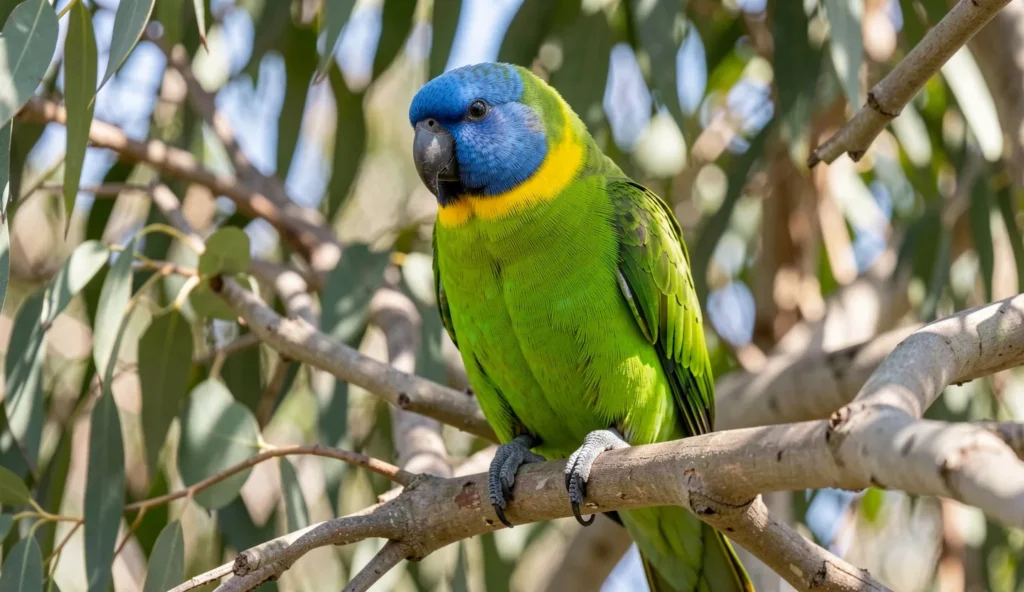
What Is an Australian Ringneck Parrot
The Australian Ringneck Parrot, scientifically known as Barnardius zonarius, belongs to a group of medium-sized parrots native to Australia. This species includes four recognized subspecies, each adapted to different arid and semi-arid regions across the continent. One subspecies, Barnardius zonarius semitorquatus, earned the nickname “28 parrot” because its call distinctly sounds like the words “twenty-eight.”
Origin and Nickname
The name “28 parrot” is most commonly used in Western Australia, where the call is a familiar part of the bush. The bird repeats a sharp two-syllable whistle that locals interpret as “twen-ty-eight.” This vocalization sets it apart from other ringneck parrots such as the Indian Ringneck Parakeet, which has a different, more high-pitched call. The Australian Ringneck’s natural range spans from Western Australia through South Australia and into Queensland and New South Wales.
Appearance and Subspecies
The Australian Ringneck Parrot exhibits bright green plumage with a yellow collar around the neck, a blue head, and a blue-green belly. The tail is long and pointed, and the beak is horn-colored. Males and females look similar, though females may have slightly duller coloration. Four subspecies exist, each with subtle variations in size, color intensity, and range.
The 28 Parrot and Its Distinctive Call
The 28 parrot call is a loud, clear “twenty-eight” that carries over long distances. Regional variations exist; birds in the south tend to have a slower, more drawn-out call, while northern birds sound faster. This call is used for contact between flock members and during dawn and dusk. Unlike the Alexandrine Parakeet, which has a deeper voice, the Australian Ringneck’s call is piercing and rhythmic.
Subspecies of Barnardius zonarius
| Subspecies | Common Name | Range | Key Features |
|---|---|---|---|
| Barnardius zonarius zonarius | Port Lincoln Ringneck | Southern Western Australia and South Australia | Bright yellow collar, dark blue head, green back |
| Barnardius zonarius barnardi | Mallee Ringneck | South-eastern Australia | Paler yellow collar, blue-green belly, smaller size |
| Barnardius zonarius macgillivrayi | Cloncurry Ringneck | North-western Queensland | Larger size, yellowish-green belly, faint collar |
| Barnardius zonarius semitorquatus | Twenty-eight Parrot | South-west Western Australia | Distinctive “twenty-eight” call, bright yellow collar |
Temperament and Personality
The Australian Ringneck Parrot is known for being active, curious, and occasionally independent. These parrots require consistent interaction and mental stimulation to remain tame. Without regular handling, they may become skittish or territorial. Intermediate owners find them rewarding because they are less demanding than larger species like cockatoos but still need a committed routine. Training methods used for the Jardine Parrot—such as positive reinforcement and target training—work well with Australian Ringnecks.
Social Behavior
In the wild, these parrots form small flocks and are highly alert. In captivity, a single bird bonds strongly with its owner but may become aggressive toward strangers or other pets. They are not typically cuddly but enjoy perching on a shoulder or playing near people. Noise levels are moderate; they call loudly for a few minutes in the morning and evening and remain quiet for the rest of the day.
Diet and Nutrition
A balanced diet is essential for maintaining the health of an Australian Ringneck Parrot. These birds are prone to obesity if fed too many seeds, so portion control matters. The base diet should consist of high-quality pellets, supplemented with fresh vegetables and fruits.
Recommended Foods
- High-quality parrot pellets (70% of diet)
- Fresh vegetables: spinach, broccoli, carrots, sweet potato
- Fresh fruits: apple, pear, berries, mango (in moderation)
- Small amounts of seed mix (no more than 10%)
- Clean water changed daily
Foods to Avoid
- Avocado and chocolate – toxic to parrots
- Caffeine and alcohol
- High-salt snacks and sugary treats
- Rhubarb and onion
Similar to a Red Bellied Parrot, Australian Ringnecks should never be given processed human food. Offer chopped vegetables in a separate bowl and remove uneaten fresh food after two hours to prevent spoilage.
Housing and Enclosure
Australian Ringneck Parrots need a spacious enclosure to accommodate their active nature. A flight cage or aviary is ideal, but a large indoor cage can work if the bird gets daily out-of-cage time.
Minimum Cage Size
- Minimum width: 36 inches for a single bird
- Bar spacing: 5/8 to 3/4 inch to prevent escape or injury
- Horizontal bars for climbing
- Height: at least 48 inches to allow flight
Enrichment and Toys
These parrots are intelligent and need regular enrichment. Provide foraging toys, puzzle feeders, and destructible chewing materials like untreated pine or cardboard. Rotate toys weekly to prevent boredom. A shallow water dish for bathing encourages natural preening and keeps feathers in good condition.
Health and Common Issues
With proper care, an Australian Ringneck Parrot can live 15 to 25 years. Preventive health measures—such as a clean environment, balanced diet, and regular veterinary check-ups—reduce the risk of disease. Some rare parrot breeds face similar viral threats, as discussed in the article on Rarest Parrot Breeds in the World.
Signs of a Healthy Parrot
- Bright, clear eyes and smooth feathers
- Consistent droppings with solid white and green parts
- Good appetite and active behavior
- Clean nostrils and beak
Common Ailments
- Psittacine beak and feather disease (PBFD) – viral, incurable; test new birds before introduction
- Respiratory infections – caused by drafts, poor humidity, or dusty environment
- Obesity – from high-seed diet and lack of exercise
- Feather plucking – often stress-related; identify triggers
Training and Enrichment
Training an Australian Ringneck Parrot requires patience and consistency. These birds respond well to short, daily sessions using positive reinforcement. Start with step-up and recall commands before moving to tricks like target touching.
Basic Training Tips
- Use a clicker or a verbal marker like “good”
- Keep sessions to 5–10 minutes twice a day
- Reward with a favorite treat (a sunflower seed or a piece of apple)
- Never shout or punish – it damages trust
Foraging enrichment is particularly effective. Hide treats inside paper cups or cardboard rolls to encourage natural problem-solving. The Australian Ringneck’s intelligence makes it a good candidate for advanced training similar to that used with other medium parrots.
Is an Australian Ringneck Right for You
Intermediate owners who can provide a structured routine and a spacious environment will find the Australian Ringneck Parrot a rewarding companion. These parrots are not suitable for apartments due to their morning and evening calls. They require at least two hours of supervised out-of-cage time daily. Noise tolerance, space for a large cage, and commitment to social interaction are essential. For those ready to meet these needs, the Australian Ringneck offers years of engaging companionship.
Considerations Before Buying
- Lifespan of 15–25 years – a long-term commitment
- Regular veterinary care needed, including annual check-ups
- Potential for loud calls, especially at dawn and dusk
- Requires a varied diet and enrichment to prevent boredom
Frequently Asked Questions
Why is the Australian Ringneck called a 28 parrot?
The call sounds like the words “twenty-eight.” This nickname is mostly used in Western Australia, and the subspecies with this call is Barnardius zonarius semitorquatus.
How long do Australian Ringneck parrots live?
Average lifespan is 15 to 20 years in captivity. With excellent care, some individuals reach 25 years or more.
Can Australian Ringnecks talk?
They are capable of mimicking speech but are not among the best talkers. Some individuals learn a few words and phrases with consistent training.
What size cage does an Australian Ringneck need?
Minimum cage width is 36 inches for a single bird. A larger aviary is recommended if keeping a pair. Bar spacing should be 5/8 to 3/4 inch to prevent escape.
Are Australian Ringneck parrots noisy?
They have a loud, distinctive call that carries outdoors. Noise levels are moderate compared to cockatoos but can be disruptive in apartments. Morning and evening are peak calling times.
Do Australian Ringnecks get along with other birds?
They can be territorial and may bully smaller birds. Pair bonding is strong, and they often do well with another ringneck. Introduce new birds slowly and monitor interactions.
Final Note
Owning an Australian Ringneck Parrot is a rewarding experience when the owner is prepared for its needs. With proper housing, diet, and interaction, this bird will thrive as an active and engaging pet.