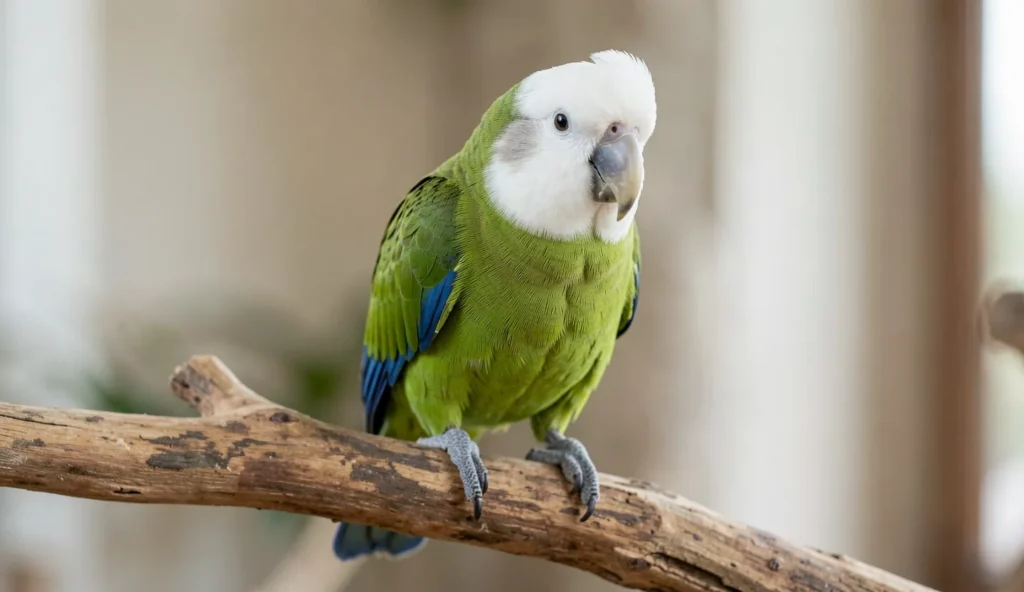
What Is a White Capped Pionus
The White Capped Pionus, scientifically known as Pionus senilis, is a medium parrot native to the forests of Central America. This species is recognized for its quiet demeanor and the distinctive white patch on its forehead. Intermediate bird owners often choose this parrot for its manageable size and calm personality.
Species Origin and Natural Range
This Central American parrot inhabits lowland forests and wooded areas from eastern Mexico down to western Panama. Unlike the Senegal Parrot, which comes from Africa, the White Capped Pionus thrives in humid tropical environments. Its natural diet consists of fruits, seeds, and vegetation found in the canopy.
Appearance and Physical Features
Size and Weight
- Length: 23 to 26 centimeters (9 to 10 inches)
- Weight: 190 to 240 grams
- Stocky body with a short, blunt tail
Plumage and Coloration
- White cap extends from the forehead to the nape
- Body is primarily green with blue-tipped wings
- Undertail coverts are bright red
- Feet are pinkish and beak is horn-colored
The white cap pattern is structurally different from the Nuns pigeon‘s white body and colored head, but both share a striking color contrast. Juvenile birds lack the full white cap until their first molt.
Lifespan and Longevity Factors
Average Lifespan in Captivity
A White Capped Pionus lifespan typically ranges from 25 to 40 years when provided with proper care. In the wild, life expectancy is shorter due to predation and disease. Captive birds that receive excellent nutrition and veterinary attention often reach the upper end of this range.
Factors That Affect Lifespan
- Diet quality and variety
- Housing size and enrichment
- Regular veterinary checkups
- Stress levels and social interaction
Providing proper nutrition and enrichment can extend the pionus lifespan, similar to the Meyer Parrot‘s longevity with excellent care. Owners must commit to a long-term responsibility spanning decades.
Housing Essentials
Cage Size and Configuration
- Minimum dimensions: 24 x 24 x 30 inches (61 x 61 x 76 cm)
- Bar spacing: no wider than 3/4 inch (19 mm)
- Horizontal bars encourage climbing
Cage Placement and Environment
- Place in a quiet room away from drafts and direct sunlight
- Maintain temperature between 65 and 80 degrees Fahrenheit
- Avoid kitchens and areas with strong fumes
Perches and Toys
- Provide natural wood perches of varying diameters
- Include foraging toys and destructible items like pine cones
- Rotate toys weekly to prevent boredom
Out-of-Cage Time
This species needs at least 2 to 3 hours of supervised time outside the cage each day. Offer a bird-safe room with closed windows and doors. While the Capuchin pigeon requires a large flight aviary, the White Capped Pionus can exercise well in a secure indoor space.
Diet and Nutrition
Base Diet
- High-quality formulated pellets should make up 60 to 70 percent of the diet
- Select pellets sized for small to medium parrots
Fresh Foods and Supplements
- Fresh vegetables daily: leafy greens, carrots, bell peppers
- Fruits in moderation: apple, berries, mango
- Sprouted seeds and legumes add variety
Foods to Avoid
- Avocado, chocolate, caffeine, and alcohol
- High-salt or high-sugar human foods
- Apple seeds, onion, and garlic
As with the Red Bellied Parrot, avoid high-fat seeds and offer a varied diet to prevent nutritional deficiencies.
Handling and Temperament
Common Personality Traits
- Quiet and calm compared to many other parrot species
- Can be shy or cautious with strangers
- Forms a strong bond with the primary caregiver
Socialization and Training
Start handling the bird early to build trust and prevent fear. Use positive reinforcement with favorite treats. Punishment or loud voices can cause lasting anxiety. A well-socialized White Capped Pionus becomes a gentle companion that enjoys shoulder time and gentle petting.
Common Health Issues
Respiratory Infections
Symptoms include wheezing, nasal discharge, and labored breathing. Drafts and poor ventilation often trigger these infections. Keep the cage in a stable environment and consult an avian vet at the first sign of illness.
Feather Plucking and Stress
Boredom or lack of social interaction can lead to feather plucking. Provide enrichment and regular out-of-cage time to reduce stress. A consistent daily routine helps the bird feel secure.
Obesity and Nutritional Deficiencies
A diet heavy in seeds and low in fresh foods can cause obesity and vitamin deficiencies. Monitor the bird’s weight weekly and offer balanced pellets as the base diet.
Is a White Capped Pionus Right for You
Lifestyle Compatibility
Intermediate owners who want a quieter, less demanding parrot will find the White Capped Pionus a rewarding pet. The bird requires consistent social time, a spacious cage, and a varied diet. Those who cannot commit to a 25- to 40-year lifespan should consider other options.
Frequently Asked Questions
How long do White Capped Pionus parrots live?
They live 25 to 40 years in captivity with proper care. Lifespan depends on diet, housing, and veterinary attention.
What size cage does a White Capped Pionus need?
The minimum cage size is 24 x 24 x 30 inches with bar spacing no wider than 3/4 inch.
Are White Capped Pionus parrots loud?
They are quieter than most parrots, making soft whistles and chirps. They are suitable for apartments with proper out-of-cage time.
What should I feed a White Capped Pionus?
A pellet-based diet supplemented with fresh vegetables and fruits is ideal. Avoid avocado, chocolate, and high-fat seeds.
Do White Capped Pionus parrots talk?
They have limited speech ability and may learn a few words. They are not strong talkers but can mimic sounds.
How much out-of-cage time does a White Capped Pionus need?
At least 2 to 3 hours of supervised time daily in a bird-safe room is necessary for exercise and interaction.
Final Note
Providing a stable environment, balanced nutrition, and daily attention will help a White Capped Pionus thrive for decades. This quiet and affectionate parrot rewards patient owners with steady companionship.