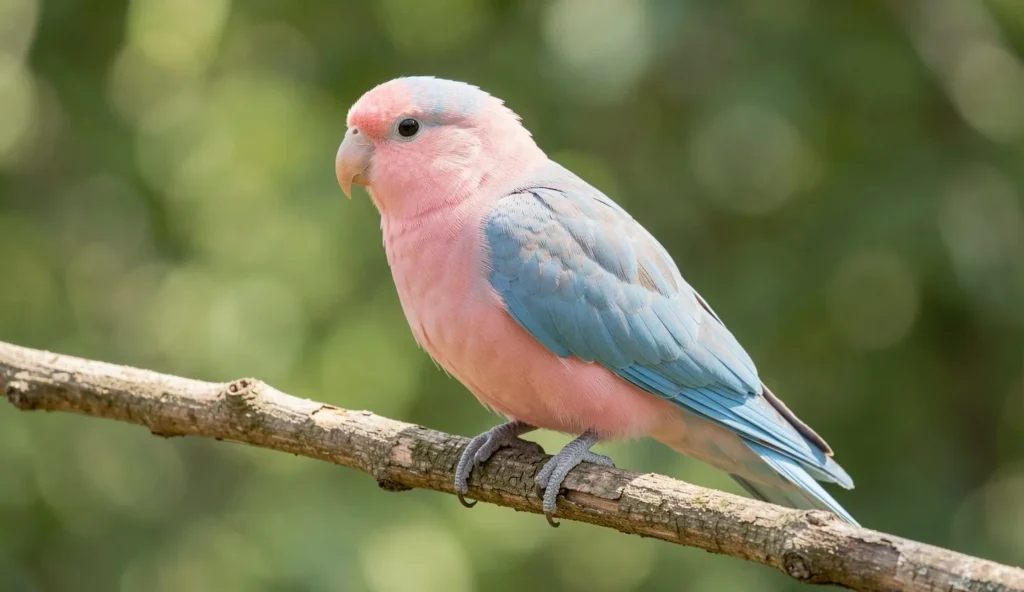
What Is a Bourke Parrot
The Bourke Parrot, scientifically known as Neopsephotus bourkii, is a small parrot native to Australia. This gentle bird belongs to the Australian grass parakeet group and stands out for its calm, quiet demeanor. Many beginners and elderly owners find the Bourke Parrot an ideal pet due to its docile nature.
Origin and Unique Traits
Sir Thomas Bourke, a former governor of New South Wales, inspired the common name. In the wild, these birds inhabit arid and semi-arid regions of central and western Australia. They travel in small flocks and feed on grass seeds. Unlike many other parrots, the Bourke Parrot rarely screams or bites. Instead, it produces soft chirps and whistles that fit well in quiet homes. This species is often compared to the similarly gentle Red Bellied Parrot in temperament.
Appearance and Color Variations
The Bourke Parrot measures 19 to 23 centimeters in length and weighs around 40 to 50 grams. Its soft pink chest, blue rump, and brownish-grey back create a muted but lovely palette. The eyes are dark with a narrow white eye ring. This small parrot is one of the few naturally pink parrots in the world.
Color Morphs
- Natural wild type: pink belly, blue rump, brown-grey back
- Rosy morph: deeper and more extensive pink coloration
- Lutino morph: mostly yellow with pink undertones
- Fallow and cream mutations: softer tones with reduced melanin
Sexual Dimorphism
Males display a brighter blue forehead and a blue cere above the beak. Females have a duller blue or brownish cere. Juveniles resemble adult females until their first molt at around four months. Observing the cere color is the most reliable way to sex adult birds. The difference becomes clear once the bird reaches maturity.
Temperament and Personality
The Bourke Parrot is exceptionally docile and non-aggressive. These birds rarely bite and prefer calm interaction over boisterous play. Their quiet nature makes them suitable for elderly owners and first-time bird owners. Unlike many small parrots, the Bourke Parrot does not demand constant attention. It enjoys sitting on a shoulder or perching nearby while its owner relaxes. Another gentle species worth considering is the Budgie Parakeet, though Budgies are more active and vocal.
Why They Are So Gentle
Bourke parrots evolved in open, dry landscapes where loud calls would attract predators. They communicate with soft contact calls and rely on flight to escape danger. This evolutionary background contributes to their calm, non-confrontational personality. Owners report that even hand-raised birds rarely show aggression. They adapt well to quiet households without children or loud pets.
Exercise and Flight Requirements
Bourke parrots are strong fliers and require daily flight time to stay healthy. Unlike many parrots that climb, these birds prefer flying short distances. A safe, enclosed flight space is essential for their physical and mental well-being. Without regular exercise, they can develop obesity and muscle atrophy.
Importance of Flight
Flight allows the Bourke Parrot to maintain cardiovascular fitness and strong wing muscles. It also provides enrichment and reduces stress. Owners should allow at least two to three hours of supervised out-of-cage time each day. Ensure windows, mirrors, and ceiling fans are covered or turned off. The room should be bird-proofed to prevent escapes or collisions. This need for flight is similar to that of the active Green Cheek Conure, though Green Cheeks are more playful and vocal.
How to Provide Flight Space
- Select a large cage: minimum 24 x 18 x 24 inches
- Allow daily out-of-cage time in a safe room
- Cover windows and mirrors to prevent collisions
- Use an aviary or bird-safe room if possible
- Offer perches at varying heights to encourage movement
Diet and Nutrition
A balanced diet is crucial for the Bourke Parrot’s health. In the wild, they eat grass seeds, green shoots, and occasional small insects. Captive birds need a high-quality seed mix designed for grass parakeets, supplemented with pellets and fresh foods. Avoid high-fat seeds like sunflower in large amounts. Proper nutrition prevents obesity and supports a long lifespan of 15 to 25 years.
Seed Mix vs Pellets
A commercial seed mix for small parrots serves as a staple. However, a seed-only diet lacks essential vitamins and minerals. Pellets provide balanced nutrition and should make up about 30 to 40 percent of the diet. Introduce pellets gradually by mixing them with seeds. This approach works well for many small parrots, including the Meyer Parrot, which also benefits from pellet supplementation.
Fresh Foods and Treats
- Offer dark leafy greens such as spinach and kale daily
- Provide small portions of apple, pear, berries, and melon
- Include sprouted seeds for extra nutrients
- Avoid avocado, chocolate, caffeine, and salty foods
- Limit fruit to avoid excess sugar
Grooming and Daily Care
Bourke parrots are relatively low maintenance but require regular hygiene routines. Bathing helps keep their feathers clean and in good condition. Nail trimming prevents overgrowth and discomfort. Cage cleaning is essential to prevent bacterial growth and respiratory issues.
Bathing
Provide a shallow water dish for bathing two to three times per week. Misting with lukewarm water is also effective. Allow the bird to dry in a warm, draft-free room. This routine mimics the natural rain showers they would encounter in the wild.
Nail and Beak Maintenance
Trim nails every four to six weeks if they become too long. Use a bird-safe nail clipper or seek veterinary assistance. Beak trimming is rarely needed when the bird has appropriate perches and chew toys. Natural wood perches help file nails and beak naturally. Regular vet checkups ensure all grooming needs are met.
Common Health Issues
Bourke parrots are generally hardy, but they can suffer from specific health problems. Respiratory infections, obesity, egg binding in females, and psittacosis are the most common. Prevention relies on a clean environment, balanced diet, and regular veterinary care. Early detection improves treatment outcomes.
Preventing Health Problems
- Provide a clean, well-ventilated cage
- Maintain a proper diet with low fat content
- Monitor weight weekly to catch obesity early
- Offer calcium supplements for breeding females
- Schedule annual vet exams for bloodwork and fecal tests
Owners should also be aware that Bourke parrots are susceptible to stress-related illnesses. A calm environment reduces the risk. If you are considering another docile species, the Australian Ringneck also has a gentle side, though it is slightly larger and more active.
Is a Bourke Parrot Right for You
The Bourke Parrot suits individuals and families who value a quiet, low-maintenance companion. Its gentle temperament makes it ideal for seniors and first-time bird owners. However, the need for daily flight space may not work in very small apartments. Those who can provide a safe room for flight and a calm routine will find this bird a joy.
Key Considerations
- Quiet and non-aggressive, rarely bites
- Requires supervised out-of-cage flight time daily
- Diet consists of seeds, pellets, and fresh produce
- Lifespan of 15 to 25 years with proper care
- Good for elderly owners and beginners
Compared to more demanding parrots like the Eclectus Parrot, the Bourke Parrot is much easier to keep. Eclectus parrots require a specialized fruit-heavy diet and more social interaction. For someone seeking a calm, undemanding pet, the Bourke Parrot is an excellent choice.
Frequently Asked Questions
What is the lifespan of a Bourke Parrot?
Bourke parrots live 15 to 25 years with proper care. Their lifespan depends on diet, housing, and regular vet checkups.
Are Bourke Parrots noisy?
Bourke parrots are one of the quietest parrot species. They produce soft chirps and whistles rather than loud squawks.
Can Bourke Parrots talk?
Bourke parrots are not known for talking. They may mimic a few simple sounds but are not vocal mimics like larger parrots.
What fruits can Bourke Parrots eat?
Safe fruits include apple, pear, berries, mango, and melon. Always remove seeds from apples and avoid citrus in excess.
How much space does a Bourke Parrot need?
A minimum cage size of 24x18x24 inches is recommended. Daily out-of-cage flight time in a safe room is essential for their health.
Are Bourke Parrots good for beginners?
Yes, their gentle and calm temperament makes them ideal for first-time bird owners. They require consistent care but are less demanding than more energetic parrots.
Final Note
The Bourke Parrot offers a peaceful presence that many bird owners cherish. With proper attention to diet, flight space, and gentle handling, this Australian grass parakeet becomes a wonderful long-term companion.