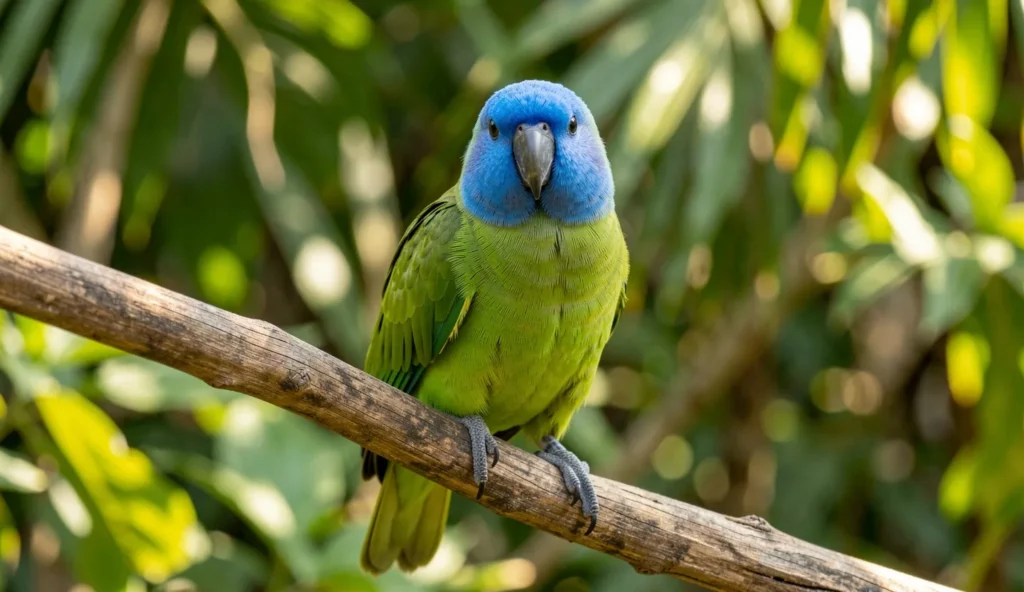
What Is a Blue Headed Pionus
The Blue Headed Pionus, scientifically known as Pionus menstruus, is a medium parrot native to the tropical forests of South America. This quiet parrot stands out for its gentle disposition and remarkably low noise level compared to other parrots. Beginner and intermediate owners seeking a calm companion often turn to this species.
Origin and Natural Habitat
Blue Headed Pionus parrots inhabit regions from Colombia and Venezuela through Brazil, Peru, and Bolivia. They thrive in tropical forests and wooded areas near rivers or streams. These South American parrots live in small flocks, foraging for fruits, seeds, and vegetation.
Why Choose a Blue Headed Pionus
This species offers a calm and steady temperament that suits quiet households or apartment living. The Blue Headed Pionus rarely screams, making it an ideal choice for owners who prefer a serene environment. Its independent nature means it entertains itself for short periods while still bonding closely with family members.
Appearance and Physical Features
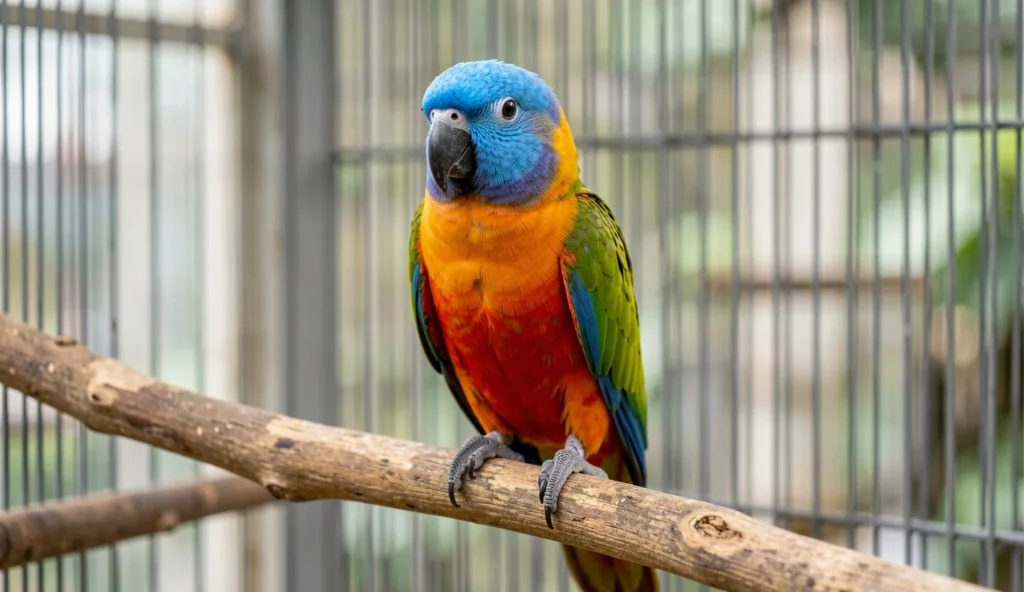
The Blue Headed Pionus displays a striking bright blue head and neck that contrasts with a deep green body. Its red undertail coverts and dark gray beak add to its distinctive look. This medium parrot has a stocky build with a short square tail.
Size and Weight
- Length: 11 to 12 inches from head to tail
- Weight: 240 to 260 grams
- Build: Stocky with a short square tail
Plumage Coloration
- Bright blue head and neck feathers
- Green back, wings, and chest with slight bronze iridescence
- Red undertail coverts and a dark gray beak
Sexual Dimorphism
Males and females look nearly identical. Reliable sexing requires DNA testing or surgical sexing performed by an avian veterinarian. No visual gender differences exist in this species.
Temperament and Personality
The Blue Headed Pionus is known for its calm and gentle demeanor. It rarely engages in destructive behavior or loud vocalizations. This quiet parrot prefers perching and observing its surroundings rather than demanding constant attention.
Calm Demeanor
These parrots bond closely with one or two family members and remain relaxed in predictable routines. They do not scream excessively and are less prone to feather plucking than many other parrots. Their steady nature makes them suitable for homes with older children or other pets.
Intelligence and Curiosity
Blue Headed Pionus parrots possess moderate intelligence and enjoy solving foraging puzzles. They can learn simple tricks through consistent positive reinforcement training. Daily mental stimulation with new toys or activities prevents boredom.
Interaction with Other Pets
These parrots generally show non-aggressive behavior toward other birds. Supervision is necessary around larger parrots, dogs, or cats. A stable routine helps them feel secure and reduces stress.
Exercise Requirements
Daily out-of-cage time is essential for a Blue Headed Pionus. At least two hours of supervised exercise keeps them physically healthy and mentally stimulated. Provide climbing structures and opportunities for wing stretching.
Recommended Activity
- At least 2 hours of supervised out-of-cage time daily
- Provide a play stand or bird-safe tree
- Encourage climbing and wing stretching
Toys for Enrichment
- Offer puzzle feeders and foraging toys
- Rotate toys weekly to maintain interest
- Avoid small parts that could be swallowed
Training Your Blue Headed Pionus
Training a Blue Headed Pionus requires patience and positive reinforcement. These parrots respond well to short sessions with consistent cues. Early socialization helps them adapt to different people and environments.
Step-Up Training
Teach the bird to step onto a finger or perch using a verbal cue like “step up.” Reward with a favorite treat such as a sunflower seed. Practice daily in sessions lasting no more than five minutes.
Trick Training
Simple tricks like target training or turning around can be taught easily. Keep sessions short to avoid frustration. Use small treats as rewards and always end on a positive note.
Socialization Tips
Expose the bird to various people and environments gradually. Never force interactions if the bird shows fear. Reward calm behavior with gentle praise and treats.
Grooming and Care Tips
Routine grooming keeps a Blue Headed Pionus comfortable and healthy. Bathing, nail trimming, and beak care are essential tasks. Wing clipping is optional and should be done by an avian vet.
Bathing
Provide a shallow dish of water or mist the bird with a spray bottle. Bathing two to three times per week is sufficient. Let the bird dry in a warm, draft-free area.
Nail and Beak Care
Trim nails every four to six weeks using bird-safe clippers. Provide a cuttlebone or mineral block for natural beak maintenance. Consult a vet if overgrowth occurs.
Wing Clipping
Wing clipping limits flight but still allows gliding. Always consult an avian veterinarian for proper technique. Never clip both wings asymmetrically.
Diet and Nutrition
A balanced diet is vital for the health of a Blue Headed Pionus. High-quality pellets should form the base, supplemented with fresh vegetables and fruits. Calcium-rich foods are especially important for this species.
Pelleted Diet
Pellets should make up 60 to 70 percent of the diet. Choose pellets without artificial colors or preservatives. Rotating brands provides nutritional variety.
Fresh Foods and Vegetables
Offer dark leafy greens, carrots, bell peppers, and squash daily. Fruits like apples, berries, and melon can be given in moderation. Avoid avocado, chocolate, caffeine, and high-fat seeds.
Calcium Supplements
Pionus parrots are prone to calcium deficiency. Add cuttlebone or calcium powder to food weekly. Ensure access to natural sunlight or a full-spectrum UVB light.
Common Health Issues
Blue Headed Pionus parrots face several health concerns that owners should monitor. Respiratory infections, obesity, feather plucking, and calcium deficiency are the most frequent problems. Regular vet check-ups help catch issues early.
Respiratory Infections
Symptoms include sneezing, nasal discharge, and labored breathing. Drafts, poor air quality, or bacteria cause these infections. Immediate avian vet attention is required.
Obesity
Overfeeding high-fat seeds leads to obesity. Monitor weight weekly using a gram scale. Limit treats and encourage daily exercise.
Feather Plucking
Boredom, stress, or medical issues can trigger feather plucking. Provide enrichment and a consistent routine. Consult a vet to rule out underlying illness.
Calcium Deficiency
Calcium deficiency causes seizures, egg binding, and brittle bones. Breeding females are especially vulnerable. Prevent with proper diet and UVB lighting.
Is a Blue Headed Pionus Right for You
This quiet parrot suits owners who appreciate a calm companion without constant noise. It adapts well to apartment living and does not demand the same attention as larger parrots. However, it still requires daily interaction and mental stimulation.
Ideal Home Environment
Best suited for quiet homes without loud noises or chaotic schedules. A stable daily routine helps the bird feel secure. Apartment-friendly due to lower noise levels.
Time and Attention Needs
Needs daily interaction but is less demanding than cockatoos or macaws. Can entertain itself for short periods. Left alone for long hours may develop behavioral issues.
Lifespan and Commitment
Lives 25 to 40 years with proper care. Adopting a Blue Headed Pionus is a lifelong commitment. Rehoming adult birds can be stressful for the parrot.
For those considering other calm parrots, the Meyer Parrot offers a similar gentle temperament. Likewise, the Red Bellied Parrot is another small African species known for its quiet nature. Owners interested in slightly more active birds might explore the Senegal Parrot or the Green Cheek Conure. For absolute beginners, the Budgie Parakeet remains a popular choice.
Frequently Asked Questions
Are Blue Headed Pionus parrots good for beginners?
They suit intermediate owners but can work for dedicated beginners who research properly. Their calm nature makes them easier than many other parrots.
How much noise does a Blue Headed Pionus make?
They are considered quiet compared to macaws or cockatoos. Vocalizations are soft whistles and short squawks, not constant screaming.
What is the lifespan of a Blue Headed Pionus?
Average lifespan is between 25 and 40 years with proper care. Some individuals may live longer with excellent diet and veterinary care.
Can Blue Headed Pionus parrots talk?
They have limited talking ability compared to African greys or Amazons. Some individuals learn a few words or phrases with consistent training.
What size cage does a Blue Headed Pionus need?
Minimum cage size is 24 inches wide, 24 inches deep, and 30 inches tall. Bar spacing should be 3/4 inch to prevent escape.
Do Blue Headed Pionus parrots need a companion?
They can live happily alone if given enough human interaction. A second parrot may be beneficial but requires careful introduction.
Final Note
The Blue Headed Pionus offers a rare combination of beauty, calmness, and low noise in a medium parrot. With proper care and attention, this South American parrot makes a wonderful lifelong companion for those seeking a quieter feathered friend.