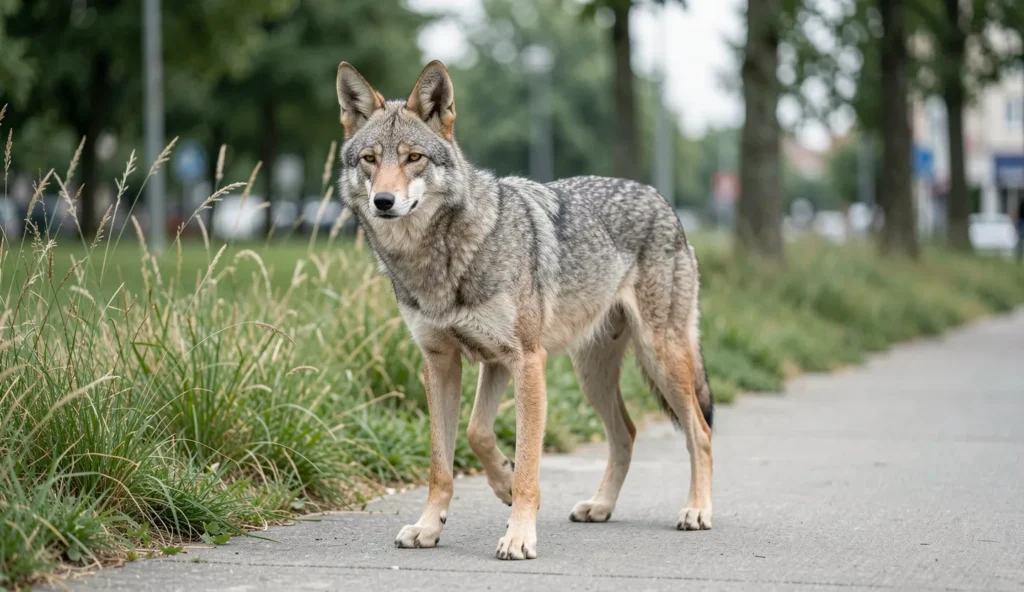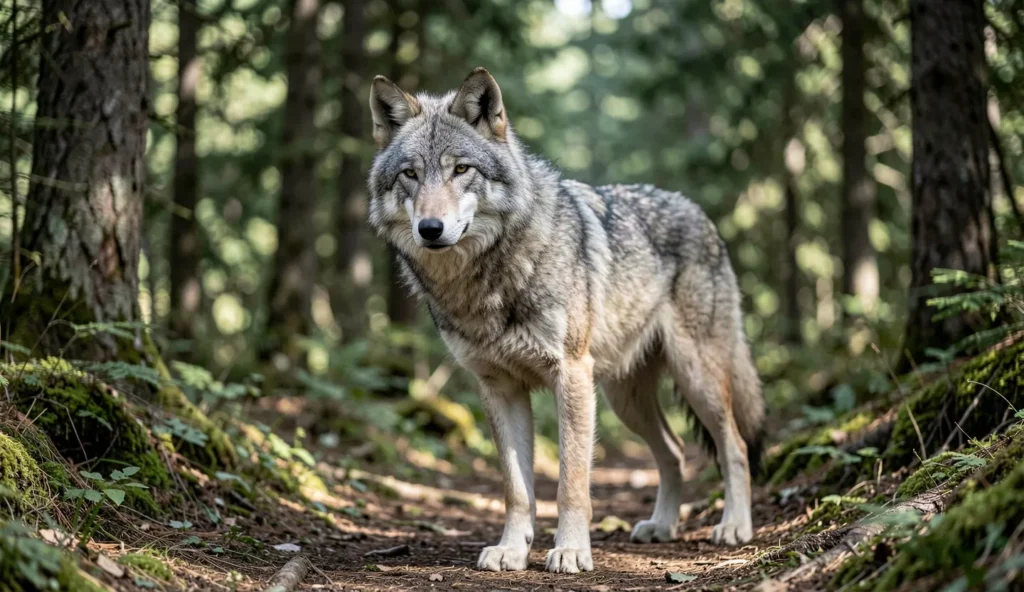
What Is Honshu Wolf
The honshu wolf refers to a smaller Japanese wolf form historically described under Canis lupus hodophilax. It is often treated as the smallest Japanese wolf subspecies and is considered extinct based on the lack of verified modern records. This topic supports research goals in taxonomy, historical ecology, and comparative canid biology.
For clarity, the term “honshu wolf” typically points to populations associated with Honshu, the largest Japanese island. Research discussions commonly integrate island-specific constraints such as prey availability, habitat fragmentation, and human pressure. Those factors help explain why size traits and ecological signals can look subtle in historical material.
Taxonomy And Scientific Name
Taxonomists have placed the honshu wolf under Canis lupus hodophilax, using the trinomial form to reflect subspecies-level variation. This classification aligns with broader efforts to separate regional wolf forms while still treating them as part of the gray wolf complex. Many zoological summaries also use “Japanese wolf” as an umbrella term for multiple island populations.
Because taxonomy has shifted over time, authoritative references should be checked for the exact spelling and rank used. Even small differences in naming can affect how museum catalog records and papers map to each other. Therefore, consistent label matching matters when comparing specimens across institutions.
Smallest Wolf Subspecies In Japan
The honshu wolf is described as the smallest Japanese wolf subspecies in many historical accounts and modern syntheses. Smaller body size can follow from island ecology, where limited space and prey supply shape energetic needs. Over generations, that selection pressure can also influence grooming investment, locomotion style, and hunting radius.
Size expectations should remain cautious because records can mix animals from different periods or local valleys. Researchers often treat the “smallest” label as a relative tendency supported by measurement sets rather than a single diagnostic number. Still, the overall pattern remains consistent enough to guide morphometric comparisons.
Extinct Status And Historical Timeline
As commonly described in zoological references, the honshu wolf is extinct. The conclusion rests on the absence of confirmed sightings after the peak of decline and on documentation from historical periods. When interpreting those timelines, it helps to separate local disappearance from complete national absence.
Broadly, wolf decline in Japan accelerated through habitat change and direct conflict with livestock and hunting practices. For an extinction timeline, zoologists often compare written accounts, specimen collection dates, and region-by-region trends. That triangulation reduces the risk of overgeneralizing from one prefecture or one observer.
When comparing the honshu wolf decline pattern, parallels often appear in other island and northern wolf histories. For example, the biology and isolation concepts used for the hudson bay wolf can support how cold-region populations respond to resource limits, even though the climates differ. Similar logic also applies when using the kenai peninsula wolf as a comparative frame for historical survival constraints. These cross-region comparisons help explain why small populations can lose resilience under multiple pressures.
Appearance And Physical Features Of Honshu Wolf
Appearance-focused work for the honshu wolf relies heavily on museum series, written descriptions, and careful comparison of skull and teeth. Because the subspecies is small, many traits require high-quality measurement rather than casual observation. For Japanese zoologists, that makes standardized morphometrics central to identification.
Also, physical features can vary by season, sex, and age class. Coat thickness in winter and tooth wear in older individuals can shift the visible look of a specimen. Therefore, each trait needs context to avoid mixing temporary and permanent signals.
Typical Body Size And Proportions
Records and specimen measurements commonly place the honshu wolf at the low end of Japanese wolf size ranges. Smaller body size usually means shorter stride length and tighter energy budgets during periods of low prey. In forested terrain, those traits can still support effective hunting, but they may influence how far animals range in a day.
Proportions matter as much as mass. Small wolves can show a compact build that improves heat retention and maneuvering through dense undergrowth. Still, without a consistent sample size and measurement protocol, size claims should remain tied to the specific dataset used by each author.
Fur Color Patterns And Seasonal Coat Changes
Historical descriptions often report gray coats with darker guard hairs, with variation across individuals. Seasonal change typically included a thicker winter coat and a lighter summer coat. That shift can influence how the wolf appears in archived photos, drawings, or field notes.
Because the honshu wolf is considered the smallest Japanese subspecies, winter coat fullness can sometimes dominate the visual impression. Researchers should treat “fluffiness” as a seasonal indicator rather than a guarantee of body size. When possible, coat condition should be documented alongside measurements and collection date.
Skull Teeth And Identification Notes
Skull and dentition traits provide more stable identification signals than fur color alone. For small subspecies, subtle differences in size and tooth proportions may appear when comparing skull series. Researchers also use dental wear patterns to estimate age class, which helps interpret size variability.
Teeth support diet reconstruction because premolar and molar features relate to processing strength and chewing strategy. However, diet inference must stay cautious when sample sizes are small. For the honshu wolf, researchers often combine dental interpretation with ecological evidence from historical prey availability.
Sexual Dimorphism And Age Variation
Sexual dimorphism in wolves commonly follows a pattern where males can be slightly larger, yet overlap occurs across individuals. For the honshu wolf, that means males and females may still share a similar overall size window in small sample sets. Age variation also adds complexity because juveniles may look smaller in overall body dimensions and skull growth stage.
In museum series, juveniles can sometimes be separated using dental eruption stage and skull ossification patterns. Still, researchers often treat age assignments as probabilistic when the specimen label lacks precise collection notes. Careful cross-checking helps protect analyses from misclassification.
Comparative skull work also benefits from context across other wolf forms. For example, the skull and trait differences discussed in italian wolf traits show how subspecies-level variation can appear despite shared species-level structure. Similar principles support cautious interpretation of honshu wolf identifiers when the record quality varies.
Where Honshu Wolf Lived And How It Used Habitat
Habitat reconstruction for the honshu wolf focuses on geographic distribution across Honshu and on how wolves used mountain forests and valley edges. Even when exact locations are limited, ecological patterns often emerge from specimen sites and historical accounts. This approach helps zoologists treat habitat as a driver of both diet and decline.
Because the honshu wolf is small, habitat use may also reflect fine-scale movement through rugged terrain. Dense cover can support stealth hunting, while valley corridors may increase access to prey. Understanding both elements matters when interpreting historical presence.
Geographic Range Across Honshu
Geographic range is often described using prefecture-level context rather than precise GPS sites, especially for older records. Researchers typically distinguish core areas where wolf mentions or specimens cluster from marginal areas with fewer observations. That differentiation helps map how far populations persisted before local extirpation.
When available, specimen localities guide range boundaries more reliably than general “Japan-wide” statements. Yet range boundaries can shift over time due to hunting pressure and habitat conversion. For that reason, range maps in papers often reflect a specific historical window.
Preferred Habitat Types
Historically, Japanese wolves were associated with forests, mountain terrain, and regions offering both cover and prey. For the honshu wolf, those patterns likely included edge habitats near valleys and areas where human agriculture created predictable prey movement. That edge use can elevate conflict risk, which in turn can accelerate decline.
Habitat types also affected how wolves formed travel routes. Narrow forest corridors allow movement while reducing visibility to people and dogs. Meanwhile, open patches can support faster searching but may increase detection.
Climate And Seasonal Movement Patterns
Mountain climates in Honshu bring snowy periods and seasonal temperature swings, which can change prey behavior and wolf movement. In winter, snow depth can limit access to low-lying ground, pushing travel into areas where cover and terrain provide consistent routes. In warmer seasons, prey may spread, which can increase foraging search time.
Seasonality also affects energy budgeting for small subspecies. Smaller bodies can lose heat faster, which can influence denning location choices and activity timing. Therefore, seasonal movement patterns should be reconstructed from both climate records and ecological constraints.
Social Space Use And Denning Areas
Denning areas for wolves generally require secure cover, stable microclimates, and access to prey without exposure. For the honshu wolf, den locations likely followed rugged terrain where human access was limited. However, denning is hard to document for an extinct subspecies, so most reconstructions rely on indirect indicators.
Small body size can also influence how territories were used. Smaller animals may rely more on dense cover and shorter travel loops, especially when prey density remains patchy. That territory structure can shape how quickly populations collapse after habitat fragmentation.
Comparative population studies can help contextualize these patterns. For instance, the regional isolation discussion used for the mackenzie valley wolf helps explain how northern terrain and resource distribution affect space use. Similar logic supports habitat inference when the honshu wolf record is incomplete.
What Honshu Wolf Ate And How It Hunted
Diet reconstruction for the honshu wolf connects prey categories to hunting behavior and scavenging opportunities. Historical ecology often shows that wolf diet shifts with local prey availability and with seasonal conditions. Because the honshu wolf is a smaller subspecies, prey choice and hunting radius may differ from larger mainland wolves.
In addition, human-altered landscapes can change what wolves can access. When prey becomes easier near settlements, conflict rises, and diet composition can reflect that shift. These patterns matter for understanding both survival and decline.
Primary Prey Species In Historical Periods
Historical accounts of Japanese wolves often mention ungulates and medium-sized animals, with the exact mix varying by region. For the honshu wolf, plausible primary prey categories include deer-like ungulates, smaller mammals, and seasonal birds or available forest fauna. Yet prey communities were not static, so wolves likely adjusted year to year.
Zoologists treat prey lists as categories rather than fixed menus. That flexibility supports better ecological inference, especially when specimen dates do not align neatly with a known prey survey. When prey scarcity increased, wolves may have expanded into less preferred options.
Diet Composition And Feeding Ecology
Wolf feeding ecology often includes a combination of active hunting and occasional scavenging. In mountainous Honshu, wolves could follow prey movement corridors through forest and valley edges. That strategy can favor consistent prey trails rather than long, open chases.
Scavenging becomes more likely when carcass availability increases through human activity. In such cases, wolves may maintain energy intake even when live prey becomes harder to catch. However, increased settlement overlap also increases persecution risk, which can reduce long-term population stability.
Hunting Group Size And Strategy
Wolf hunting behavior typically varies with prey size, season, and local pack structure. Many wolf ecologies feature cooperative hunting when prey is large, with smaller groups or pairs handling smaller prey. For the honshu wolf, smaller body size can change chase duration and how long animals can sustain pursuit.
Because the subspecies is extinct, direct observation is unavailable, so inferences come from general wolf ecology and indirect record signals. Researchers also consider that terrain can limit long pursuits in mountainous forests. Therefore, ambush and close-approach tactics often fit well with dense habitat.
Water Use And Foraging Constraints
Water availability in mountainous regions depends on season, snowmelt, and the presence of streams. Wolves can use riparian corridors to reduce search time for hydration and prey. In winter, frozen conditions can make surface water less accessible and push animals toward areas with reliable flow.
Foraging constraints therefore tie directly to climate and cover. If deep snow restricts movement, wolves can concentrate around more accessible prey areas. That concentration can increase contact with livestock and dogs, which raises conflict pressure.
Diet research benefits from comparison across other wolf populations, especially when subspecies size varies. For example, regional prey ecology used for great plains wolf discussions can guide how habitat productivity influences prey access. Those ecological principles help frame honshu wolf diet reconstructions when direct remains analysis is limited.
Behavior, Temperament, And Breeding Biology
Behavioral interpretation for the honshu wolf focuses on communication, social structure, and reproduction. While temperament labels often vary in popular writing, zoological work emphasizes functional behaviors that can be inferred from known wolf ecology. Those functions include vocal signaling, scent marking, and cooperative pup care.
For an extinct subspecies, breeding biology must rely on historical descriptions, specimen contexts, and comparisons with living wolf populations. Even so, core wolf patterns often remain consistent enough to support cautious reconstructions. This section frames those patterns in a way that supports scientific study goals.
Communication And Scent Marking
Wolves use vocal communication such as howls for long-distance contact and coordination. Scent marking helps define territories, supports mate signaling, and reduces conflict with neighboring packs. In dense forest habitats, communication can rely more on scent and nearby auditory range.
For the honshu wolf, forest structure likely influenced the balance between visual distance and scent spread. Terrain can funnel scent through valleys and ridges, shaping how boundary areas were used. Therefore, inferred communication strategies should align with the habitat types described for Honshu.
Pack Structure And Role Allocation
Wolf packs commonly include a breeding pair plus additional individuals that may help raise pups. In many systems, non-breeding individuals contribute to hunting support and den defense. That role allocation improves pup survival, especially in harsh seasonal periods.
For a small subspecies, survival may depend strongly on effective cooperation when prey density is variable. If hunting requires coordination to secure prey, losing one adult could significantly reduce pup feeding capacity. Those dynamics can contribute to population decline during conflict periods.
Breeding Season And Litter Characteristics
Breeding in wolves typically follows a seasonal pattern, with pups born in a period that supports weaning before the harshest conditions peak. For Japanese wolf forms, breeding timing is often described in broad seasonal terms across regional records. Litter size can vary with food supply, maternal condition, and local mortality pressures.
For the honshu wolf specifically, available litter data may be limited, so researchers tend to use ranges drawn from related wolf ecologies. Any number used in papers should include the confidence level and sample basis. That approach protects interpretations when the dataset is small or biased by which animals were collected.
Pup Rearing And Juvenile Development
Pups are usually born in dens, then weaned and gradually introduced to movement outside the den area. Juvenile development often includes learning prey handling, social bonding, and travel skills. In mountainous landscapes, juvenile survival can depend on den location safety and access to prey trails.
Human impacts can increase juvenile mortality when wolves use edge areas that overlap with livestock and settlements. As pups become mobile, contact risk rises because travel routes widen. Therefore, pup rearing ecology should be interpreted in relation to habitat and persecution intensity.
Comparative developmental constraints can be contextualized through other subspecies research. For example, the isolation factors discussed for the cascade mountains wolf can inform how fragmentation impacts juvenile survival. Similar causal pathways can be applied to the honshu wolf decline narrative without overclaiming direct parallels.
Decline, Causes Of Extinction, And What Researchers Use Today
Understanding extinction in the honshu wolf requires multiple lines of evidence because no single record explains every local disappearance. Decline pressures in Japan often combined habitat change, reduced prey base, and direct persecution. Over time, those pressures can drive fragmentation and increase the risk of population collapse.
Because the honshu wolf is extinct, modern ecological monitoring cannot occur, so researchers focus on historical reconstruction. That reconstruction uses specimen data, written reports, and ecological context records. Together, those sources build an evidence-weighted interpretation.
Primary Drivers Of Decline In Japan
Primary decline drivers often include habitat conversion that reduced cover and prey availability. Another major factor involves conflict dynamics with livestock, where wolves can be targeted as threats to farm animals. When conflict becomes persistent, wolf survival drops even if prey remains present.
Habitat change can also disrupt pack stability by reducing usable territories and increasing edge exposure. In small subspecies, even moderate habitat loss can create uneven population distribution. That uneven distribution makes recolonization harder after local losses.
Disease, Genetic Bottlenecks, And Population Fragmentation
Small and isolated populations can experience genetic bottlenecks that reduce adaptive potential. As fragmentation increases, gene flow declines, and effective population size falls. Those effects can compound decline by making populations less resilient to environmental fluctuations.
Disease risk can also rise when contact patterns change and when individuals concentrate in smaller areas. Fragmented packs may have fewer buffers against outbreaks. Even without direct disease records for the honshu wolf, these general mechanisms guide scientific interpretation.
Evidence Sources Used To Study Honshu Wolf
Zoologists study an extinct wolf like the honshu wolf using museum specimens, historical writing, and ecological context records. Museum series provide measurable traits, while written accounts can provide timing and location hints. Ecological records help translate those hints into habitat and prey expectations.
Because each evidence type has bias, triangulation matters. For example, specimen collection likely favored certain areas and seasons, which can skew apparent distributions. Therefore, researchers often compare multiple datasets before proposing a final interpretation.
Research, Conservation Lessons, And Comparative Context
Research on the honshu wolf highlights how risks intensify for small island wolf populations. The combination of limited range, smaller body size expectations, and high human overlap can accelerate collapse. These lessons apply broadly to other Japanese wolf forms and to other island canids worldwide.
Comparative context also matters, since different regions show how ecological constraints shape survival. For example, the population discussion around the Ethiopian Wolf shows how narrow ecological niches can increase sensitivity to disturbance. Similar comparative framing helps interpret why the honshu wolf could not recover once multiple threats converged.
Is Honshu Wolf Suitable For Contemporary Zoological Research Goals
The honshu wolf can support contemporary research goals that focus on taxonomy, morphometrics, and historical ecology. Because it is a named subspecies, it also helps clarify how scientists handle extinct Canis lupus lineages in classification practice. At the same time, extinct status limits direct behavioral study, so research design must account for evidence gaps.
In Japan, the honshu wolf also functions as a case study for how island ecology interacts with human pressure. That makes it valuable for museum-led analytics and for historical reconstruction methods. Proper interpretation requires strong dataset documentation and cross-checking across sources.
Best Fit For Taxonomy, Morphometrics, And Historical Ecology
Taxonomic and morphometric work benefits from skull and tooth measurements from museum series. Historical ecology benefits from integrating collection locality with habitat and prey context records. Those goals fit well with the honshu wolf because physical traits and historical references remain available for analysis.
In addition, the honshu wolf provides a reference point for comparisons with other Japanese wolf forms under the broader “Japanese wolf” label. Comparative studies can examine whether size trends correlate with island geography. Those patterns can then inform how subspecies-level classification should treat island-driven variation.
Common Research Limitations And How To Address Them
Key limitations include record bias, uncertainty in locality data, and limited sample sizes for small subspecies. Extinct status also means behavior and diet cannot be rechecked through modern observation. To address these issues, researchers typically use cross-validation across specimen measurements, historical writings, and ecological context records.
When comparing across regions, it helps to standardize measurement protocols and age estimation methods. Otherwise, the smallest wolf subspecies claims can become vulnerable to methodological drift. Careful statistical treatment supports more reliable conclusions about the honshu wolf as a distinct historical form.
Comparative methods can also be supported by how other extinct or rare forms are treated in the literature. For example, trait comparison discussions in Himalayan Wolf summaries show how researchers separate environmental effects from lineage effects. Applying that mindset helps avoid over-attributing every size signal to genetics alone in the honshu wolf.
Final Note On Honshu Wolf Research And Interpretation
The honshu wolf remains a high-value scientific topic because it combines subspecies taxonomy, size-related variation, and extinction pressure reconstruction. Rigorous interpretation depends on evidence triangulation rather than single-source conclusions. Careful handling supports clearer understanding of Canis lupus hodophilax and the broader Japanese wolf history.
Frequently Asked Questions
What Scientific Name Is Used For Honshu Wolf
Honshu wolf is commonly described as Canis lupus hodophilax, and the exact spelling should be verified in authoritative taxonomy sources.
Is The Honshu Wolf Extinct
Yes, the honshu wolf is considered extinct, based on the lack of confirmed modern records and reliance on historical specimens.
How Is Honshu Wolf Described As The Smallest Japanese Wolf Subspecies
Smaller body size is supported by historical measurements and specimen records, and island ecology can influence body size through prey and habitat constraints.
What Habitat Types Were Most Associated With Japanese Wolf Populations
Mountain forests, valleys, and areas with reliable prey and cover are commonly cited, with habitat use varying by region and season.
What Evidence Sources Do Zoologists Use To Study An Extinct Wolf Like Honshu Wolf
Museum specimens, historical accounts, and ecological context records are used, with conclusions strengthened by triangulating across multiple data types.
Final Note On Honshu Wolf Research And Interpretation
Honshu wolf research rewards careful documentation because small subspecies claims depend on measurement quality and source matching. Consistent interpretation supports clearer scientific understanding of Japanese wolf history.