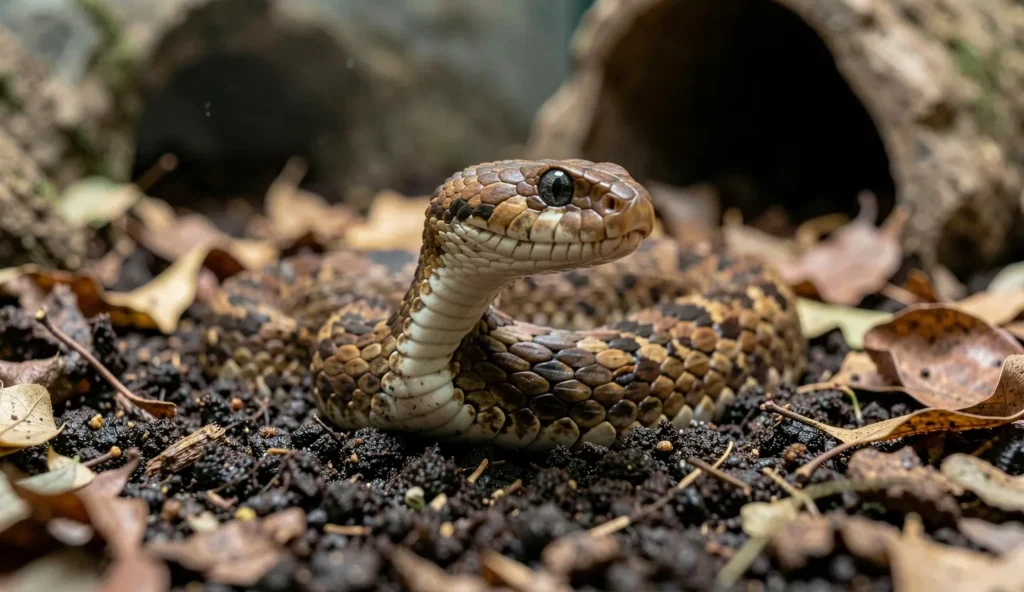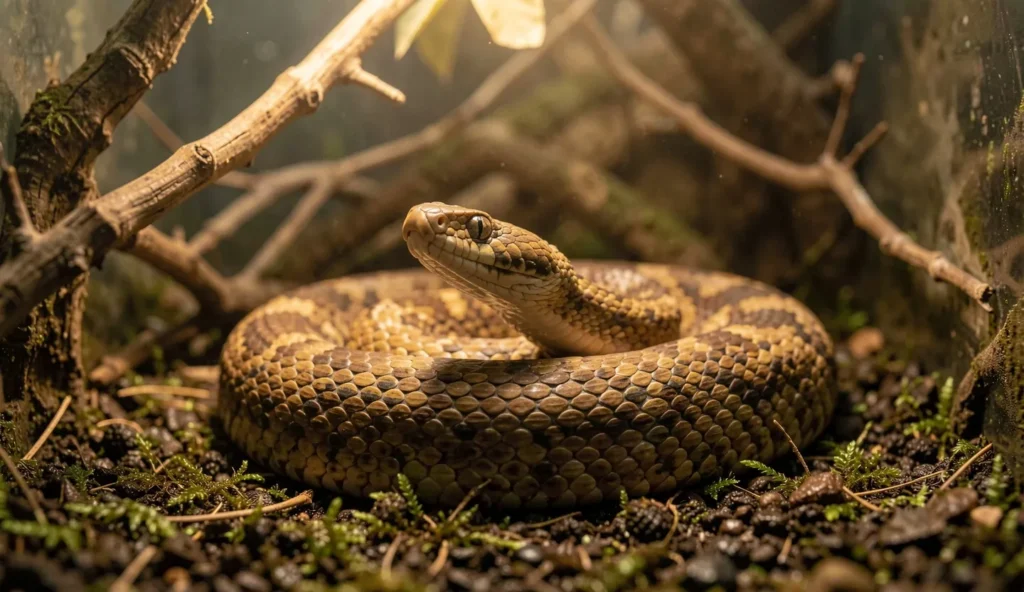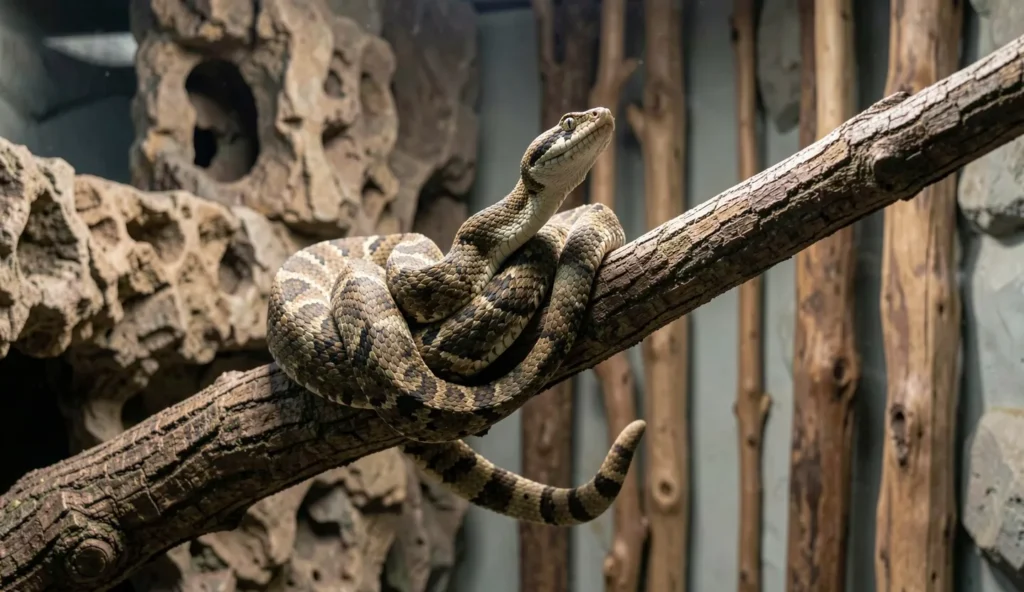
What Is a Blood Python
A Blood Python is a heavy-bodied python species kept by experienced reptile keepers who understand husbandry needs. It comes from Southeast Asia, where local climate drives temperature and humidity expectations. Blood Python care focuses on stable conditions, because stress and inconsistent environment can affect feeding and health.
Many keepers choose a Blood Python for its manageable adult size compared with several larger pythons. Still, the species can show defensive behavior, so secure handling and reliable enclosure design matter. For comparison with other common pythons, owners often also review guides like Ball Python husbandry to understand how care routines differ.
Origin and Natural Habitat
Blood pythons originate in parts of Southeast Asia, including regions with warm temperatures and seasonal humidity changes. These natural conditions shape how the body tolerates cool periods and how shedding cycles progress. Wild feeding behavior also supports understanding why sudden disruptions can reduce appetite in captivity.
Natural habitat patterns influence how often a Blood Python feeds and how long it may rest between movements. When enclosure heat and humidity match local cues, the snake typically maintains more consistent body condition. Conversely, unstable humidity can show up later as shedding problems.
Key Physical Traits That Affect Care
Blood python size and build influence how the snake uses hides, climbs, and rests. The heavier build compared with some slimmer python species makes secure body support more important during any handling. Muscular strength also increases the need for stable enclosure furnishings to prevent shifting.
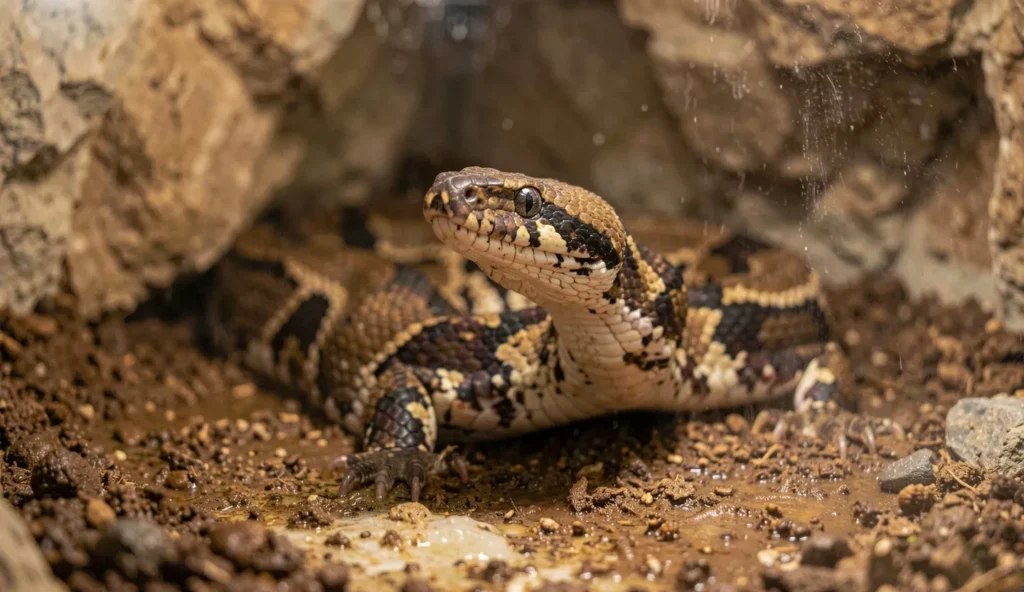
Color and pattern vary by locality and lineage, which can affect how the snake looks in low light and in hides. However, appearance does not change core needs for blood python enclosure humidity, temperature stability, and feeding consistency. For owners comparing patterns and care styles across colubrids, reviewing Milk Snake basics can also clarify how diet changes affect health, even though the species differs from pythons.
Blood Python Size and Temperament Expectations
Blood Python size and temperament define daily management more than most owners expect. Many Blood Python keepers plan for a heavier-bodied animal and set up the enclosure for secure anchoring of hides and accessories. Because the temperament can trend defensive, the handling plan should reduce stress before it starts.
When the environment stays consistent, feeding often becomes more predictable. When the environment changes frequently, defensive posture may increase and feeding can pause. That pattern makes routine husbandry updates and gentle handling timing essential.
Typical Blood Python Size Ranges
Adults are commonly smaller than several very large python species, but they still reach a substantial girth. Growth depends on feeding consistency, enclosure temperature, and overall health. Planning enclosure space based on long-term blood python size helps reduce stress when the snake outgrows early setups.
Heavier growth also affects what hides fit comfortably. A hide that is narrow at first may pinch the body later, and that can increase defensive behavior. Reliable measurements of the snake’s girth can guide when to upgrade to a larger hide.
Blood Python Temperament and Defensive Behavior
Blood python temperament often includes defensive behavior, especially during environmental changes or handling attempts. Stress signals may include tight coiling, hissing, and a striking posture that starts from a defensive position. Owners who respond slowly and avoid repeated interruptions typically see calmer feeding outcomes.
Stable routines reduce stress and feeding disruptions, while frequent opening of the enclosure can trigger a pattern of refusal. It is also common for a Blood Python to respond strongly around feeding time. Keeping handling and feeding separated helps reduce confusion for the snake.
Handling to Reduce Stress
Handling should stay brief and calm, with rest periods in between sessions. The body needs full support to reduce slips and sudden repositioning that can escalate defensive reactions. Avoid handling around feeding and for at least a short window after a shed begins.
If defensive posture persists, the handling session should end, and the enclosure should remain closed until the snake settles again. A consistent approach teaches the animal that the keeper is not forcing changes. For owners who also keep other snakes, comparing temperament patterns with California Kingsnake care can highlight how species temperament varies even when both are nonvenomous.
How To Set Up a Blood Python Enclosure
A Blood Python enclosure must support thermoregulation and blood python enclosure humidity at the level the snake expects. Heat and moisture targets should remain stable so the snake can choose preferred zones. With a heavier-bodied python, enclosure security and hide fit carry extra importance because the animal can wedge itself firmly.
Before the snake arrives, the enclosure should already be running and monitored. Temperature checks at snake level, humidity tracking, and substrate selection help prevent health issues later. Owners who want broader setup ideas across pythons may also review Reticulated Python or similar guides, but a Blood Python still needs its own humidity and heat balance.
Enclosure Size and Layout for a Heavier Python
Choose a secure, escape-resistant enclosure with sturdy closures and limited gaps. A larger floor area helps the snake explore without repeatedly climbing on unstable objects. The layout should allow smooth access to at least two hides and a water dish.
Sturdy hides should match the snake’s body width, especially after full feeding and growth. Avoid sharp edges and overly tight furnishings that can scrape scales. If the enclosure allows, create open paths so the snake can reposition with minimal bumping.
Temperature Gradient and Heat Sources
Set a temperature gradient with warm and cool zones supported by measurable targets and thermostatic control. Use a heat source sized for the enclosure so hotspots do not form in random corners. Multiple thermometers placed at key zones make monitoring more accurate.
The warm side supports digestion and activity, while the cool side helps the snake rest and thermoregulate. Heat sources must never be placed in direct contact with the snake or substrate in a way that causes burn risk. After any equipment change, temperature checks should repeat before feeding.
Humidity and Substrate Choices
Humidity supports healthy sheds, and it also affects skin quality and comfort during resting. Use a substrate that holds moisture without staying soggy, because persistent wetness increases skin irritation risk. During the shed window, blood python enclosure humidity may need a temporary increase to help the process finish.
Substrate moisture should remain controlled, because too dry can lead to stuck shed and too wet can encourage bacterial growth. Owners often find success with moisture-retaining substrates that dry gradually between cycles. A simple humidity log helps identify when conditions drift.
Hides, Water Dish, and Enrichment Options
Provide at least two hides so the snake can choose safety and temperature independently. One hide should sit in the warm zone, while the other supports the cooler area. A large water dish supports soaking and can help maintain local humidity near the hide.
Enrichment should not introduce sharp edges or fragile décor. Smooth surfaces reduce scrapes during rest and when the snake shifts position. A consistent soak area can also reduce how often the keeper needs to open the enclosure for adjustments.
Biosecurity and Cleaning Routine
Spot clean waste daily to reduce bacterial load and odor buildup that can raise stress. Disinfect on a schedule appropriate for enclosure size and substrate choice, and avoid harsh residue that irritates the skin. Quarantine procedures matter for newly acquired snakes to prevent parasite introductions.
When cleaning, keep handling interruptions minimal and return furnishings once surfaces fully dry. That approach helps maintain the stable conditions a Blood Python expects. For owners cross-checking hygiene and stress effects in other snakes, Rosy Boa care routines offer similar principles even though the husbandry targets differ.
Blood Python Feeding and Meal Planning
Blood python feeding should rely on appropriate prey type, correct prey size, and a stable feeding schedule. Meal planning matters because stress and temperature problems often show up first as missed meals or digestion delays. With a heavier-bodied python, overfeeding can also contribute to handling difficulty and health strain.
Feeding routines work best when the environment remains unchanged. Any sudden changes, including frequent enclosure openings or equipment swaps, can reduce appetite. Therefore, feeding steps should stay predictable and calm.
Diet Basics and Prey Type
Feed appropriately sized rodents as the primary prey, using fully thawed items to prevent injury and stress. Sudden prey changes should get avoided during stabilization after acquisition. Consistency helps the snake maintain digestion and supports a steady growth pattern.
Live feeding often increases risk of bites and stress, which can also lead to failed meals later. If prey variety is desired, changes should happen slowly and only after the snake shows stable acceptance. For keepers comparing rodent-feeding routines across species, King Snake care basics can help show how feeding stress can affect behavior, even though dietary composition differs.
Prey Size and Blood Python Feeding Frequency
Prey size should match the snake’s girth without overfilling the stomach area. Blood python feeding frequency typically depends on age, body condition, and how consistently the snake digests meals. Many owners adjust feeding schedules when growth slows or when refusals happen.
Body condition tracking helps avoid both underfeeding and excessive feeding. If a Blood Python becomes lean, frequency or prey size may need to increase. If the snake becomes heavy quickly, reducing frequency can prevent digestion stress and improve overall comfort.
Feeding Technique That Limits Stress
Feeding should happen in a controlled setting that limits handling and reduces enclosure collisions. Feeding in the enclosure usually works best, as long as the keeper avoids rapid movements and disturbed décor. A simple routine reduces defensive responses and keeps the snake focused on eating.
After a meal, handling should pause for at least a day. Handling too soon can trigger regurgitation risk and disrupt digestion. If a Blood Python reacts defensively during feeding, the keeper should reduce interference and allow quiet time.
Signs Feeding Is Going Wrong
Refusal can signal stress, shed timing, or temperature problems within the enclosure. Regurgitation can follow incorrect temperatures or prey size that is too large. Persistent issues should prompt a husbandry reassessment before making prey changes.
Weight loss requires body condition evaluation rather than guessing. If feces quality changes or the snake becomes less active, feeding decisions should get adjusted. Owners who notice feeding problems often compare setup targets with other species care references, such as Ball Python feeding routines, to understand how temperature timing impacts digestion.
Grooming, Shedding Care, and Daily Maintenance
Blood Python care includes routine maintenance that supports skin health and stable digestion. Grooming for a snake usually means managing shedding, keeping water clean, and monitoring body condition without overhandling. Small adjustments made at the right time can prevent retained shed and related health complications.
Daily care should stay simple and consistent, because frequent changes can increase stress. Checking the enclosure without disturbing the snake too often helps keep conditions stable. Routine monitoring also makes early symptoms easier to notice.
Shedding Support and Humidity Timing
Increase humidity as the eyes cloud and shedding begins. A clean, damp hide option can help if sheds run incomplete, because the snake can access moisture where it rests. Forcing shed pieces off the skin can cause injury and infection risk, so patience matters.
If shed fragments remain after the main shed cycle, humidity and hydration checks should happen before any attempts to remove pieces. The best approach stays supportive rather than intrusive. This practice also reduces the chance of skin damage that can connect later to bacterial issues.
Water Changes and Soaking Behavior
Change water regularly to keep the water dish clean and reduce contamination. Soaking can support shed progress, but wet substrates around the soaking area can irritate skin. Owners should inspect the water dish and adjacent substrate to avoid constant saturation.
Sometimes the snake chooses the water dish as a humidity source, which can shift local conditions. Keeping water clean helps prevent slimy residue that can worsen skin issues. A stable soaking routine can also reduce how often the snake needs to move during the shed window.
Routine Monitoring Without Overhandling
Monitoring should focus on body condition, skin quality, and overall behavior while avoiding frequent handling. Periodic weighing can support trend tracking, especially during feeding schedule adjustments. When handling is needed, it should remain limited to necessary tasks.
Visual checks should look for abnormal discoloration, scabbing, or retained shed areas. If the snake seems unusually inactive, the environment should get reviewed for heat and humidity consistency. This approach reduces stress while supporting early detection.
Common Blood Python Health Issues and What to Watch For
Blood python health issues typically connect to husbandry gaps, stress, and incorrect environment targets. Owners who watch early signs can address problems before they escalate. Respiratory issues, skin problems, parasites, and digestive stress often reflect temperature and humidity control weaknesses.
Because Blood Python temperament can be defensive, behavior changes may be subtle at first. A practical approach tracks changes in breathing, shedding, feeding acceptance, and body weight. When symptoms persist, veterinary care should not get delayed.
Respiratory Problems Linked to Husbandry
Respiratory problems often increase with low temperatures and inconsistent humidity control. Watch for open-mouth breathing, wheezing, and excess mucus around the nostrils or mouth. These signs indicate irritation and stress on the respiratory system.
Immediate environment correction can support recovery planning, but it should not replace medical evaluation. Temperature stability helps the immune system function normally, so the enclosure should get adjusted right away. If breathing symptoms persist, reptile veterinary care becomes the safer path.
Skin Issues and Scale Problems
Retained shed can cause skin damage and increase infection risk. Persistent moisture and damp substrate can contribute to bacterial or fungal changes that show up as discoloration or patchy skin quality. Skin checks should happen regularly during and after shedding.
When retained shed appears, humidity timing should get corrected and the substrate moisture level reviewed. Avoid aggressive removal, because injury can worsen the condition. Clean water and clean surfaces also reduce how many microbes contact the skin.
Parasites and Symptoms That Show Up Early
External parasites can affect resting behavior and skin quality, including increased rubbing or irritation. Internal parasites can cause weight loss, poor appetite, and changes in feces. Early detection matters because untreated parasites can progress quickly.
Fecal testing supports targeted treatment rather than guessing. After diagnosis, cleaning and quarantine routines should align with the parasite type. If a keeper also monitors other captive snakes, learning from Milk Snake health basics can show why early testing often prevents recurring problems.
Regurgitation and Digestive Stress
Regurgitation can follow prey size issues, stress during feeding, or temperature problems in digestion. Dehydration can also show up if the enclosure heat is too low or the snake cannot thermoregulate well. Repeated regurgitation should trigger a full husbandry review.
Monitoring after feeding helps identify patterns, including meal timing and post-feeding activity. If the snake repeatedly refuses meals after a regurgitation event, feeding schedule and temperatures should adjust. Stability often improves digestion more than frequent attempts to feed again.
Burns, Pressure Injuries, and Heat-Related Damage
Overdirected heat sources can cause localized injury, especially if a thermostat fails or heat placement is incorrect. Watch for discoloration, scabbing, and unusual sensitivity in spots near heat contact areas. Heat-related damage requires prompt environmental correction.
After any incident, verify thermostat function and heat placement. The area should get assessed for progression, because minor burns can become infected if left untreated. Keeping enclosure heat stable reduces the chance of repeated injury.
When to Seek Reptile Veterinary Care
Seek reptile veterinary care for persistent breathing signs or repeated regurgitation. Suspected parasites and internal illness also require prompt consultation so treatment matches the cause. Early intervention generally improves outcomes.
Veterinary guidance also helps when symptoms overlap, such as respiratory issues that appear alongside shedding problems. A structured approach protects the snake while keeping husbandry corrections accurate. For owners who want a general sense of how emergency signs vary across snakes, comparing with Black Mamba health warnings can be educational, even though care targets and risk profiles differ.
Is a Blood Python Right for You
A Blood Python can work well for experienced keepers who can manage defensive behavior calmly and consistently. The species benefits from stable routines, low-stress handling, and reliable thermoregulation. Setup control should already exist before purchase so temperature and humidity targets do not drift.
Because enclosure requirements and handling needs can be demanding, preparation should happen before the snake arrives. A reliable plan for monitoring, feeding, and veterinary care supports long-term success. If setup control and patience are in place, the Blood Python often becomes a manageable keeper responsibility.
Good Fit for Keepers Who Can Manage Defensive Behavior
Blood Python temperament often improves when handling stays calm and infrequent. A low-stress routine helps the snake maintain feeding stability and reduces defensive reactions. Keepers who tolerate brief handling sessions and then allow rest tend to avoid stress loops.
Experience with heavier-bodied snakes helps reduce slip risk and accidental rough handling. Comfort with routine maintenance also reduces the need for frequent enclosure openings. Those factors support better acceptance of feeding and more stable shed cycles.
Setup Requirements That Must Be Met Before Buying
Reliable temperature measurement and blood python enclosure humidity control are essential before the first meal. Secure housing reduces escape risk and also prevents injuries from sudden repositioning. A plan for vet care and fecal testing supports long-term health and reduces repeated parasite uncertainty.
Owners should verify heat and humidity targets with multiple checks so adjustments are not made while the snake is already stressed. Equipment should include trustworthy thermostatic control and clear monitoring tools. When those basics stay in place, blood python feeding and shed management become simpler.
Frequently Asked Questions
What Temperature Range Is Best for a Blood Python Enclosure?
Use a warm and cool zone with consistent thermostatic control, and measure temperatures at snake level in multiple spots.
How Often Should a Blood Python Be Fed?
Feeding frequency depends on age and body condition, and it should adjust if refusal or weight changes occur.
How Large Do Blood Pythons Typically Get?
Adult size varies by lineage and feeding history, so realistic enclosure space planning should use adult girth expectations.
Why Is a Blood Python Refusing Food?
Common causes include stress, shed timing, and incorrect temperatures, so husbandry should get reviewed before changing prey items.
What Are the Most Common Blood Python Health Issues?
Respiratory problems, retained shed, parasites, and regurgitation are common, and early environmental correction improves response.
How Can Handling Be Done Safely to Reduce Stress?
Handling should stay brief, support the full body, and avoid feeding windows, with sessions ending if defensive posture persists.
Final Maintenance Priorities for Long Term Health
Consistent heat, controlled humidity, and calm feeding routines support better health outcomes for Blood Python keepers. Routine checks for shedding quality, breathing changes, and body condition help catch issues early.