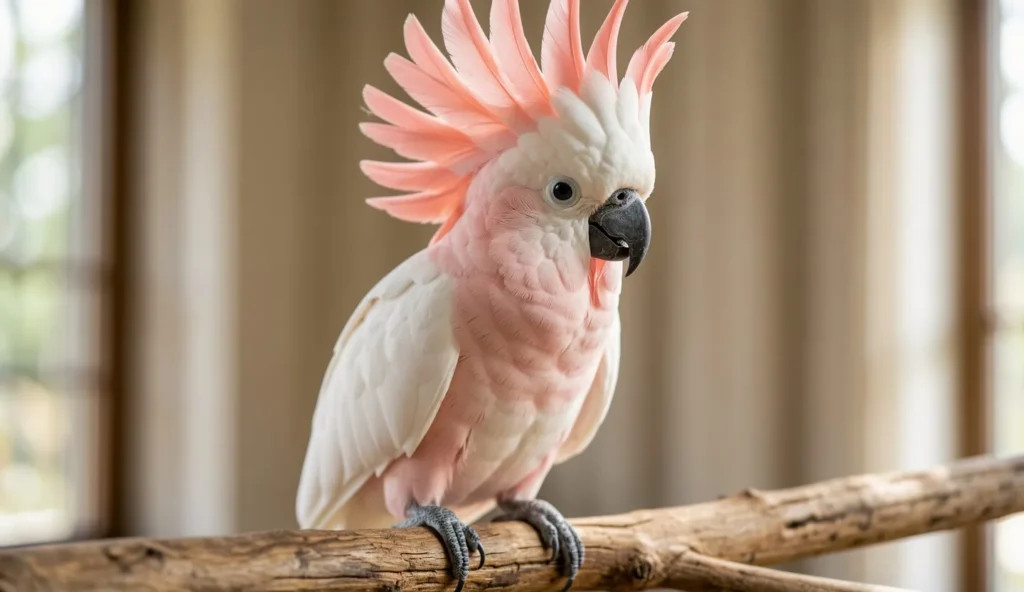
What Is a Moluccan Cockatoo
Scientific Name and Common Names
The Moluccan Cockatoo, scientifically known as Cacatua moluccensis, is a large parrot native to the Seram archipelago in Indonesia. It is also called the salmon-crested cockatoo due to its striking pink plumage and prominent retractable crest. This species is the largest of the white cockatoos and is widely recognized for its high intelligence and intense social demands.
Why This Cockatoo Stands Out
Among large parrots, the Moluccan Cockatoo is famous for its affectionate nature and extraordinary bond with owners. However, its extreme need for attention and potential 70-year captivity longevity make it a bird only for experienced owners who can commit decades of daily care. Understanding the full scope of the cockatoo lifespan is essential before bringing one home.
Appearance and Physical Features
Size and Weight
Adult Moluccan Cockatoos reach about 20 inches in length from beak to tail tip. Their body weight ranges from 775 to 950 grams, making them one of the heaviest cockatoo species. Males and females are similar in size, with minor differences in head shape and eye ring color.
Plumage and Crest
The body is a soft salmon-pink with white undersides on the wings and tail. The large, retractable crest rises in a dramatic fan when the bird is excited or alarmed. Unlike many other cockatoos, the Moluccan has relatively short, square tail feathers and a powerful black beak.
- Salmon-pink body with white flight feathers
- Long, erectile crest up to 4 inches high
- Bare white eye rings that blush pink when stressed or excited
- Strong curved beak adapted for cracking nuts
Temperament and Personality
Affectionate but Needy
The Moluccan Cockatoo is arguably the most affectionate cockatoo species, often seeking physical contact and cuddling with its primary caregiver. This intense bonding can lead to possessiveness and jealousy toward other people or pets. Owners must provide several hours of daily interaction to prevent the bird from developing neurotic behaviors.
Without sufficient attention, the bird may scream excessively or start feather plucking. The affectionate cockatoo demands a human companion who is home most of the day and willing to integrate the bird into daily life.
Noise Level
Moluccan Cockatoos produce loud, piercing calls, especially at dawn and dusk. These vocalizations are natural forms of communication and cannot be trained away. The noise level makes this species unsuitable for apartment living or homes with noise-sensitive neighbors. Some birds also imitate household sounds and human speech, though they are not the best talkers among parrots.
Social Needs of a Moluccan Cockatoo
Bonding With Owners
The Moluccan Cockatoo forms a strong pair bond with one person and may reject other family members. This bond requires consistent, gentle handling and clear boundaries. If the owner becomes unavailable, the bird may redirect its affection toward an object or develop severe anxiety.
Owners should avoid encouraging overly dependent behavior, such as allowing the bird to sleep in the bed or spend all day on the shoulder. Structured interaction, including training and play, builds a healthy relationship.
Need for Daily Attention
These parrots need a minimum of 3 to 4 hours of out-of-cage time each day. This time must include interactive play, training sessions, and physical contact. Without this level of engagement, the bird becomes bored and may start feather plucking or other destructive behaviors.
Many experienced owners compare the social demands of a Moluccan Cockatoo to those of a toddler. For those interested in other large parrots, the macaw parrots also require substantial daily attention, though their temperament differs.
Exercise Requirements
Physical Activity Needs
A Moluccan Cockatoo needs a large cage—at least 36 inches wide, 24 inches deep, and 48 inches tall—filled with perches of varying diameters and textures. Supervised flight time outside the cage is essential for muscle maintenance and cardiovascular health. Foraging toys that require the bird to manipulate objects for treats provide both exercise and mental stimulation.
- Climbing structures and rope perches
- Destructible toys for shredding
- Foot toys that encourage grasping and manipulation
- Outdoor aviary access in warm weather, with supervision
Training and Mental Stimulation
Basic Training Tips
Training should begin with the step-up command using positive reinforcement, such as offering a sunflower seed or a piece of fruit. Sessions must be short—10 to 15 minutes—to match the bird’s attention span. Never use punishment, as cockatoos are sensitive and can become fearful or aggressive.
Consistency and patience are key. A Moluccan Cockatoo can learn tricks, such as turning around or retrieving objects, but the primary goal is to build trust and provide mental engagement.
Enrichment Ideas
Puzzle toys that release food when manipulated are highly effective. Shreddable toys made of soft wood, cardboard, and paper satisfy the bird’s natural urge to chew. For a more immersive experience, some owners set up an outdoor aviary during safe hours. Providing varied enrichment prevents boredom, a primary trigger for feather plucking.
Grooming and Care Tips
Bathing and Hygiene
Moluccan Cockatoos produce a fine white powder from their feathers, called dander, to keep plumage clean. This dust can accumulate in the home, so regular cage cleaning and air filtration are necessary. Mist bathing daily or offering a shallow dish of water helps maintain feather condition and reduces dust.
Feather and Beak Care
A cuttlebone or mineral block should always be available to help the bird wear down its beak naturally. Owners should inspect the beak and nails monthly. Nail trims every 4 to 6 weeks by a veterinarian or experienced groomer prevent overgrowth and injury. Any signs of feather plucking—ragged feathers, bald patches—require immediate evaluation.
- Use an avian-safe disinfectant for cage cleaning
- Replace perches as they become soiled
- Provide a shallow water dish for self-bathing
- Monitor for changes in feather condition daily
Diet and Nutrition
Recommended Foods
A high-quality pellet formulated for large parrots should form the base of the diet, making up about 60 to 70 percent of daily intake. Fresh vegetables, such as carrots, broccoli, leafy greens, and bell peppers, provide essential vitamins and minerals. Fruits like apple, papaya, and berries can be offered in small amounts due to sugar content.
Foods to Avoid
Avocado, chocolate, caffeine, and alcohol are toxic to cockatoos. Salty snacks, sugary treats, and high-fat seeds should be limited to occasional rewards. A diet too rich in seeds can lead to obesity, which shortens the cockatoo lifespan. Proper nutrition is critical for the bird’s long-term health.
Common Health Issues and Lifespan
Feather Plucking
Feather plucking is the most common behavioral problem in Moluccan Cockatoos. It is usually caused by stress, boredom, loneliness, or insufficient social interaction. Medical conditions, such as skin infections or allergies, can also trigger plucking. A veterinary examination should always rule out physical causes before addressing behavioral factors.
Environmental enrichment and increased attention often help reduce plucking. In severe cases, an avian behaviorist may need to design a rehabilitation plan. Owners must understand that once plucking becomes habitual, it can be very difficult to reverse.
Lifespan Expectations
The Moluccan Cockatoo lifespan in captivity ranges from 70 to 80 years, with some individuals living beyond 85. This extraordinary longevity means the bird will likely outlive its owner if acquired later in life. Many owners include the bird in their will or make arrangements with avian sanctuaries. The commitment is effectively for a lifetime.
For comparison, other parrot species such as the Hyacinth Macaw also have long lifespans, but the Moluccan Cockatoo’s social requirements are markedly more demanding.
Other Common Conditions
Obesity from overfeeding and lack of exercise is a frequent problem. Respiratory infections can result from excessive dust exposure in poorly ventilated rooms. Psittacine Beak and Feather Disease (PBFD) and feather cysts are serious viral and genetic conditions, respectively. Regular annual checkups with an avian veterinarian help catch issues early.
Is a Moluccan Cockatoo Right for You
Key Considerations
Before acquiring a Moluccan Cockatoo, evaluate your daily schedule. The bird requires several hours of direct attention every day for decades. Your home must tolerate loud, frequent calls. The financial cost of a large cage, quality food, toys, and veterinary care is substantial.
This species is not suitable for beginners. Only experienced parrot owners who have successfully managed other large parrots, such as the Blue and Gold Macaw, should consider a Moluccan Cockatoo. The reward of a deeply bonded, affectionate companion is unmatched, but the price is a total lifestyle commitment.
Frequently Asked Questions
How long do Moluccan Cockatoos live in captivity?
Moluccan Cockatoos can live 70 to 80 years with proper care, and some individuals have been reported to exceed 80 years.
Why do Moluccan Cockatoos pluck their feathers?
Feather plucking is often due to stress, boredom, or lack of social interaction, but medical conditions should always be ruled out by a veterinarian.
Are Moluccan Cockatoos good pets for beginners?
No, they require experienced owners with time and patience due to their demanding social needs and loud vocalizations.
How much attention does a Moluccan Cockatoo need daily?
They need at least 3 to 4 hours of direct interaction and out-of-cage time each day; neglect can lead to severe behavioral problems.
What is the average size of a Moluccan Cockatoo?
Adults reach about 20 inches in length and weigh between 775 and 950 grams.
What should I feed a Moluccan Cockatoo?
A balanced diet includes high-quality pellets, fresh vegetables, and occasional fruits, while avocado, chocolate, and caffeine must be avoided.
Final Note
The Moluccan Cockatoo is a spectacular but extremely demanding parrot that offers an unmatched level of affection and interaction. Experienced owners who can provide lifetime dedication will find a rewarding, intelligent companion.