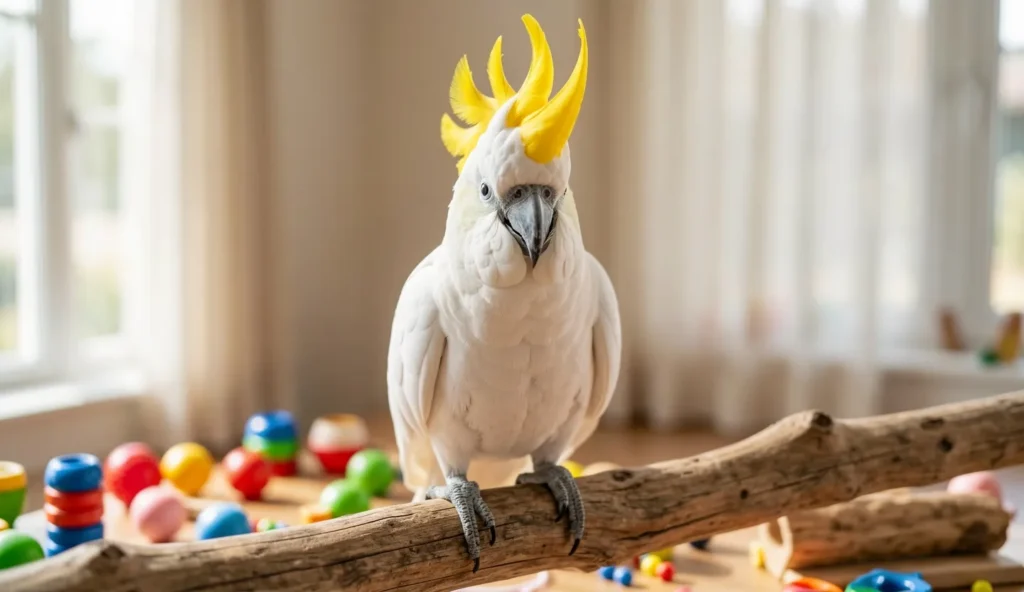
What Is a Sulphur Crested Cockatoo
The Sulphur Crested Cockatoo (Cacatua galerita) is a large white parrot native to Australia, New Guinea, and nearby islands. This species stands out for its striking yellow crest and extremely loud vocalizations. Understanding the noise and enrichment needs of this bird is essential for any prospective owner.
Origin and Natural Habitat
These cockatoos live in flocks across rainforests, woodlands, and urban areas. Their wild diet consists of seeds, fruits, and insects. In the wild, they use loud calls to stay in contact with their flock.
Similar to other large parrots like the macaw parrots, the Sulphur Crested Cockatoo requires a spacious environment. They are highly social and do not thrive in isolation.
Physical Characteristics
Adults reach 18 to 20 inches in length and weigh about 1.5 to 2 pounds. The plumage is pure white with a bright yellow crest that raises when excited or alarmed. The beak is black and powerful, designed for cracking hard nuts.
In captivity, a well-cared-for bird can live 40 to 70 years. This makes them a lifelong commitment that requires careful planning.
Understanding Sulphur Crested Cockatoo Noise
The Sulphur Crested Cockatoo is one of the loudest companion parrots. Sound levels can reach 135 decibels, comparable to a jet engine at close range. Owners must be prepared for frequent, piercing screams.
Natural Vocalizations in the Wild
In their native habitat, these birds use loud screeches to communicate over long distances through dense forest. Contact calls help flock members stay together while foraging. Alarm calls warn others of predators such as hawks or snakes.
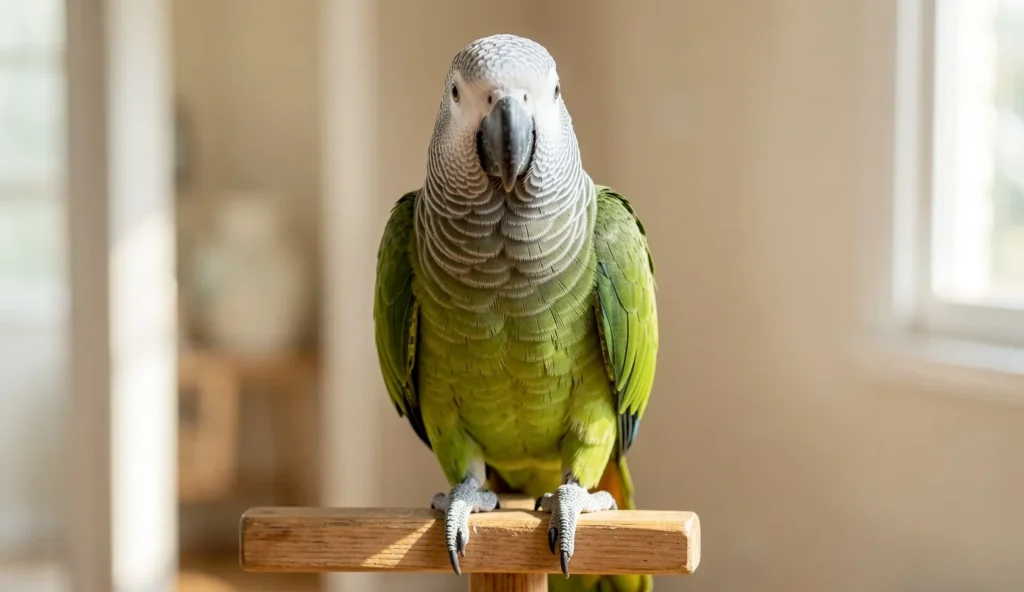
When compared to the African Grey Parrots, the Sulphur Crested Cockatoo is far more vocal and at a higher volume. This is a key distinction for potential owners.
Volume and Frequency
Vocalizations occur multiple times daily, especially at dawn and dusk. The noise level is among the highest of any pet bird. Even with training, the bird will still scream, though frequency can be reduced.
Why Noise Levels Matter for Owners
The extreme volume creates real challenges, particularly for apartment dwellers. Many landlords and neighbors will not tolerate the constant noise. Prospective owners should evaluate their living situation carefully before bringing one home.
Impact on Apartment Living
Screams can easily travel through walls and disturb neighbors. Noise complaints are common and can lead to eviction. Soundproofing helps but rarely eliminates the problem entirely.
Birds like the Blue and Gold Macaw also produce loud calls, but the Sulphur Crested Cockatoo is notably louder. Apartment living is strongly discouraged for this species.
Legal and Rental Considerations
Some cities have noise ordinances that apply to pet birds. Landlords may prohibit large parrots due to noise complaints. Check lease agreements and local laws before acquiring a cockatoo.
Effective Ways to Manage Cockatoo Noise
While you cannot silence a cockatoo, you can reduce excessive screaming through training and routine. Consistency is the most important factor.
Positive Reinforcement Training
Reward quiet behavior with treats or praise. Ignore screaming completely to avoid reinforcing the noise. Teach a quiet cue such as a soft word, then reward when the bird stops vocalizing.
For more training tips, the cockatoos the enchanting world of these charismatic parrots article offers additional insights on behavior modification.
Establishing a Daily Routine
Create predictable feeding, play, and sleep schedules. Provide at least 12 hours of dark, quiet sleep time each night. Regular activity reduces boredom-related screaming.
Environmental Modifications
Use heavy curtains or acoustic panels near windows to dampen sound. Place the cage away from busy household areas to reduce triggers. Offer background music or white noise to mask outside noises that may cause alarm calls.
Essential Enrichment for Sulphur Crested Cockatoos
Enrichment is critical for mental health and noise reduction. A bored cockatoo will scream for attention. Providing engaging activities keeps the bird occupied and content.
Foraging Toys and Activities
Hide treats in paper, boxes, or commercial foraging toys. Use puzzle feeders to mimic wild food searching. Rotate foraging items weekly to maintain the bird’s interest.
Chewing and Destructive Play
Provide untreated wood blocks, pine cones, and cardboard. Offer destructible toys made of soft wood or leather. Chewing sessions reduce frustration and channel energy away from screaming.
Social Interaction and Training Sessions
Spend at least 2 to 3 hours daily outside the cage. Teach tricks like step-up, wave, or targeting. Regular one-on-one time prevents attention-seeking screams.
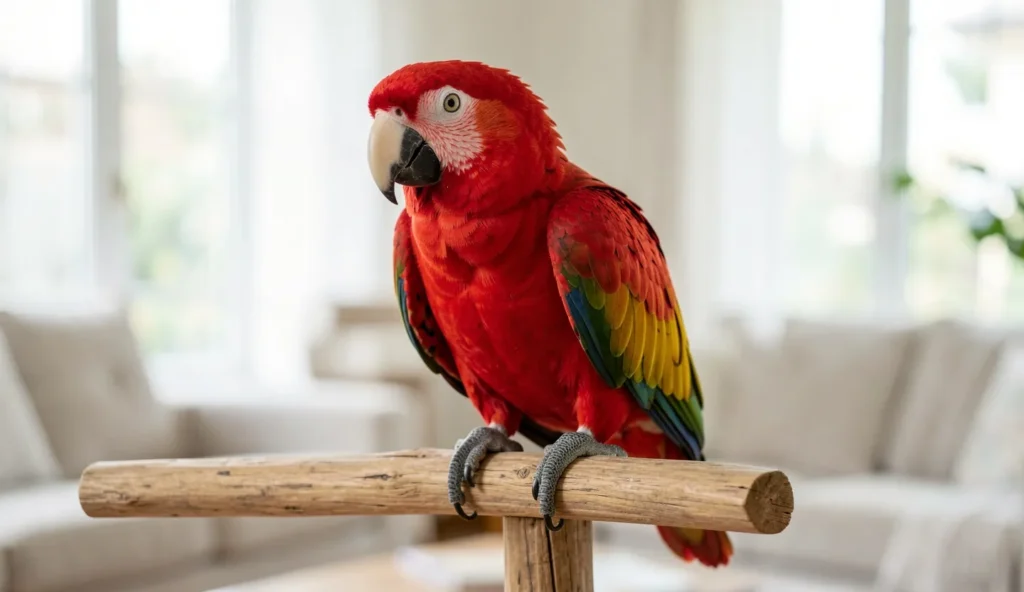
Birds that lack social time often develop behavioral problems. The Scarlet Macaw also demands high social interaction, but the cockatoo’s need is even more pronounced due to its flock mentality.
Creating a Stimulating Environment
A well-designed cage setup reduces boredom and destructive behavior. Proper placement and toy rotation make a significant difference.
Cage Size and Placement
The minimum cage size is 36 inches wide by 24 inches deep by 48 inches tall. Place the cage in a social room but away from windows. Horizontal bars allow climbing and exercise.
Toy Rotation and Variety
Introduce new toys every one to two weeks. Include foot toys, rope swings, and stainless steel bells. Avoid small parts that could be ingested.
Common Mistakes That Increase Noise
Well-meaning owners often accidentally encourage screaming. Recognizing these mistakes helps correct the behavior.
Reinforcing Screaming Unintentionally
Yelling at a screaming cockatoo mimics flock calling and may increase volume. Rushing to the cage when the bird screams rewards the noise. Consistent ignoring is the only way to extinguish the behavior.
Lack of Adequate Stimulation
Boredom is the top cause of excessive vocalization. Without enrichment, cockatoos become restless and loud. Insufficient out-of-cage time leads to frustration screams.
Is a Sulphur Crested Cockatoo Right for You
This bird is not suitable for apartments or quiet homes. Daily enrichment and social interaction are non-negotiable. The commitment spans 40 years or more.
Key Considerations Before Adoption
Review noise tolerance, available space, and daily schedule. Ensure you can provide at least 2 to 3 hours of supervised time outside the cage. Preparation prevents future rehoming.
Frequently Asked Questions
How loud is a Sulphur Crested Cockatoo?
Screams can reach up to 135 decibels. Vocalizations are frequent, especially at dawn and dusk. This is one of the loudest companion parrots.
Can Sulphur Crested Cockatoos be trained to be quieter?
Yes, through positive reinforcement and ignoring screaming. Teaching a quiet cue and rewarding calm behavior helps. Consistency and routine are essential for success.
What toys are best for Sulphur Crested Cockatoo enrichment?
Foraging puzzles, destructible wood toys, and foot toys are ideal. Rotate toys weekly to prevent boredom. Avoid toys with small parts that can be swallowed.
How much out-of-cage time does a Sulphur Crested Cockatoo need?
At least 2 to 3 hours of supervised time daily. Interaction during out-of-cage time reduces screaming. Provide perches and play stands in different rooms.
Do Sulphur Crested Cockatoos scream out of boredom?
Yes, boredom is a primary cause of excessive screaming. Lack of enrichment and social stimulation triggers noise. Providing toys, foraging, and training reduces boredom screams.
A Note on Enrichment and Commitment
A Sulphur Crested Cockatoo can be a rewarding companion when its needs are met. Adequate enrichment and noise management strategies make cohabitation possible. Dedicated owners who plan ahead will find this bird a joyful addition to their home.