What Is An Ayam Cemani Chicken?
The Ayam Cemani chicken is an Indonesian ornamental breed known for its extreme dark pigmentation across skin and tissues. The look goes beyond typical black feathering and often shows up as overall dark coloration when birds are handled and viewed closely. Many keepers choose the Ayam Cemani chicken for its genetics and display value rather than farm utility.
In most listings, the breed is commonly linked to Java and kept for appearance and breeding interest. Buyers usually expect uncommon pigment traits, and sellers often describe the bird as “all black” in a technical sense. That framing matters because true traits depend on genes, not only on how feathers appear from a distance.
Breed Origin And Recognition
Ayam Cemani is a rare ornamental chicken breed often connected to Java in breed histories and collector circles. The defining feature involves pigmentation that can extend beyond normal feather color. Many people keep the breed mainly for visual appeal and genetic projects.
Because the breed stays uncommon, consistent results vary across lines. Some sellers may use the term loosely, so careful evaluation helps avoid disappointment. A practical approach is to compare what is promised with what is visible on skin and internal tissue over time.
Key Traits That Stand Out
The most important trait is dark skin and dark internal tissues, which creates the “all black” impression. Feather color can look uniformly dark, but the deeper rarity comes from hyperpigmentation that can affect more than the plumage. Strong lines often show consistent depth in multiple tissues as the bird matures.
Rarity also influences buyer behavior. The more uniform the pigment and the more reliably it appears across generations, the higher the perceived value often becomes. That effect helps explain why an Ayam Cemani black meat discussion sometimes appears in collector forums.
What People Mean By Black Meat
Some keepers report Ayam Cemani black meat when the breed’s hyperpigmentation extends into internal tissues. This outcome connects to fibromelanosis and related genetic patterns in the lineage. Even so, reports are not guaranteed for every bird and can vary between individual genetics.
Meat color also depends on processing and expectations. For that reason, the most reliable way to manage goals is to treat “black meat” as a possible trait linked to hyperpigmentation rather than a sure result. Buyers who prioritize genetics and documentation often ask about chick development and pigment stability.
Appearance And Physical Features
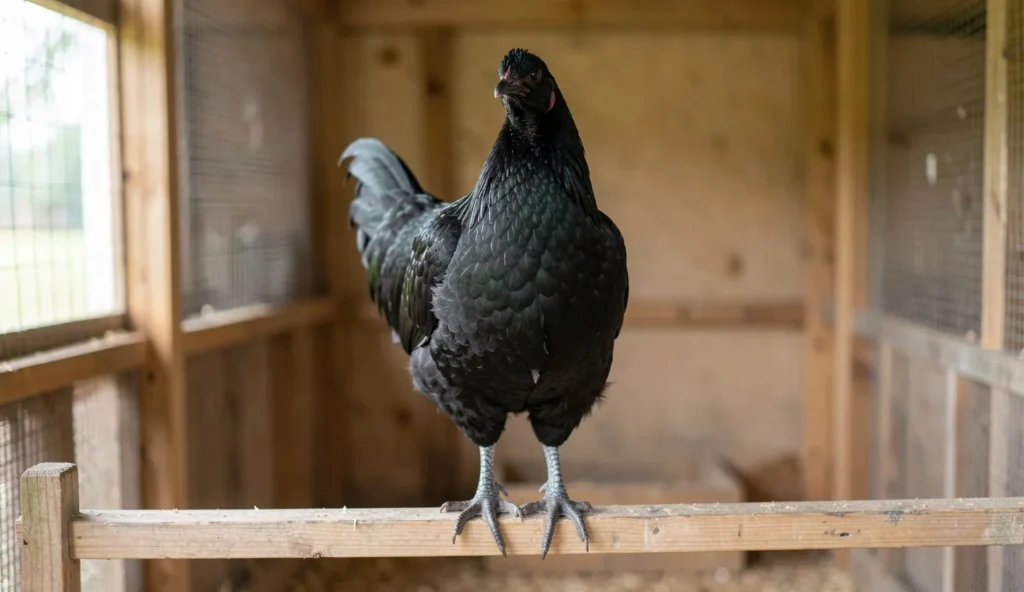
When evaluating an Ayam Cemani chicken, appearance helps, but it should not be the only screening tool. Correct birds often show very dark feathers, dark skin that looks slate to charcoal, and combs that stay dark compared with many other breeds. Even lighting and viewing angles can change how dark a bird appears.
Additionally, a healthy bird still needs good body condition and balanced form. Hyperpigmentation does not replace normal husbandry, so feather coverage, posture, and activity remain the real quality signals. Careful observation reduces risk when purchasing chicks or adult birds.
Feathers, Skin, And Comb Color
Feathers typically appear nearly black with a uniform look across the body. Skin pigmentation often reads as deep charcoal, especially when feathers are parted along the neck or under wings. Under some lighting, the skin can look slate and still remain consistent with the breed’s trait goals.
Comb and wattles commonly stay darker than those of lighter-feathered breeds. However, color alone cannot confirm fibromelanosis, because some birds show incomplete pigmentation at early ages. For that reason, visual screening should be paired with growth history from the seller.
Body Shape And Size Expectations
Many Ayam Cemani birds show a compact, balanced body with an upright stance. Size can differ by line and selection goals, so expectations should follow what a specific breeder has produced. Consistent feather coverage and clean skin also help confirm that pigmentation does not hide underlying health problems.
When birds look thin or have patchy plumage, the issue usually points to health or husbandry rather than pigmentation genes. Collectors can still enjoy appearance, but stress and poor nutrition can weaken feather quality quickly. That makes routine inspection a key part of Ayam Cemani care.
Egg Color And What To Expect
Egg color can vary depending on breeder lines and individual hens, so color claims often do not predict lay performance. For keepers, the more useful evaluation focuses on lay consistency and overall flock health. Hatch rate and chick quality can matter more than marketing descriptions.
Because pigmentation genetics relate mainly to dark tissues, egg shell color is not usually treated as the main indicator of trait strength. Still, breeders may track egg and chick outcomes together to assess whether selected traits stay stable. That records-driven approach supports better breeding decisions.
How To Tell If A Bird Has Consistent Hyperpigmentation
Consistent hyperpigmentation should show on skin and visible tissues, not only on outer feather color. Handling briefly and viewing areas where skin shows, like the neck and around feather shafts, can reveal deeper pigment. This check works best when the seller can show how pigmentation looks as the bird matures.
Feather color can mislead because some birds appear dark while skin pigment remains lighter. For that reason, buyers should avoid assuming that any black-feathered chicken equals the true fibromelanosis-associated pattern. A disciplined evaluation helps protect the investment tied to Ayam Cemani cost.
Fibromelanosis Genetics And Why The Breed Is So Rare
The Ayam Cemani chicken is strongly associated with fibromelanosis, a genetic trait that produces heavy hyperpigmentation. Hyperpigmentation means pigment deposits increase in one or more tissues, creating a deeper dark appearance across skin and internal areas. This genetic background also explains why results can vary even within the same clutch.
For many rare-breed projects, the value depends on how consistently the trait appears and how reliably it passes to offspring. That is the main reason fibromelanosis discussion often appears alongside selection strategies. It also helps explain why even well-cared-for birds may not show the same intensity at the same age.
Understanding Hyperpigmentation In Chickens
Hyperpigmentation in chickens refers to darker coloration caused by increased pigment deposition. In this breed, the trait connects with fibromelanosis, which can influence tissues beyond feather structure. The overall effect can show up as darker skin and darker internal tissues over time.
It helps to remember that genetics drive the result. Husbandry supports health, but it does not create fibromelanosis. That distinction matters for both collectors and anyone evaluating “all black” claims.
What Fibromelanosis Means
Fibromelanosis involves excess dark pigment in connective tissues, and the result can include darker skin and internal tissues. Pigmentation intensity can differ between individuals, which can create visible differences among chicks. Some birds show subtle changes early and develop a stronger look later as they mature.
Because connective tissue involvement can include multiple body areas, the condition can be recognized through more than one visible cue. Skin and certain internal tissue color patterns are more informative than feather color alone. That makes seller documentation and growth staging more valuable.
Why Genetics Affect Color Consistency
Color consistency depends on which genes and inheritance patterns are present in a line. When breeding outcomes differ, some chicks can start lighter and then deepen over time. Line breeding and careful selection can improve uniformity by prioritizing birds with stable pigment.
Even then, genetic expression can still vary. That means the most accurate expectation involves a range, not a guarantee. Collectors who track chick pigment development usually make better purchasing decisions.
How Breeders Explain High Values And Ayam Cemani Cost
The Ayam Cemani cost often reflects rarity, demand, and how difficult it is to reproduce consistent all-black traits. Uniform pigmentation across multiple tissues is harder than simply producing black feathers. Limited availability increases competition among buyers and collectors.
Some breeders also spend time selecting, keeping records, and raising chicks through stages where pigmentation becomes clearer. This process can extend the time required before birds can be sold as true examples. Those steps naturally increase the final price.
Questions To Ask Before Buying
Smart buyers ask how many generations the line has been selected for pigment traits and whether sellers can describe development milestones. Asking for notes on chick pigmentation progression can reduce confusion about early color. Buyers also benefit from confirming health history and how birds were raised before sale.
It can also help to evaluate whether a seller treats pigmentation traits as a genetic project with data, not only as a visual promise. Since fibromelanosis-related traits may show changes over time, staged expectations protect both budget and results. This careful approach supports long-term Ayam Cemani care.
Temperament And Behavior In A Home Flock
Temperament often shapes day-to-day success more than appearance. Many keepers report calm behavior when an Ayam Cemani chicken receives stable housing and routine handling. Still, individual variation exists across lines and depends on early socialization and flock management.
Because rare breeds can be sensitive to stress, introductions require planning. Gradual acclimation reduces bullying and helps birds settle into a new routine. Observations during the first days matter because stress can affect appetite and feather condition.
Typical Personality Traits
Many Ayam Cemani birds show non-aggressive behavior in managed settings, particularly when they grow in a familiar environment. Even so, some individuals may show different confidence levels based on breeding and handling history. Consistent, calm interaction helps birds tolerate routine care.
Handlers should avoid sudden chasing or rough handling because stress can damage feather integrity. When birds experience repeated stress, the keeper may notice crouching or reduced appetite. Those signals usually indicate environmental stress rather than a temperament mismatch.
Social Dynamics With Other Chickens
Introducing new birds works best when the enclosure provides enough room to reduce competition at feeders. Using multiple feeding points can help reduce crowding during early acclimation. The goal is to minimize pecking and allow calmer birds to access food and water.
Predator pressure also changes flock behavior, so secure runs matter. If birds feel unsafe, stress can escalate into chasing or aggression. A well-managed coop and run support smoother flock integration.
Handling And Stress Signals
Stress signals can include crouching, huddling, and reduced appetite, especially after a move or mixing. Keepers should also watch for signs of feather damage from repeated stress interactions. If one bird appears sick or unusually weak, separation can reduce spread of problems.
Routine inspection should focus on behavior and basic health indicators first. Pigmentation traits will not compensate for illness, mites, or injuries. This checklist-minded approach supports safer daily Ayam Cemani care.
Ayam Cemani Care Essentials For Healthy Birds
Ayam Cemani care centers on stable housing, dry bedding, balanced nutrition, and daily checks. The breed does not require special feed formulas, but it does require good environmental management because respiratory irritation can worsen in damp coops. A well-run setup supports both comfort and steady pigment development as birds mature.
For collectors, secure fencing and predator control matter as much as appearance. Many rare breeds get purchased at higher prices, so preventing losses protects the investment and the breeding plan. Practical care keeps birds healthy and helps maintain trait goals.
Housing Requirements And Coop Setup
Provide a dry, draft-safe coop with good ventilation to keep moisture low. Bedding should stay clean, with wet spots removed quickly to reduce irritation. Roosting areas should allow birds to rest without constant crowding or jostling.
Space matters because cramped conditions increase stress and parasite pressure. When birds can spread out, they can avoid repeated bullying. This also improves overall flock hygiene and makes daily inspection easier.
Outdoor Runs And Foraging Needs
Use a secure run to limit predators and reduce roaming stress. Foraging supports natural behavior and helps birds stay mentally engaged. Include shaded areas to reduce heat stress during hotter weather.
Safe foraging options also help reduce boredom, which can otherwise lead to unwanted pecking. If the run provides enough cover, birds can retreat from direct sun. That routine reduces stress and improves comfort during the day.
Diet And Feeding Schedule
Feed a balanced layer or all-flock ration based on age and production stage. Fresh water needs daily attention and waterers should remain clean to prevent contamination. Treats work best in small portions so the base diet stays balanced.
Feeding consistency helps birds settle and supports steady growth for chicks. Abrupt feed changes can upset digestion, so transitions should be gradual. Balanced nutrition also supports feather growth and skin health.
Recommended Food Types
Commercial feed helps cover protein, vitamins, and minerals, which supports normal physiology and feather quality. Properly prepared greens can serve as treats, and insects can add variety in moderate amounts. Since protein treats can add calories fast, portion control remains essential.
When additional foods get used, keep them safe and clean. Avoid feeding spoiled items, and remove uneaten portions quickly. For keepers comparing breeds, looking at how other ornamental birds eat can provide helpful baselines, such as care discussions for Leghorn chicken where feed consistency supports production.
Health Checks And Daily Monitoring
Daily monitoring should include appetite, droppings, and activity level. Inspect feet and legs for swelling or limping because these issues can worsen without early action. Feathers and skin also require attention because mites and irritants can appear as subtle changes first.
When issues appear, treat them as husbandry signals before they become emergencies. Damp bedding, poor ventilation, and overcrowding often contribute to many common problems. Collectors can also compare prevention strategies with other heritage lines, such as Welsh Black cattle guidance that emphasizes consistent conditions for animal health.
Grooming And Basic Hygiene
Grooming for an Ayam Cemani chicken focuses on hygiene more than showy grooming. Keep bedding fresh to reduce respiratory irritants and keep the coop easy to clean. Dust-bathing access supports normal feather maintenance and comfort.
Nail trimming should happen only if needed and with careful handling to avoid injury. If birds get nervous, skip DIY trimming and seek assistance from someone experienced. Good hygiene reduces the risk of parasites that can disrupt feather health.
Common Health Issues And Breeding Basics
Common health issues in pet chicken setups usually arise from parasites, dirty bedding, and poor ventilation. For Ayam Cemani care, prevention matters because rare birds can be harder to replace. A clean coop and early response reduce complications and support stable flock health.
Breeding also requires planning, especially when pigmentation goals involve fibromelanosis traits. Selection affects results over multiple generations, so records and patience help. Collectors who treat breeding as a long process usually make calmer decisions.
Common Problems In Pet Chicken Setups
Parasites such as mites can affect feather condition and cause irritation. Coccidiosis risk increases in dirty or wet bedding conditions, particularly for chicks. Respiratory irritation can also happen when ventilation is weak and moisture stays trapped.
Because unusual pigment does not protect against disease, standard chicken health rules apply. Keepers should watch for changes in appetite, droppings, and posture. Early isolation can reduce spread if a problem emerges in the flock.
Prevention Steps That Work
Start with clean and dry bedding on a regular schedule, and avoid leaving wet areas untreated. Separate sick birds early to reduce spread, and keep quarantine space ready if possible. Secure predator control also matters because injuries increase infection risk.
Sanitation also supports smoother introductions between birds. A stable environment reduces stress hormones, which can improve resilience. Prevention reduces the need for urgent interventions and supports ongoing Ayam Cemani care.
Breeding Considerations For Pigmentation Goals
Selecting for consistent hyperpigmentation traits can take multiple generations because genetics express differently across chicks. Pairing decisions should depend on observed pigmentation and health rather than a single photo. Keeping breeding records helps track which crosses produce stronger or more stable pigment.
Because some chicks may show weaker pigmentation early, timing matters when evaluating results. Breeders who note development milestones can reduce misjudging young birds. That structured approach also supports more realistic expectations about Ayam Cemani black meat claims.
Incubation And Chick Rearing Basics
Incubation requires stable temperature and careful humidity management. During chick rearing, warmth, clean bedding, and appropriate starter feed support steady early growth. Brooder airflow should remain balanced to avoid respiratory stress in young birds.
Chicks also need frequent checks because small issues can escalate quickly in brooding setups. Watch for weak activity, poor appetite, or clumping, which can indicate temperature or moisture issues. A disciplined brooder setup supports chick health and more predictable development.
Is An Ayam Cemani Chicken Right For You?
Choosing the right bird depends on rarity goals, budget, and the willingness to manage variability in genetics. An Ayam Cemani chicken can fit exotic collectors who want a unique genetic trait and a visually striking flock member. It also suits keepers who can provide secure housing and daily monitoring.
At the same time, the breed comes with long-term care responsibilities and uncertainty in pigmentation intensity. Understanding Ayam Cemani care from day one helps prevent rushed decisions. A realistic approach protects both bird welfare and collector expectations.
Best-Fit Owners For Rare Breeds
Ayam Cemani works best for collectors seeking a genetically distinct ornamental chicken rather than low-maintenance flock expansion. Housing security and daily check time matter because rare birds deserve consistent protection and hygiene. The most rewarding experiences come from buyers who prepare for variable chick development.
If the goal includes comparison breeding, it helps to study other rare lines that share similar collector dynamics. For example, collectors may also research Shamo Chicken to understand how temperament and line selection affect outcomes. That broader knowledge improves decision-making for long projects.
Budget And Long-Term Care Reality
The Ayam Cemani cost reflects scarcity and selection for hyperpigmentation traits that can take years to stabilize. Ongoing costs include feed, bedding, fencing maintenance, and basic health supplies. These expenses often continue long after purchase, especially if the flock grows through breeding.
Losses can happen during acclimation, transport stress, or outbreaks, so planning matters. Secure coops, steady routines, and early intervention reduce risks. Collectors who manage expectations can protect breeding plans and reduce financial strain.
When To Choose A Different Breed
Choosing a different breed often makes sense when secure housing, predator control, and daily care time are not available. Common breeds cost less and support faster flock growth, which can fit beginners who want predictable returns. Temperament needs also matter if the bird must mix with more assertive flock members.
For collectors focused on appearance but not fibromelanosis, other ornamental breeds may offer a similar hobby experience. Comparing traits and care demands can guide the choice and reduce mismatch. Even for those who love black-feathered looks, the genetics behind fibromelanosis make the Ayam Cemani chicken uniquely demanding.
Final Note On Keeping Ayam Cemani Chickens
Consistent housing, balanced nutrition, and careful observation support healthy birds and clearer pigmentation outcomes. With realistic expectations, the Ayam Cemani chicken can become a rewarding rare-breed addition for collectors.
Frequently Asked Questions
How Can The Fibromelanosis Trait Show Up In Young Chicks?
Pigmentation can be subtle at first and deepen as chicks mature, and results depend on the genetics in the breeding line.
Why Does Ayam Cemani Cost So Much Compared With Other Chickens?
Rarity and demand drive higher prices for true all-black traits, and uniform pigmentation is harder to reproduce.
Does Ayam Cemani Black Meat Happen In Every Bird?
Darker internal tissue links to fibromelanosis but can vary by individual, and variation can appear across lines and breeding outcomes.
What Is The Best Coop Setup For Ayam Cemani Care?
A dry, well ventilated coop with clean bedding and enough space for roosting reduces stress and supports daily health.
What Health Issues Are Most Common In Ayam Cemani Flocks?
Parasites like mites can reduce feather comfort, and dirty bedding can increase coccidiosis and respiratory risks.
Are Ayam Cemani Chickens Good For Mixed Flocks?
They can do well with careful introductions and enough space, but pecking and stress should be monitored early.