What Is The British Columbia Wolf
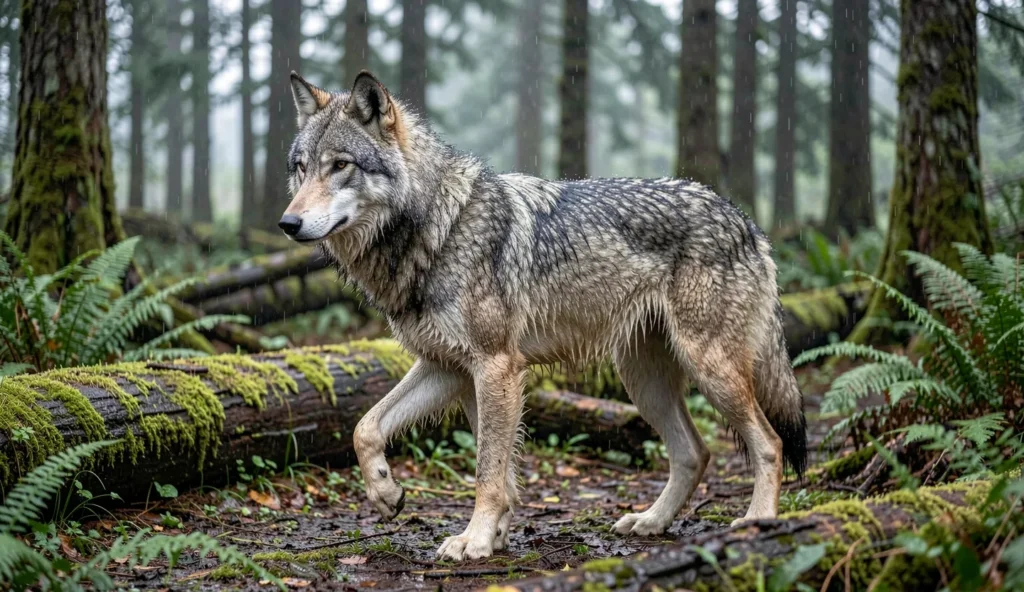
The british columbia wolf is commonly used to describe coastal wolf populations in British Columbia, often tied to Canis lupus columbianus. This animal lives across rainforest ecosystems and nearby forest types. A key trait stands out in field observations, since wet weather shapes how fur looks and how animals move.
Because naming can vary by region, physical-feature ID needs clear visual notes. When field conditions get rainy or muddy, coat density and tail fullness usually remain the easiest cues to record. For more context on wolf identification patterns, it also helps to compare with general wolf forms described in articles like the Gray Wolf guide.
Scientific Name And Common Labels
British Columbia wolf most often refers to Canis lupus columbianus in many references. In everyday language, people may also use terms like coastal wolf and rainforest wolf. Those labels usually describe location and habitat, not a separate species.
Regional variation exists across coastal and inland zones. Some references also overlap with how other Canis lupus populations get described across North America. For comparison of how geography affects traits, the Eastern Wolf article provides useful context on how names and classifications get used in wildlife writing.
When confirming identification, it helps to avoid guessing based on labels alone. Instead, focus on physical cues like coat tone, ruff thickness, tail outline, and track details. Those features stay more consistent across typical naming changes.
Where It Lives In British Columbia
This wolf population range includes coastal rainforest ecosystems and adjacent forest and hillside habitats. Dense vegetation, steep terrain, and wet ground conditions all influence where sightings happen. As a result, many observations occur near creek edges, forest trails, and natural clearings.
Forested valleys and rugged terrain often shape how animals travel. That movement pattern can affect where tracks and partial sightings appear. In turn, habitat type can correlate with coat thickness and shedding patterns that observers notice at different times of year.
Because the coastal environment stays moist, fur often looks darker or shinier after rain. Weather also affects visibility, so comparisons between individuals get harder in low light. This is why structured field notes matter more than quick impressions.
Why Physical Features Matter For Field Identification
Physical features support identification when a sighting is brief or partially obscured. Coat color, density, and tail shape can confirm the animal’s general form from a distance. Body size and limb proportions can also differ by region and season.
In many cases, skull and paw traits stay harder to confirm without evidence. However, track evidence can provide useful support when taken responsibly. When possible, comparisons to documented wolf anatomy can improve accuracy.
If field interest extends to how different climates shape fur and structure, the arctic wolf adaptations article can help show why weather drives coat changes across regions. Coastal rainforests push a different adaptation balance, but the identification lesson stays the same.
What The British Columbia Wolf Looks Like In Different Seasons
Seasonal changes affect the coat, body outline, and visible condition of the british columbia wolf. Observers often notice the strongest differences between winter and summer. That pattern supports field identification when month and weather conditions get recorded.
Even within the same season, storms and persistent drizzle can shift how fur clumps or darkens. For that reason, physical descriptions should always mention whether the coat looks wet, roughened, or freshly dried. Over time, those details help separate true individual differences from temporary weather effects.
Winter Coat Thickness And Color Range
Winter coats typically appear denser because insulation needs rise during cold, wet conditions. Wet air and low temperatures make coat structure more visually obvious. Common color tones include grays, browns, and darker guard hair that catches light differently.
After heavy rain or wind-driven storms, fur may look roughened. Small clumps can form along the back and legs, which can change perceived color. Observers should record the impression of density rather than trying to match a single “true” shade.
Winter also tends to make the neck area look fuller. A stronger ruff can broaden the upper body silhouette, which supports distance identification when the head is partially visible.
Summer Coat And Seasonal Shedding
In summer, coats often look shorter and less bulky after shedding. The undercoat reduces, which changes the body outline from thick to more streamlined. As a result, the same wolf can appear slimmer even when overall structure stays similar.
Coat condition can reflect food availability and climate exposure. When prey conditions change, body condition can shift, and that influences how the rib line looks under the fur. Those patterns work best as supportive evidence, not as the only identification method.
Observers should also note whether fur looks smooth or slightly uneven. Shed fur may leave temporary “patchy” areas around the flanks and hindquarters in early stages of seasonal change.
How Rainforest Weather Affects Fur Appearance
Frequent moisture can make fur cling, which sometimes darkens it temporarily. Guard hairs can repel water, but wet fur may still look darker and heavier. Mud and debris often add contrast, especially on legs and underparts.
After rainfall, wet fur may clump into thicker strands. When the fur dries, the same coat can look lighter or more matte. This is why timing matters for field photos and written descriptions.
Rainforest humidity can also affect how fur separates into layers. In some conditions, the outer layer and undercoat appearance looks distinct, helping observers describe thickness more accurately.
Coat And Fur Characteristics You Can Notice
Coat traits provide one of the most practical ways to describe the british columbia wolf during a sighting. Observations work best when notes include coat color tone, fur layering, and visible ruff and tail fullness. Because individual variation exists, descriptions should stay general and measurable.
For many watchers, learning to describe fur details clearly improves both record quality and report usefulness. When the same person records multiple sightings, patterns become easier to compare across months. That consistency matters in rainforest settings where wet weather changes appearance.
Typical Fur Color Patterns On The Body
Coat color often shows darker shading along the back and sides, with lighter tones on the throat and belly. Some wolves show mottling or blended tones rather than strict patches. Observers should expect individual variation even within the same region.
In coastal rainforests, fur may look darker after drizzle. That does not always mean the coat is naturally darker. Light angle and background color can also shift how gray versus brown tones appear.
To keep descriptions useful, it helps to specify where the darker color sits. Mention dorsal shading along the spine and any lighter underparts near the chest and abdomen. Those location-based notes support later comparisons.
Guard Hair Density And Undercoat Texture
Guard hair density supports weather resistance in coastal rainforests. When guard hairs are prominent, the outer coat often looks smoother and more structured from a distance. Undercoat texture influences how puffed the body appears in colder months.
During wet conditions, fur can separate into layers. Once dry, the coat can look more uniform again. Observers should describe whether fur looks layered, clumped, or uniformly aligned.
Undercoat thickness also affects how the animal’s silhouette looks. In winter, the body often looks rounder, while in summer it looks tighter and more athletic.
Head And Neck Fur Features
The neck ruff can make the upper body look broader, especially in winter. Forehead and cheek hair often frame the muzzle and jaw line. That framing helps observers recognize the wolf’s head shape even when the view is brief.
In colder months, ear edges may show a lighter fringe. That fringe can blend with the surrounding coat, making the ear appear slightly bordered. In summer, that same area often looks smoother due to reduced overall fur volume.
Because head fur can look different in wet weather, note whether the muzzle hair looks clumped or sleek. Those details can help distinguish weather effects from structural traits.
Tail Shape And Tail Fur Fullness
A full tail supports heat retention during rest and can look thicker than the rest of the body. Tail carriage also affects how fluffy the tail appears. If the wolf holds the tail low, it may look narrower, even with a dense coat.
Tail fur length often contributes to overall silhouette recognition. In many sightings, tail visibility becomes the easiest cue because it stays distinct against the background. Observers should note whether the tail ends look bushy or taper more sharply.
When a tail sways during movement, the fur can create a blurred edge. That motion effect can be mistaken for a coat irregularity, so it helps to describe tail shape at rest if possible.
Quick Visual Checklist For Coat Observations
A short checklist helps reduce memory errors during and after a sighting. It also keeps descriptions consistent across multiple observers and reporting events. The items below focus on details that remain useful in rainforest weather.
- Color tone on back and sides
- Lighter shading on throat and belly
- Ruff thickness around neck
- Tail fullness in standing posture
- Any muddy buildup on legs after rain
- Coat length compared with nearby individuals
- Shedding signs near flanks
After a wet spell, fur texture may look clumped. Therefore, recording the wet or dry state of the coat improves clarity. For additional context on how habitats shape visible traits, the Himalayan Wolf guide offers a helpful example of climate-linked coat expectations.
Body Size And Proportions In Coastal Habitats
Body size and proportions help observers interpret a wolf’s overall build. In coastal habitats, the british columbia wolf often appears athletic and endurance-oriented. However, season and ground conditions can change how size looks in photos.
Wet, uneven terrain also affects posture and stride. As a result, the same animal can look longer-legged or more compact depending on how it stands. Observers should interpret proportions in context and document conditions.
Overall Body Shape And Limb Proportions
Expect a strong, athletic frame built for endurance movement. Limb proportions can influence how stride appears, especially on soft ground. When the wolf walks uphill or across uneven logs, legs may look more extended than when it stands still.
Body mass cues can change with season and prey availability. Winter conditions can also thicken the visual outline, making the wolf look heavier. Summer shedding can reduce that bulk, which may make the same individual look slimmer.
Because observers rarely get perfect views, these cues work best when multiple traits agree. Coat density plus tail fullness plus body outline often deliver better identification value than one measurement.
How Coastal Environments Influence Physical Condition
Wet terrain can affect visible wear on paws and lower legs. In muddy areas, fur may collect debris that darkens lower limbs and underparts. That buildup can hide or exaggerate shape, especially around joints.
Thermal needs in rainforest climates can influence coat development and how “layered” fur looks. Even though the climate stays relatively mild compared with far northern zones, moisture and wind still shape coat appearance. Those factors can change how often a wolf looks uniformly groomed versus slightly rough after storms.
Lower visibility vegetation can reduce clear size comparisons. Therefore, observers should avoid estimating height based only on the animal’s position in the frame. Instead, focus on relative comparisons using tracks and nearby objects when safe.
Common Field Measurements That Support Identification
Some field measurements can strengthen identification when the animal is not close enough for detailed observation. Comparing perceived height at the shoulder to body length can help, though it remains approximate. Track size offers a more reliable estimate when evidence gets preserved.
Documenting the time of year matters because coat thickness alters perceived body mass. Measurements taken in winter often need different interpretation than measurements taken after summer shedding. When reports include date and weather, later comparisons become more credible.
If track evidence gets found near trails, record whether it sits on firm soil, wet sand, or deep mud. Substrate strongly affects how toes spread and how clear pad marks appear.
Skull, Jaw, And Ear Details That Help Confirm Species
Facial traits can support identification without close approach. For safety, observation stays from a respectful distance and relies on visible structure. Still, certain skull and jaw characteristics appear consistently in general wolf morphology.
Rather than trying to confirm skull features in the field, watchers can focus on visible muzzle and ear structure. When these cues match with coat and track details, confidence increases. That combination often works better than relying on one trait alone.
Muzzle Shape And Jaw Strength
A broad, powerful muzzle supports gripping and carrying prey. In side profile, the jaw line can look pronounced because the head fur frames the lower contour. Facial hair density also changes how sharp or rounded the muzzle outline looks.
Wet conditions can cling to muzzle fur, making the hair look darker and slightly thicker. That effect can change perceived muzzle width. Therefore, the safest approach uses multiple cues rather than only muzzle width.
When possible, note how the muzzle tapers toward the nose. A gradual taper often appears with dense facial hair, while a more abrupt taper can appear when fur looks shorter.
Ear Size, Set, And Fur Covering
Ears usually remain upright to aid hearing in forested environments. Ear size relative to the head can vary with age, coat fullness, and lighting. In winter, thicker surrounding fur can make ears look slightly smaller.
Ear edges may show a lighter fringe during colder periods. That fringe can blend with the neck ruff, especially when the animal stays still. In summer, the same area often looks smoother due to reduced coat bulk.
Because ear visibility can be limited by brush and lighting, ear traits work best when the animal turns its head. If head angle stays constant, ear shape notes become more accurate.
Eye Color And Expression From Safe Distances
Eye color can range widely across wolves, and it is hard to confirm at distance. Head angle and lighting strongly affect perceived eye color. Therefore, observers should avoid strict color matching during brief views.
Instead, record eye visibility and whether the eyes appear reflective in low light. When a photograph exists, use consistent camera settings to reduce color distortions. That method makes future comparisons more practical.
Expression also comes from head posture, such as a forward-facing head or a turned gaze. Those posture cues support context, especially when recording behavior near tracks.
Paws, Tracks, And Movement Clues On Wet Ground
Paws, tracks, and movement provide strong evidence for field identification in rainforest habitats. Wet ground conditions often preserve track details that dry soil erases. When observations include substrate type, track notes become far more useful.
Because direct contact with wildlife is not appropriate, track work stays non-invasive and observational. It helps to record the setting and time because mud consistency changes within hours. That approach supports more accurate interpretation of toe spread and pad impressions.
Paw Structure And Toe Splay
Wolves typically have large, strong paws adapted to varied terrain. Toe spread can change on soft mud versus firm soil, so direct comparison requires similar substrates. Claw marks may appear depending on ground texture and how hard the wolf steps.
When tracks show clear edges, observers can compare the relative width across toes. The goal is not to diagnose from a single track, but to support overall identification with consistent patterning.
Fur and body movement also influence track clarity. A heavier step can deepen the pad impression, while lighter stepping may only show toe tips.
Track Appearance In Rainforests And Muddy Trails
Wet ground can capture paw pad impressions clearly. After rain, tracks may darken but still hold shape longer in some soils. In contrast, repeated steps can smear edges and reduce measurement accuracy.
Rain can also blend track outlines with leaf debris. That blending sometimes makes toe spacing look wider than it really is. For accuracy, record whether leaf cover or mud slush obscures the print.
When tracks get found, note whether they occur on a trail, creek edge, or open patch. Those locations often correlate with wolf travel routes in forested regions.
If comparing evidence methods across regions helps, the Pakistani Wolf profile demonstrates how habitat affects what trackers notice. Coastal rainforest mud behaves differently than arid sand, but the observation principle stays consistent.
Gait And Body Position While Walking Or Trotting
A steady, ground-covering gait helps energy-efficient travel across uneven terrain. Stride length can change with terrain and load carriage, such as moving downhill or carrying prey. Tail carriage can also stabilize balance on uneven surfaces.
In soft mud, stepping patterns can leave irregular depth. That pattern should be described, not treated as an abnormality. When gait looks smooth, it suggests a normal travel routine rather than a pause or stumble.
Observers should note whether the wolf trots, walks, or pauses between steps. Those movement states often produce different track spacing and alignment.
Field Notes Checklist For Tracks And Movement
A checklist improves consistency when multiple sightings get recorded over time. It also prevents missing key details that explain why a track looks the way it does. Each item below supports a clearer identification record.
- Track depth in mud or snow
- Toe alignment and spread
- Presence of claw marks
- Distance between front and rear tracks
- Time of day and weather conditions
- Nearby habitat type such as trail or creek edge
Because the british columbia wolf often travels through dense vegetation, tracks may appear sporadically. Therefore, noting habitat context and weather helps interpret why some tracks remain clear while others fade quickly. For an example of how similar observational detail supports understanding across regions, the Ethiopian Wolf article can be a useful comparison point.
Is The British Columbia Wolf Right For Coastal Rainforest Observers
Coastal rainforest observers often find the british columbia wolf interesting because the environment shapes visible physical cues. Wet conditions influence fur texture, tail appearance, and track clarity. That creates many observable differences across seasons without needing close approach.
Still, identification accuracy depends on careful observation and consistent notes. Wolves can pass quickly, and dense vegetation can block key features. When observers focus on coat density, tail outline, and track evidence, the chance of accurate notes increases.
For anyone who compares wildlife traits across climates, learning how other coastal or regional populations handle fur shifts can help. The same methodology applies when reading red wolf descriptions, even though the habitat and appearance vary.
What Makes This Wolf Interesting To Observe
Coastal rainforest conditions shape fur look and seasonal coat change in noticeable ways. Physical traits support identification through coat, tail, and track details that remain visible during drizzle and muddy travel. Variation across seasons offers visible differences to document responsibly.
Observers also see how the wolf’s body handles uneven terrain. Stable gait and balance cues can support interpretation of movement state. Combined with coat and track notes, those details strengthen identification.
Observation Tips That Improve Physical Feature Accuracy
Record month and weather because coat condition changes appearance over short timeframes. Use consistent angles for photos when images get taken, especially side profile and tail carriage views. Prioritize distance and avoid disturbing wolves that appear resting or traveling.
If a wolf remains partially obscured, note which features remain visible. For example, tail fullness might remain clear even when the head stays hidden. That selective documentation still provides useful physical-feature evidence.
When track evidence exists, keep notes tied to substrate and weather rather than only to measurements. Soil and moisture explain many track differences that people might otherwise misread.
A Practical Way To Document Physical Features During Coastal Wolf Sightings
Accurate documentation supports future comparisons and helps improve field reports. It also reduces confusion caused by wet fur, changing lighting, and short observation windows. A simple record template keeps notes focused on traits that matter.
When documentation stays consistent, physical-feature descriptions become easier to compare across months. That consistency helps observers see how the british columbia wolf looks at different points in the year. For extra context on general wolf traits, it can also help to review the african wolf profile when learning how different environments produce different visible adaptations.
What To Record In The Field
- Month and weather, plus basic coat and tail appearance notes
- Track location, substrate type, and visible toe or claw details
- Photo angles that capture side profile and tail carriage when safe
These notes work best when written immediately after the sighting. Even short entries improve quality and reduce reliance on memory. Over time, the recorded traits create a useful personal reference for coastal observations.
Frequently Asked Questions
What Color Variations Are Typical For A British Columbia Wolf?
Common ranges include gray and brown tones with occasional darker guard hair, and season or individual variation can shift how colors appear.
How Thick Is The Fur On A British Columbia Wolf In Coastal Rainforest Weather?
Winter coats typically look denser for insulation and wet conditions, while summer coats shorten after shedding.
What Physical Features Are Easiest To Spot From A Distance?
Coat density, tail fullness, and overall body outline are often most visible, and ear position and neck ruff can also help.
How Do Wet Ground Conditions Affect British Columbia Wolf Tracks?
Muddy substrates can preserve paw pad impressions and toe spread, while rain can darken tracks and smear edges over time.
Do British Columbia Wolves Have A Distinctive Skull Or Muzzle Shape?
A broad, strong muzzle and pronounced jaw line are common wolf traits, while detailed skull confirmation usually requires close evidence.
Are Rainforest Wolves The Same As British Columbia Wolf Animals?
The term rainforest wolf is often used informally for wolves in rainforest regions, and many references connect coastal populations with Canis lupus columbianus.
A Final Note On Observing Physical Features
Careful, weather-aware notes help turn brief coastal rainforest sightings into reliable physical-feature records for the british columbia wolf.
With consistent documentation of coat, tail, and track details, observations become easier to compare across seasons and conditions.