What Is the Nubian Lion?
Nubian lion facts usually refer to a lion form connected in older records to the Nile region and parts of Sudan. In modern research, the name often appears in discussions of subspecies labeling rather than a clearly separated living population.
Because taxonomy has changed repeatedly, Nubian lion facts can show up with different labels across museum catalogs and scientific papers. For history enthusiasts, the same naming shifts help explain why ancient Egypt and Nile-area references are frequently linked to lions.
Scientific Naming And Common Labels
Panthera leo nubica is a scientific label used in some historical and zoological references for a Nubian lion. Over time, databases and authors have used different terms, so the same animal may appear as Nubian lion or in broader regional categories.
Regional labels like East African lion can also appear in the literature when authors focus on geography rather than fixed genetics. As a result, Nubian lion facts often combine scientific naming with regional naming conventions from different periods.
Where the Nubian Lion Is Linked in Records
Older references frequently associate the Nubian lion with the Nile corridor, where geography strongly shaped how naturalists described animals. Summaries may then connect the label Panthera leo nubica to Sudan as part of that broader Nile region framing.
However, modern range details can differ from older classifications because sampling locations and museum specimens do not always match current distribution data. Therefore, Nubian lion facts should be read as record-based history, not a guarantee of modern boundaries.
Historical Time Frame Mentioned in Scholarship
Nubian lion facts often show up in scholarship that considers ancient Egypt and surrounding regions. Lions appeared in Egyptian royal imagery and hunting scenes, which made the wider Nile world a recurring reference point.
Modern studies also use museum records and written accounts to interpret how lions may have moved through or been described from the region. Even so, historical mentions do not automatically confirm where Panthera leo nubica existed at any specific time.
Appearance and Physical Traits
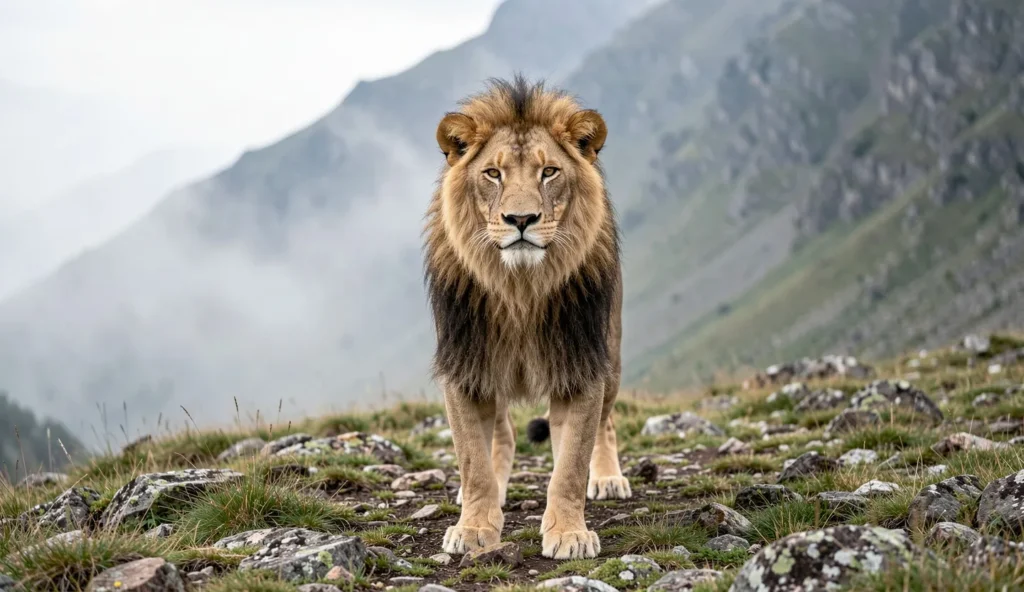
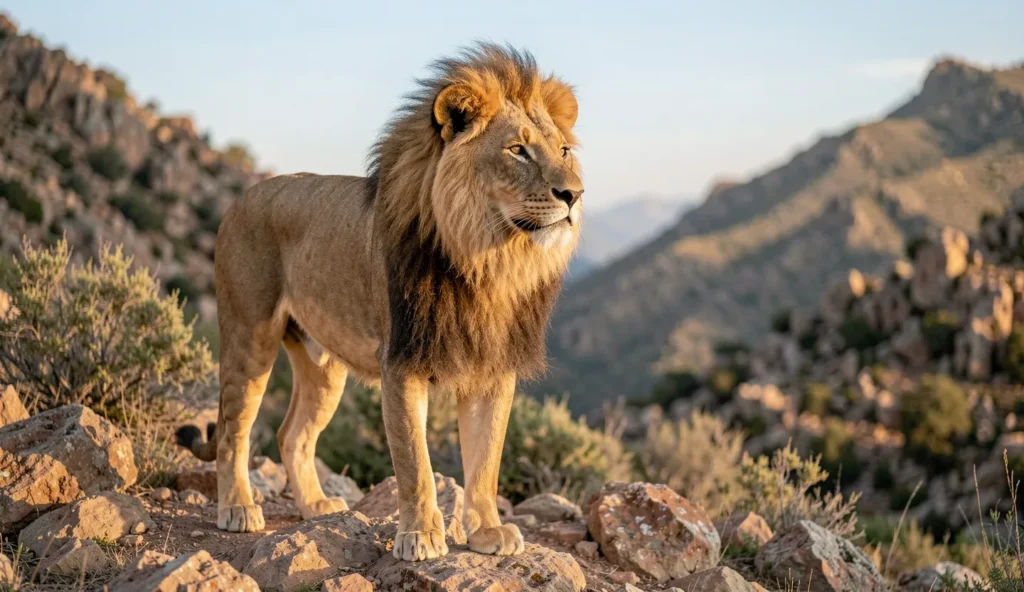
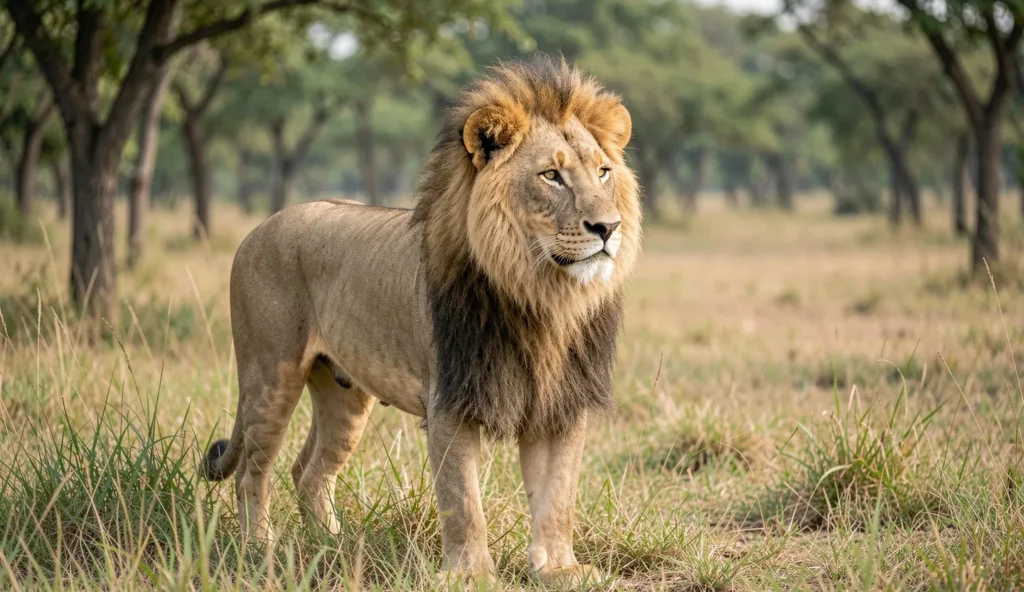
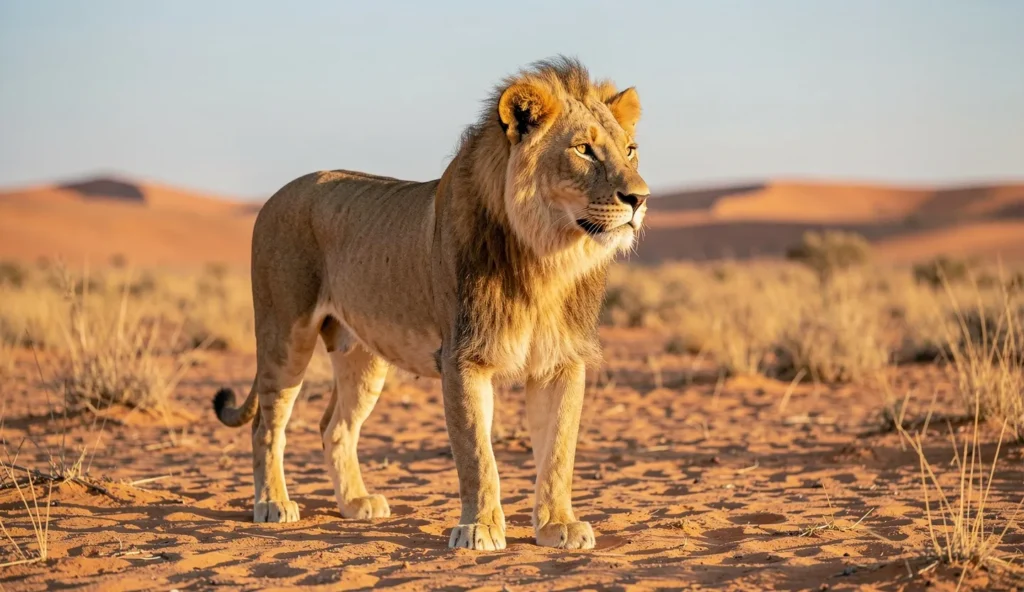
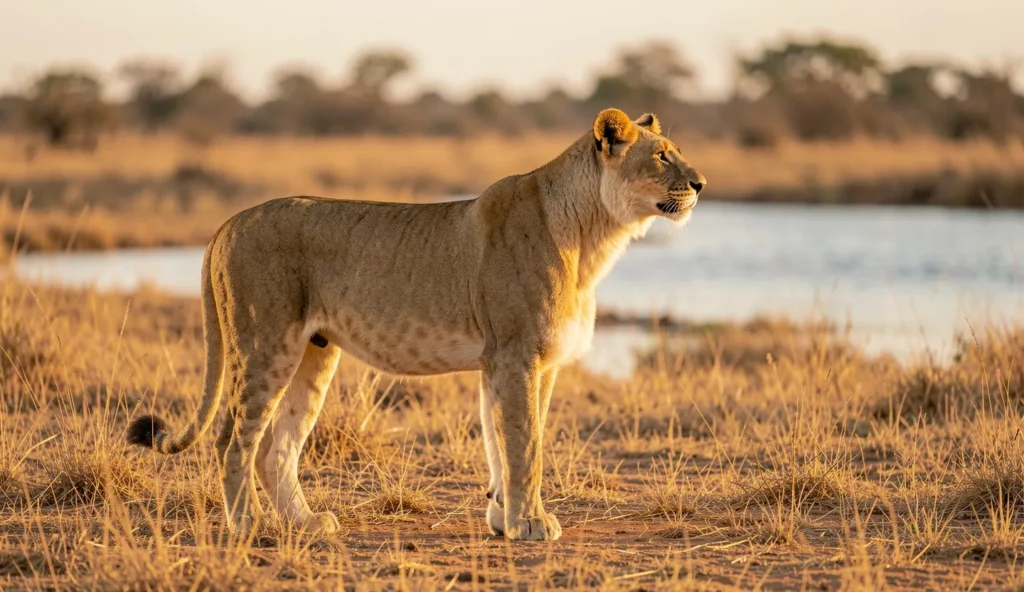
When Nubian lion facts focus on appearance, the safest approach uses general lion traits plus awareness of regional variation. Lion body form, coat tone, and mane development vary by sex, age, and individual genetics.
For research use, physical descriptions are usually tied to specimen notes rather than live observation. That means catalog wording can be broader than what a casual observer expects from a single fixed look.
Body Size And Build
Most lion references describe a muscular, deep-chested body shape built for short bursts of power in open habitats. Male lions typically appear larger and heavier than females, with stronger shoulder mass.
Within any named form, variation remains normal because nutrition and local conditions affect growth. Therefore, Nubian lion facts about size should stay framed as typical ranges for lions rather than exact measurements.
Coat Color And Pattern Expectations
Coat tones for lions from warmer, arid zones often include sand to tawny shades, with lighter underparts in many individuals. Still, coat color can shift with genetics, wear, and seasonal coat condition.
Patterning usually stays subtle, with minimal stripes on most adult coats. For that reason, Nubian lion facts rarely support identifying Panthera leo nubica by color alone.
Mane Characteristics In Historical Descriptions
Historical descriptions commonly mention differences in mane coverage and mane color, especially in males. Some records may describe darker or more extensive manes, which can influence how a lion looks in artwork or specimen photos.
At the same time, mane traits vary widely even among lions from nearby areas. Also, historical descriptions may not match modern measurement methods, so exact comparisons can be misleading.
How Researchers Differentiate Regional Forms
Researchers typically separate regional forms using a mix of morphology, geography, and historical specimen data. Genetic studies may also influence modern debates about subspecies, especially when museum labels and distribution assumptions conflict.
As evidence improves, classification can change, so Nubian lion facts may not stay identical across every database. This also explains why related labels for the wider region keep appearing in lion research summaries.
For context, readers comparing subspecies discussions can also review how other regional labels are treated in sources such as African Lion coverage. That broader framing helps show how subspecies labels differ from living population structure.
Temperament and Social Behavior
Lion temperament follows species-wide social rules, so Nubian lion facts about behavior usually match standard lion patterns. Lions live in prides built around cooperative breeding and shared territory use.
Because behavior depends on prey density and habitat quality, individual temperament can vary between animals. Still, the core daily routines and social roles remain predictable for lions in general.
Group Structure And Pride Roles
Lions typically form prides with related females, their cubs, and one or more adult males. Females often share hunting support and cub care, while adult males protect the pride and help defend territory.
Cubs learn through play and close observation, with early behavior tied to the pride’s routines. Even when Nubian lion facts mention Nile-area links, the social structure stays a lion-wide trait rather than a unique regional behavior.
Hunting And Feeding Patterns
Lions usually hunt in open habitats using stalking, short acceleration, and coordinated pursuit when conditions allow. Prey availability strongly affects how often hunts succeed, and that in turn shapes movement and rest patterns.
In seasonal periods, prey distribution can shift, which changes where pride members spend time. These patterns matter for research because sightings depend on prey timing, not only on lion presence.
Communication And Daily Activity
Lions communicate through vocalizations, scent marking, and body postures that signal territory and social status. Territorial behavior increases when rivals are near or when pride borders feel pressured.
Daily activity often peaks during cooler hours, followed by long resting periods in heat. Even so, Nubian lion facts should be treated as general lion behavior unless a study or record ties observations to a specific locality.
For readers interested in how behavior descriptions appear across regions, exploring lion form variation such as Masai Lion can show how authors link activity and appearance to location. That comparison helps separate normal lion variation from claims about a single named group.
Historical Significance in Ancient Egypt
Nubian lion facts often focus on historical significance because lions appear in ancient Egyptian symbolism and royal scenes. Lions also appear across the Nile corridor in broader accounts, which makes the Nile region a repeated research theme.
At the same time, matching those cultural references to Panthera leo nubica specifically requires careful handling. Historical evidence can show lions in general, but it cannot always prove which labeled population scholars mean today.
Why Lions Appeared in Ancient Egyptian Contexts
Lions show up in Egyptian royal imagery, hunting scenes, and symbolic systems tied to power and protection. Artworks and texts often treat lions as an important presence in the landscape and courtly symbolism.
However, linking specific lion populations to named modern forms remains complex. Nubian lion references often come through regional associations with the Nile rather than direct subspecies-level proof.
Links to the Nile Region and Sudan in Historical Accounts
The Nile corridor served as a route for cultural exchange, trade, and record keeping, which influenced how people described wildlife. Geographic references shaped naming, so animals were often linked to broad regions rather than precise local populations.
When summaries connect Nubian lion facts to Sudan, the connection typically follows that Nile region framing. Still, boundaries described in older sources do not always align with how modern zoologists define distribution.
Evidence Types Used by Historians and Researchers
Historians and researchers rely on categories like artwork, written texts, and traveler reports. Scientists then compare those categories with specimen records and distribution data when available.
This mixed evidence approach helps frame plausibility, but it also shows limits. Non-scientific descriptions can be valuable for context while still not offering certainty about Panthera leo nubica at the subspecies level.
For example, when readers compare multiple lion records, it helps to understand how different regional labels are handled in sources like Barbary Lion. That kind of comparison shows why historical naming overlaps with modern classification debates.
Modern Status and Conservation Context
Modern Nubian lion facts involve both conservation realities and classification challenges. Lions across East Africa and the Nile region face pressure from habitat loss, prey decline, and conflict with people.
Meanwhile, Panthera leo nubica may appear differently across modern databases because subspecies debates continue. Conservation programs often target populations and areas, not labels.
Why Nubian Lion Classification Can Vary in Modern Sources
Subspecies debates arise because genetics and morphology do not always match older museum labels. Panthera leo nubica may appear in some lists, while other databases use alternative labels or broader categories.
That means Nubian lion facts can differ across sources even when authors discuss the same general region. It also means the most useful conservation information often focuses on where lions live now, not what they are called.
Threats Affecting Lions Across East Africa and Nile Regions
Habitat loss and fragmentation remain major threats because they reduce safe areas for pride survival and hunting. Prey decline often follows from overharvesting, habitat change, or competition with livestock.
Human conflict can increase when lions hunt livestock, which may lead to retaliatory killings. Disease and climate variability can add extra stress, especially when lions already face reduced prey availability.
- Habitat loss and corridor fragmentation
- Prey decline from environmental and human pressure
- Human conflict around grazing and livestock
- Risk from disease outbreaks and drought swings
What Current Wildlife Research Emphasizes
Wildlife research commonly uses camera traps, field surveys, and protected area monitoring to estimate presence and behavior. Genetic sampling can help clarify whether populations connect or stay distinct, but it depends on sampling quality and coverage.
Researchers also emphasize verifying location-based claims because historical locality labels can shift across records. This is why Nubian lion facts should be treated as record-linked hypotheses unless supported by modern field evidence.
Responsible Interest and Why Captive Ownership Is Not Typical
Lions require specialized facilities, experienced staff, and strict safety protocols. Most ethical and legal frameworks also limit private ownership, which helps protect both people and animals.
For reliable learning, accredited institutions and professional animal welfare teams offer structured care and documentation. That setting aligns better with conservation-focused goals than keeping lions as private pets.
For broader historical context on how labels shift, readers might also compare Ethiopian Lion or other regional groupings mentioned in modern conservation discussion. Those comparisons can clarify why “Nubian” may be treated as a historical label in some research workflows.
Care Essentials for Lion Enthusiasts Looking at Captive Care Reality
Lion care for accredited settings requires a high level of planning, veterinary support, and enclosure safety. For anyone searching Nubian lion facts from a pet-breed curiosity angle, it helps to understand that captive ownership rarely matches normal household expectations.
Instead, lion welfare focuses on professional housing, meat-based nutrition under supervision, enrichment, and consistent health monitoring. These care principles apply across lion forms, including any label connected to the Nubian or Nile region discussions.
Housing Requirements for Big Cats in Accredited Settings
Accredited facilities typically use spacious enclosures with secure barriers to prevent escapes and reduce injury risk. Shade, drainage, and safe substrates help lions rest comfortably and support daily cleaning routines.
Enrichment structures support natural behaviors like walking routes, scent exploration, and controlled climbing opportunities where suitable. Handling access systems also matter, because staff need a safe way to conduct husbandry tasks.
- Spacious enclosure with escape-prevention design
- Safe barriers for staff movement and lion separation
- Drainage and comfort surfaces to manage hygiene
- Enrichment elements that encourage natural movement
- Clear access points for routine veterinary procedures
Diet and Feeding Principles
Large cats generally receive meat-based diets prepared and balanced for nutritional needs. Facilities work with veterinary nutrition guidance to maintain growth, body condition, and long-term health.
Feeding schedules reflect age, activity level, and veterinary goals. Safe thawing and storage reduce contamination risk and help prevent digestive problems.
Because prey composition affects nutrients, consistent sourcing and diet review matter. This care requirement helps explain why private feeding by untrained owners usually fails to meet welfare standards.
Training and Handling for Welfare
Professional facilities often use positive reinforcement training to reduce stress during daily care. Voluntary behaviors help lions present for weighing, checkups, or routine procedures with less force.
Training also supports safer husbandry, such as moving lions between areas without panic. These practices depend on skilled staff, clear protocols, and careful monitoring of stress signals.
Instead of treating lion care like basic pet handling, accredited settings treat it as a controlled welfare system. That structure protects lions and limits risk during medical or enclosure management.
Health Monitoring and Common Medical Concerns
Facilities track body condition score, appetite, and behavior changes because subtle shifts can signal illness. Dental, skin, and musculoskeletal problems may arise from diet imbalances, activity changes, or aging.
Parasite prevention and scheduled veterinary checkups help reduce avoidable risks. Respiratory issues and gastrointestinal problems can become serious quickly, so facilities rely on early detection.
- Body condition score tracking during routine checks
- Monitoring appetite and stool patterns for changes
- Dental checks for pain and infection risk
- Skin and joint assessments for mobility concerns
- Veterinary schedule for parasites and preventive care
Starter Checklist for Research and Accredited Enthusiasts
For research-minded readers and accredited enthusiasts, a practical checklist helps focus on what matters for welfare and documentation. Legal requirements, institutional accreditation, and veterinary support define whether any captive plan is realistic.
Enclosure safety and enrichment planning should come first, followed by diet sourcing and nutrition review. Documentation of staff training and emergency protocols also supports responsible care.
- Verify legal requirements and institutional accreditation status
- Confirm veterinary support and emergency handling procedures
- Review enclosure safety systems and access control design
- Plan enrichment that encourages natural movement
- Set diet sourcing rules and nutrition review schedule
- Document staff training and husbandry recordkeeping
For readers interested in how animal classification debates shape research priorities, comparing related big cat labeling like West African Lion can show how conservation planning differs from naming history. That perspective helps keep Nubian lion facts grounded in evidence.
Frequently Asked Questions
Is Panthera Leo Nubica The Same As Nubian Lion In Modern Research?
Labeling can vary across databases, so “Nubian lion” often functions as a regional reference rather than one fixed modern subspecies.
Where Were Nubian Lions Historically Recorded In Relation To Sudan And The Nile Region?
Older sources often place the association along the Nile corridor, with boundaries described inconsistently across records.
What Physical Traits Are Most Commonly Described For Nubian Lion Facts?
Descriptions usually focus on general lion variation such as coat tone and mane characteristics, rather than one uniform appearance.
How Does Ancient Egyptian Evidence Connect To Nubian Lions?
Egyptian art and texts show lions in royal and symbolic settings, but direct matching to a specific subspecies remains difficult.
What Is The Modern Conservation Context For Lions Associated With The Nile Region?
Threats like habitat loss and prey decline affect lion populations broadly, while conservation typically targets areas and populations rather than labels.
Can Nubian Lions Be Kept By Private Owners As Pets?
Captive lion ownership is usually heavily regulated and not suited to private homes, and accredited facilities set the standard for welfare.
A Final Note On Nubian Lion Facts
Nubian lion facts connect naming history, Nile region records, and modern conservation needs into one changing research topic. For accurate understanding, it helps to treat Panthera leo nubica claims as evidence-linked rather than fixed.