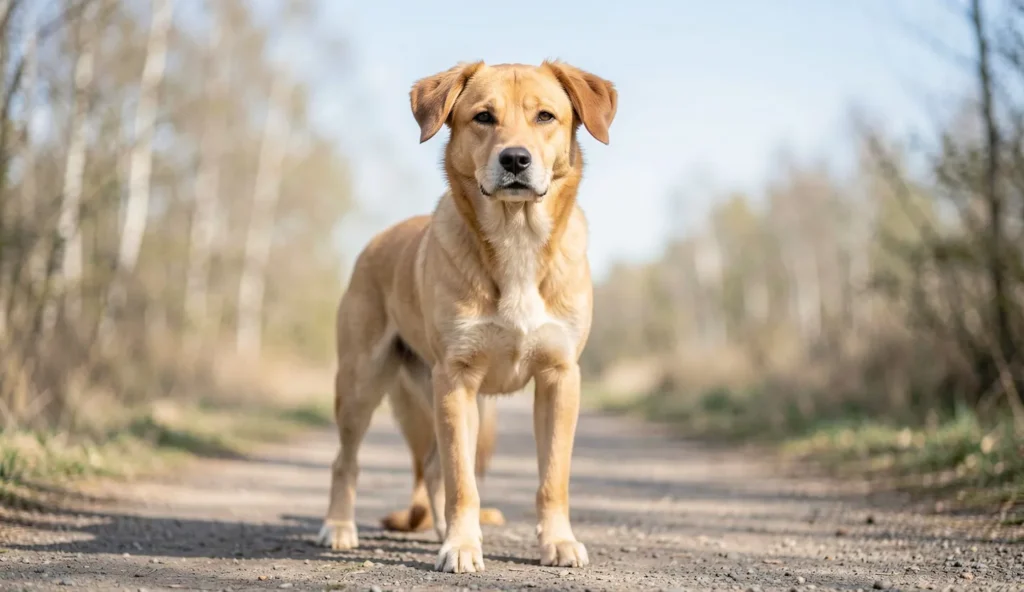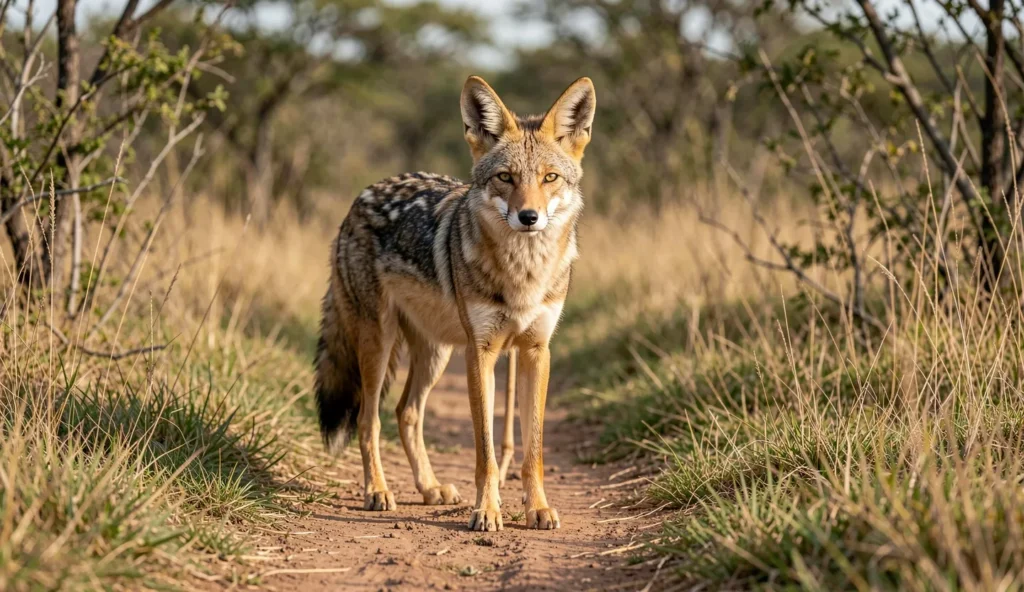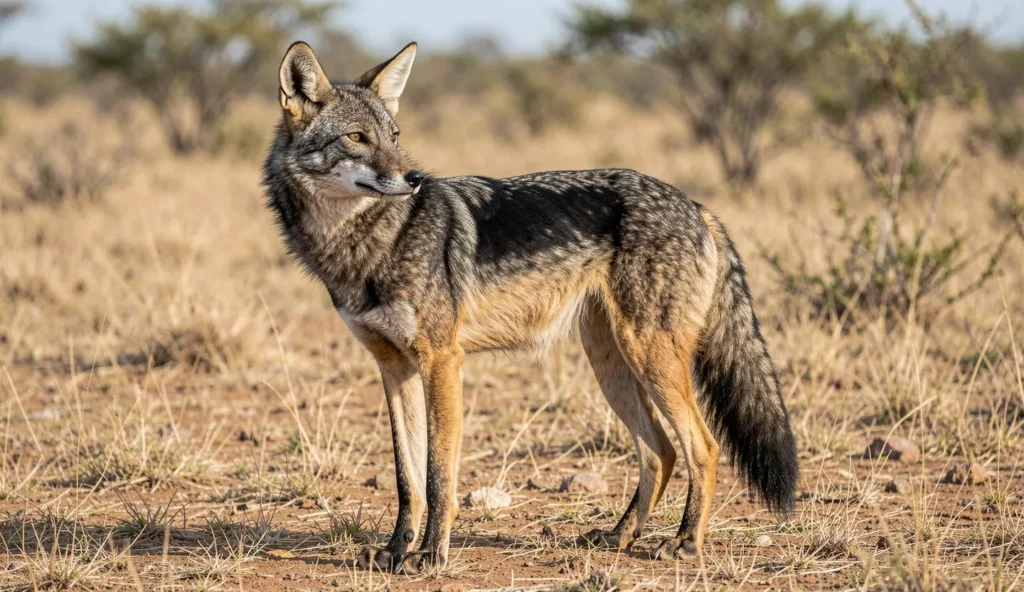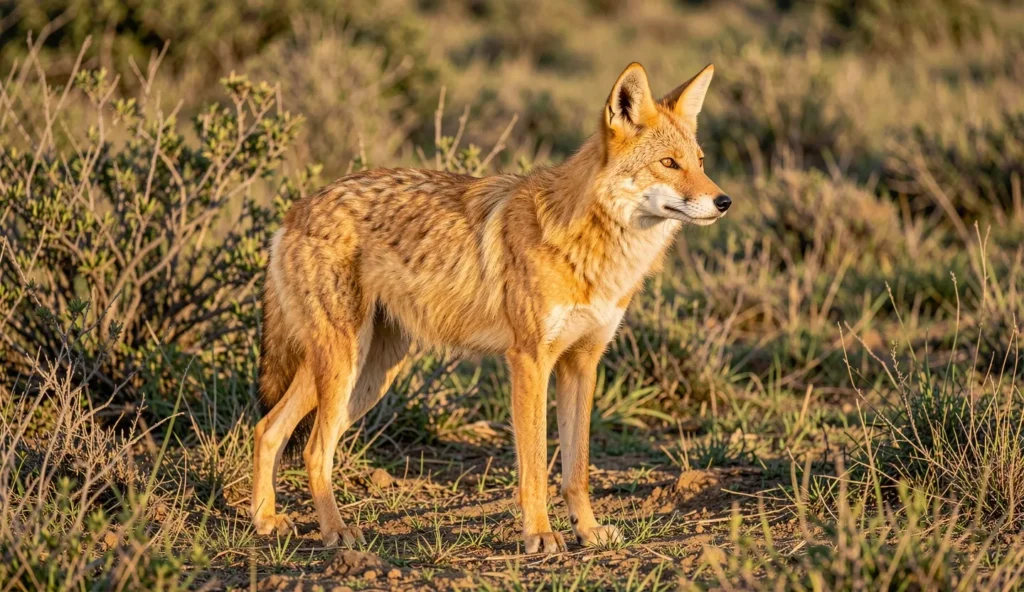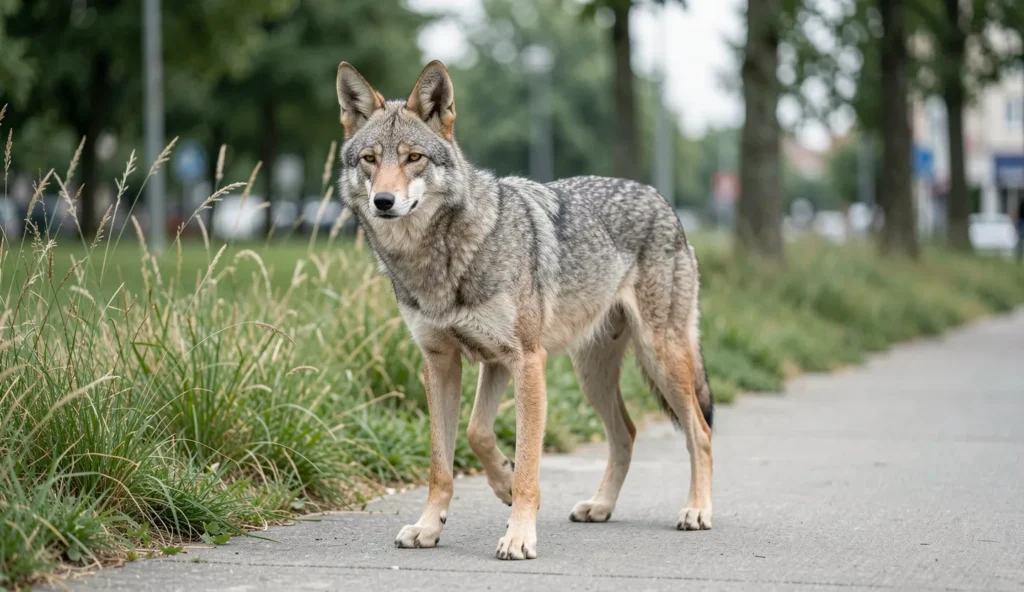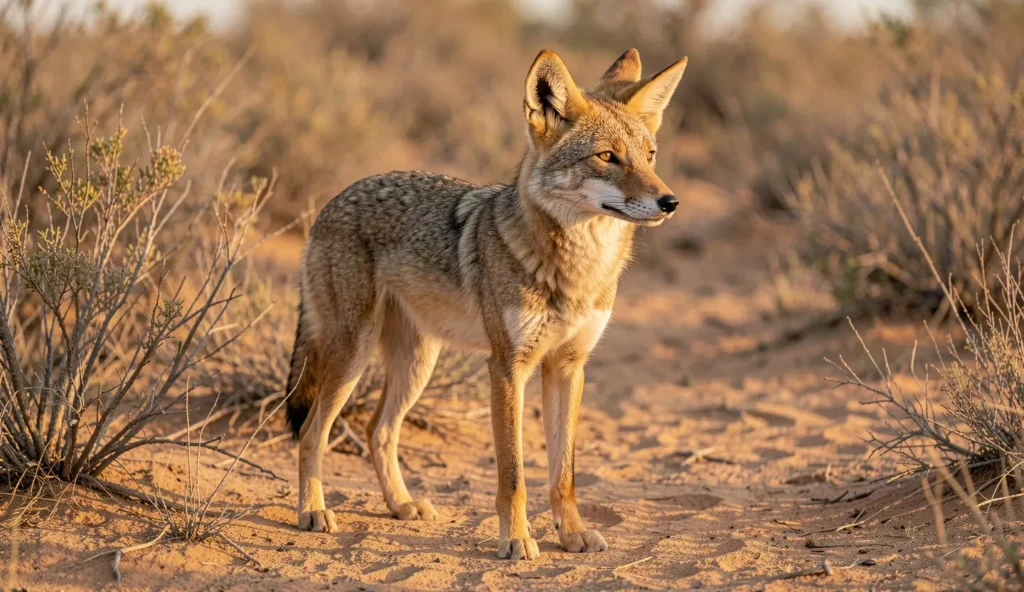
What Is an African Wolf
The african wolf profile centers on a desert canid called Canis lupaster. This canid often gets confused with jackals because both can share dry habitat and a similar general body plan. The animal also appears under alternate names like African golden wolf in some regional descriptions.
Wildlife enthusiasts benefit from learning African wolf identification traits that work at distance. When observers use combined cues like coat tone, ear prominence, and tail carriage, misidentification drops. That matters because jackals and wolves can overlap in range across parts of Africa.
Scientific Name and Common Names Used
Canis lupaster is the scientific name used for the African wolf. African golden wolf is a commonly used alternate name, and it can appear in field discussions. In many local accounts, the animal also gets described as a desert canid because it occurs in dry regions.
Because names vary by country and language, the best method is to match the description to reliable identification traits. Those traits include warm golden to sandy coat tones and canid proportions suited for arid movement. For a broader comparison of canid forms, checking a guide like Gray Wolf can help clarify why true wolves often look distinct at closer range.
Where It Lives in Africa
African wolf habitat includes arid and semi arid regions across parts of Africa. Presence often aligns with dry landscapes where prey remains available and where travel through scrub supports daily movement. Overlap with jackal ranges can occur in many areas.
As a result, location alone rarely provides certainty. Instead, habitat plus appearance works better. If the focus is range context, observers can also compare how different canids occupy dry zones by reviewing Ethiopian Wolf.
Why It Is Commonly Confused With Jackals
Similarity in size and overall silhouette often creates confusion for casual observers. Coat tones can also resemble jackal color patterns, especially under warm lighting. Both animals can use opportunistic feeding, which can further blur the distinction.
Even experienced viewers can misread a single moment. With that in mind, it helps to treat every sighting as a set of clues rather than a one trait decision. Then identification becomes more consistent across repeated observations.
African Wolf Appearance and Key Identification Traits
Field identification works best when the african wolf profile gets broken into multiple visible markers. These markers include body size proportions, coat color, head and muzzle shape, ear position, and tail carriage. Observers should also watch movement patterns because gait and posture can reinforce what the coat cannot.
Because dust, distance, and light can distort color, using shape first often helps. Then coat tone can confirm. For comparisons with other canids, viewing Pakistani Wolf may help people learn how wolf-like canids can share streamlined forms across regions.
Body Size and Overall Proportions
African wolf size often appears smaller than many gray wolf forms, but the animal still looks like a lean canid built for dry terrain. The build tends to look balanced, with a slender body and a clear head to body relationship. Instead of focusing on total height alone, observers should check the proportion between head size and body length.
From a distance, the animal can look narrow through the torso. That slenderness supports quick movement through scrub. By watching how the body stays steady while the head moves, observers can better separate it from some jackal silhouettes.
Coat Color Patterns and Texture
African wolf coat often shows warm golden to sandy tones, which is why African golden wolf appears in some naming. In strong sunlight, fur texture can look coarse or slightly rough. Color can also vary across individuals and local populations, so the same region may not show identical tones every time.
For better accuracy, observers should compare the coat tone to the surrounding ground colors. If the coat strongly blends, the next step should focus on head contrast and ear prominence. That approach prevents a single color impression from overriding other traits.
Head Shape and Muzzle Details
The muzzle often tapers toward the nose, creating a recognizable side profile. Observers can check how the skull appears from the side, including how the line from forehead to muzzle forms a smooth taper. Face contrast around the eyes can also help, especially when lighting makes the facial features stand out.
When images appear blurry, muzzle shape still offers a usable clue compared with coat color alone. Angles matter, but repeated sightings increase reliability. Then identification improves without relying on a single photograph.
Ears Shape and Ear Position
Ears tend to look prominent and alert, with an upright placement that supports a watchful expression. Compared with typical jackal profiles, ear appearance can help narrow the possibilities. However, shadows and distance can fool observers, especially when light comes from behind.
For that reason, ear position should get evaluated with the head angle and posture. If the ears look consistently forward and the head holds a stable line during movement, the sighting becomes more informative. This also fits the african wolf profile because alertness supports scanning behavior.
Tail Shape and Carrying Position
Tail carriage can help refine african wolf identification, since the tail often shows a particular line during walking or trotting. Observers should watch tail movement in real time rather than relying on a single still frame. A fuller tail look versus a more streamlined shape can provide a useful clue depending on angle and motion.
During movement, tail position can remain more controlled than in some faster, more darting patterns. Still, tail alone should never decide the identification. It must work with body lines and head posture.
Teeth and Snout Clues From Clear Photos
In close enough or sharp photos, tooth shape and jaw width can support identification. The jaw structure can show a canid face that looks proportionally different from jackals when viewed from the right angle. That said, angles vary and small errors can occur, especially with motion blur.
Teeth should therefore act as a secondary check. The best practice uses combined traits instead of one feature. This prevents confusion when only a partial view exists.
Movement and Typical Gait in the Wild
Movement provides evidence for the african wolf profile because posture affects how a canid looks in motion. Observers can watch pacing, stride length, and how the body holds steady while walking. Some individuals show a smooth gait with less abrupt changes in body angle.
Since local jackals may adjust behavior based on prey and danger, differences can be subtle. Yet repeated observation usually reveals consistent patterns. That consistency strengthens identification when visual traits alone remain ambiguous.
African Wolf Temperament and Behavior
Behavior helps identification because it often pairs with the animal’s physical cues. In a typical african wolf profile, daily activity, social structure, and vocal behavior can align with the dry habitat and prey rhythms. Observers should watch how the canid moves, pauses, and scans rather than only how it looks.
Temperament can also shift with human disturbance. If livestock or people are nearby, caution levels may rise, and the animal can change its rhythm. For enthusiasts who want broader canid context, a look at Eastern Wolf can reinforce how wolf-like canids still maintain scan and travel patterns across regions.
Daily Activity and Hunting Patterns
African wolf activity often increases when temperatures and prey movement align. The animal uses scenting and scanning to locate food in open scrub and rocky areas. Behavior can shift from quiet searching to quick bursts of travel, which can look different from jackal pacing.
Rather than assuming the same pattern every day, observers should focus on the sequence. Search, pause, and then renewed travel usually creates a recognizable rhythm. This sequence often appears alongside visible head movement and steady posture.
Social Structure and Family Groups
African wolves may form pairs or small family groups depending on region and season. Territorial behavior can appear around dens or prime feeding areas. Because brief sightings do not show the full social unit, group size should not be assumed from one moment.
When two animals appear together, it helps to note their spacing and coordination. If the animals maintain a consistent relationship over multiple minutes, that can support family or pair behavior. However, distance can hide details, so identification should still rely on multiple traits.
Vocalizations and How to Interpret Them
Vocalizations can signal contact or presence and may occur at different times of day. Interpreting calls works best when the vocal moment matches visual behavior. For example, calls followed by movement between cover can suggest how the animals coordinate in a dry landscape.
Calling alone rarely confirms identification because several canids vocalize in ways that can sound similar. The best practice uses calls together with coat tone, ear posture, and habitat context. That approach fits how the african wolf profile typically gets recognized in the field.
Common Behaviors Seen Near People or Livestock
Opportunistic feeding can occur when accessible food sources appear near farms or settlement edges. When human disturbance increases, caution levels can rise, which may shorten movement and increase scanning. Close encounters should be treated as uncertain identification moments because conditions can distort normal behavior.
Even so, observers can still look for consistent traits like ear alertness and overall body lines. Those visible features often remain more reliable than behavior changes. Then, recorded details become useful for later verification.
African Wolf Habitat Requirements and Range
African wolf habitat supports identification because it shapes how the canid uses cover and open areas. The african wolf profile fits arid and semi arid environments where prey and travel routes remain predictable. When habitat clues align with physical cues, observers can make more confident identifications.
However, habitat alone cannot solve the problem because jackals can use many of the same landscapes. That means every habitat note should pair with appearance and behavior. Then the identification remains grounded in multiple lines of evidence.
Typical Landscape Types and Cover
African wolves prefer arid and semi arid environments that include scrub, rocky areas, and sparse cover. The canid often uses available cover for movement and for short pauses during scanning. Observers can look for activity along natural travel corridors created by terrain and vegetation patterns.
If an animal appears in a landscape with low cover but visible travel routes, the sighting becomes more likely to match the african wolf profile. Still, that same structure can also fit jackals. So cover type must link to the animal’s gait and head posture.
Water and Prey Availability Clues
Survival depends on prey and occasional water access, especially in dry months. Activity may concentrate where prey density increases, including near dens or stable feeding areas. During dry periods, sightings can cluster around reliable resources that support daily movement.
This does not mean the animal always stays near water, but it often adapts routes to reduce energy costs. Observers should note whether the animal travels from cover to open areas in a way that matches resource locations. When those patterns persist, identification accuracy improves.
Seasonal Changes That Affect Sightings
Seasonal prey shifts can change where canids move and how often they appear. Coat visibility may also change because lighting angles and seasonal conditions affect how golden tones read. Habitat use can shift during breeding and denning periods as animals move between den sites and feeding areas.
Because of these changes, two sightings in different seasons may look different in coat contrast. The best strategy is to record more than color. Body lines, ear placement, and tail carriage should remain part of the identification checklist.
African Wolf Behavior and Identification Compared With Jackals
The most common mistake comes from relying on one trait, especially coat color. A stronger african wolf profile uses comparisons across several moments and features. Since jackals and African wolves can overlap in range, side-by-side thinking must stay practical.
Observers can improve accuracy by running quick field checks that combine shape, behavior, and habitat context. Then the result becomes less dependent on distance, lighting, or luck. If additional canid comparisons help, Himalayan Wolf provides useful wolf form context even though the habitat differs.
Quick Field Checks That Help Separate Them
Start with coat tone plus head and ear proportions together. Then add tail carriage and overall body lines as a second check. After that, confirm behavior patterns across more than one moment because a single pause can hide the full shape.
In practice, this means watching the animal for enough time to see a walk, a stop, and a resumption of movement. Even a few extra minutes can reveal consistent body posture. When multiple checks agree, the identification becomes more stable.
Differences in Size and Proportions You Can Notice
Size comparisons can help when distance remains controlled. Observers can compare perceived leg length and overall slenderness. Using head to body ratio rather than total size alone often works better because lenses and distance can distort measurements.
Leg lines and torso narrowness can provide clues to the overall canid build. If the animal maintains a lean, wolf-like body silhouette while moving steadily, the sighting more strongly matches African wolf identification expectations. If the silhouette looks more compact and quick-darting, jackal behavior becomes more likely.
Differences in Coat Color and Marking Visibility
Warm golden tones can support the african wolf profile, while some jackals show different grayish or patterned looks. Visibility of markings can also change with lighting and coat texture. Therefore, coat color should get treated as a supporting clue, not a single deciding factor.
When visibility permits, check contrast around the face and legs. If the facial area looks brighter or more defined against the surrounding coat, the animal may match the desert canid look described for Canis lupaster. Still, always test the observation against movement and ear posture.
How to Use Photos Ethically for Identification
Photos can help identification when taken safely and responsibly. Capture multiple angles when possible, but do not crowd the animal to force a better view. Recording location and time also matters because habitat context can confirm whether the sighting fits known ranges.
If a photo shows only a partial view, the best response is to label it tentative and continue observing. Overconfidence from a single image often increases misidentification. With ethical distance, better results often come from waiting for natural posture changes.
Is the African Wolf Right for Wildlife Enthusiasts to Track
Tracking an African wolf can feel rewarding because the species demands careful observation. In a practical african wolf profile, success depends on habitat match, light conditions, and repeated sightings. People often underestimate how quickly lighting and distance can distort coat and facial cues.
Still, the project can fit wildlife enthusiasts who enjoy methodical identification. The key is treating each sighting as data and building confidence through verification. That approach supports ethical viewing and improves accuracy over time.
What Successful Observation Looks Like
Successful observation usually depends on patience, habitat awareness, and the time of day. Better results happen when the canid gets seen more than once or when multiple moments get captured. Using identification traits as a checklist keeps decisions grounded in evidence rather than guesswork.
For example, note ear position, tail carriage, and gait in the same viewing session. Then compare the notes to what local jackals usually look like in that area. When traits align repeatedly, identification confidence increases.
Ethical Distance and Safety Guidelines
Safe distance protects both the animals and the observers. Avoid interfering with behavior and never approach dens or movement corridors. Instead, use binoculars and zoom lenses so the animal keeps acting normally.
Disturbance can also change how a canid moves, which then undermines the identification cues being observed. Keeping the distance steady helps the scan and travel patterns stay consistent. If safety becomes uncertain, the best choice is to step back and wait.
Best Ways to Confirm Identification Without Overreliance
Confirmation should combine appearance traits with behavior and habitat context. Cross checking with local field guides or trusted experts can also reduce errors, especially when jackals are common. Most importantly, treat single sightings as tentative until repeated evidence supports the african wolf profile.
If records are kept over time, pattern recognition improves. Details like date, time, exact location, and consistent traits help build a clearer picture. Over time, the identification process becomes more reliable and less dependent on one challenging moment.
Frequently Asked Questions
How Can The African Wolf Profile Be Identified From A Distance?
Use overall proportions, coat tone, and ear prominence together. Then check tail carriage and body lines during movement. Confirm with habitat context and behavior over multiple moments.
What Traits Help Distinguish An African Wolf From A Jackal?
Compare head and muzzle proportions plus ear placement. Look for warm golden versus more grayish coat tones. Use behavior and movement patterns instead of one feature.
Where Does Canis Lupaster Usually Live?
It occurs in arid and semi arid regions across parts of Africa. Sightings increase where prey and cover support daily movement. Range overlap with jackals can occur in some areas.
Is The African Wolf Active During The Day Or Night?
Activity often changes with temperature and prey availability. Observations can occur at multiple times depending on conditions. Use local timing and behavior context for better interpretation.
What Should Wildlife Observers Record To Improve Identification Accuracy?
Record date, time, and exact location. Capture multiple angles without approaching too closely. Note coat tone, ear posture, tail carriage, and gait.
Why Are African Wolf Sightings Sometimes Misidentified?
Jackals can look similar in size and color from certain angles. Lighting, distance, and motion blur can distort key traits. Single moment views are less reliable than repeated observations.
Final Note On African Wolf Identification
Learning the african wolf profile improves whenever multiple traits get checked together. With careful viewing and ethical distance, Canis lupaster identification becomes more consistent across real field conditions.