Green Anaconda – The Giant of the Amazon
Introduction
Weighing more than a grand piano and capable of swallowing prey larger than a human, the Green Anaconda (Eunectes murinus) is the world’s heaviest and one of the longest snake species, known for its powerful build and aquatic lifestyle. Native to the swamps and rivers of South America, this iconic reptile plays a crucial role in its ecosystem. Often misunderstood due to myths and media portrayals, the Green Anaconda is a fascinating, essential, and awe-inspiring part of the natural world. Unlike the Reticulated Python, which holds the title for length, the anaconda claims the crown for sheer bulk and strength.
Natural Habitat and Distribution
Green Anacondas are primarily found in:
- Swamps and marshes
- Slow-moving rivers and streams
- Flooded rainforests of the Amazon and Orinoco basins
Countries where they are commonly seen include Brazil, Venezuela, Colombia, Bolivia, Ecuador, and Peru.
Physical Characteristics
These snakes are built for strength and stealth in water. Key features include:
- Length: Up to 20–30 feet (6–9 meters)
- Weight: Up to 550 pounds (250 kg)
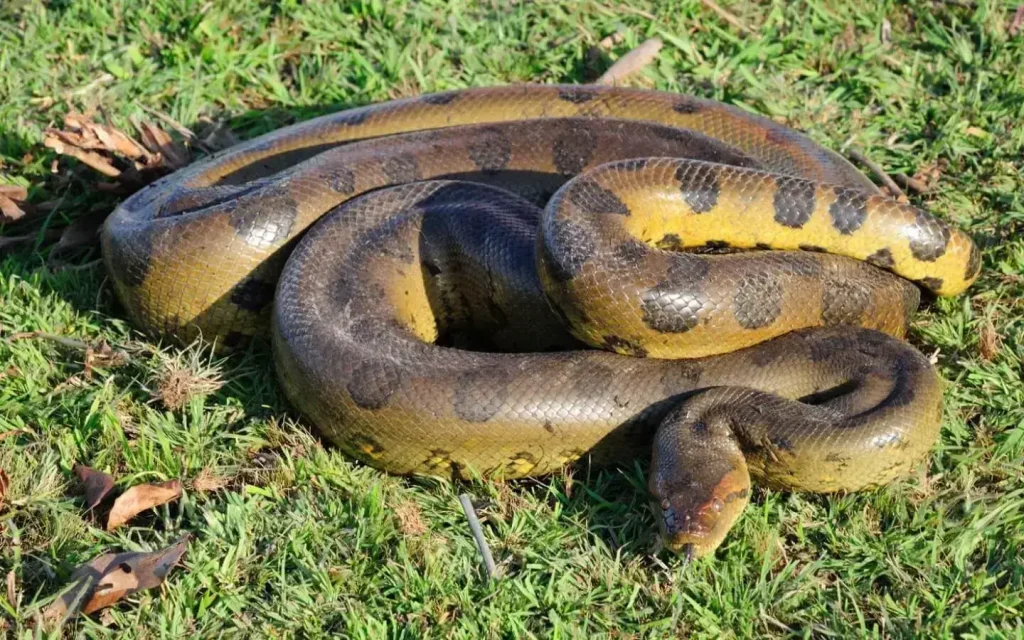
- Color: Olive-green with black blotches, providing camouflage in aquatic vegetation
- Eyes and Nostrils: Positioned on top of the head for easy breathing while submerged
Females are typically much larger than males—a rare trait in the animal kingdom. This size difference is more pronounced than in the closely related Boa Constrictor, where males and females are more similar in size.
Behavior and Lifestyle
Green Anacondas are solitary and mostly nocturnal. They spend much of their time in water, where they are most agile.
- Extremely quiet and stealthy in hunting
- Not aggressive toward humans unless threatened
- Most active at night but can be seen during the day
They rely on ambush rather than chasing prey. This patient hunting style contrasts with the active pursuit seen in venomous species like the Black Mamba, which relies on speed rather than concealment.
Diet and Hunting
Green Anacondas are non-venomous constrictors, meaning they wrap around their prey and suffocate it before swallowing it whole. Their diet includes:
- Fish
- Birds
- Reptiles
- Wild pigs
- Deer
- Even small caimans
They can go weeks or months without eating after a large meal. Their ability to take down such large prey is unmatched among New World snakes, though the Green Tree Python shows a similar ambush strategy on a much smaller scale in the rainforest canopy.
Reproduction and Growth
Anacondas are ovoviviparous, which means they give birth to live young rather than laying eggs.
- A female can give birth to 20–40 baby anacondas at a time
- Newborns are about 2 feet long and completely independent
- Growth continues throughout their lives, but it slows with age
Mating often involves several males competing to fertilize one female in a group known as a “breeding ball.” This competitive mating behavior is unique among large constrictors and is rarely observed in other species like the King Cobra, which builds nests for its eggs.
Threats and Conservation
While not considered endangered, the Green Anaconda faces several threats:
- Habitat destruction due to deforestation and wetland drainage
- Human fear and persecution
- Illegal pet trade and poaching
They are protected in many areas, and education efforts aim to reduce negative perceptions. Conservationists emphasize that these snakes are far more valuable alive in their ecosystems than as trophies or exotic pets.
Relationship with Humans
Despite their size and power, Green Anacondas are not known to attack people unless provoked. In many Indigenous cultures, they are respected as powerful yet misunderstood creatures. Modern ecotourism in the Amazon has helped shift public perception, allowing travelers to observe these giants safely in the wild.
Fascinating Facts About Green Anacondas
- They are the heaviest snake species in the world!
- They are more graceful in water than on land
- They use heat-sensing pits to locate warm-blooded prey
- They can eat prey almost half their body weight
Frequently Asked Questions
Q1: Are Green Anacondas dangerous to humans?
A: Not typically. They avoid human interaction and are not aggressive unless they feel threatened or cornered.
Q2: Can Green Anacondas live in captivity?
A: While they can be kept in large, specialized enclosures, they thrive best in their natural environments. Captivity can restrict their behavior and health.
Q3: How do Green Anacondas breathe underwater?
A: They can hold their breath for up to 10 minutes and keep only their nostrils above the surface to breathe while remaining hidden.
Q4: Do they have natural predators?
A: As adults, they have few natural predators, but jaguars and large caimans may occasionally pose a threat. Juveniles are more vulnerable.
Q5: How can I help protect Green Anacondas?
A: Support conservation efforts, avoid spreading fear-based myths, and advocate for the preservation of rainforests and wetlands.
Conclusion
The Green Anaconda is a marvel of nature—powerful, mysterious, and perfectly adapted to its watery world. With its role in maintaining the balance of its ecosystem, this gentle giant deserves our respect and protection. Understanding its behavior and debunking misconceptions helps foster a more compassionate relationship with one of the world’s most iconic reptiles. Whether you are comparing it to the Indian Cobra or simply admiring its place in the animal kingdom, the Green Anaconda remains a true heavyweight champion of the snake world.