What Is a Lowline Cattle
Lowline cattle are a compact beef breed developed from Angus genetics at the Trangie Research Centre in New South Wales, Australia. This breed stands out for its small size, docile nature, and efficient grazing ability, making it an ideal choice for small farms and pet owners. The breed offers high-quality beef in a manageable package.
Origin and Development
The Lowline breed originated from a selective breeding program that began in the 1970s at the Trangie Research Centre. Researchers selected Angus cattle for smaller frame size while maintaining beef quality and efficiency. The resulting line was officially recognized as a separate breed in the 1990s and is now kept worldwide. These cattle are sometimes compared to other small breeds like Dexter cattle, but Lowlines have their own distinct lineage.
Why They Are Called a Miniature Beef Breed
Lowlines are roughly half the size of standard Angus cattle. Mature cows weigh 450–600 kg and bulls weigh 600–800 kg. Their smaller stature makes them suitable for small properties, hobby farms, and even as gentle pets. Unlike dwarf cattle, Lowlines are proportionally scaled down, meaning they maintain the same body balance as full-sized beef cattle.
Appearance and Physical Features of Lowline Cattle
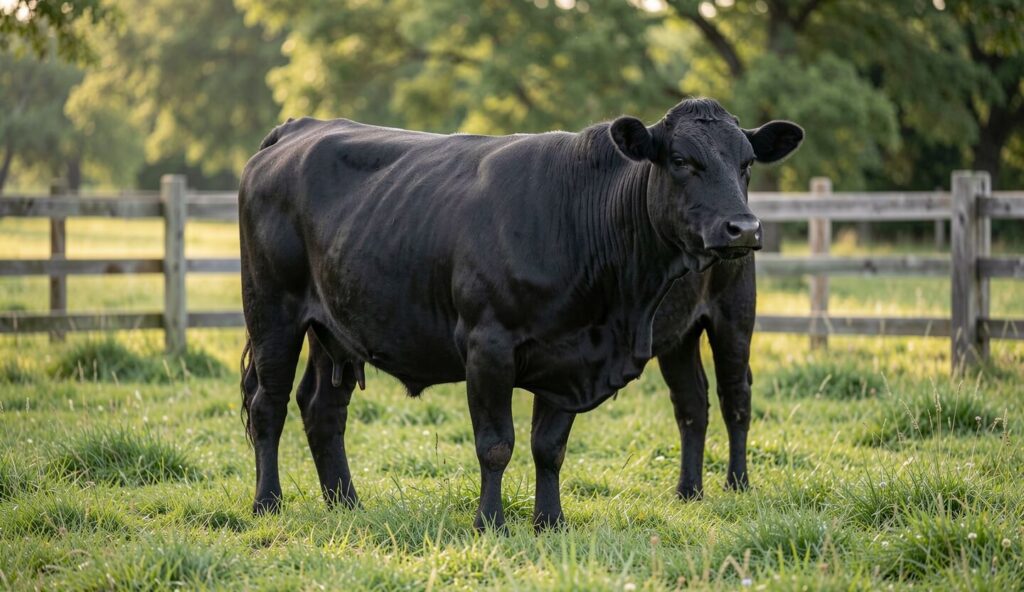
Lowline cattle have a compact, muscular body with a deep chest and short legs. Their conformation reflects their Angus heritage, emphasizing meat yield and structural soundness.
Size and Build
Mature height at the hip is typically 100–115 cm for cows and 110–125 cm for bulls. Despite their small size, they have a high meat-to-bone ratio and excellent carcass quality. Their build is robust without being bulky, allowing them to move easily on pasture.
Color and Coat
Lowline cattle are naturally polled, meaning they grow no horns. The coat is solid black or red, short, and smooth. Some individuals may show a small white patch on the underline, but excessive white is discouraged in the breed standard. Their coat is easy to maintain in most climates.
Temperament and Personality of Lowline Cattle
Lowlines are known for their calm, friendly disposition. This makes them ideal for beginners, families, and those looking for a pet cow. Aggressive behavior is rare, and most Lowlines are curious and approachable.
Docile and Easy to Handle
They respond well to regular handling and can be trained to lead, stand for hoof care, and load into trailers. Their gentle nature reduces the risk of injury to handlers. Many owners report that Lowlines are easier to manage than larger breeds like Highland cattle.
Good with Other Animals
Lowline cattle usually get along with sheep, goats, and horses. They are herd animals and prefer the company of at least one other cow or a companion animal. Their small size reduces the risk of injury to other livestock and to handlers.
Exercise Requirements for Lowline Cattle
Lowline cattle need adequate space to graze and move. Their activity level is moderate, and they thrive on pasture-based living.
Pasture Needs
Each head requires at least 0.5–1 acre of good-quality pasture. Their efficient grazing habits mean they consume less forage than full-sized beef breeds. A rotational grazing system helps maintain pasture health and provides consistent nutrition.
Daily Activity
Lowlines naturally spend most of the day grazing and resting, with short periods of playful movement. Stall confinement is not suitable. Free-range or pasture living is essential for their well-being. They are not high-energy but do need room to roam.
Training Tips for Lowline Cattle
Training Lowline cattle is straightforward due to their intelligence and cooperative nature. Consistent, gentle handling builds trust.
Halter Training
Start halter training at a young age using a soft webbing halter and positive reinforcement. Food treats like hay cubes or grain encourage calves to accept the halter and lead. Short daily sessions of 10–15 minutes are most effective.
Teaching Basic Cues
Lowlines can learn voice cues for “come,” “stand,” and “back.” Avoid using force or loud commands, as this can undermine their docile nature. Regular handling reduces stress during vet visits or hoof trimming.
Grooming and Care Tips for Lowline Cattle
Routine care includes hoof trimming, coat maintenance, and health monitoring. These tasks are simple and keep the animal comfortable.
Hoof Trimming
Lowline hooves grow continuously and need trimming every 6–12 months. Overgrown hooves cause lameness and joint issues. A professional hoof trimmer or experienced owner can perform this task using a cattle crush or chute.
Coat and Skin Care
The short coat requires minimal brushing. A curry comb helps remove loose hair in spring. Check for external parasites like flies, lice, and ticks during warm months. Provide shade and a clean, dry shelter to protect from extreme weather.
Routine Health Checks
Monitor body condition, appetite, and manure consistency weekly. Schedule annual vaccinations and deworming with a veterinarian. Dental health should be checked in older animals, as tooth problems can affect feed intake.
Diet and Nutrition for Lowline Cattle
A forage-based diet meets the nutritional needs of Lowline cattle. They are efficient grazers and require minimal supplementation.
Forage-Based Diet
Good-quality pasture grass or hay forms the foundation of their diet. Lowlines do not need high-concentrate feeds unless for weight gain or lactation. Provide free-choice salt and mineral blocks formulated for beef cattle.
Supplemental Feeding
During winter or drought, supplement with grass hay, alfalfa, or a small amount of grain. Bred females and growing calves benefit from a grain-based supplement with 12–14% protein. Avoid overfeeding, as Lowlines can become overweight easily due to their efficient metabolism. For comparison, other small cattle like Dwarf Lulu cattle have similar dietary requirements.
Common Health Issues in Lowline Cattle
Lowlines are generally hardy but can face some health challenges. Preventive care keeps most problems at bay.
Digestive Disorders
Bloat can occur if cattle overeat lush legumes or grains. Introduce new feeds gradually and consider a bloat prevention block. Scours in calves is often caused by bacteria or coccidia; keep pens clean and dry.
Parasites and External Issues
Internal parasites like roundworms and flukes cause weight loss. Use fecal egg counts to determine deworming schedule. Fly control includes fly tags, pour-ons, and maintaining clean environments.
Genetic Conditions
Because Lowlines descend from Angus, they can carry genetic disorders like arthrogryposis multiplex (AM) and osteopetrosis (OS). Purchase calves from breeders who test for known defects. Overall, Lowlines are a hardy breed with fewer health problems than many commercial lines.
Is a Lowline Cattle Right for You
Lowline cattle suit owners with limited land and a desire for docile, productive animals. They fit well into small-scale farming or as pets.
Ideal for Small Properties
Lowlines require less land than standard cattle, making them perfect for hobby farms of 2–5 acres. Their docile nature allows safe handling even for children and new owners. They are also a good choice for organic or grass-fed beef production on a small scale. Many owners appreciate the breed’s resemblance to the Australian cow but in a smaller package.
Considerations Before Buying
Cattle are herd animals; plan to keep at least two Lowlines together. Fencing must be secure and at least 4 feet high with sturdy posts. Check local zoning regulations for livestock on residential or semi-rural properties.
Lowline Cattle as Pets
Their calm temperament and manageable size make them suitable as companion animals. Some owners train them for shows, parades, or even as therapy animals. A well-handled Lowline can become a friendly, affectionate member of the family. They are often compared to the Beefalo breed for their hybrid vigor, but Lowlines are purely Angus-based.
Frequently Asked Questions
How big do Lowline cattle get?
Mature cows weigh 450–600 kg and stand 100–115 cm at the hip. Mature bulls weigh 600–800 kg and stand 110–125 cm at the hip. They are about half the size of standard Angus cattle.
Are Lowline cattle good for beginners?
Yes, their docile and friendly nature makes them ideal for first-time cattle owners. They require minimal training and are safe to handle when properly socialized.
How much land do you need for Lowline cattle?
A pair of Lowline cattle needs at least 1–2 acres of good pasture. Additional land may be required for rotational grazing or during dry seasons.
What do Lowline cattle eat?
Their diet is primarily grass or hay, supplemented with minerals and salt. In winter or for breeding stock, small amounts of grain can be added.
Do Lowline cattle need special housing?
They need access to a dry shelter or barn for protection from extreme weather. A three-sided shed with good ventilation is sufficient in most climates.
Final Note
Lowline cattle offer a practical solution for anyone wanting beef production or a pet cow on limited acreage. Their easy keep nature and gentle temperament make them a rewarding choice for small farm owners and livestock enthusiasts.