What Is Abondance Cattle
Abondance cattle are a traditional dual-purpose breed from the Haute-Savoie region of France. These animals are prized for their high-quality milk, which is used to produce Abondance cheese, a protected designation of origin (PDO) product. Farmers value Abondance cattle for their strong constitution and remarkable adaptation to alpine environments.
Origin and History
Abondance cattle developed in the French Alps, specifically in the Haute-Savoie region. The breed descends from ancient Swiss mountain cattle, which were brought into the area centuries ago. Historically, farmers relied on Abondance cattle for both milk and meat, making them a cornerstone of alpine agriculture.
Breed Classification
Abondance cattle are classified as a dual-purpose breed, suitable for milk and beef production. France recognizes them as a protected breed, ensuring their genetic purity and traditional management. Their ability to thrive on steep, high-altitude pastures makes them ideal for alpine dairy systems.
Appearance and Physical Features
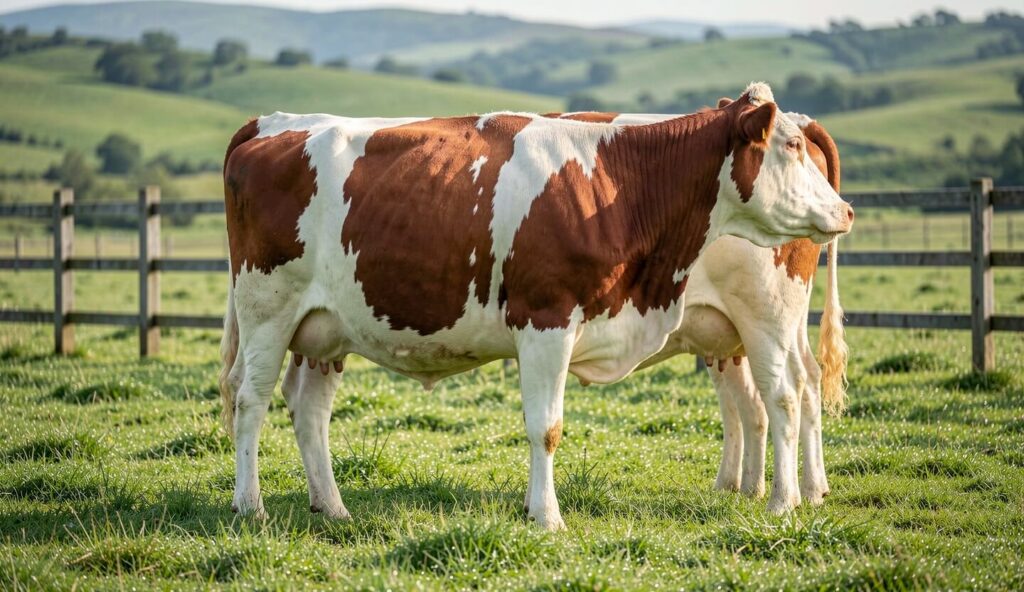
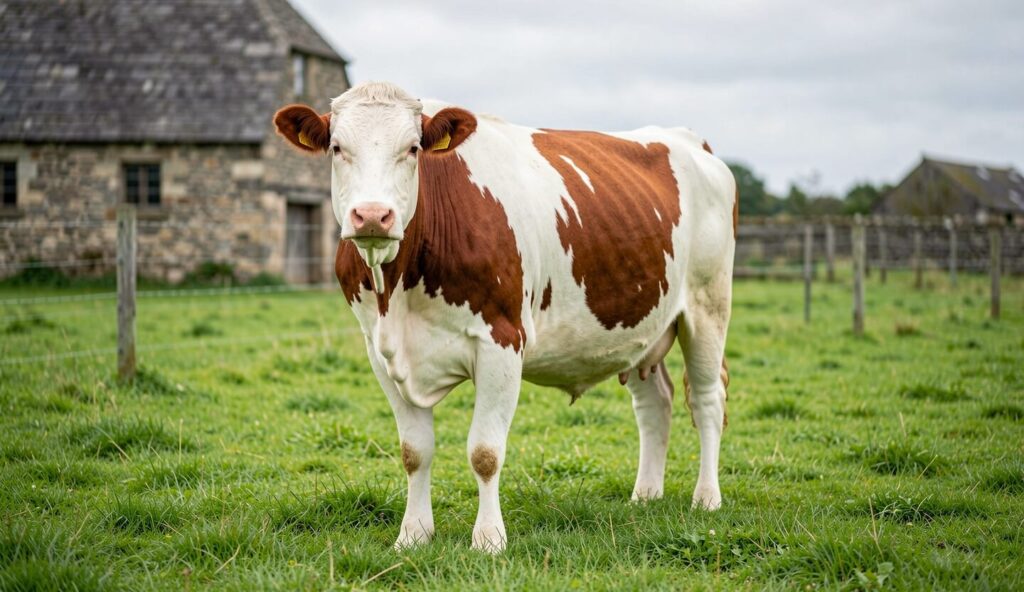
Abondance cattle have a striking red and white coat pattern that is easy to recognize. Their robust build reflects centuries of selection for strength and productivity in mountainous terrain.
Coat Color and Markings
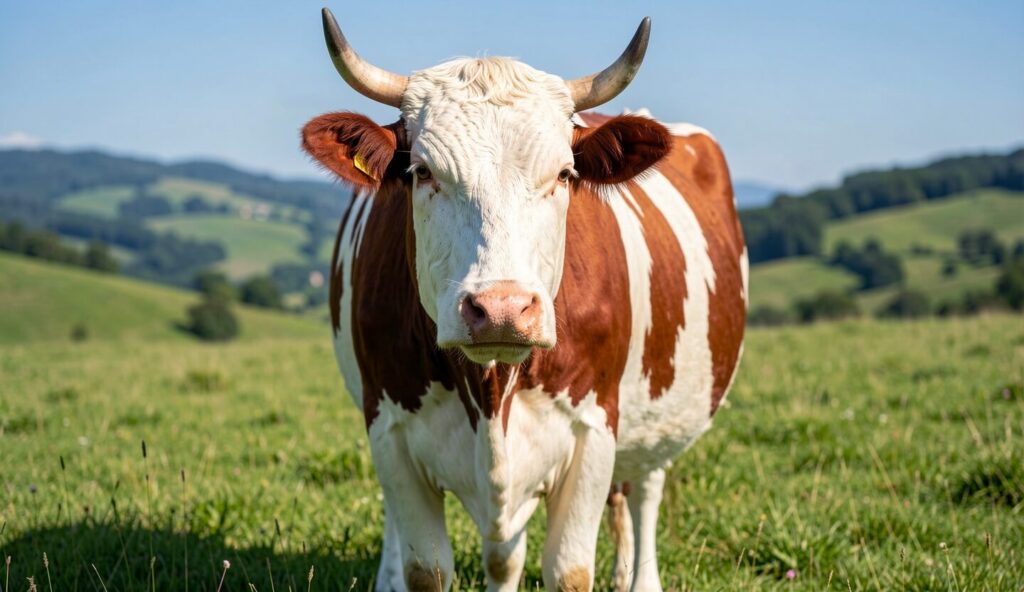
The breed displays a distinctive red and white pattern, with a white head, belly, and legs. Red patches cover the rest of the body, and the short, fine hair changes thickness with the seasons. This coat provides natural insulation during cold alpine winters.
Size and Build
Abondance cattle are medium to large, with a strong bone structure and muscular hindquarters. Cows weigh between 600 and 700 kg, while bulls reach 900 to 1000 kg. The deep chest and solid frame support efficient grazing on steep slopes.
Horns and Head
The breed carries curved horns that are usually white with dark tips. A broad forehead and wide muzzle give a calm and gentle expression. The strong neck and well-attached horns highlight their traditional alpine lineage.
Temperament and Behavior
Abondance cattle are docile and easy to manage, which makes them suitable for both experienced farmers and newcomers. Their calm disposition and strong maternal instincts contribute to low-stress handling.
General Disposition
These cattle are generally calm around humans and adapt well to pasture or barn systems. They exhibit good maternal instincts, protecting their calves without excessive aggression. Their steady temperament simplifies daily husbandry tasks.
Social Structure
Abondance cattle form strong social bonds within the herd, reducing stress and aggression. They are less confrontational than many beef breeds, making them suitable for mixed grazing with other livestock. For example, they can share pastures with other Swiss cattle like the Brown Swiss Cow without trouble.
Housing and Pasture Requirements
Abondance cattle need access to well-managed pastures and secure housing. Their ability to thrive on high-altitude alpine meadows is one of their greatest strengths.
Pasture and Grazing
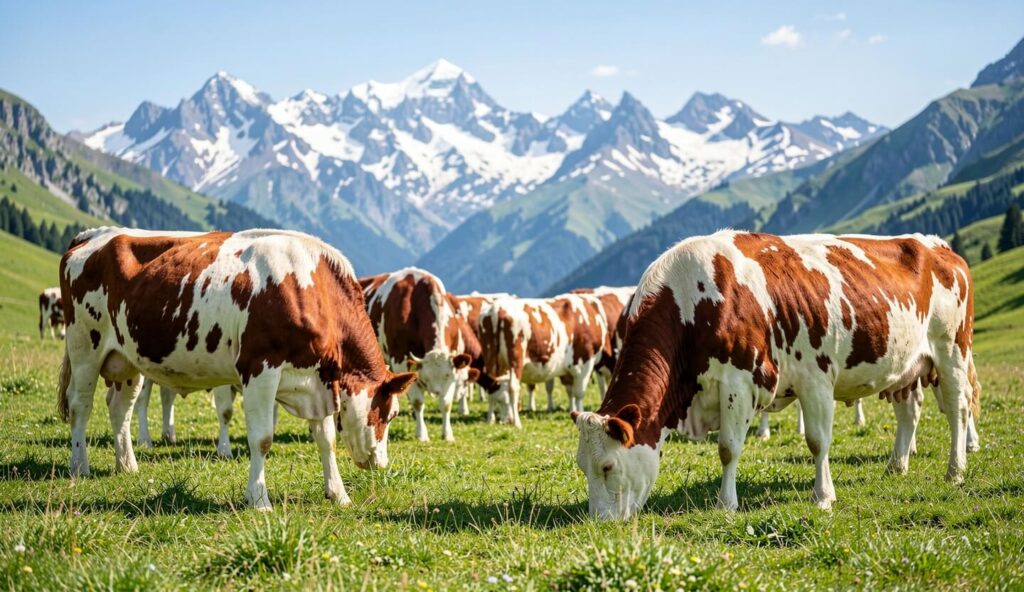
These cattle excel on alpine pastures with diverse grasses and herbs. They efficiently forage on rough terrain, converting low-quality forage into rich milk. Adequate fencing and natural water sources are essential for rotational grazing.
Barn Housing
When housed, Abondance cattle require well-ventilated barns with dry bedding areas. Each animal needs 8 to 10 square meters of lying space. Good ventilation prevents respiratory issues, especially during winter confinement.
Climate Tolerance
The breed is extremely cold-hardy thanks to a thick winter coat that provides insulation in deep snow. However, they tolerate heat less well, so shade and airflow are critical in lower altitudes. Their adaptation to alpine dairy conditions sets them apart from many other breeds.
Diet and Nutrition
A forage-based diet forms the foundation of good nutrition for Abondance cattle. Proper feeding supports milk production, health, and longevity.
Forage-Based Diet
Grass and hay from alpine meadows make up the bulk of their diet. In winter, silage supplements the forage. High fiber intake supports rumen health and prevents digestive disorders.
Grain and Concentrates
Only lactating cows receive small amounts of grain, typically 2 to 4 kg per day. Overfeeding can trigger metabolic problems, so rations must be balanced carefully. Minimal concentrate use keeps feed costs low and aligns with traditional alpine feeding practices.
Water and Minerals
Clean, fresh water must be available at all times. Free-choice mineral blocks provide essential calcium and phosphorus, which are critical for milk production. Regular monitoring of mineral intake helps prevent deficiencies.
Grooming and Care
Routine care keeps Abondance cattle healthy and comfortable. Grooming tasks such as hoof trimming and coat maintenance should not be overlooked.
Hoof Care
Hooves need trimming every four to six months. Check for cracks or overgrowth that could cause lameness. Regular walking on hard surfaces helps wear hooves naturally.
Coat and Skin Maintenance
Brushing removes dirt, loose hair, and external parasites such as lice. Provide shelter to protect cattle from excessive rain or sun. A clean coat reduces the risk of skin infections.
Vaccination and Deworming
Follow regional vaccination schedules for common cattle diseases. Deworm at least twice a year, usually in spring and autumn. A veterinarian should design a herd health plan tailored to your farm.
Common Health Issues
Abondance cattle are generally hardy, but they can suffer from the same metabolic and infectious problems as other dairy breeds. Early detection and prevention are key to maintaining herd health.
Metabolic Disorders
Milk fever, caused by calcium imbalance, is the most common metabolic issue. Ketosis can occur in high-producing cows during early lactation. Balanced nutrition and careful transition feeding reduce these risks.
Lameness
Wet conditions or poor hoof care can lead to lameness. Digital dermatitis and sole ulcers are frequent problems. Regular hoof trimming and dry bedding lower the incidence of lameness.
Parasites and Infections
Internal worms from pasture grazing can reduce growth and milk yield. Mastitis arises from unhygienic milking equipment, while respiratory infections occur in poorly ventilated barns. Good sanitation and regular deworming keep these issues under control.
Abondance Cattle and Cheese Production
The breed’s milk is uniquely suited for cheese making, producing the famous Abondance cheese. This connection between the animal and the final product makes Abondance cattle a true cheese breed.
Milk Characteristics
Abondance milk has a high butterfat content of 4 to 4.5 percent and is rich in protein. The distinct flavor comes from the diverse alpine forage the cows consume. This quality makes the milk ideal for crafting traditional raw-milk cheeses.
Cheese Types
Abondance cheese is a semi-hard, raw-milk cheese with a protected designation of origin (PDO). It is aged up to 12 months and develops a nutty, complex taste. The cheese is closely tied to the breed’s heritage, much like other alpine dairy products.
Production Standards
Strict standards require that cows graze in designated alpine zones during the cheese production season. No silage is fed during this period to maintain milk quality. Traditional copper vat methods are still used to preserve the cheese’s authentic character.
Is Abondance Cattle Right for You
This breed offers several advantages for farmers seeking a hardy, low-maintenance dairy cow. However, the specific needs of the breed should match your farm’s resources.
Ideal Farming Situations
Abondance cattle excel on small to medium alpine farms with grass-based dairy systems. The breed suits direct cheese sales operations where high-quality milk is necessary. Farmers who already keep other hardy breeds like Tarentaise cattle will find similar management practices.
Considerations for Beginners
Their docile temperament makes Abondance cattle manageable even for newcomers. Reliable pasture and a winter feed supply must be available. Although the initial purchase price can be high, their longevity and low health costs offer good long-term value.
Frequently Asked Questions
What is the average milk production of Abondance cattle?
Abondance cows produce 6,000 to 7,000 liters per lactation on average. The milk is high in fat and protein, ideal for cheese making.
Are Abondance cattle aggressive?
No, Abondance cattle are known for their docile and calm temperament. Bulls can be protective but are generally manageable with proper handling.
How much space does an Abondance cow need?
A cow needs at least 1 hectare of pasture for grazing in summer. In barns, each requires 8 to 10 square meters of lying space.
What is the lifespan of Abondance cattle?
Abondance cattle typically live 15 to 20 years. Many cows remain productive for 10 to 12 lactations.
Can Abondance cattle live in lowland areas?
They adapt to lowlands but prefer cooler climates. Shade and ventilation are essential in warmer regions.
What are the main uses of Abondance cattle besides cheese?
They are also raised for high-quality beef. Their hardy nature makes them ideal for conservation grazing.
Final Note
Abondance cattle represent a living tradition of alpine dairy farming. With careful attention to their unique needs, any dedicated farmer can enjoy the rewards of this exceptional breed.