What Is a Normande
Normande cattle are a French dual-purpose breed developed in the Normandy region. These animals combine high-quality milk production with well-marbled beef, making them a favorite among small farms and artisan cheese makers. Their striking red-and-white patterned coat makes them instantly recognizable.
Origin and History
The breed originated in the Normandy region of northwestern France during the 19th century. Local farmers crossbred native cattle with Dutch and Jersey breeds to improve milk yield and meat quality. By the late 1800s, Normande cattle were recognized as a distinct breed and became central to the region’s dairy industry. Today, they remain the primary milk source for iconic French cheeses.
Why the Breed Is Called Dual-Purpose
A dual-purpose animal produces both milk and meat effectively. Normande cattle excel in both areas. Their milk contains high butterfat and protein, ideal for Camembert and other AOP cheeses. The beef is tender and well-marbled, prized by butchers and chefs alike. This balanced genetic selection sets them apart from single-purpose dairy or beef breeds.
Appearance and Physical Features
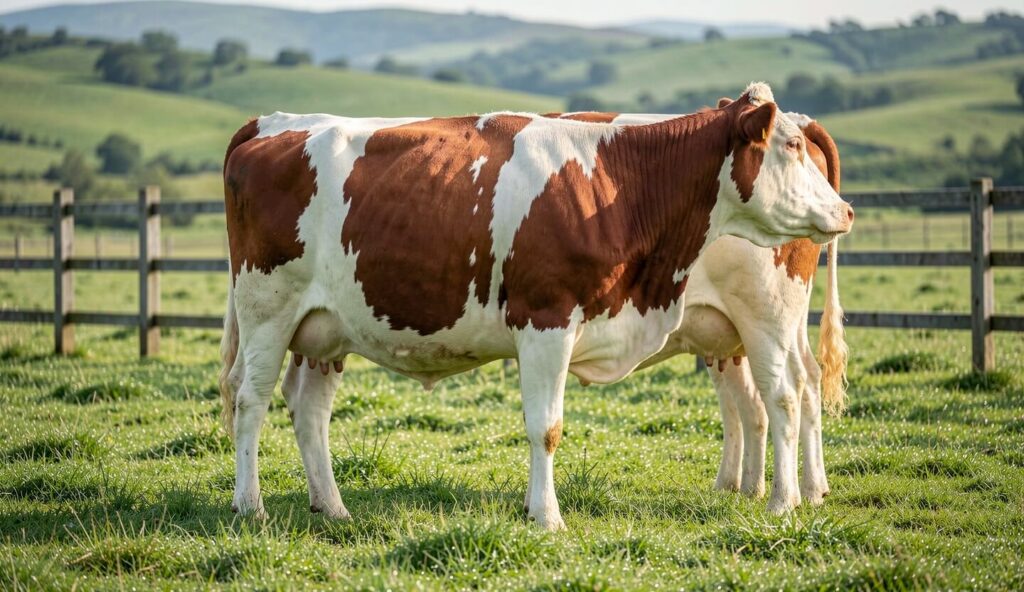
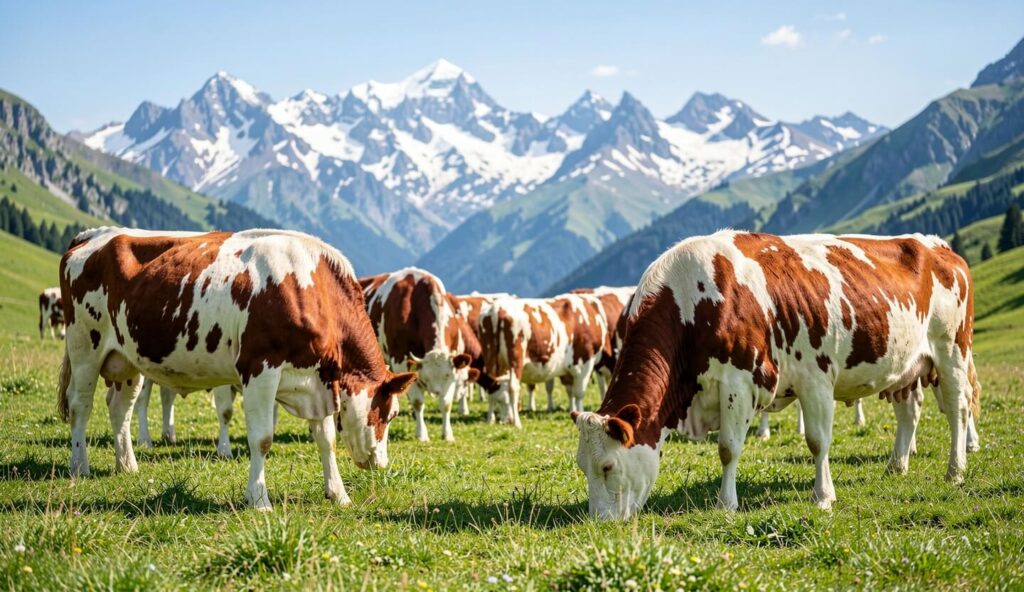
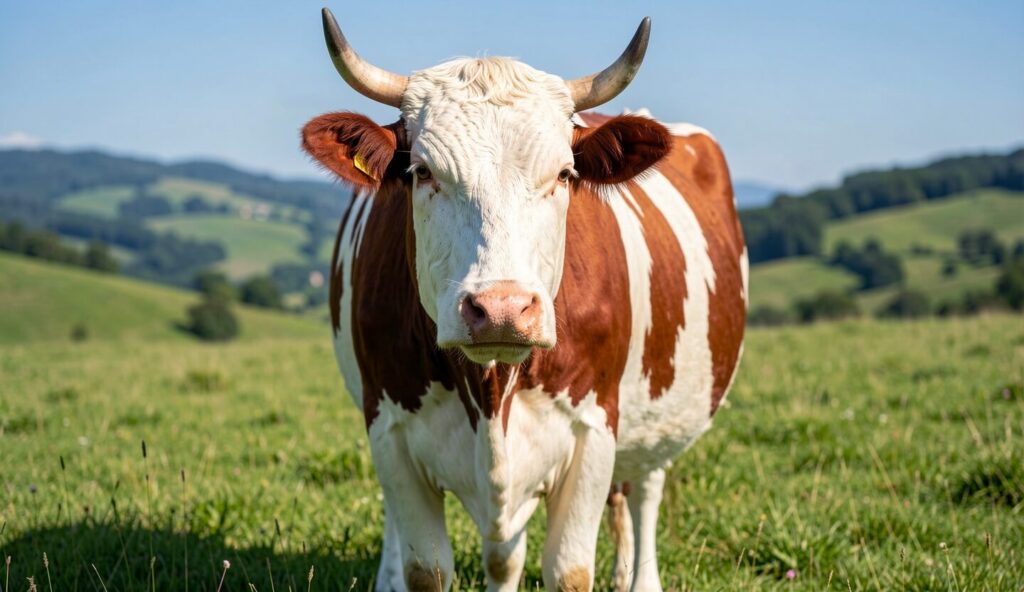
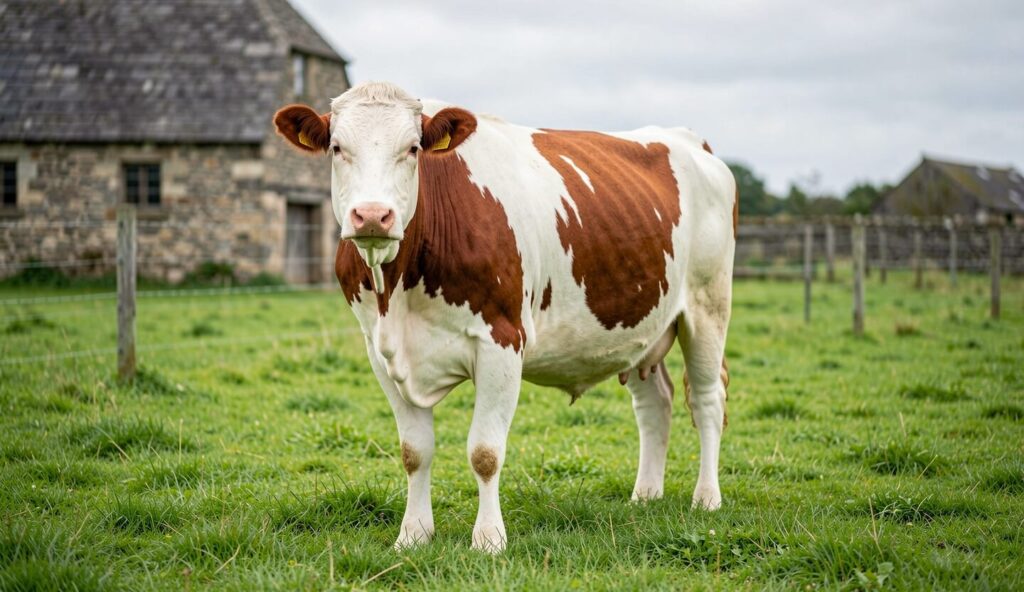
Normande cattle display one of the most beautiful patterned coats in the cattle world. Their red-and-white patches create a unique look that varies from one animal to another. Beyond aesthetics, their body structure supports both heavy milk production and quality beef yield.
Coat Color and Markings
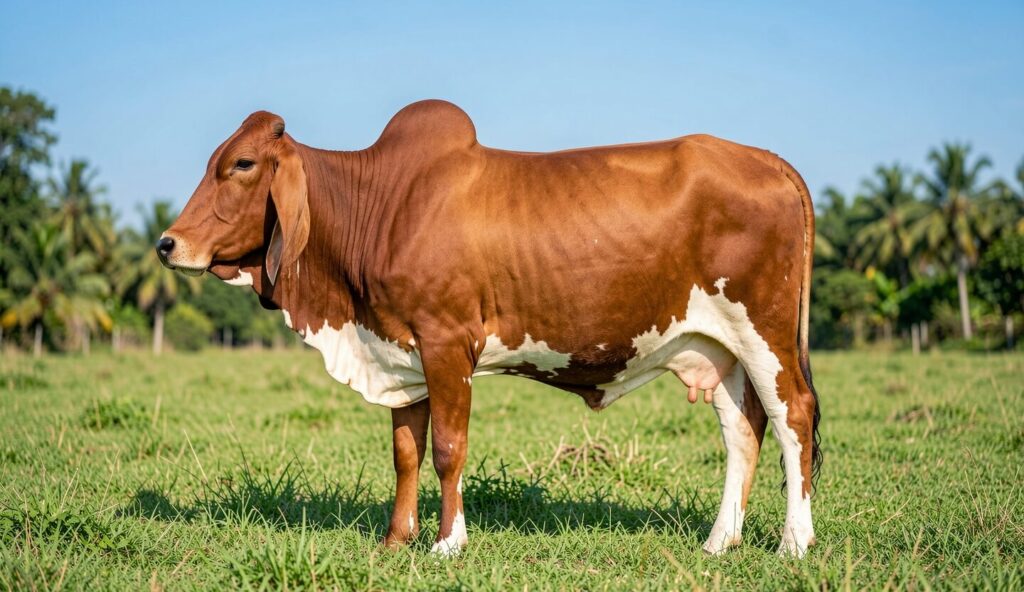
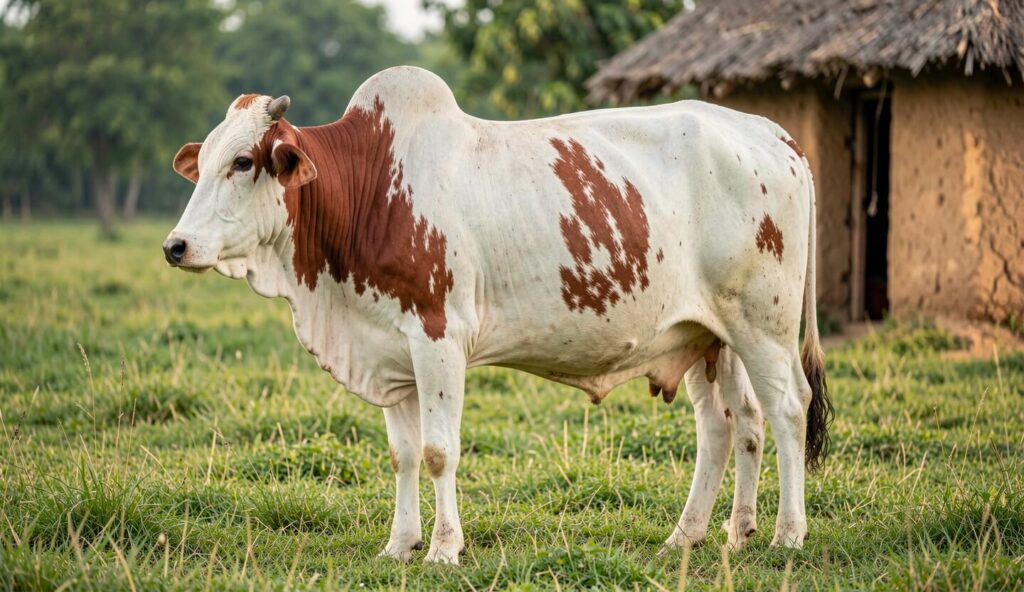
The base coat is white with irregular red or reddish-brown patches. These patches can cover large areas, and no two Normande cattle have identical patterns. The muzzle, hooves, and tail switch are typically pigmented. The breed standard does not accept solid red or solid white animals.
Body Structure and Size
Mature cows weigh between 600 and 700 kilograms, while bulls range from 900 to 1,100 kilograms. They have a medium to large frame with strong legs, a wide chest, and well-attached udders. Muscular hindquarters contribute to beef yield, and the overall conformation is symmetrical and balanced.
Distinctive Breed Traits
A prominent forehead and calm, docile eyes are characteristic of Normande cattle. They may have short, curved horns or be polled, depending on the bloodline. The breed is often described as elegant, with a refined head and graceful neck. These traits make them appealing for exhibitions as well as production.
Temperament and Personality
Normande cattle are known for their calm and friendly nature. They handle easily and adapt well to various farming systems. This temperament makes them suitable for beginners and families.
Docile and Easy to Handle
These cattle are less flighty than many other dairy or beef breeds. They respond well to regular handling and rarely show aggression. First-time owners find them manageable, and their gentle disposition reduces stress during milking or veterinary care.
Social Behavior and Herd Dynamics
Normandes thrive in small herds with a clear hierarchy. Cows bond strongly with their calves and are protective without being aggressive. Bulls can be territorial, but proper handling and fencing keep them safe to manage. They prefer routine and a calm environment.
Milk Production and Cheese Making
The milk from Normande cattle is famous for its richness and flavor. It is the traditional milk used for Camembert de Normandie, Pont-l’Évêque, and Livarot. Cheese makers seek out this breed for the superior fat and protein profile.
Milk Yield and Composition
An average Normande cow produces 5,500 to 7,000 kilograms of milk per lactation. The butterfat content ranges from 4.2 to 4.5 percent, and protein from 3.5 to 3.7 percent. This composition is ideal for high-fat, soft-ripened cheeses and yields a creamy texture.
Role in Camembert and Other AOP Cheeses
Camembert de Normandie must by law come from Normande milk. The same milk is used for Pont-l’Évêque and Livarot, both protected appellation cheeses. The fat and protein ratios ensure proper curd formation and rich flavor development during aging.
Beef Quality and Meat Production
Normande beef is well-marbled with intramuscular fat, giving it a tender and succulent texture. Butchers and gourmet markets prize this meat for steaks and roasts. The dual-purpose nature means the animal produces quality beef after its dairy career.
Marbling and Flavor
Intramuscular fat creates a buttery texture and rich, beefy flavor. The meat remains juicy when cooked, making it suitable for premium cuts. Chefs appreciate the consistent marbling and deep taste.
Carcass Yield and Growth Rate
Finished steers reach a carcass weight of 350 to 450 kilograms, with a dressing percentage of 55 to 60 percent. Growth rate is moderate, but feed conversion is efficient. The breed’s beef is often marketed as specialty French beef.
Housing and Space Requirements
Providing adequate shelter and pasture is essential for Normande cattle. They adapt well to temperate climates but need protection from harsh weather. Proper fencing and clean bedding maintain health and production.
Pasture Needs
Each cow requires at least one to two acres of high-quality pasture for rotational grazing. Normandes thrive on grass-based systems and can utilize marginal land effectively. Access to clean, fresh water in the pasture is critical.
Shelter and Bedding
A dry, draft-free barn or three-sided shelter protects the animals from rain and snow. Straw or sawdust bedding keeps the udder and coat clean. Adequate ventilation prevents respiratory issues common in confined livestock.
Fencing and Safety
Strong fencing, such as barbed wire or electric fence, is necessary to contain the herd. Normandes are not prone to jumping, but posts must be sturdy and gates secure. Separate handling pens make routine care safer for both animals and handlers.
Diet and Nutrition
A balanced diet is vital for milk production, growth, and overall health. Normande cattle eat primarily forage, with supplements as needed. Proper nutrition prevents metabolic disorders and supports longevity.
Forage and Roughage
Grass hay or silage forms the foundation of the diet. Lactating cows require higher-quality forage to meet energy demands. Free-choice mineral salt blocks provide essential trace minerals.
Grain and Concentrates
Supplemental grain, such as corn or barley, is fed during lactation or finishing periods. Protein supplements like soybean meal boost milk production. Careful rationing avoids overconditioning and related health issues.
Water and Supplements
Constant access to clean, fresh water is nonnegotiable. Calcium and phosphorus supplements support bone health and milk synthesis. Selenium and vitamin E are added in areas where soil deficiencies exist.
Common Health Issues
Like all cattle, Normandes face certain health challenges. Preventive care and regular monitoring reduce the risk of serious problems. Early detection is key to successful treatment.
Mastitis and Udder Health
Mastitis is an inflammation of the udder caused by bacterial infection. Good milking hygiene and teat dipping prevent most cases. Monitor for swelling, heat, or abnormal milk and treat promptly. Chronic cases may require culling to protect the herd.
Metabolic Disorders
Milk fever, or hypocalcemia, occurs in high-producing cows around calving. Ketosis can develop during early lactation when energy demand outpaces intake. Proper transition diets with controlled calcium levels help prevent these conditions.
Parasites and Lameness
Internal parasites from grazing require regular deworming programs. Foot rot and hoof abscesses are common in wet pastures. Routine hoof trimming every six to eight months keeps feet healthy and reduces lameness.
Grooming and Routine Care
Grooming Normande cattle keeps their patterned coat clean and reduces skin irritation. Regular hoof care and horn maintenance are necessary for comfort and safety.
Coat Care and Brushing
Brush the coat weekly with a soft-bristled brush to remove dirt and loose hair. Bathing is only needed before shows, using mild soap. The white patches show dirt easily, so clean bedding helps maintain appearance.
Hoof and Horn Maintenance
Trim hooves every six months or when signs of overgrowth appear. Dehorning is recommended for small herds to prevent injury. Check regularly for cracks or infections and address promptly.
Is Normande Cattle Right for You
Normande cattle suit a variety of setups, from small homesteads to commercial dairies. Their dual-purpose nature and gentle temperament make them a practical choice. However, certain factors must be evaluated before purchase.
Ideal for Cheese Producers
Artisan cheese makers benefit from the high butterfat and protein content. Normande milk produces award-winning cheeses that command premium prices. Pasture-based systems keep input costs low while maintaining milk quality.
Suitable for Beginners
First-time cattle owners find Normandes easy to handle due to their calm nature. They are less demanding than some specialized dairy breeds. With proper fencing and basic knowledge, a small herd can be managed successfully.
Considerations Before Buying
Land and shelter must meet the minimum space requirements. Veterinary costs and routine hoof care add to annual expenses. Availability of Normande genetics outside France may require importation or artificial insemination. Research local breeders and check for breed association support.
Final Note
Normande cattle offer a winning combination of beauty, productivity, and temperament. Their spectacular red-and-white patterned coat and high-quality milk make them a standout breed. With proper care, they reward owners with years of dependable dairy products and flavorful beef.
Frequently Asked Questions
What is the average lifespan of Normande cattle?
Normande cattle live between 15 and 20 years with proper care. Well-managed cows often remain productive for 10 to 12 lactations.
Are Normande cattle good for small farms?
Yes, their docile nature and moderate size make them ideal for small farms. They thrive on pasture-based systems with minimal infrastructure.
How much milk does a Normande cow produce per day?
During peak lactation, a Normande cow produces 15 to 20 liters per day. The milk is high in butterfat and protein for cheese making.
What colors do Normande cattle come in?
Normande cattle have a white base with red or reddish-brown patches. The pattern is distinct and irregular; no two animals are identical.
Can Normande cattle be kept as pets?
Yes, their calm temperament makes them suitable as companion animals. However, they require ample space, proper feeding, and regular veterinary care.
Is Normande beef considered high quality?
Normande beef is well-marbled and tender, prized by butchers. It is often used in French gourmet dishes and premium meat markets.