What Is a Montbéliarde Cattle
Montbéliarde cattle are a hardy French dairy breed developed in the Montbéliard region of eastern France. These animals are prized for their rich cheese milk, calm disposition, and exceptional longevity. Small farm owners and dairy hobbyists often choose this breed for its balanced milk composition and low-maintenance nature.
Origin and History
The breed originated from Swiss Simmental cattle brought into France during the 18th century. Local farmers in the Montbéliard area selected for milk production while retaining the breed’s dual-purpose qualities. Over time, Montbéliarde cattle became a distinct breed known for hardiness and adaptability.
Today, the breed is one of the most popular French dairy breeds, second only to Holstein in numbers. Its reputation for producing excellent cheese milk has made it a favorite among artisan cheesemakers.
Appearance and Physical Features
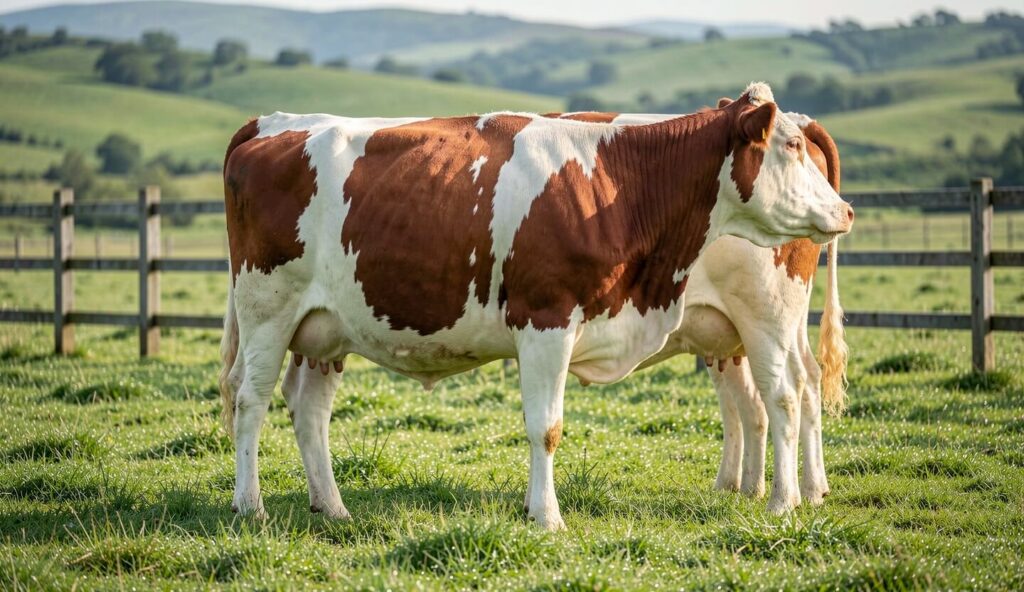
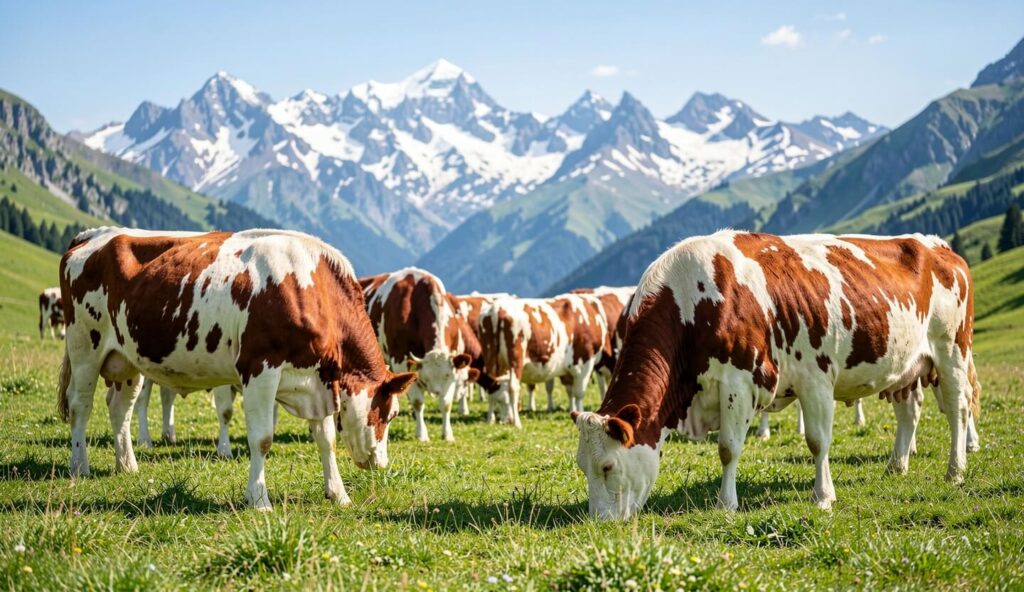
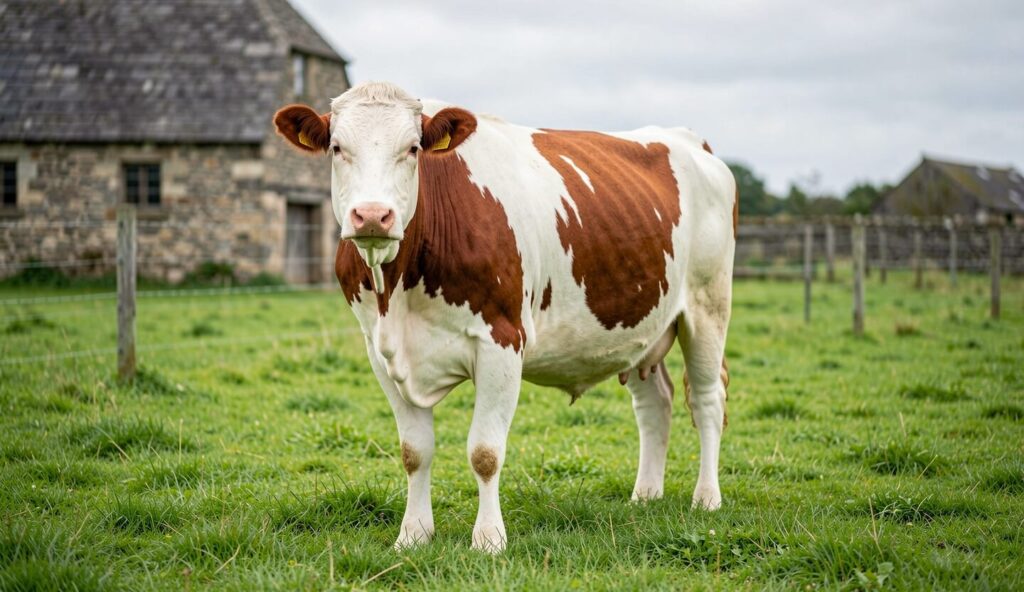
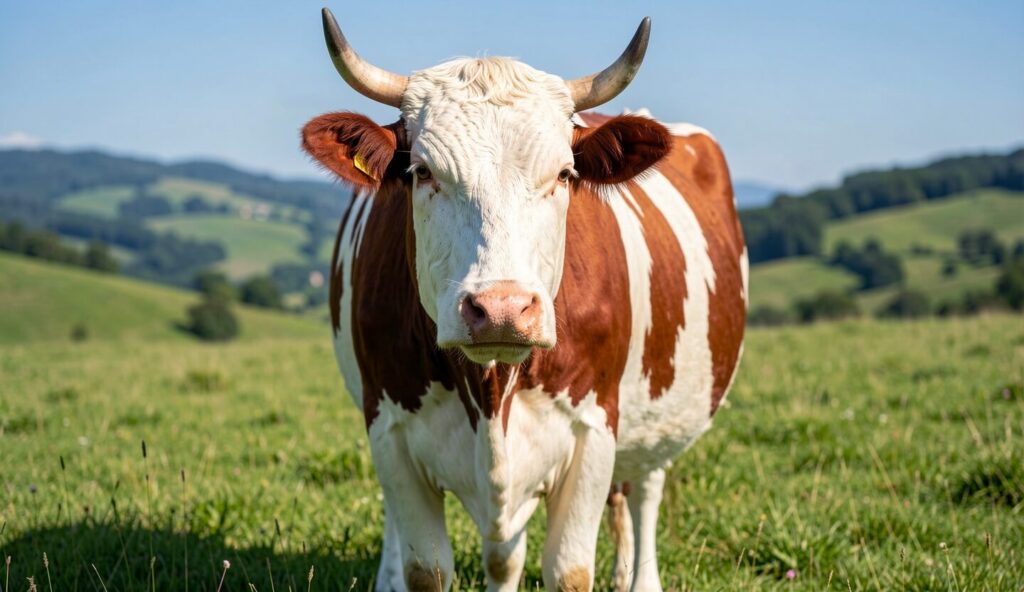
Montbéliarde cattle display a striking red and white coat pattern. The red patches are deep and rich, while the white markings are typically concentrated on the face, legs, and underline. This two-tone appearance makes them easy to recognize in a pasture.
Coat Color and Markings
The breed exhibits a piebald pattern with red patches on a white background. Most animals have a white face and white legs below the hocks. The coat is short, smooth, and dense, providing good protection against cold weather.
- Red and white piebald pattern
- White face and legs are common
- Coat is short and smooth
Size and Weight
Montbéliarde cows are medium to large framed animals. Cows weigh between 600 and 700 kilograms (1,320–1,540 pounds). Bulls are significantly larger, reaching 900 to 1,100 kilograms (1,980–2,425 pounds).
Height at the withers ranges from 140 to 150 centimeters. This moderate size makes them manageable for small farms without specialized handling equipment.
Temperament and Behavior
Montbéliarde cattle are known for their docile and calm temperament. They adapt well to handling by beginners and families, making them suitable as a pet cow. Their quiet nature reduces stress for both the animal and the owner.
Temperament and Behavior
These cows are generally easygoing but remain alert to their surroundings. They form strong bonds with consistent handlers and prefer routine. Aggression is rare, though bulls should always be treated with caution.
Their calm demeanor makes them a good choice for children’s 4-H projects or hobby farms where gentle interaction is important.
Milk Production and Cheese Making Qualities
The milk of Montbéliarde cattle is exceptional for cheesemaking. It contains high levels of butterfat and protein, particularly the kappa-casein BB variant that improves curd firmness and yield. This composition produces firm, flavorful cheeses.
Milk Composition
Average lactation yield ranges from 7,000 to 8,000 kilograms of milk per year. Butterfat content sits between 4.0 and 4.2 percent, while protein content ranges from 3.4 to 3.6 percent. These figures are higher than many other dairy breeds.
The elevated protein and casein levels directly translate into more cheese per liter of milk. Cheesemakers value this trait for economic and quality reasons.
Cheese Types Made from Montbéliarde Milk
Several famous French cheeses use Montbéliarde milk. These include Comté, Beaufort, and Emmental. The breed’s milk also contributes to other Alpine-style cheeses.
Artisan cheesemakers prefer Montbéliarde milk for its consistent fermentation characteristics. The resulting cheeses are firm, nutty, and highly flavorful.
Hardiness and Adaptability
Montbéliarde cattle evolved in mountainous terrain, giving them excellent hardiness. They handle cold climates and rough pastures better than many specialised dairy breeds. Their robust constitution reduces dependency on expensive feed and housing.
Climate Tolerance
These animals thrive in the cold, alpine winters of their native region. They also adapt to temperate lowland areas. Compared to Holsteins, Montbéliarde cattle are less sensitive to heat stress, which improves summer milk production.
Foraging Ability
Montbéliarde cattle are efficient grazers. They utilize lower-quality forage and rough terrain that other breeds might reject. This trait lowers feed costs on pasture-based operations.
Small farmers can keep them on marginal land without heavy grain supplementation, especially during the growing season.
Health and Longevity
Montbéliarde cattle enjoy robust health and a long productive life. They suffer from fewer metabolic and reproductive disorders compared to some high-yielding dairy breeds. This longevity makes them a cost-effective choice for small farms.
Common Health Issues
The breed shows a low incidence of mastitis, likely due to well-attached udders and strong immune systems. Hoof health is generally good, with few lameness problems. Calving ease is above average because calves are moderate in size.
- Low incidence of mastitis
- Strong hoof health
- Good calving ease due to moderate calf size
Fertility and Lifespan
Montbéliarde cows have high conception rates and maintain fertility through multiple lactations. The average productive lifespan is 6 to 8 lactations, which is longer than many dairy breeds. It is not unusual for a cow to live 15 to 20 years and remain productive into older age.
Feeding and Nutrition
A balanced diet keeps Montbéliarde cattle healthy and productive. Their feeding program should emphasize high-quality forage, with grain reserved for high producers or cold weather stress. Proper mineral supplementation is also essential.
Pasture and Forage
Quality pasture provides the bulk of nutrition during the growing season. Winter feeding relies on hay or silage. Each cow requires at least 0.5 to 1 acre of pasture under rotational grazing to prevent overgrazing and maintain forage quality.
Grain and Minerals
Grain is optional for dry cows but beneficial for lactating females. A free-choice mineral salt block should always be available. Fresh, clean water is critical year-round, especially for milk production.
Housing and Space Requirements
Montbéliarde cattle do not require elaborate housing. A simple three-sided run-in shed provides adequate shelter from rain, wind, and sun. Bedding such as straw or sawdust keeps them comfortable and dry.
Shelter Types
A well-ventilated barn or shed prevents respiratory issues. Deep bedding helps maintain hoof health and udder cleanliness. The structure should be spacious enough for all animals to lie down simultaneously.
Fencing and Pasture
Sturdy livestock fencing is necessary to contain these large animals. Barbed wire or high-tensile electric fencing works well. Rotational grazing improves pasture regrowth and reduces parasite load.
Is a Montbéliarde Right for Your Small Farm
Montbéliarde cattle offer a rare combination of gentle temperament, high-quality milk, and low maintenance. They fit well into small-scale dairy operations, hobby farms, and even as companion animals. However, prospective owners should consider space, feed costs, and time commitment.
Is a Montbéliarde Right for Your Small Farm
These cows are ideal for people who want to produce their own cheese or cream. They also appeal to families seeking a friendly, productive pet cow. Beginners will appreciate the breed’s easygoing nature and forgiving management requirements.
Before acquiring Montbéliarde cattle, ensure adequate fencing, shelter, and a reliable hay supply. The breed’s hardiness reduces veterinary costs, but routine hoof trimming and vaccinations remain necessary. For those with a few acres and a love for French dairy, this breed is an excellent choice.
Frequently Asked Questions
How much milk does a Montbéliarde cow produce per day?
Average daily milk production is 20 to 25 litres during peak lactation, depending on feeding and genetics.
Are Montbéliarde cows good for beginners?
Yes, they are docile and easy to handle, requiring only basic cattle care and management.
What is the lifespan of a Montbéliarde cow?
Typically 15 to 20 years, with a productive lifespan of 6 to 8 lactations.
Do Montbéliarde cattle need special care?
No special care beyond standard cattle management, including regular hoof trimming and vaccinations.
Can Montbéliarde cattle be kept as pets?
Yes, their calm temperament makes them suitable as companion animals, provided they have adequate space and feeding.
What is the difference between Montbéliarde and Holstein cattle?
Montbéliarde cattle produce milk with higher butterfat and protein, though Holsteins yield more volume. Montbéliarde are hardier, longer-lived, and better suited for cheese production.
Final Note
Montbéliarde cattle bring together the best traits of a French dairy breed: hardy physique, rich cheese milk, and a gentle nature. Small farmers and hobbyists will find them a rewarding addition to any farmstead.