Marvelous Spatuletail The Most Extraordinary Hummingbird And Complete Breed Guide
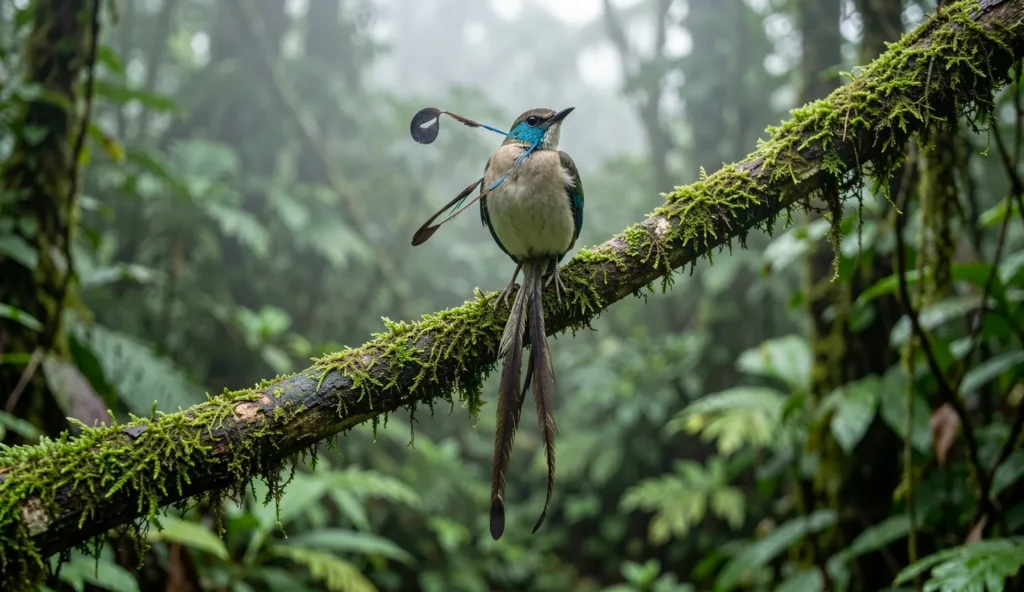
The Marvelous Spatuletail is a small hummingbird that is endemic to Peru. It is renowned for its two elongated tail feathers ending in spatulate discs, a trait that makes this species instantly recognizable. For rare bird enthusiasts, observing the Marvelous Spatuletail offers a rare glimpse into Peru’s highland biodiversity.
What Is a Marvelous Spatuletail
Species Overview
The Marvelous Spatuletail is the sole member of the monotypic genus Loddigesia mirabilis. This distinction highlights unique evolutionary traits that set it apart from other hummingbirds. The species is endemic to Peru with a highly restricted range. Male displays two long tail feathers with spatulate discs.
In the broader world of hummingbirds, rare species such as the Lucifer Hummingbird demonstrate a similar pattern of specialization and habitat sensitivity, underscoring how small ranges influence conservation priorities. Lucifer Hummingbird shows that visual spectacle often accompanies restricted distributions.
Key Taxonomic Facts
Only species in its genus, making Loddigesia mirabilis a singular lineage within Trochilidae. The scientific name is closely tied to its unique evolutionary history. This bird belongs to the hummingbird family, a group known for rapid wingbeats and nectar-based diets.
Appearance and Physical Features
Size and Plumage
The Marvelous Spatuletail measures about 8 to 9 cm in length. It features iridescent green upperparts with metallic highlights that shimmer in forest light. The slender bill is adapted for nectar feeding, a hallmark of many hummingbird species.
Compared to other small perching birds, this species exhibits exceptional plumage contrast during courtship displays. Observers often note the vivid coloration when birds hover near blossoms. For contrast with other rare forms, the Blue-throated Hummingbird offers a striking example of regional variation, which you can explore in profiles like the Blue-throated Hummingbird.
Tail Feathers and Spatules
Two exceptionally long tail feathers terminate in round spatules or discs, a distinctive feature of the species. Males are typically more ornate than females, displaying the tail apparatus during courtship and territorial behavior.
These spatulate discs are visually striking, aiding in recognition during aerial displays seen in many hummingbird species. Conservationists note that these tail features are a key visual cue for field identification in Peru’s montane habitats.
Habitat and Range in Peru
Natural Habitat
This hummingbird inhabits humid montane forests and bamboo thickets, typically found along forest edges and riparian zones. Dense vegetation provides foraging routes and nesting cover that are essential for survival in highland Peru. The Marvelous Spatuletail relies on nectar sources scattered across fragmented forest patches.
As Peru travelers explore cloud forests, they may encounter similar endemic species that thrive in protected reserves, such as the Magnificent Hummingbird, another jewel of Andean habitats. Magnificent Hummingbird showcases how highland ecosystems support dazzling nectarivores.
Geographic Range
The species is endemic to Peru with a very restricted distribution, confined to specific montane valleys. Sightings are rare and localized, often dependent on seasonal flowering and habitat connectivity. Population distribution remains concentrated in a few key valleys, making monitoring essential.
Behavior and Feeding Habits
Diet and Foraging
The Marvelous Spatuletail feeds on nectar from a variety of flowers and supplements its diet with small insects for protein. Hovering flight enables precise nectar extraction from delicate corollas in dense vegetation.
Field observers sometimes compare its foraging tactics with those of related species, including the Broad-tailed Hummingbird, which also exploits montane nectar sources. Broad-tailed Hummingbird illustrates how flight mechanics adapt to high-altitude foraging.
Courtship and Social Behavior
Males display with elongated tail feathers during courtship, performing aerial routines to attract mates. Outside the breeding season, individuals are generally solitary or occur in small groups around reliable feeding sites. Territorial behavior around favored flowers helps maintain access to nectar resources.
Conservation Status and Threats
Current Conservation Status
The Marvelous Spatuletail is listed as critically endangered with a very small known population. Ongoing monitoring is essential to track trends and respond to habitat changes. Protected reserves in Peru play a crucial role in maintaining remaining individuals.
Other rare hummingbirds experience similar pressures, such as the Buff-bellied Hummingbird which inhabits the Gulf Coast; this comparison highlights how habitat loss can affect restricted-range species. Buff-bellied Hummingbird exemplifies the regional threat profile for many neotropical species.
Primary Threats
Deforestation for agriculture, habitat fragmentation, and degradation reduce foraging options and nesting sites. The species’ limited geographic range magnifies vulnerability to land-use changes. Fragmented landscapes impede long-term genetic diversity and resilience.
Is Marvelous Spatuletail Right for You
Who Should Watch This Bird
Rare bird enthusiasts, field researchers, and conservationists will find the Marvelous Spatuletail compelling. This species offers a clear case study of endemism and habitat sensitivity in the Andes. It also serves as a focal point for conservation planning in Peru’s protected areas.
Observing this hummingbird aligns with responsible travel goals, such as supporting community-guided tours that prioritize habitat protection. For a broader context on regional diversity, the Violet-crowned Hummingbird provides a complementary example of highland nectar feeders. Violet-crowned Hummingbird demonstrates how crown coloration can accompany unique habitat preferences.
Observation and Ethical Considerations
Observe only with licensed guides operating in reserves to minimize disturbance. Maintain a respectful distance and avoid sudden movements near nests or feeding sites. Supporting conservation through responsible travel helps ensure the species persists for future generations.
Final Note
Closing Thoughts
The Marvelous Spatuletail represents a rare glimpse into Peru’s biodiversity and the ongoing story of conservation in montane forests.
Frequently Asked Questions
What makes the Marvelous Spatuletail unique among hummingbirds?
It is the only species in its genus and has two long tail feathers with spatulate discs.
Where in Peru is the Marvelous Spatuletail found and why is its range so restricted?
It is endemic to Peru with a highly restricted distribution in montane forest valleys.
How many species are in the genus Loddigesia and what does that mean for its conservation?
There is only one species in the genus, intensifying rarity and conservation concerns.
What does the Marvelous Spatuletail eat and how does it forage?
It feeds on nectar and small insects, using hovering flight to access flowers.
Why is the Marvelous Spatuletail classified as critically endangered?
Its population is extremely small and range is very limited, with ongoing habitat loss threats.
How can travelers observe the Marvelous Spatuletail responsibly in Peru?
Join guided, licensed tours and follow ethical birding practices to minimize impact.