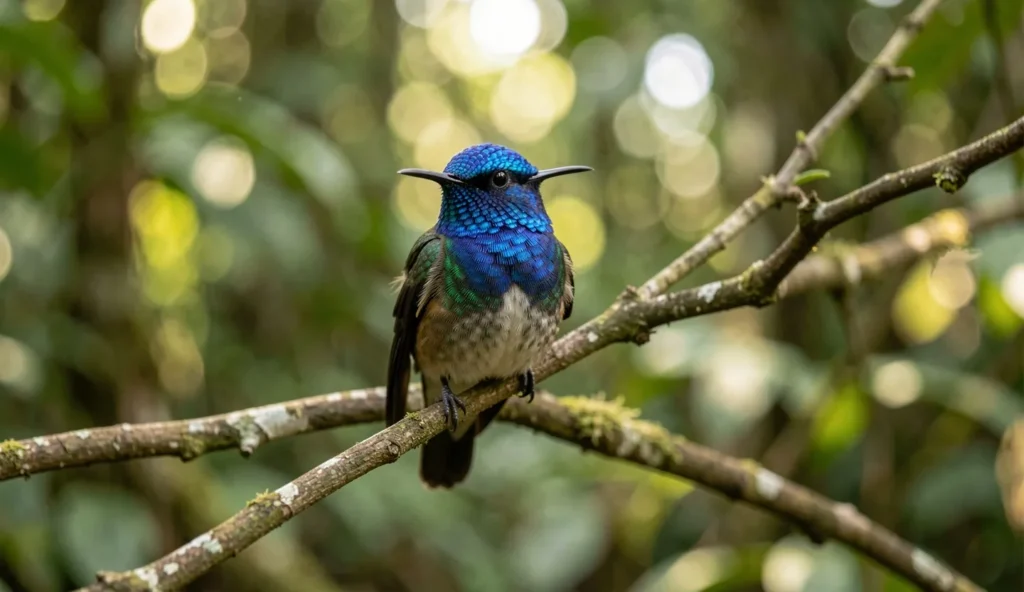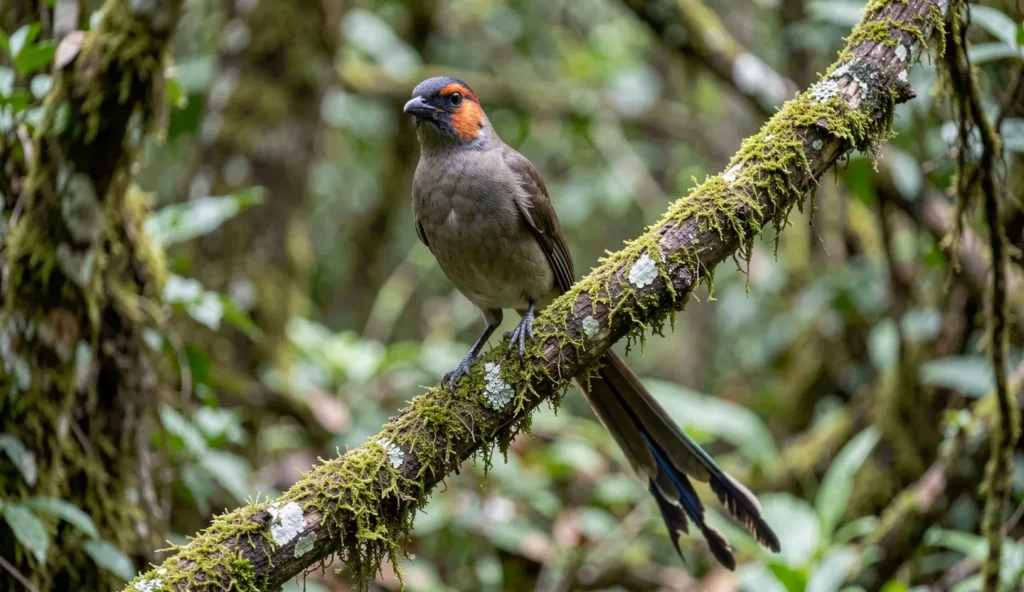
What Is a Booted Racket-tail
The Booted Racket-tail is a small to medium hummingbird native to the Andean forests, celebrated for its elongated tail that ends in racket-shaped tips. The name highlights two distinctive features: the racket-like tail and the booted legs observed in males.
Overview of the Species
- Small to medium hummingbird with distinctive tail shape
- Scientific name Ocreatus underwoodii
- Endemic to Andean forests
In this context, other racket tail relatives include the Broad-tailed Hummingbird, which shares the high-elevation habitat and striking tail ornamentation.
Taxonomy and Classification
- Belongs To Family Trochilidae In Genus Ocreatus
- Common Name Booted Racket-tail
- Related To Other Racket Tail Hummingbirds
The species is categorized within the Trochilidae family, and its genus Ocreatus places it among several striking racket tail hummingbirds.
Distinctive Tail Anatomy And Features
The tail of the Booted Racket-tail is a defining trait, with males showing an extended tail that ends in racket-shaped tips. This morphological feature is used prominently during displays to attract mates and deter rivals.
Elongated Tail And Racket Tips
Male individuals exhibit a longer tail with racket-shaped tips that flare during courtship. Tail morphology is a key ornament and a visible cue in social interactions.
White Leg Puffs In Males
Males have distinct white feather puffs on the legs, often described as booted legs, which aid in species recognition during flight displays.
Comparison With Related Hummingbirds
Tail ornamentation varies among racket tail species, and timing of display patterns differs from related birds such as the Ruby-throated Hummingbird, illustrating diverse signaling strategies across the group.
Diet And Feeding Habits
The Booted Racket-tail relies primarily on nectar, supplemented by small arthropods for protein. Flower availability at high elevations shapes feeding patterns and energetic intake.
Primary Nectar Sources
Nectar sources are typically at mid to high elevations where specialized flowers bloom. Costa’s Hummingbird shares a similar nectar-driven foraging niche at comparable elevations.
Insect Diet And Role In Ecosystem
Insects provide essential protein and are taken in small arthropods during hovering or brief foraging pauses.
Feeding Habits In The Wild
Hovering flight is typical during nectar uptake, and occasional trap-lining behavior has been observed in some individuals.
Habitat Range And Natural History
The species occupies Andean forest habitats with a preference for forest edges and montane forest microhabitats. Its ecology mirrors other high-elevation nectar specialists.
Geographic Distribution In The Andes
Found along Andean corridors from Peru to Bolivia, with a tendency toward mid-altitude forest regions and cloud forest edges. The Violet-crowned Hummingbird represents another iconic Andean species sharing similar elevations and habitat features.
Altitude Range And Climate
Mid to high elevation occurrences mean cool, misty climates with cloud forest microclimates influencing activity patterns. Temperature and moisture regimes drive nectar timing and foraging success.
Conservation Status And Rarity
The Booted Racket-tail is considered rare across parts of its range, with habitat loss contributing to its vulnerability in some areas.
Care Tips And Practical Considerations
Researchers and enthusiasts benefit from non-disruptive methods and proper ethics when observing or studying this species. Practical notes help minimize disturbance while gathering useful data.
Observing In The Field
Approach quietly and minimize disturbance; use binoculars and long lenses to observe from a distance. For reference, researchers sometimes study other nectar specialists such as the Lucifer Hummingbird to compare signaling strategies.
Captive Care And Ethics
Captivity requires specialized facilities and careful consideration of welfare; permits and ethical clearance are mandatory for any kept individuals.
Non Invasive Study Methods
Prioritize non-invasive sampling and observational techniques while adhering to local wildlife regulations to protect wild populations.
Final Note
The Booted Racket-tail represents a remarkable example of avian tail morphology and signaling in Andean ecosystems. Continued study supports understanding of its unique adaptation and conservation needs.
Frequently Asked Questions
What is the scientific name of the Booted Racket-tail?
Ocreatus underwoodii.
Where is the Booted Racket-tail found in the wild?
Found in Andean cloud forests from Peru to Bolivia.
How does the tail shape differ between sexes in the Booted Racket-tail?
Males have elongated tail tips forming a racket shape, while females have shorter tails.
Why is the Booted Racket-tail considered rare?
Restricted range and ongoing habitat loss contribute to its rarity.