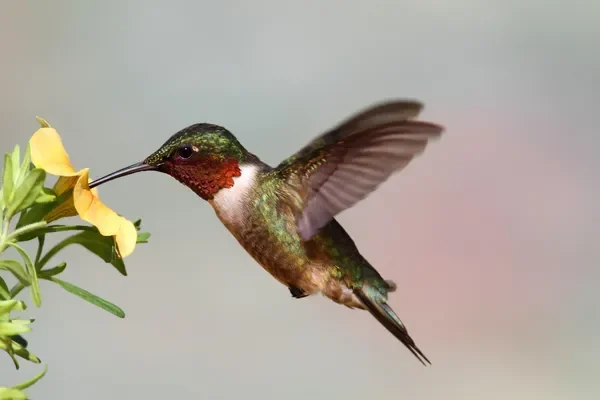
Ruby-throated Hummingbird – The Jewel of Eastern Skies
Introduction
With a heart that beats up to 1,260 times per minute and wings that beat 50 to 80 times per second, the Ruby-throated Hummingbird is a marvel of biological engineering. As the most widespread hummingbird species east of the Rocky Mountains, this tiny dynamo undertakes an epic 2,000-mile migration each year, including a non-stop 500-mile flight across the Gulf of Mexico. Known for its shimmering ruby-red throat, rapid wingbeats, and fearless nature, this tiny bird captivates nature lovers with its elegance and energy. Whether flitting around backyard feeders or zipping through flower gardens, this hummingbird brings a spark of magic to every encounter.
Natural Habitat and Range
Ruby-throated Hummingbirds are native to eastern North America. Their range extends from southern Canada to the Gulf of Mexico, and they migrate annually to Central America, especially Mexico, Panama, and Costa Rica. While they are the dominant species in the east, birdwatchers in western regions may encounter other species like the rufous hummingbird, known for its fiery orange coloration and equally bold temperament.
- Prefer open woodlands, meadows, and gardens
- Frequently visit feeders in urban and suburban areas
- Spend winters in tropical forests and mangroves
Their adaptability allows them to thrive in both natural and human-influenced environments.
Physical Appearance
These hummingbirds may be tiny, but they are dazzling in every way:
- Size: About 3 to 3.5 inches long
- Weight: Less than 4 grams (lighter than a coin)
- Male: Bright ruby-red throat, metallic green back
- Female: Pale throat, green back, and white underparts
- Wings: Beat about 50–80 times per second
Their colors can appear to shift depending on the angle of sunlight, adding to their mystique. For comparison, the magnificent hummingbird found in the southwestern highlands is one of the largest hummingbird species, offering a striking contrast in size and plumage.
Migration and Journey
One of the most amazing aspects of the Ruby-throated Hummingbird is its long-distance migration:
- Travels up to 2,000 miles between breeding and wintering grounds
- Makes a non-stop 500-mile flight across the Gulf of Mexico
- Uses instinct, sun navigation, and landmarks to find its way
This tiny bird’s endurance is nothing short of awe-inspiring. In the western United States, the annas hummingbird takes a different approach, remaining in coastal regions year-round rather than migrating long distances.
Diet and Feeding Habits
The Ruby-throated Hummingbird is always on the move, needing to feed frequently to support its high metabolism:
- Consumes flower nectar as its main energy source
- Eats insects and spiders for protein
- Also drinks sugar-water from feeders
They can visit hundreds of flowers a day and even remember the location and timing of nectar renewal. Recent studies have shown that these birds can recall specific feeder locations and return to them at the same time each day when nectar production is highest.
Nesting and Reproduction
These birds build some of the most delicate and intricate nests in the bird world:
- Female builds the nest alone, using soft materials like moss, plant down, and spider silk
- Lays 1–3 eggs, each about the size of a jellybean
- Mothers care for the young until fledging (about 3 weeks)
Male hummingbirds do not participate in nesting but may guard feeding territories during the breeding season. The nest construction is a remarkable feat of engineering, with spider silk allowing the nest to expand as the chicks grow.
Social Behavior
Ruby-throated Hummingbirds are generally solitary and can be quite territorial, especially males:
- Defend food sources with aggressive dives and chirps
- Interact mainly during courtship or feeding overlaps
- Use rapid vocalizations and wing sounds to communicate
Despite their size, they show confident and bold behavior, often chasing away larger birds. This territorial nature is shared by many hummingbird species, including the black chinned hummingbird, which defends its feeding areas with similar tenacity across the western states.
Observation Tips
Want to attract Ruby-throated Hummingbirds to your garden? Here’s how:
- Plant native nectar-rich flowers like bee balm, salvia, and trumpet vine
- Use red feeders with a sugar-water solution (4 parts water to 1 part sugar)
- Avoid red dyes or honey, which can be harmful
- Provide perches and shaded resting spots
- Clean feeders every 2-3 days in hot weather to prevent mold growth
With patience and the right setup, you can enjoy close encounters with these enchanting birds.
Conservation and Protection
The Ruby-throated Hummingbird is currently classified as a species of Least Concern, but they still face threats:
- Habitat loss due to urban development
- Climate change is affecting flower bloom patterns and migration timing
- Pesticide use reduces insect availability
- Window collisions during migration claim millions of birds annually
Supporting pollinator-friendly gardens, applying window decals to reduce collisions, and reducing chemical use can help keep their populations healthy.
Cultural and Ecological Importance
These birds hold special places in many cultures and ecosystems:
- Pollinators helping maintain plant biodiversity
- Symbolizes joy, endurance, and energy in many traditions
- Popular subjects in art, photography, and literature
They remind us how even the smallest beings can have a powerful impact.
Fun Facts About Ruby-throated Hummingbirds
- Can lift more than their body weight in midair
- Their heart beats up to 1,260 times per minute
- At night, they enter a deep sleep-like state called torpor to save energy
- Fly at speeds of up to 30 mph in level flight—and faster during dives
- They have no sense of smell but excellent color vision, especially for red tones
Frequently Asked Questions
Q1: Do both male and female Ruby-throated Hummingbirds have red throats?
A: No. Only males have the ruby-red throat, while females have a white or pale throat with greenish backs.
Q2: How long do Ruby-throated Hummingbirds live?
A: In the wild, they typically live 3 to 5 years, though some individuals have lived up to 9 years.
Q3: When can I see them in North America?
A: They usually arrive in the U.S. in late March or April and migrate back to Central America by September.
Q4: Are Ruby-throated Hummingbirds endangered?
A: No, but like all wildlife, they are vulnerable to habitat changes, pollution, and climate disruption.
Q5: Can I help them during migration?
A: Yes. Offer clean feeders, native plants, and rest stops free of pesticides. Every safe space matters.
Conclusion
The Ruby-throated Hummingbird is a glowing gem in the bird world. With its fearless flight, vital ecological role, and stunning beauty, it reminds us of nature’s delicate brilliance. Whether you’re a backyard birdwatcher or a devoted conservationist, supporting these hummingbirds connects you to a deeper appreciation of the natural world, one flutter at a time. By creating hummingbird-friendly spaces and learning about the diverse species that share our continent, you can play an active role in ensuring these aerial jewels continue to grace our skies for generations to come.