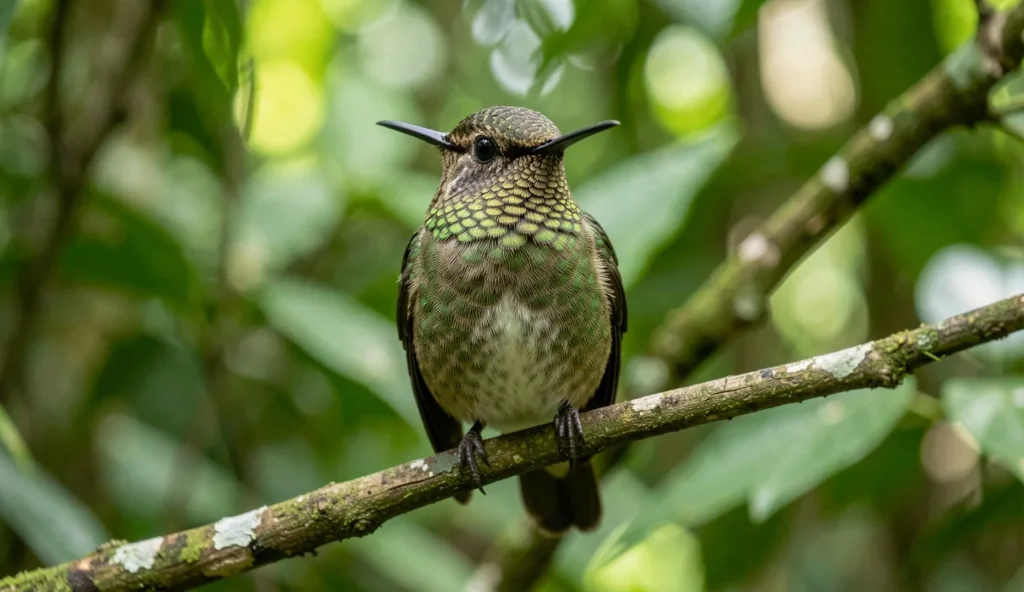
What Is a Scaly-Breasted Hummingbird
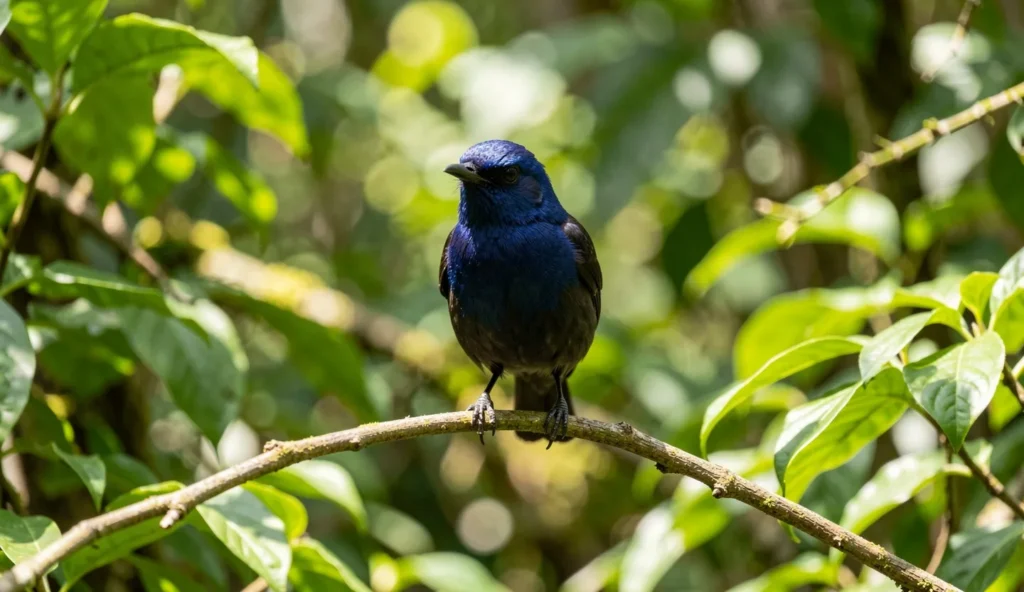
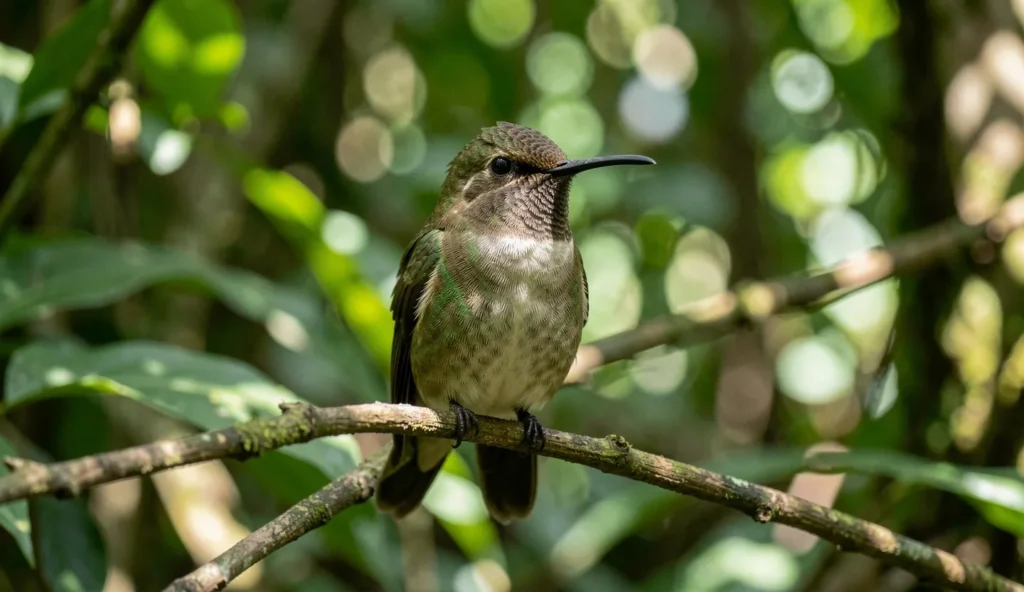
The Scaly-breasted Hummingbird is a tiny nectar-feeding bird native to humid lowland forests in Central America. This species stands out for the distinctive scaly breast pattern that helps field observers identify it in dense vegetation.
Among Central America’s small hummingbirds, this species shares its region with other nectar specialists like the Fiery-throated Hummingbird, making careful observation essential for correct identification.
Key Characteristics At A Glance
- Very small passerine bird with rapid wingbeat
- Distinct scaly breast pattern in males and females
- Belongs to hummingbird family Trochilidae
- Found primarily in humid lowland forests
Appearance And Physical Features
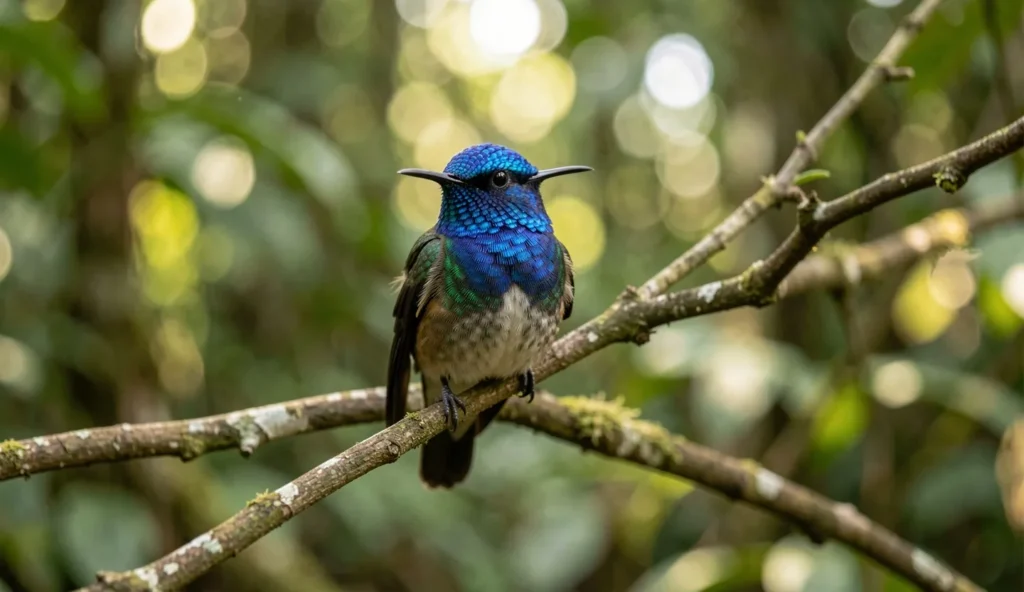
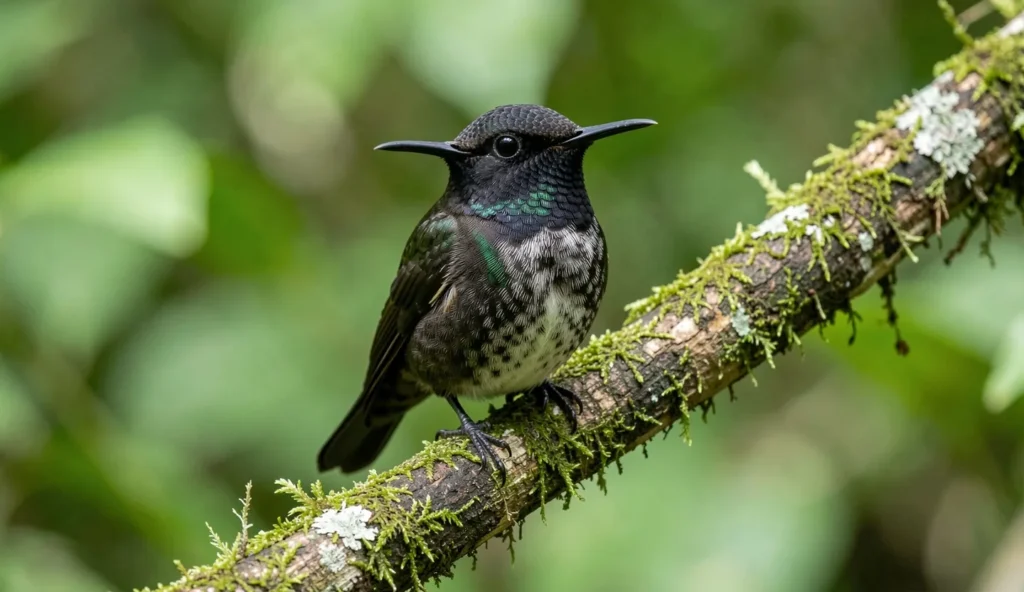
The Scaly-breasted Hummingbird displays a bright iridescent back and head, contrasted by a small body and a long slender bill designed for nectar feeding. The most distinctive trait is the scaly breast that gives the species its name and visual appeal.
In the humid lowland forests of Central America, observers often compare it with other tiny hummers such as the Purple-crowned Fairy, which frequently shares flowering corridors. Purple-crowned Fairy shares similar habitat, though its plumage differs in color patterns.
What To Look For In Plumage
- Bright iridescent back and head
- Distinctive scaly breast pattern on chest
- Long slender bill adapted for nectar
- Tiny compact body typical of hummingbirds
Habitat And Range In Central America
This species favors lowland tropical forests, forest edges, and clearings where flowering plants attract nectar feeders. Microhabitats with abundant blossoms offer optimal foraging grounds for this tiny bird.
Geographically, the Scaly-breasted Hummingbird is found across Central America, including parts of Guatemala and Belize, extending from near sea level to mid elevations. The distribution highlights the region’s high biodiversity and the need to protect humid forest corridors, much like the Green-breasted Mango.
Natural Habitat
- Lowland tropical forests
- Forest edges and clearings
- Microhabitats with flowering plants
Geographic Range
- Central America including parts of Guatemala and Belize
- Elevation from near sea level to mid elevations
Diet And Feeding Habits
Natural diet consists of nectar from tubular flowers and small insects for protein, reflecting typical hummingbird foraging behavior. This combination supports high metabolism and precise wing movements during rapid aerial maneuvers.
In its natural diet, the Scaly-breasted Hummingbird relies on nectar and small insects, which is similar to the Ruby-topaz Hummingbird.
Natural Diet
- Nectar from tubular flowers
- Insects and spiders for protein
- Frequent visits to flowering trees
Behavior And Social Interactions
The Scaly-breasted Hummingbird exhibits notable flight agility, with aerial acrobatics during courtship and rapid wingbeats that make field identification challenging. It hovers precisely as it forages, a trait common to many hummingbirds.
During studies of Central America’s hummingbirds, observers note similar courtship displays in species like the Violet-crowned Hummingbird, highlighting shared behavioral patterns.
Flight And Agility
- Aerial acrobatics during courtship
- High speed makes field identification challenging
- Hovering with rapid wingbeats
Territorial And Feeding Habits
- Defends nectar sources aggressively
- Solitary outside breeding season
Care Tips For Scaly-Breasted Hummingbird
This section offers practical considerations for keeping a Scaly-breasted Hummingbird in captivity, focusing on enclosure, diet, and health. Housing should mimic rainforest conditions to support natural behavior.
In captivity, providing a large flight cage and humidity control is essential, mirroring care standards seen in related species such as the Costa’s Hummingbird.
Housing And Indoor Environment
- Large flight cage with perches
- Fresh air and humidity control
- Access to varied nectar substitutes
Diet And Feeding For Captivity
- Balanced nectar solution
- Insect protein supplementation
- Constant fresh water
Handling And Safety
- Gentle handling to avoid stress
- Minimize noise and sudden movements
- Regular veterinary checks
Health Monitoring And Common Issues
- Watch for feather loss or lethargy
- Observe flight performance and appetite
- Keep environment clean to prevent infections
Final Note
Closing Thought
Careful observation and respect for natural habitats underpin any study or keeping attempt of this species. The Scaly-breasted Hummingbird remains a remarkable, delicate dancer in the rainforest.
Frequently Asked Questions
Where is the Scaly-breasted Hummingbird native to?
The Scaly-breasted Hummingbird is native to Central America.
What distinguishes the scaly breast pattern on this hummingbird?
The breast shows a distinct, scale like pattern formed by iridescent feathers.
Is the Scaly-breasted Hummingbird kept as a pet?
This species is primarily a wild rainforest bird and is not commonly kept as a pet.
What is the typical diet of this hummingbird in the wild?
It feeds mainly on nectar from tubular flowers and insect prey for protein.
What threats does this species face in its natural habitat?
Habitat loss from deforestation and climate change are major threats in Central America.
How can I identify a Scaly-breasted Hummingbird in the field?
Look for the small size, iridescent back, and the distinctive scaly breast pattern set against rainforest foliage.