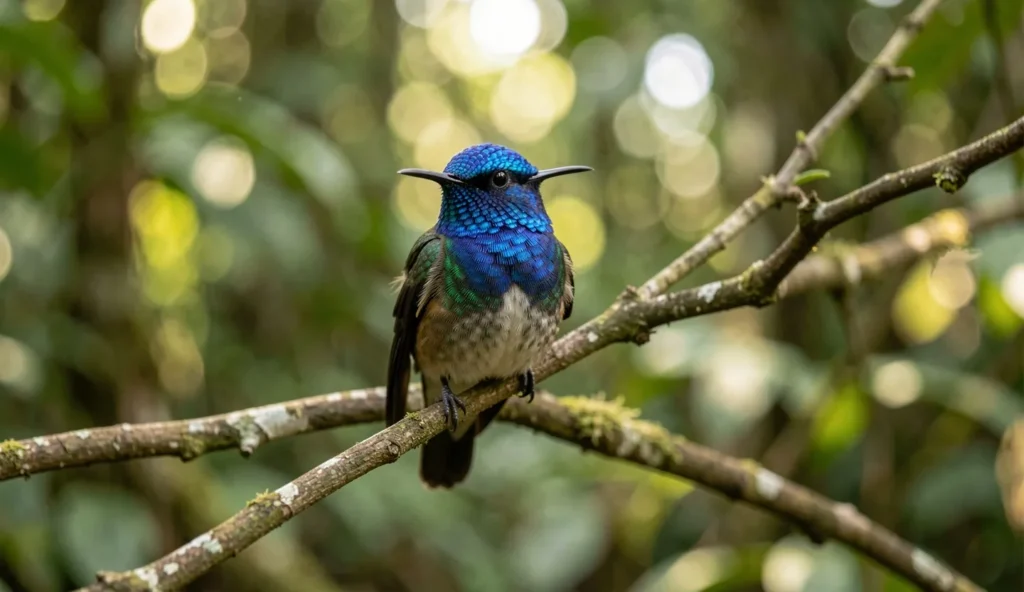
What Is a Green-breasted Mango
The Green-breasted Mango is a tropical hummingbird native to Central America, with occasional sightings in Texas. This small bird is distinguished by its bright green breast and shimmering upperparts, making it a favorite among tropical bird fans and Texas birders who seek novelty in the field, see Broad-tailed Hummingbird.
Origin And Classification
The scientific name is Anthracothorax prevostii and it belongs to the hummingbird family Trochilidae. It is primarily found in Central America with occasional sightings near the Texas border, reflecting its tropical range and partial range into the southern United States.
Species Overview
The Green-breasted Mango is a tropical hummingbird noted for a bright green breast and slender frame. It feeds primarily on nectar from flowering plants and is commonly observed near forests edges, shrubby clearings, and other nectar-rich habitats, similar in diet to the Magnificent Hummingbird.
Appearance And Physical Features
Size And Shape
The Green-breasted Mango measures about 3.5 to 4 inches long, with a compact body and a long slender bill. Like many small hummingbirds, it shows rapid wingbeats that produce the familiar fast darting action, a pattern shared by the Ruby-throated Hummingbird.
Coloration And Beak
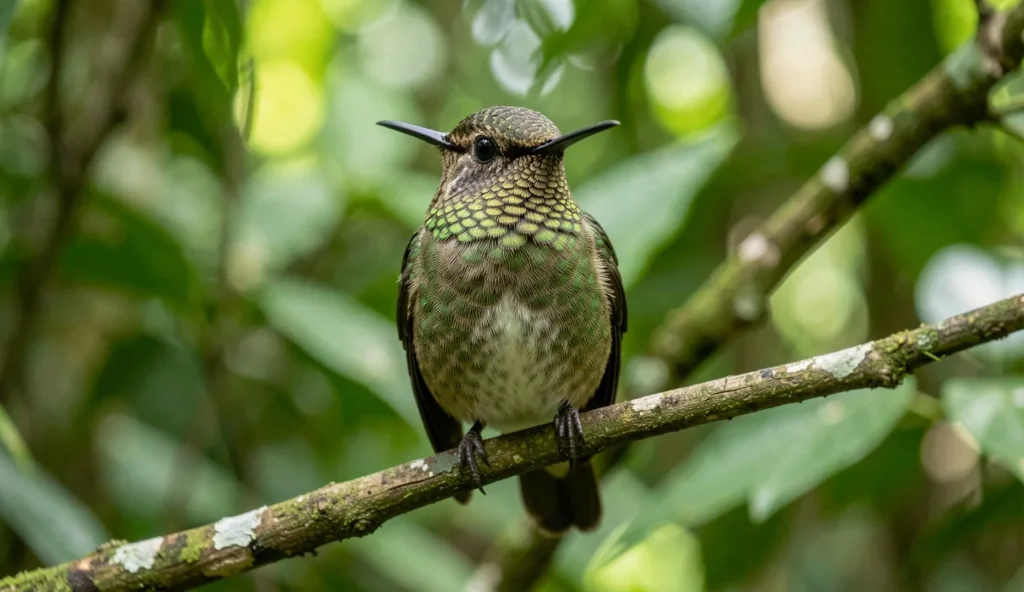
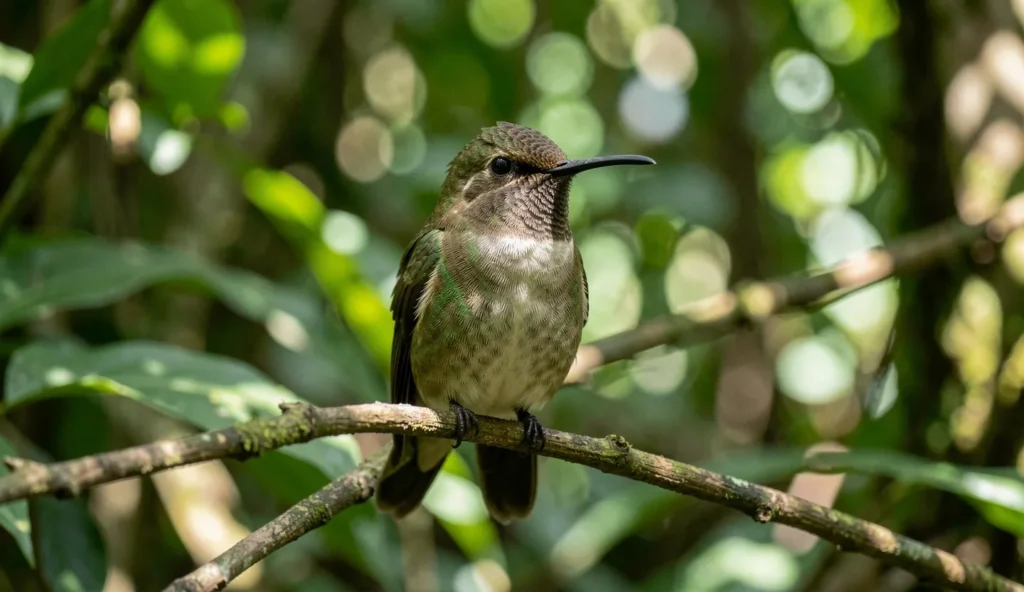
The Green-breasted Mango displays bright emerald green upperparts and a distinctive green breast that gives the species its name. Its curved bill is adapted for nectar retrieval, and, as with other tropical hummingbirds such as the Violet-crowned Hummingbird, enables feeding from narrow blossoms.
Temperament And Personality
Behavior In The Wild
In the wild, the Green-breasted Mango is highly territorial around feeding sites, often pursuing intruders with quick bursts of speed. This behavior helps protect nectar sources essential for its energy needs.
Vocalizations
Vocalizations are soft chirps and buzzes, especially during courtship and feeding bouts.
Social Structure
Typically, individuals forage alone outside of the breeding season, while males defend territories during courtship.
Diet And Nutrition
Natural Diet
The natural diet centers on nectar from tropical flowers, supplemented by small insects for protein and wing maintenance. This combination supports high energy demands during flight.
Nectar Sources
In the wild, nectar comes from a variety of flowering trees and shrubs in tropical habitats. Seasonal shifts in blooms influence which plants provide the most nectar at any time of year.
- Tropical flowers such as heliconia and bromeliads
- Shrubs along forest edges with abundant nectar
- Seasonal blooms shape available nectar sources
Insect Protein
Insects supplement nectar, providing essential amino acids for egg production and growth.
Health Issues And Care
Common Health Concerns
Nectar-related malnutrition can occur if diet lacks variety, and parasites or weight loss may appear with poor nutrition. Respiratory infections are possible but uncommon.
Care And Monitoring
Regularly observe flight ability and energy levels, and watch for noticeable weight changes or a drooped appearance.
Is Green-breasted Mango Right For You
Habitat And Space Needs
The Green-breasted Mango prefers warm tropical environments with abundant nectar sources; in the wild, natural habitat is essential, while captivity requires specialized care and space, similar to the Costa’s Hummingbird.
Legal And Conservation Considerations
Protection status varies by country and region; conservation priorities may restrict ownership of wild hummingbirds.
Observation Versus Ownership
Observation through birdwatching in appropriate habitats is the preferred approach, and ownership of wild hummingbirds is generally discouraged or restricted.
Frequently Asked Questions
Is the Green-breasted Mango native to the United States?
Occasional vagrants are reported near Texas, but the species is native to Central America.
What is the scientific name of the Green-breasted Mango?
Anthracothorax prevostii is the scientific name.
Is it legal to keep a Green-breasted Mango as a pet?
Legal restrictions vary by country and many jurisdictions prohibit keeping wild hummingbirds as pets.
How big is the Green-breasted Mango?
It is a small hummingbird about 3.5 to 4 inches in length.
Final Note
The Green-breasted Mango remains a striking tropical hummingbird that delights observers in suitable habitats. Careful observation and respectful conservation support the species long-term presence in its native range.