Rufous Hummingbird – The Fiery Spirit of the West
Introduction
The Rufous Hummingbird is a tiny yet mighty marvel, known for its bold coloration and fearless attitude. Native to North America, this hummingbird dazzles observers with its rich reddish-orange feathers and astonishing long-distance migrations. In fact, the Rufous Hummingbird holds the record for the longest migration route relative to body size of any hummingbird, traveling from Alaska to Mexico each year. Despite its small size, the Rufous Hummingbird has a big personality and plays a vital role in pollination and ecosystem health.
Natural Habitat and Range
Rufous Hummingbirds breed in the north and migrate to warmer southern regions each year.
- Breeding range: Northwestern U.S., Canada, and Alaska
- Wintering range: Mexico and the southern United States
- Found in open woodlands, meadows, gardens, and mountain slopes
Their migration route spans over 3,000 miles, making them one of the most impressive migrators among hummingbirds. While they share some range overlap with species like the Black-chinned Hummingbird, the Rufous is known for pushing farther north than almost any other hummingbird species.
Physical Characteristics
Rufous Hummingbirds are instantly recognizable by their vibrant colors and dynamic flight:
- Size: About 2.8 to 3.5 inches long
- Weight: 2 to 5 grams (lighter than a nickel!)
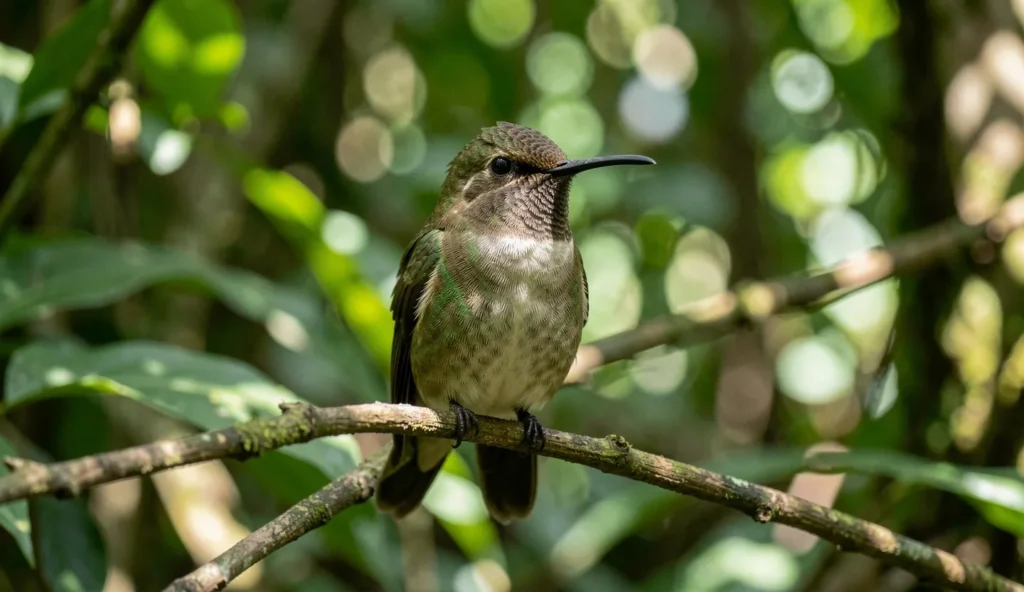
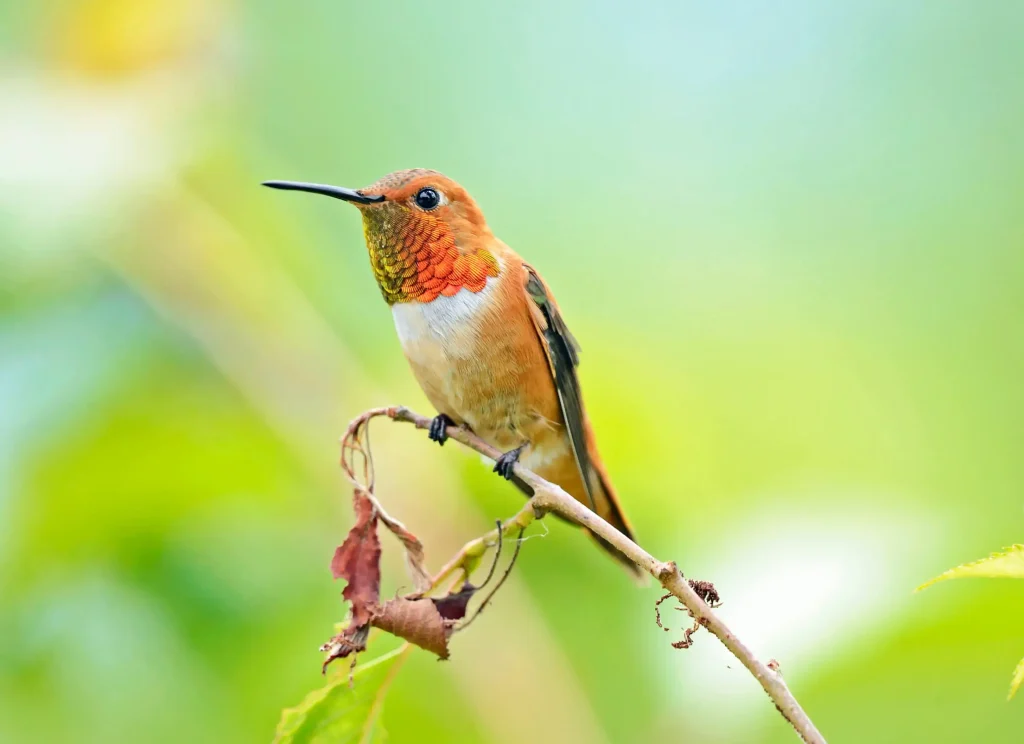
- Male: Bright orange-red back and throat, with iridescent highlights
- Female: Greenish back, white belly, and a touch of orange on the throat
Their vivid coloring shines brightest in sunlight, making them a favorite among birdwatchers and photographers. In terms of size, they are slightly smaller than the Broad-tailed Hummingbird, but their fiery coloration makes them just as easy to spot.
Behavior and Personality
Rufous Hummingbirds are energetic, curious, and not afraid to stand their ground:
- Very territorial—often seen chasing larger birds away from feeders
- Males perform dramatic aerial dives during mating displays
- Communicate with sharp “chip” sounds and wing buzzes
Their bold nature contrasts beautifully with their delicate appearance. This aggressive temperament is similar to that of the Allen’s Hummingbird, another West Coast species known for its feisty personality.
Diet and Feeding Habits
Rufous Hummingbirds are active feeders, constantly seeking fuel for their tiny bodies and long migrations:
- Primary diet: nectar from flowers like columbine, penstemon, and honeysuckle
- Supplements with small insects and spiders for protein
- Frequently visit hummingbird feeders with sugar-water solutions
They are important pollinators and help sustain wildflower populations across their range. A single Rufous Hummingbird may visit hundreds of flowers each day, making them one of the most effective pollinators in their habitat.
Migration and Seasonal Activity
One of the most remarkable features of Rufous Hummingbirds is their migration:
- Travel over 3,000 miles from Alaska to Mexico
- Begin migration early in the year, often arriving in the southern U.S. by February
- Navigate using landmarks and possibly Earth’s magnetic field
This incredible journey makes them one of the most wide-ranging hummingbirds in North America. Unlike the Ruby-throated Hummingbird, which migrates across the Gulf of Mexico, Rufous Hummingbirds follow a land-based route along the Pacific coast and Rocky Mountains.
Nesting and Reproduction
Females are solely responsible for building the nest and raising the young:
- Nests are made from plant down, moss, and spider silk for flexibility
- Typically lay two tiny eggs, each the size of a jellybean
- Incubation lasts about two weeks, with fledging at three weeks
Nests are often built on tree limbs, camouflaged and secure from predators. Females may raise two broods per season in the southern part of their range, taking advantage of the longer warm season.
Conservation and Threats
While currently listed as a species of “Least Concern,” Rufous Hummingbirds face environmental pressures:
- Habitat loss due to urban development and deforestation
- Wildfires and climate change affect their food supply and nesting areas
- Pesticides can poison the insects they rely on for nutrition
Supporting native plants and reducing pesticide use helps protect these incredible birds. Recent studies have shown that some populations have declined by as much as 60% since the 1970s, making conservation efforts more important than ever.
Connection with People
Rufous Hummingbirds enrich human environments with their beauty and charm:
- Attract easily to feeders in spring and summer
- Appreciate native, nectar-rich plants like bee balm and trumpet vine
- Offer amazing photography opportunities with their vibrant feathers
Creating safe, pollinator-friendly spaces at home supports both Rufous Hummingbirds and local biodiversity. A well-maintained feeder can attract these birds year after year, as they develop strong site fidelity to reliable food sources.
Fun Facts About Rufous Hummingbirds
- They hold the record for the longest migration route (relative to body size) among hummingbirds
- Males can flash their iridescent throat feathers to signal dominance
- Their wings beat around 50 times per second
- They can remember specific flower patches from year to year
- Rufous Hummingbirds have been observed flying at speeds up to 30 miles per hour during courtship dives
Frequently Asked Questions
Q1: Do Rufous Hummingbirds return to the same feeder?
A: Yes! These hummingbirds often return to the same gardens or feeders during migration, sometimes arriving on the exact same date year after year.
Q2: How can I help Rufous Hummingbirds during migration?
A: Offer clean sugar-water feeders, plant native flowers, and avoid pesticides to support their journey. Keeping feeders up until you haven’t seen a bird for two weeks ensures late migrants get the energy they need.
Q3: Why are Rufous Hummingbirds so aggressive?
A: Their territorial behavior helps them defend valuable food sources, especially during migration and breeding season. This aggression is an evolutionary adaptation that ensures they have enough energy for their demanding lifestyle.
Q4: What is the lifespan of a Rufous Hummingbird?
A: Most live 3–5 years in the wild, though some have been recorded living up to 8 years. The oldest known Rufous Hummingbird was a female banded in British Columbia that lived to be at least 8 years and 11 months old.
Q5: Are they affected by climate change?
A: Yes, changing bloom times and weather patterns can affect their food availability and nesting success. Warmer springs may cause flowers to bloom earlier, potentially creating a mismatch between migration timing and food availability.
Conclusion
The Rufous Hummingbird is a fiery and fearless symbol of endurance, color, and nature’s brilliance. Its remarkable migration, vibrant personality, and ecological importance remind us that even the smallest creatures deserve our respect and care. By planting native flowers, maintaining feeders, and preserving natural spaces, we can ensure the Rufous Hummingbird continues to light up skies from Alaska to Mexico for generations to come. Whether you are a seasoned birdwatcher or a backyard enthusiast, taking steps to support this species will reward you with one of the most spectacular wildlife experiences North America has to offer.