Allen’s Hummingbird – A Tiny Fireball of the West Coast
Introduction
With wings that beat up to 80 times per second and a heart that races over 1,200 times per minute, the Allen’s Hummingbird is a dazzling, energetic bird that lights up the gardens and coastal areas of the western United States. Known for its coppery-orange feathers and zippy flight, this tiny species is admired for its beauty, boldness, and unique behaviors. Despite its small size, the Allen’s Hummingbird plays a big role in local ecosystems as a key pollinator. For those interested in other fiery hummingbird species, the Rufous Hummingbird shares a similar bold temperament and striking coloration.
Natural Habitat and Distribution
Allen’s Hummingbirds are primarily found along the coastal regions of California and southern Oregon. Their range includes:
- Urban gardens and parks
- Coastal forests and thickets
- Wildflower-filled meadows and canyons
They are seasonal migrants, with some populations wintering in central Mexico. While they prefer coastal habitats, they can also be found in inland areas with sufficient nectar sources.
Physical Features
Allen’s Hummingbirds are often confused with Rufous Hummingbirds due to their similar coloring, but they have some distinctive features:
- Size: 3 to 3.5 inches long
- Weight: Around 2 to 3 grams
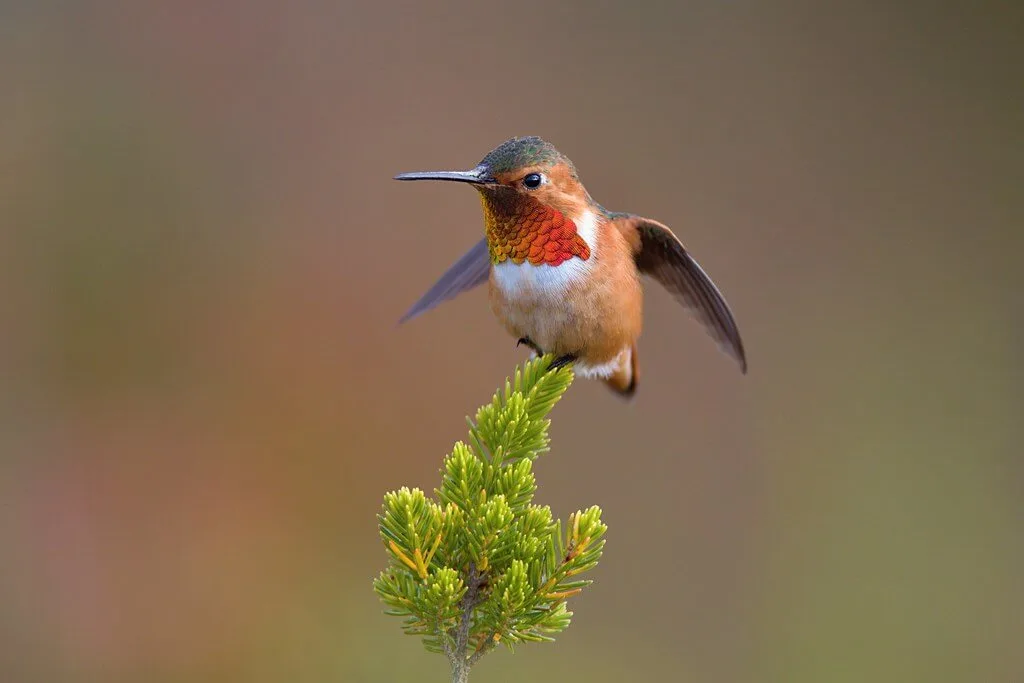
- Male: Bright orange body, shimmering green back, and a fiery red-orange throat
- Female: Green back, pale underparts with some orange on the sides
Their rapid wingbeats make a buzzing sound as they hover or zip through the air. Unlike the similar-looking Rufous Hummingbird, Allen’s Hummingbirds have a green back and narrower tail feathers, which helps with identification.
Feeding Habits
These hummingbirds are excellent pollinators and rely on a varied diet:
- Nectar from native flowers like fuchsia, salvia, and monkeyflowers
- Tiny insects and spiders for protein
- Sugar-water from clean hummingbird feeders (no red dye)
They are especially aggressive in guarding their food sources—even from larger birds! To attract them to your yard, plant a mix of native flowering plants and maintain clean feeders, as these birds often return to reliable food sources year after year.
Personality and Behavior
Allen’s Hummingbirds may be small, but they have bold personalities:
- Males are highly territorial, especially during the breeding season
- Courtship includes fast, looping display flights and buzzing sounds
- Defend feeders and flowering plants from other hummingbirds
They often return to the same feeding and nesting sites year after year. Their fearless nature makes them a delight to watch, though they can be quite demanding when it comes to protecting their territory.
Nesting and Breeding
Female Allen’s Hummingbirds are responsible for nest building and raising the young:
- Nests are tiny and built from soft plant fibers, feathers, and spider silk
- Typically lays 2 small white eggs
- Chicks hatch after 15–17 days and fledge about 3 weeks later
Nests are usually well-hidden in shrubs or trees, providing warmth and protection. The female may raise two broods per season in favorable conditions, especially in southern parts of their range.
Migration Patterns
While some Allen’s Hummingbirds remain year-round in southern California, others migrate:
- Northern populations travel over 1,000 miles to winter in Mexico
- Return to California by early spring, following blooming flower trails
They are among the earliest migratory hummingbirds to arrive in the U.S. each spring, often beating other species like the Black-chinned Hummingbird to northern breeding grounds.
Conservation and Threats
Allen’s Hummingbirds face several environmental pressures:
- Habitat loss from urban development and agriculture
- Climate change is altering blooming times and food availability
- Use of pesticides that reduce insect populations
Supporting native plant growth and reducing chemical use helps sustain healthy populations. Conservation efforts are especially important in coastal California, where development continues to encroach on their natural habitat.
Connection with People
Allen’s Hummingbirds are a favorite among birdwatchers and gardeners:
- Easily attracted by native flowering plants and feeders
- Often photographed for their vibrant colors and aerial acrobatics
- Serve as ambassadors for pollinator awareness and environmental education
Encouraging responsible observation supports both learning and conservation. For those who enjoy watching hummingbirds, the Anna’s Hummingbird is another West Coast species that shares similar habitat preferences and can often be seen in the same gardens.
Fun Facts About Allen’s Hummingbirds
- Named after naturalist Charles Andrew Allen
- Males perform “pendulum” flight displays to attract mates
- Visit over 1,000 flowers a day while feeding
- Can remember every flower they’ve visited in a day
Frequently Asked Questions
Q1: How do you tell an Allen’s Hummingbird from a Rufous Hummingbird?
A: Allen’s Hummingbirds have a green back and narrower tail feathers, while Rufous Hummingbirds typically have a copper-colored back. Identification can be tricky and may require close observation. The Broad-tailed Hummingbird is another species that can be confused with these two, though it has a distinct wing trill during flight.
Q2: What is the best way to attract Allen’s Hummingbirds?
A: Plant native flowers rich in nectar and use clean hummingbird feeders. Avoid pesticides to keep their food sources healthy. Providing a water source like a mister can also help attract them, especially during dry summer months.
Q3: Are Allen’s Hummingbirds endangered?
A: No, but they are considered Near Threatened due to habitat loss and environmental pressures. Conservation efforts help protect their future. Recent studies show that populations in southern California have declined by up to 30% in some areas over the past decade.
Q4: Do both sexes migrate?
A: Yes, both males and females migrate, though timing may differ slightly depending on their roles during the breeding season. Males typically depart first, leaving females to finish raising the young before heading south.
Q5: Can they survive in cities?
A: Yes, they can adapt to urban environments as long as there are sufficient nectar sources and safe nesting areas. Urban gardens with native plants can provide excellent habitat, and many birders report seeing them regularly in city parks and suburban backyards.
Conclusion
The Allen’s Hummingbird may be small, but its role in pollination and ecosystem health is mighty. With its brilliant orange hues, acrobatic flight, and dedicated nature, this West Coast gem continues to inspire awe and wonder. By creating pollinator-friendly spaces and protecting native habitats, we can ensure the continued presence of these vibrant birds for generations to come. Whether you are a seasoned birder or a casual gardener, taking steps to support Allen’s Hummingbirds enriches your local environment and brings a flash of fiery color to your day.