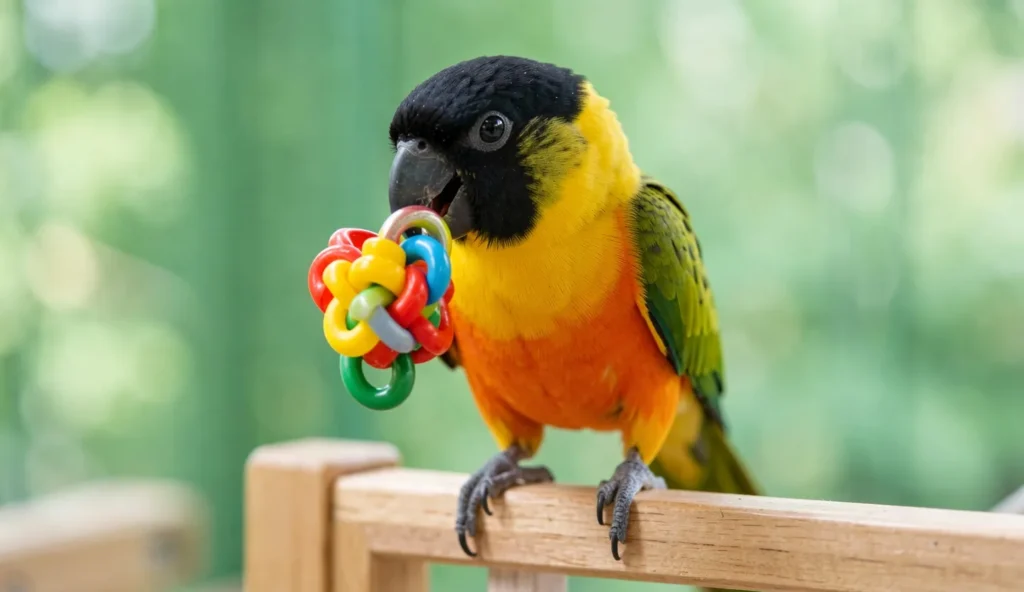
What Is a Black Headed Caique
The Black Headed Caique, scientifically known as Pionites melanocephalus, is a small to medium parrot native to the Amazon Basin in South America. This species belongs to the genus Pionites, which includes only two caique species, the other being the White Bellied Caique. A Black Headed Caique is easily recognized by its stark black cap, bright yellow neck, and orange belly. These birds inhabit lowland forests and swampy areas in countries like Brazil, Colombia, Ecuador, and Peru. Their energetic and comedic personality makes them one of the most entertaining parrots to keep as pets.
Appearance and Physical Features
Size and Weight
Black Headed Caiques are stocky, short-tailed parrots that measure 23 to 25 centimeters in length. They weigh between 150 and 170 grams, with a compact, robust body. Their build is noticeably different from the slender shapes of other medium parrots. The short tail gives them a rather round silhouette when perched.
Color Markings
The most distinctive feature of the Black Headed Caique is the black crown and forehead that contrast sharply with a white chest and belly. The back and wings are bright green, while the thighs and underwing coverts display a vivid yellow. Below the white chest, the lower belly and vent area turn a deep orange. Unlike many parrots, male and female Black Headed Caiques look identical, so genetic testing is required for sex determination. In comparison, the Eclectus Parrot shows extreme sexual dimorphism where the male is green and the female red, but caiques offer no such visual clues.
Temperament and Personality
Energy Levels
The Black Headed Caique is one of the most active parrots in the pet trade. These birds rarely sit still and spend their waking hours hopping, rolling, and hanging upside down from perches. Their clownish behavior includes bouncing on cage tops and flipping toys. Owners often describe them as perpetual motion machines. This high energy makes them a perfect match for owners who want a lively, interactive companion.
Social Needs
Caiques form intense bonds with their owners and demand daily interaction. They thrive on play and attention and can become nippy if left alone for long periods. A bored Black Headed Caique may develop screaming habits or feather destructive behavior. Providing consistent socialization is essential. Similar to the Senegal Parrot, which also bonds closely with one person, the Black Headed Caique requires an owner who can dedicate several hours each day to interaction. They are not a hands-off pet and do best with intermediate or experienced bird owners.
Exercise Requirements
Playful Behavior and Enrichment
Because of their boundless energy, Black Headed Caiques need a large cage measuring at least 24 x 24 x 36 inches with bar spacing between 0.5 and 0.75 inches. The cage must be filled with multiple perches, swings, and plenty of toys. Puzzle toys, foot toys, and bells are especially engaging. Owners should rotate toys weekly to maintain the bird’s interest. Foraging opportunities, such as shredded paper or cardboard boxes, stimulate natural exploration.
Recommended Activities
These birds require a minimum of three to four hours of supervised out-of-cage time every day. During this time they enjoy climbing on play stands, chewing on wooden blocks, and chasing small balls. Providing a play gym or a bird-safe tree branch encourages exercise. Unlike larger macaws, caiques prefer hopping and climbing over flying, so a secure play area with horizontal surfaces works well. The Green Cheek Conure also enjoys active play but the Black Headed Caique demands even more intense physical engagement.
Training
Basic Commands
Training a Black Headed Caique relies on positive reinforcement with very short sessions of five to ten minutes. Step up and recall are the first commands to teach. Use small treats such as sunflower seeds or pieces of fruit as rewards. These birds are intelligent but can be stubborn, so patience is key. Keep training sessions fun and end on a positive note. Consistency builds trust and reduces unwanted behavior.
Managing Nipping
Nipping is common in caiques, especially when they are overexcited or seeking attention. Never react with anger or punishment, as this encourages more biting. Instead, offer a toy as an alternative target to chew. Redirect the bird toward acceptable objects. With consistent redirection, most caiques learn to control their beak. Avoiding rough play with hands also prevents accidental nips. The Umbrella Cockatoo is another species that can develop nipping habits, but caiques generally respond well to gentle, consistent training.
Grooming and Care Tips
Bathing
Black Headed Caiques enjoy bathing and should be offered a shallow water dish or a gentle misting two to three times per week. Use room temperature water and allow the bird to bathe at its own pace. Bathing helps maintain feather condition and prevents dry skin. Some caiques prefer to bathe in a water bowl, while others enjoy a spray bottle.
Nail and Beak Care
Nails require trimming every four to six weeks. Provide a cuttlebone and mineral blocks to help the bird naturally wear down its beak and nails. If the beak overgrows, consult an avian veterinarian for a professional trim. Rough or unsuitable perches can lead to pressure sores, so include a variety of natural wood perches of different diameters. Regular inspection of feet and mouth keeps the bird healthy.
Diet and Nutrition
Staple Foods
A balanced diet for a Black Headed Caique consists of 60 to 70 percent high-quality pellets. Supplement with fresh vegetables such as leafy greens, bell peppers, carrots, and broccoli. Fruits like apple, papaya, and berries can be offered in small amounts as treats. Seeds and nuts should be limited to no more than 10 percent of the total diet to avoid obesity.
Foods to Avoid
Avocado, chocolate, caffeine, and alcohol are toxic to caiques and must never be given. Highly salted, sugary, or fried human foods cause serious health problems. High-fat seeds such as sunflower seeds should be used sparingly, only as training rewards. Avoid feeding any fruit pits or apple seeds that contain cyanide. Always wash fresh produce thoroughly before serving.
Feeding Schedule
Offer fresh food twice daily, once in the morning and once in the evening. Remove uneaten produce after two hours to prevent spoilage. Provide constant access to clean, fresh water. The African grey parrots require a similar pelleted base, but caiques need a slightly higher proportion of pellets versus veggies due to their different metabolic needs. Adjust portions based on the bird’s activity level and body condition.
Common Health Issues
Behavioral Issues
Feather plucking often results from boredom, stress, or inadequate social interaction. Screaming can develop if the bird feels neglected. Obesity is a risk when the diet contains too many seeds or fatty treats. Regular exercise and a structured routine prevent most behavioral problems. Early intervention is crucial; once plucking becomes a habit it is hard to reverse.
Medical Concerns
Black Headed Caiques are susceptible to aspergillosis, a fungal respiratory infection, especially in damp or dusty environments. Psittacosis (parrot fever) can occur if hygiene is poor. Pododermatitis, or bumblefoot, results from standing on dirty or inappropriate perches. Annual veterinary checkups help detect these conditions early. Provide clean cage liners and varied perch textures to reduce foot issues.
Is a Black Headed Caique Right for You
This species suits owners who have time for several hours of daily interaction and can provide a large, toy-filled environment. They are moderately noisy but not as loud as larger parrots like the macaw parrots. Apartment living is possible with proper soundproofing, but their energy may overwhelm quiet households. Those who want a more independent bird might consider cockatiels parrots instead. A Black Headed Caique offers unmatched entertainment but demands commitment.
Frequently Asked Questions
How much playtime does a Black Headed Caique need each day?
At least three to four hours of supervised out-of-cage play is required, plus constant access to toys and foraging activities during cage time.
What is the best diet for a Black Headed Caique?
A high-quality pellet diet should make up 60 to 70 percent of the food, supplemented with fresh vegetables, fruits, and limited seeds.
Are Black Headed Caiques good for beginners?
No, they are high-energy and demand lots of interaction, making them best suited for intermediate owners with time and patience.
Do Black Headed Caiques talk or mimic sounds?
They are not known for extensive talking but can learn a few words and often mimic whistles and household sounds like phone rings.
How can I prevent my Black Headed Caique from nipping?
Provide plenty of toys, avoid hand roughhousing, use redirection when biting occurs, and reward calm behavior with treats.
What size cage does a Black Headed Caique require?
The minimum cage dimensions are 24 x 24 x 36 inches, with bar spacing of 0.5 to 0.75 inches to prevent escape or injury.
Final Note
Owning a Black Headed Caique is a rewarding experience for those prepared to match their energy and social needs. With proper diet, enrichment, and veterinary care, these parrots bring years of laughter and companionship. They thrive in homes that treat them as active family members rather than ornamental pets.