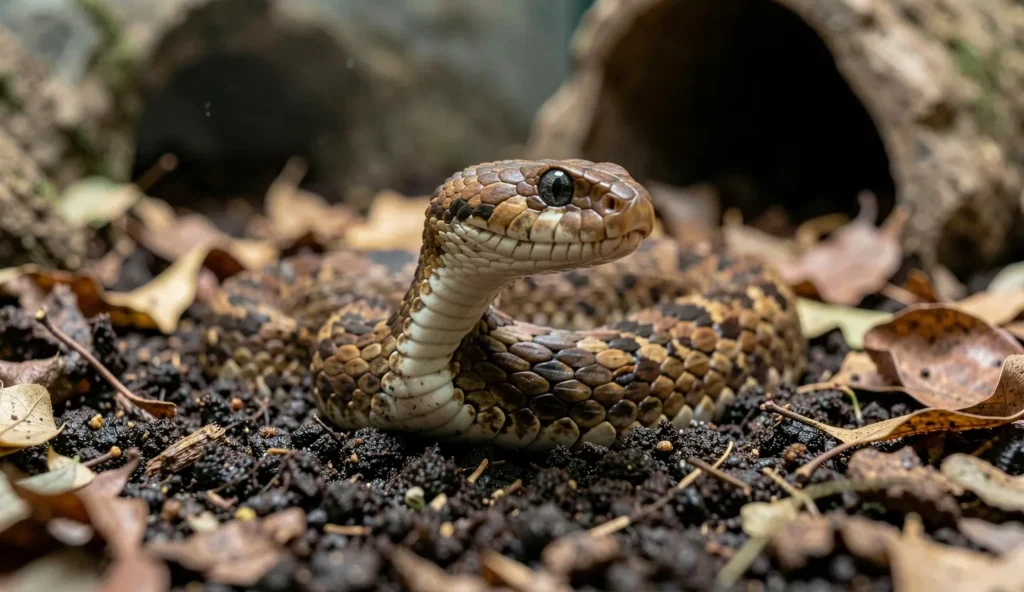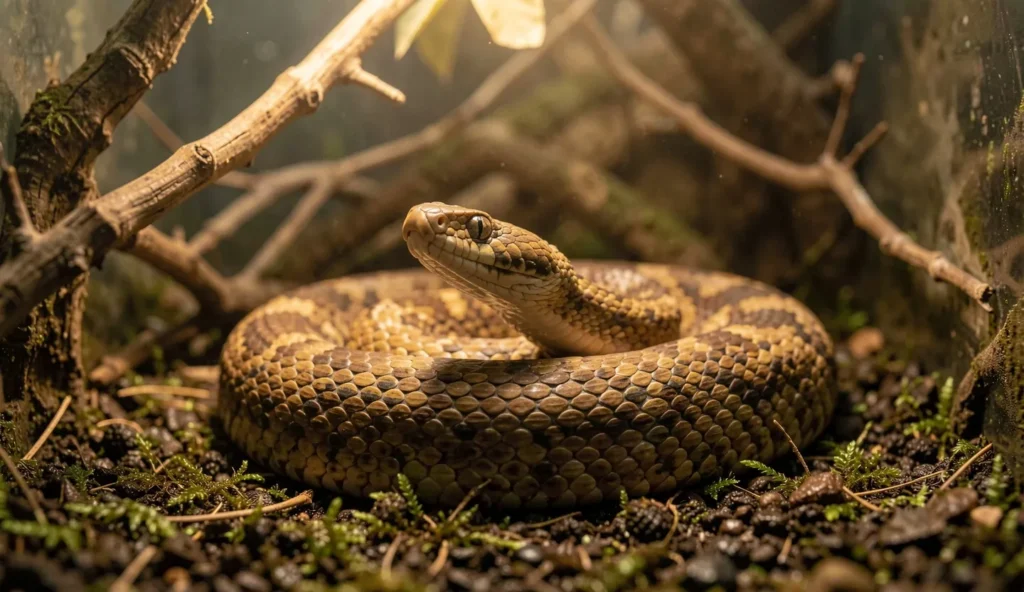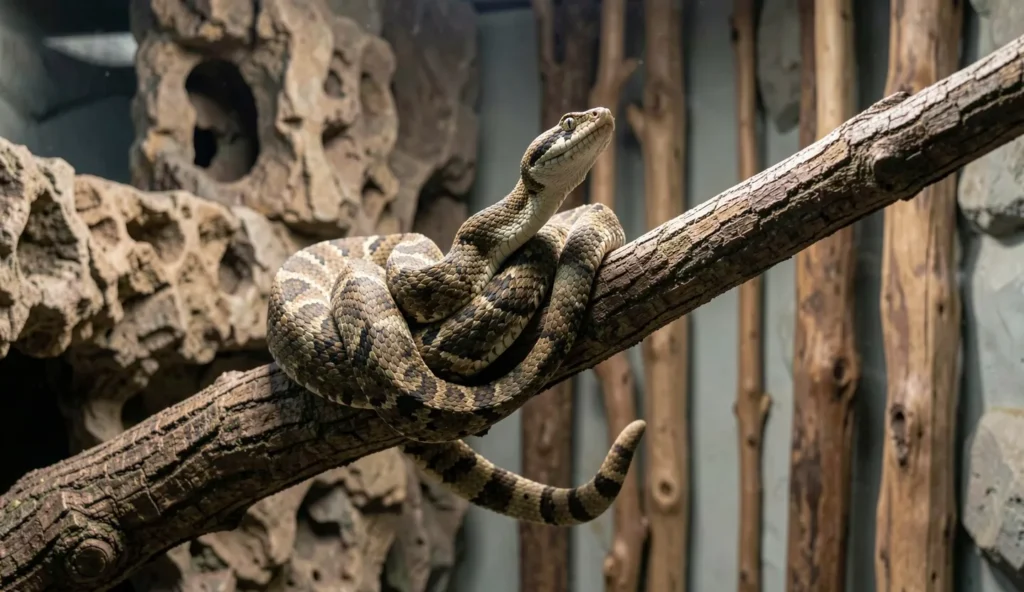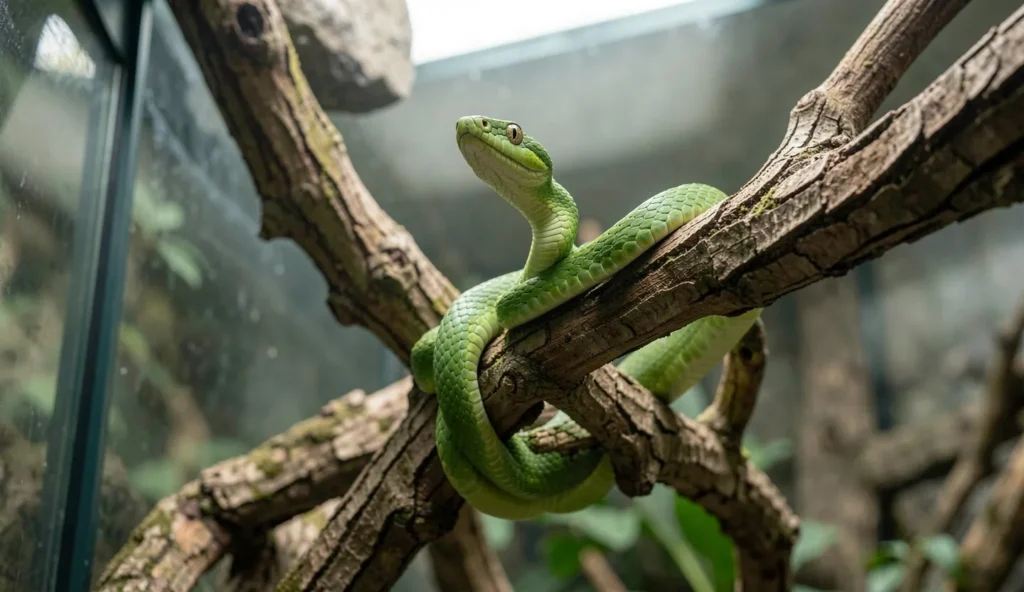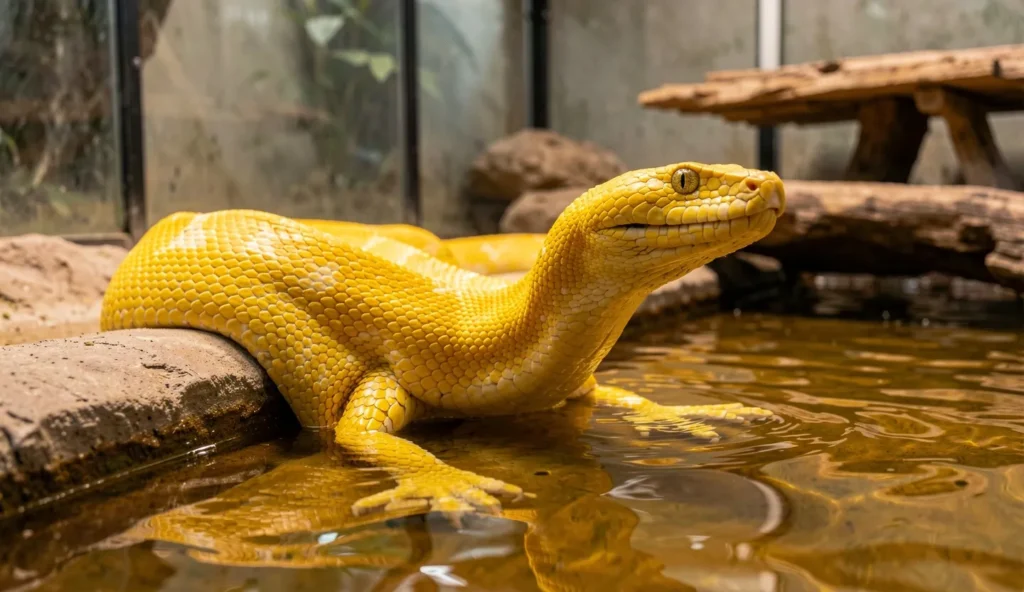
What Is A Yellow Anaconda?
Yellow Anaconda is a large, semi aquatic constrictor that comes from South America and spends much of its time in water and along muddy banks. In captivity, the same lifestyle makes the setup demanding, especially when space and water quality are managed at adult scale. A strong swimming drive and heavy feeding needs also shape daily care routines.
Because the species requires deep water features, a typical small reptile enclosure does not work. Instead, Yellow Anaconda care focuses on thermal stability, filtration capacity, and predictable access to both land and water zones.
Species Traits That Affect Care
- Semi aquatic lifestyle with strong swimming behavior
- Large body and heavy feeding drive
- Thermoregulation depends on warm water and air
These traits mean the animal is not just “kept” in an enclosure, it actively uses water for movement and digestion support. When warm water becomes inconsistent, appetite and activity often drop. Therefore, enclosure planning must treat water and land as one combined system.
Also, the body shape creates practical challenges for owners, including thick girth that limits maneuvering in tight corners. For safety, a long access path and secure handling zones matter as much as heat and humidity.
Typical Captive Expectations
- Expect long term commitment with high enclosure requirements
- Plan for waste management and water quality testing
- Provide secure handling areas due to size and strength
Yellow Anaconda enclosures require ongoing maintenance rather than occasional spot care. Filtration, cleaning, and water parameter checks become weekly responsibilities that cannot be postponed. In many homes, successful care also depends on having enough electrical capacity for heating and filtration.
Meanwhile, stress reduction stays practical through consistent rhythms for feeding, cleaning, and access. Similar large constrictor species share some handling safety concerns, so reviewing secure approaches used for King Snake care can help owners think through restraint time and transfer handling.
Yellow Anaconda Size And Growth Expectations
Yellow Anaconda size planning should start with adult scale, not just the current length at purchase. Although genetics and prey quality influence growth, thick girth becomes the limiting factor for enclosure width and water turnover. A good plan also accounts for the cost and labor of upgrades, since temporary housing often delays proper long term setups.
For advanced aquatic enclosures, owners benefit from measuring available floor space, water volume, and power capacity before deciding on a keeper schedule. In addition, feeding capacity must match the snake’s changing body condition and metabolism over time.
How Large Yellow Anacondas Get
- Adult size varies by locality, genetics, and diet
- Long length and thick girth drive enclosure scale
- Growth rate often slows with age
In practice, Yellow Anaconda size ranges widely between individuals, so a single “target” number rarely fits every keeper plan. Instead, enclosure scaling works best when built around the thickest body expectations and the longest swim lane that can be provided. Nutrition influences growth, but overfeeding also increases health risk and water contamination.
Because growth often slows with age, the most important upgrade is frequently the water feature scale and basking access. Feeding strategy should also adjust as weight stabilizes to avoid oversized rations that strain filtration.
Space Planning From Juvenile To Adult
- Avoid frequent enclosure upgrades when possible
- Increase swimming depth and basking area as girth grows
- Use temporary holding only for short transitions
Temporary housing can work for short transitions, but long term reliance increases stress and maintenance load. When upgrades happen often, water treatment and temperature calibration also restart from scratch. Therefore, planning for adult scale early often reduces repeated cycles of cleaning and equipment testing.
In the same way that some keepers plan more manageable aquatic setups for Rosy Boa, the best results come from designing one strong system rather than repeating smaller versions. However, the scale for Yellow Anaconda remains far larger and more equipment intensive.
How Big Should a Yellow Anaconda Enclosure Be?
How big a Yellow Anaconda enclosure should be depends on both swim space and water depth, not just length measurements. Semi aquatic housing needs a water feature deep enough for full body immersion and stable movement. At the same time, the land area must support safe basking, hiding, and access for cleaning.
Enclosure sizing also affects air stability, since larger systems hold temperature and humidity more consistently. If an enclosure runs cold or uneven, the snake often chooses water less or becomes more difficult to manage.
Minimum Footprint And Room To Swim
- Scale enclosure size to adult length and body girth
- Prioritize longer swim lanes over decorative space
- Allow turning radius and stable footing near edges
A longer swim lane supports natural movement and reduces repeated body contact with barriers. When turning space is tight, stress may show as restless repositioning or reluctance to use the water feature. A sturdy edge structure also helps the snake transition between wet and dry zones.
Even for advanced keepers, it helps to build for worst case movement patterns. A Yellow Anaconda is heavy, and support surfaces must handle shifting weight without warping. That same logic appears in other large snakes, including care planning considerations discussed in Bull Snake behavior and handling tips.
Water Feature Requirements For Semi Aquatic Housing
- Provide deep enough water for full body immersion
- Use filtration matched to enclosure volume and feeding load
- Include a gradual entry area for safe movement
Deep immersion supports normal thermoregulation and activity, but it also increases waste load and water chemistry demands. Filtration must match both total water volume and expected feeding events. For owners using advanced aquatic setups, water changes and parameter testing remain routine rather than emergency repairs.
Gradual entry areas also reduce slipping and help the snake feel secure. When entry is steep, the animal can hesitate near the edge, and that reduces exposure to basking heat.
Land Area, Basking Spots, And Microclimates
- Create a dry basking zone beside the water
- Offer at least one secure hide in warm and cool sides
- Maintain consistent surface temperatures across the basking area
Land zones should sit adjacent to water so transitions require minimal effort. Basking spots need to create stable surface temperatures that do not fluctuate widely during the day. Microclimates matter because the snake needs both warmer areas for activity and cooler retreats for safe recovery.
In many setups, owners also use visual barriers and secure hide placement to reduce stress. If hide access depends on the water edge, keepers must ensure the path stays dry enough for safe entry and exit during cleaning.
Substrate, Drainage, And Waste Management
- Choose substrates that can be removed and cleaned effectively
- Plan for drainage and easy water replacement cycles
- Separate feeding stations from cleaning zones when feasible
Substrate choice affects how quickly waste spreads and how easily the enclosure can be restored after feeding. Drainage planning reduces stagnant zones where debris collects. When waste remains trapped, ammonia buildup rises and water clarity drops even with strong filtration.
Feeding stations should reduce contact between leftover prey and the main water area when possible. Owners sometimes stage feeding so the snake eats safely and then returns to the water after the heaviest contamination risk passes.
Safety And Escape Prevention
- Use locking lids and secure door mechanisms
- Use sturdy materials that resist water warping
- Provide handling access without stressing the water feature
Escape prevention becomes a core part of Yellow Anaconda enclosure setup because large constrictors create strong pulling force. Locking mechanisms must stay functional even in damp conditions, since corrosion and swelling can weaken latches over time. Sturdy construction also helps keep heated surfaces stable and reduces condensation near electrical components.
Because semi aquatic snakes also test edges during movement, water resistant materials matter. Equipment placement should keep cords and controls away from splashes and possible head contact.
Yellow Anaconda Temperature, Humidity, And Lighting Needs
Temperature, humidity, and lighting determine how well Yellow Anaconda processes food and manages shedding. In a large aquatic enclosure, heat must support both land basking and active swimming behavior. Humidity also changes with water surface area, so monitoring must reflect real conditions rather than assumptions.
Instead of focusing only on one thermostat target, keepers should treat the enclosure as a combined thermal zone. When either water or land drops in temperature, the snake often compensates by changing where it spends time.
Heating Layout For Water And Land
- Heat land basking with reliable surface temperature control
- Keep water warm enough for active swimming and digestion support
- Avoid hot spots directly against the water surface
Surface temperature control on land supports more predictable basking behavior and helps maintain consistent digestion. Water heating should support movement without creating extreme gradients near entry points. Hot spots can increase stress and encourage uneven skin drying patterns.
Electrical components must stay protected from splashes, and cords should route through sealed points. Owners who plan heat placement carefully also reduce the risk of sudden temperature dips during maintenance.
Humidity And Evaporation Control
- Maintain humidity appropriate for shedding and skin health
- Use ventilation that does not crash humidity levels
- Monitor with calibrated hygrometers
Humidity depends on water surface area, ventilation, and room airflow, so it can change quickly when doors open during cleaning. Calibrated hygrometers help identify real humidity levels rather than guessing based on water appearance. Stable humidity reduces the chance of stuck shed around eyes and tail areas.
Evaporation control also supports electrical safety and enclosure stability. When humidity drops, shedding cycles can drag longer, which increases retained shed risk and the need for careful humid hide use.
Lighting Considerations For A Large Aquatic Setup
- Use lighting to support day night cycles, not to overheat
- Keep electrical components protected from splashes
- Confirm basking zone temperatures do not exceed safe limits
Lighting supports a consistent day night rhythm and helps keep feeding and activity patterns predictable. However, the basking surface temperature should come from controlled heating rather than uncontrolled light intensity. When lighting creates excess heat, owners can lose temperature balance across the enclosure.
Protecting fixtures from splashes reduces failure risk. Over time, a lighting plan that prioritizes safe placements also improves long term maintenance reliability.
Yellow Anaconda Diet And Feeding Schedule
Yellow anaconda diet planning must consider both prey size and the effect of feeding on water quality. Whole prey feeding often works best for a constrictor that hunts and swallows as a complete meal. Yet leftovers and waste can quickly change water chemistry in a semi aquatic enclosure.
For advanced keepers, feeding becomes a structured task that ties into filtration capacity, temperature stability, and body condition tracking. Overfeeding also strains digestion, which can trigger regurgitation risk.
What Yellow Anacondas Eat In Captivity
- Offer appropriately sized whole prey items
- Select prey size relative to girth and swallowing ability
- Use consistent prey sources to reduce feeding problems
Yellow Anaconda diet typically focuses on whole frozen thawed prey offered at sizes that match swallowing capability. Prey items should be neither too small, which can lead to inconsistent growth, nor too large, which can cause feeding difficulty. Consistent prey sourcing also reduces unexpected refusal patterns.
Feeding decisions should connect to the snake’s current girth and post meal comfort. When prey size increases, keepers should watch stool output, body condition changes, and how quickly the snake returns to normal activity.
For keepers expanding knowledge across large constrictors, comparing prey preparation notes from Ball Python care can help refine thawing consistency, even though the size and water handling differ.
Feeding Frequency For Growing And Mature Snakes
- Juveniles usually need more frequent feedings than adults
- Adjust schedule based on growth and body condition
- Avoid overfeeding that strains water and filtration systems
Feeding frequency changes with age, and growth rate often slows as the snake matures. Owners should use body condition as the main guide rather than rigid calendar intervals. A schedule that ignores weight trends often results in overfeeding.
Water temperature also plays a role in digestion success. When water stays too cool, the snake may digest slowly, which can increase stress and extend the time contaminants affect water quality.
Feeding In A Semi Aquatic Enclosure
- Feed with a plan to reduce contaminated water from leftovers
- Consider feeding schedules that align with filtration capacity
- Remove uneaten prey promptly to protect water quality
Feeding inside the enclosure can be convenient, but it increases contamination risk because prey fluids and waste enter the water. Many owners reduce this by planning feeding timing and using spot cleaning right after meals. If uneaten prey remains, water quality can shift quickly.
Some keepers prefer feeding in a controlled area, then allowing the snake to return once swallowing finishes. Either method works when it protects the water feature and prevents long contact between uneaten material and pooled water.
Water Quality And Health After Meals
- Track ammonia and nitrate levels after heavy feeding
- Keep pH stable to avoid stress during digestion
- Use spot cleaning after feeding sessions
After feeding, the main goal is stable water chemistry to protect skin health and reduce respiratory risk. Monitoring ammonia and nitrate helps detect problems early, since large meals increase waste load. Stable pH also supports comfort during digestion.
Spot cleaning reduces debris that breaks down into harmful byproducts. When water changes happen on a predictable schedule, the enclosure becomes easier to manage for both filtration and heating systems.
Yellow Anaconda Temperament And Handling Techniques
Yellow anaconda temperament in captivity often includes strong defensive and feeding responses due to its muscular build. Owners should assume the snake can react quickly, especially when the animal associates human presence with feeding. At large size, handling risks increase even for experienced keepers, so calm technique and planning matter.
Safe handling focuses on reducing stress and limiting restraint time. It also relies on stable enclosure conditions, since cold temperatures or poor water quality often increase defensiveness.
Understanding Yellow Anaconda Temperament
- Often strong and muscular with powerful defensive responses
- Response can vary based on age, feeding status, and prior handling
- Stress signs may include rapid movement and defensive posture
Yellow Anaconda temperament can shift after a feeding, during shedding, or when water temperatures change. A snake that feels secure in its warm, clean environment often shows calmer movement. Meanwhile, changes in routine can increase defensive behavior.
Because large aquatic snakes rely on water for regulation, stress can also appear as frantic repositioning near edges. Comparing handling priorities across other constrictors, such as King Snake care, helps reinforce the need for predictable movements and reduced chaos.
Safe Handling Steps For Large Snakes
- Handle with support to reduce body stress
- Use calm, predictable movements and minimize restraint time
- Schedule handling when the snake is fully awake and stable
Supporting the body reduces strain and helps prevent sudden thrashing. Transfers between enclosure zones should avoid dragging, especially across wet surfaces where footing can shift. Restraint time should stay as short as possible.
Handling should happen when the snake is stable and warm enough to move normally. If the animal seems sluggish or refuses movement, it usually indicates environmental stress or digestion aftereffects.
When To Skip Handling And Focus On Enclosure Care
- Avoid handling during shedding or after a recent meal
- Do not handle if water quality is unstable or temperature is off
- Use enclosure based observation when health is uncertain
Skipping handling supports healing and reduces stress during sensitive cycles. Shedding can create friction risks around eyes and tail, so the best approach is to let the snake manage it privately. After feeding, digestion should proceed without disturbance.
If water parameters or temperature targets fall out of range, the enclosure becomes the priority. Many owners notice that improved stability helps behavior improve, much like the way Rosy Boa care emphasizes temperature consistency for stable routines.
Grooming, Cleaning, And Enclosure Maintenance
Grooming for Yellow Anaconda is less about brushing and more about keeping water and surfaces clean. Cleaning routines directly support skin health, shedding success, and respiratory comfort in a semi aquatic environment. A predictable maintenance schedule reduces the chance of ammonia buildup and harmful bacterial growth.
Because waste load comes from feeding and natural activity, maintenance must align with the enclosure’s filtration capacity and water volume.
Daily And Weekly Cleaning Tasks
- Remove waste quickly to reduce ammonia buildup
- Rinse and check basking surfaces and hides
- Inspect water clarity and filter flow rate
Daily waste removal reduces breakdown products that can irritate skin. Weekly surface rinses help keep basking areas safe and reduce residue that dries onto contact points. Checking water clarity and filter flow also reveals early issues with blockages or pump performance.
During these checks, keep hands and tools away from the water feature if the snake is actively using it. Separation of cleaning and feeding areas improves safety and lowers the chance that the snake experiences sudden disturbances.
Filter Care And Water Change Planning
- Use a filter schedule that prevents bacterial die off
- Test water parameters regularly after any changes
- Keep backup parts for high demand filtration
Water filtration must run consistently, since interruptions can destabilize beneficial bacteria. Filter cleaning should follow a schedule that preserves biological filtration rather than washing everything at once. Parameter testing after filter changes confirms whether stability persists.
Water change planning should match the feeding schedule and waste output. When water changes happen in predictable cycles, heat and filtration remain stable, which supports a healthier environment. Similar parameter planning is also emphasized in Ball Python care practices, though the causes and volumes differ.
Shedding Support And Skin Health Checks
- Maintain stable humidity and provide a humid hide if needed
- Avoid abrasive cleaning during shed cycles
- Watch for retained shed around eyes and tail tip
Stable humidity helps the shedding process complete without stuck areas. A humid hide offers a controlled microclimate, especially when the enclosure environment trends dry. During shed cycles, cleaning should stay gentle to avoid disturbing fragile skin.
Skin checks should focus on retained shed around eyes and the tail tip. If retained shed appears, owners should handle intervention carefully and prioritize correct humidity levels rather than aggressive rubbing.
Common Health Issues In Yellow Anacondas
Common health issues in Yellow Anaconda often link back to water quality, temperature stability, and feeding management. Semi aquatic housing can amplify risk because poor filtration affects skin and respiratory systems. Weight management issues can also appear when feed size and frequency do not match the animal’s metabolic needs.
Owners who track changes early often reduce the likelihood of worsening conditions. Regular observation of breathing, appetite, and skin appearance supports earlier intervention.
Respiratory And Water Related Problems
- Poor water quality can contribute to skin and respiratory issues
- Chilly water can reduce digestion and activity
- Monitor for wheezing, open mouth breathing, or persistent bubbling
When water quality declines, contaminants can irritate skin and stress the snake’s respiratory function. Chilly water can slow digestion and reduce overall movement, which further affects waste output. Persistent breathing abnormalities require fast environmental correction and veterinary input.
During troubleshooting, owners should check water clarity, filter flow, and heating stability before assuming illness alone. Stress often begins with unstable conditions, so environment fixes can improve the animal’s response.
Digestion And Weight Management Concerns
- Overfeeding increases risk of regurgitation and obesity
- Large meals require stable temperatures afterward
- Track body condition with consistent measurements
Regurgitation risk increases when meal size and frequency become too aggressive. After heavy feeding, the enclosure must remain warm enough for digestion without overheating land or water zones. Weight management also affects mobility, since excess fat can hinder movement in and out of water.
Consistent measurements help identify changes early. When body condition shifts upward, feeding intervals should be adjusted rather than continuing the same ration size.
Parasites And Skin Findings
- New prey and water can introduce parasites
- Check skin regularly for unusual shedding patterns
- Use veterinary guidance for any suspected parasitic infection
Parasites can enter through prey sources or new water exposure, so observation remains essential after any change. Unusual shedding patterns sometimes reflect environmental stress or underlying issues. Skin lesions or irregular scales should trigger targeted checks and potential veterinary evaluation.
During any suspected parasite event, cleaning and water management should continue, since stable conditions support immune response. Owners who plan quarantine approaches for other species may also find structure in Rat Snake species overview practices, especially for routine observation priorities.
Is A Yellow Anaconda Right For You?
Yellow Anaconda suits advanced keepers with large aquatic enclosures, strong filtration systems, and the discipline to monitor water quality. The semi aquatic lifestyle requires deep water, stable temperatures, and frequent spot cleaning, which demands time and equipment capacity. It also requires safe handling planning due to size and strength.
When these requirements cannot be met, keeping this species becomes higher risk. Therefore, the decision should focus on setup readiness rather than enthusiasm for owning a large snake.
Requirements That Must Be In Place First
- Large enclosure with deep water feature and strong filtration
- Reliable heating for both water and land
- Ability to feed appropriately sized whole prey consistently
- Time for water testing and frequent spot cleaning
A strong setup depends on water volume, electrical safety, and reliable measurement tools. Without calibrated temperature and humidity monitoring, it becomes hard to prevent shedding problems and digestion slowdowns. Owners must also maintain consistent cleaning so waste does not overload the system.
Feeding logistics matter too, since whole prey requires reliable thawing, handling safety, and prompt removal of leftovers. When feeding routine stays predictable, water quality changes become easier to manage and filtration choices can be tuned.
Best Fit For Experienced Keepers
- Works best with keepers experienced in handling large constrictors
- Suitable when long term housing plans are ready
- Not ideal for setups without enough water volume and power capacity
Advanced keepers typically already understand how to manage larger reptiles that require frequent parameter checks. Still, Yellow Anaconda enclosures push aquatic filtration and heat control beyond many standard setups. That is why matching the enclosure scale to adult needs matters from the beginning.
Keeping a similar, but smaller or more manageable snake often helps build routine skills, yet Yellow Anaconda remains a different maintenance level. For example, Carpet Python morph care can teach enclosure stability planning, but the water feature expectations differ strongly.
Starter Checklist For New Owners
A starter checklist for Yellow Anaconda should focus on enclosure security, water depth, and monitoring tools. Advanced aquatic setups often take longer to build, so preparation helps avoid delays in heating and filtration stabilization. The checklist below aligns readiness with the semi aquatic space needs that determine long term success.
Yellow Anaconda Setup Must Haves
- Enclosure with secure locking lid and escape proof access
- Water feature deep enough for full immersion
- Filtration sized for water volume and feeding waste
- Calibrated temperature and humidity monitoring
- Basking zone and hides on warm and cooler sides
- Substrate and drainage plan for daily waste removal
- Prey supply and feeding schedule aligned to body condition
- Cleaning tools and spare filter parts on hand
Before bringing the snake in, owners should verify temperature stability, confirm filter flow, and test basic water parameters. It also helps to run a dry run for feeding and cleaning access so the handling path stays clear. This approach reduces stress during the first days of ownership.
Final Note On Long Term Care Planning
Long term care planning protects water quality, supports shedding, and reduces handling stress for Yellow Anaconda.
Frequently Asked Questions
How Large Does a Yellow Anaconda Size Reach In Captivity?
Adult size varies by genetics and diet, with thick girth that drives space needs.
What Size Yellow Anaconda Enclosure Is Typical for Advanced Aquatic Setups?
Enclosures should prioritize deep water and long swimming space for an adult scale body.
What Is the Best Yellow Anaconda Diet Plan For Maintaining Body Condition?
Feed whole prey sized to girth and adjust frequency by weight and growth rate.
What Yellow Anaconda Temperament Should Keepers Expect During Feeding Time?
Expect strong feeding response and avoid handling during or immediately after meals.
How Do Keepers Manage Water Quality in a Large Semi Aquatic Enclosure?
Use appropriately sized filtration, frequent spot cleaning, and regular parameter testing.
What Health Signs Suggest a Yellow Anaconda Needs More Stable Heat or Cleaner Water?
Look for reduced appetite, abnormal breathing, persistent skin issues, or ongoing lethargy.