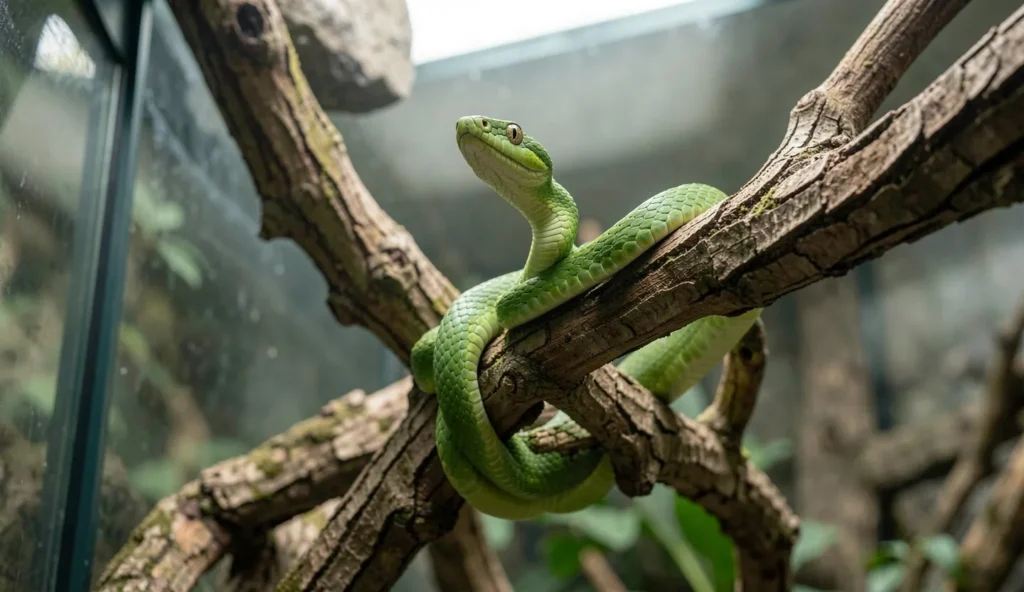
What Is An Emerald Tree Boa
The Emerald Tree Boa is a bright, arboreal boa from tropical Central and South America. It relies on height, grip, and ambush behavior, so successful husbandry must match that style. Many keepers also treat it as an Emerald Tree Boa with demanding humidity and precise heat control. This species often looks calm, yet it can act nippy during feeding or stress.
Species Basics And Natural Habitat
In the wild, the Emerald Tree Boa lives in warm tropical forests with high rainfall. It spends most of its time off the ground and uses strong gripping ability to climb and rest. Because it feeds like an ambush predator, it often stays high and strikes when prey appears. Seasonal shifts in humidity and temperature can also change how active the snake seems.
For captive care planning, those wild patterns matter. Captive keepers typically aim for stable, high moisture conditions rather than sudden drops. They also plan heat gradients so digestion stays predictable. When those targets are missed, shedding and skin health usually show the strain.
Why Experienced Keepers Choose This Snake
Experienced keepers often choose the Emerald Tree Boa for its vivid emerald green coloration. Individuals vary in how strong the green appears and how patterning shows across the body. It also suits keepers who prefer vertical setups and stable perching areas. The species benefits from height because it allows natural climbing routes and resting positions.
However, the husbandry challenge stays real. High humidity needs require controlled misting or humidification strategies that do not create stagnant wetness. The Emerald Tree Boa enclosure also needs breathable layers to support healthy skin. Finally, the species can show defensive behavior, including nipping, especially around feeding time.
Appearance And Emerald Tree Boa Morphs
Emerald Tree Boa appearance centers on bright green scales with subtle variation between individuals. Body shape stays robust and muscular, built for gripping and controlled constriction. The head typically looks distinct and includes the heat-sensing pit typical of boas. Adult size can vary based on locality and genetics, so size expectations should be based on the specific lineage.
What To Expect In Color And Body Features
The Emerald Tree Boa usually shows emerald green as the base color with light striping or mottling. Pattern intensity often changes with age and individual genetics, so two adults can look meaningfully different. The body also tends to look bulky compared with many other slender arboreal snakes. That mass helps it hold position on branches and manage ambush strikes.
When the snake rests, the patterning may blend with vertical bark textures. The head often rests slightly forward during alert moments, and the eyes stay focused. Those traits help experienced keepers identify stress and readiness to move. Heat-sensing pits and typical boa features also support its hunting style.
Common Emerald Tree Boa Morphs And Color Variations
Captive breeding has produced lines that highlight different green intensity levels. Some emerald tree boa morphs show deeper green tones, while others appear lighter or more yellow-green. Pattern may also look more banded or more speckled in certain lines. Some individuals show reduced patterning that can make the body look cleaner and more uniform.
At the same time, labels can oversell certainty. Instead of assuming a morph name guarantees a look, keepers should verify the actual adult appearance in proven stock. Those choices often lead to better expectations around coloration, contrast, and visual stability. Most importantly, emerald tree boa morphs rarely change core care needs like humidity and temperature.
Emerald Tree Boa Enclosure Setup For Arboreal Life
An emerald tree boa enclosure should be designed for movement in three dimensions. Vertical space supports climbing behavior, and secure surfaces reduce risky slips. Because this species often rests high, a keeper needs consistent conditions at perch level. That means humidity, heat, and airflow must work together across the whole vertical layout.
Enclosure Type And Size Targets That Work
Most keepers use a tall vertical enclosure with a locking, secure lid. The enclosure should support multiple climbing routes and perches at several heights. A mix of horizontally and diagonally oriented branches supports different resting postures. At the same time, enough room must exist for hiding, so the snake can retreat from light and disturbance.
When sizing, it helps to plan for stable anchor points. Branches and decor should not wobble if weight shifts during climbing. A distinct basking zone should sit where temperature and humidity both remain safe. If the enclosure feels cluttered, perches often become crowded and harder to monitor.
Substrate Choices For Moisture Without Stagnant Wetness
Substrate must help hold moisture while still allowing air exchange. Many keepers prefer moisture-safe layers that do not turn into a constantly wet sponge. That balance supports skin and reduces odor build up. It also makes it easier to spot clean without disturbing the entire enclosure.
Spot cleaning needs to happen regularly to remove waste before it matures into odor sources. Deep cleaning should also occur on a schedule that fits how quickly the substrate breaks down. Stale substrate can raise the risk of skin irritation and respiratory stress. Those issues tend to appear faster in high humidity setups.
Humidity Management And Ventilation Balance
Emerald Tree Boa humidity must stay high and stable for healthy shedding. Keepers should use a humidification method that provides daily control, not random bursts. Ventilation then becomes the second half of the equation. Without enough airflow, mold and bacterial growth can increase inside the emerald tree boa enclosure.
Monitoring matters just as much as equipment. A reliable hygrometer should sit at primary basking height, not only near the floor. If humidity readings come only from one spot, the snake may face drier or wetter zones than expected. When humidity swings, shedding problems often follow within the next cycle.
Climbing Structures And Hides At Multiple Heights
Climbing structures work best when they stay secure and stable under the snake’s grip. Branches or cork bark perches can go horizontally and diagonally to create natural travel paths. Multiple hides should sit at different heights so the snake can choose comfort. That layout reduces stress and helps the snake settle without repeated disturbance.
A humid hide also supports shedding by offering a microclimate near the snake’s skin. It should stay clean and not trap dirty moisture. Keeping decor anchored prevents collapse if the snake shifts position quickly. It also reduces fall risk, which can cause injury in arboreal setups.
Water Dish And Soaking Options For Hydration
A sturdy water dish supports hydration and sometimes soaking behavior. The dish needs a stable base and edges that the snake cannot tip over easily. Some individuals soak frequently during shedding, while others prefer brief drinks. Because of that variation, water should remain safe and clean between refills.
Humidity should not rely on the water dish alone. If humidity drops, the snake may dry out and shedding can become incomplete. When high humidity requires active control, the water dish becomes an accessory rather than the main tool. Keepers also should keep water quality consistent to prevent residue buildup.
Lighting And Photoperiod Choices That Support Routine
Lighting often follows a photoperiod pattern that matches local seasonal cycles. Many keepers use a simple light cycle and avoid sudden schedule changes. If lighting adds heat, the setup must also avoid overheating the basking zone. Monitoring behavior after any change helps catch problems early.
Because this snake spends time high in the emerald tree boa enclosure, bright hotspots can affect comfort. Adjusting intensity and distance can help keep the temperature stable. If the snake becomes unusually withdrawn, the lighting or airflow settings might need revision. Stable routine supports digestion and shedding cycles.
Emerald Tree Boa Temperature And Heat Gradients
Emerald tree boa temperature control needs a warm basking area and a cooler retreat zone. Heat gradients let the snake choose the microclimate that matches its needs. Because this species rests on perches at multiple heights, measurements must reflect the actual perch level. Accurate heat targets often improve digestion and reduce shedding issues.
Practical Temperature Range Targets For Day And Night
Captive keepers usually aim for a warmer basking zone paired with a cooler area where the snake can rest. The exact numbers vary by room temperature, enclosure insulation, and the heat source used. Instead of relying on heater settings, temperatures should be measured at where the snake sits. That is the most reliable way to confirm the emerald tree boa temperature stays within a safe range.
Day-to-night cooling can also support normal cycles, provided it remains safe for the animal’s activity. Digestion depends on adequate warmth, so cooling should not make the enclosure too cold. If nighttime cooling is too aggressive, digestion slows and health risk can increase. When conditions remain consistent, appetite and shedding usually track more predictably.
How To Measure Temperature Correctly In Vertical Setups
Temperature sensors need placement at perch level since that is where heat exposure occurs. Using at least two measurement points helps confirm the gradient works as intended. Keeping sensors near the center of the perch zone improves accuracy. After any equipment change, spot checks help confirm the new layout behaves properly.
Relying on a single sensor near glass often creates misleading readings. Heat can collect near a surface, while the snake rests a few inches away. That mismatch can produce inconsistent basking. Careful measurement prevents the most common temperature errors.
Heating Equipment Choices For A Safe Vertical Layout
Heat sources should not create direct burn zones on climbing surfaces. Thermostats should control every heat-producing device that can raise surface temperatures. In vertical setups, cords need safe routing to prevent snagging during climbs. If guards are used, they should not block heat measurement points.
Safety also includes protecting the keeper. Secure equipment reduces the chance of accidental contact when opening the enclosure. Using stable mounting points for heat elements keeps the system consistent over time. It also helps prevent sudden equipment shifts that can alter the heat gradient.
Common Temperature Problems And Fixes Keepers Use
If the setup runs too cool, digestion can slow and immune stress can increase. Conversely, overly hot hotspots can lead to stress behavior and reduced comfort. Uneven heating causes inconsistent basking and may worsen shedding outcomes. Those issues typically show up as repeated dull color shifts or delayed shedding cycles.
When hotspots appear near decor, repositioning or equipment adjustments usually solve the problem. Heat sources can be redirected or diffusion can be added to smooth the gradient. If the warm zone stays too narrow, adding perch options at consistent heights helps spread heat exposure. Regular checking prevents drift as bulbs age or thermostat settings change.
Emerald Tree Boa Feeding And Prey Selection
Emerald tree boa feeding should focus on prey size, prey type consistency, and safe presentation. A stable routine supports digestion, which also affects how reliably sheds progress. Because this snake may stay high, the keeper should plan how feeding works at typical resting heights. Food offered in stressful moments can trigger defensive behavior.
How To Choose Prey Size Without Increasing Risk
Prey size selection should match the snake’s body girth and feeding response. Oversized prey increases the risk of regurgitation and can strain the digestive system. Many keepers start with consistent prey items to establish routine, then adjust as the snake grows. After sheds and growth changes, prey size should be reassessed rather than kept rigid.
Feeding response also matters. If the snake hesitates, the prey might be too large, the temperature might run low, or timing might fall outside normal activity. Keeping records helps experienced keepers see patterns instead of guessing. When the plan fits the individual, emerald tree boa feeding becomes more predictable.
Feeding Schedule For Active Arboreal Adults
Feeding frequency depends on age, body condition, and activity level. Some adults feed less often than juveniles, but appetite can vary by conditions and season. Keeping track of weight trends helps determine whether schedule adjustments are needed. When a snake stays too lean, feeding frequency usually increases gradually.
Digestion requires time, so handling should wait until the digestive process has stabilized. Also, feeding can happen at typical high perching zones, which means the environment should support safe movement. If enclosure changes occur, feeding should pause until the snake stabilizes. Monitoring appetite over multiple cycles is more useful than changes based on one meal.
Feeding Methods That Reduce Nips And Accidental Bites
Using feeding tongs supports controlled presentation and reduces accidental contact. Hand feeding should generally be avoided because it increases nipping risk and can create scent confusion. Feeding area lighting matters too, since sudden changes can startle the snake. Keeping the feeding setup calm reduces defensive posture.
Safety also includes timing and positioning. Feeding immediately after enclosure rearrangements can increase stress and defensive responses. Tongs should present prey without forcing the snake to reach awkward angles. After feeding, the snake should receive quiet conditions to settle.
Hydration Support And Post Feed Care
Hydration support depends on stable humidity and access to clean water. After feeding, calm conditions help the snake focus on digestion rather than immediate movement. Spot cleaning becomes more important during feeding cycles to prevent buildup of waste. Over the following days, normal digestion cues should appear without signs of distress.
Keeping humidity stable helps digestion and shedding readiness. If humidity crashes after feeding, the snake may show reluctance to settle. That pattern can also make the next shed more difficult. A stable environment supports steady internal processes.
What To Do If Feeding Stops
When feeding stops, temperature and humidity stability should be checked first. Then the keeper should review prey size, prey type, and last shed status. Mouth issues, injury, or breathing changes can also cause refusal. A veterinary evaluation should be considered if refusal continues and the animal’s condition declines.
At the same time, experienced keepers often compare feeding habits across similar colubrids and boas to spot husbandry mismatches. For example, keeping a log alongside patterns from a King Snake can help highlight environmental variability, even though both species differ in care details. Those comparisons support systematic troubleshooting instead of repeated random changes.
Handling Temperament And Nippy Behavior Management
Handling an Emerald Tree Boa requires careful support and risk reduction. Many individuals can stay calm, yet they may show nippy behavior during feeding time or after stress. Because this species can climb and grip hard, sudden lifting can trigger defensive reactions. For that reason, handling plans should remain brief and controlled.
Stress Cues That Show When Handling Is Risky
Defensive cues can include head-forward postures and sudden repositioning. Body tension may increase, and the snake may repeatedly shift away from contact. Withdrawal behavior often appears after disturbance or enclosure changes. Feeding time handling also tends to increase the chance of nipping.
For experienced keepers, reading those signals matters. If the snake shows repeated defensive cues, time and tools should replace direct contact. Observations made over multiple sessions usually reveal whether the behavior relates to schedule, temperature, or substrate changes. That kind of pattern tracking reduces repeated bite risk.
Safe Handling Technique For Tree Boas
Safe technique starts with full body support to prevent panic gripping. Handling should limit duration, especially during shedding or post feed recovery. Entry into the handling session should stay calm and avoid sudden movement above the head. A secure return path to the emerald tree boa enclosure should be planned before lifting begins.
If the snake grips tightly, the handler should not pull or twist. Instead, the snake should be guided to a stable perch or handling surface that supports its grip. That approach reduces slipping and the chance of a fall. It also helps keep handling predictable for both keeper and snake.
Nip Prevention During Husbandry Tasks
Husbandry tasks should avoid mixing hands with feeding presentation. Dedicated tools for spot cleaning and decor adjustments reduce direct hand exposure near the snake’s strike zone. Hands should stay away from feeding zones and feeding tools, especially during active periods. Washing hands after food preparation can also reduce scent confusion.
Planning maintenance on a consistent schedule can reduce repeated disturbances that increase defensive behavior. When tasks remain predictable, the snake often settles more quickly after enclosure openings. If the snake seems extra active, it may be better to postpone high-interaction tasks. Those steps can meaningfully reduce nips over time.
Common Health Issues And Preventative Care
Health management for the Emerald Tree Boa focuses on preventing shedding failures, respiratory strain, and injury from falls. High humidity creates benefits for skin health, but it also raises risk if ventilation and hygiene fail. Preventative care requires regular observation, stable environments, and fast action when red flags appear. Because this snake can be nippy, preventative routines also protect the keeper.
Shedding Problems And Humidity Related Issues
Incomplete sheds often happen when humidity swings or ventilation becomes too dry. Stuck shed can affect toes or remain around the head area, and it can restrict movement. Using a humid hide during shedding windows often improves outcomes. Closely monitoring during shedding prevents damage from attempts to force removal.
When sheds fail repeatedly, the keeper should review hygrometer placement and confirm humidity at perch level. A humidity reading near the floor can look fine while the snake remains in drier air. That mismatch can create partial sheds even in otherwise humid setups. Stable humidity support usually solves the majority of shed issues.
Respiratory And Skin Health Red Flags
Respiratory problems can show as wheezing, open-mouth breathing, or persistent mucus. Skin issues often follow dirty substrate, chronic wetness, or uneven hygiene. Dampness should reduce without lowering overall humidity stability. That balance usually protects the skin barrier and supports normal respiratory function.
When symptoms persist, isolation and reptile veterinary care become necessary. Keeping the enclosure clean while preparing for veterinary evaluation also helps. Over time, prompt responses often prevent small issues from becoming systemic problems. Those actions are usually most effective when based on early observations.
Parasites And Hygiene Protocols For High Humidity Setups
Routine fecal checks help detect parasites early, especially when new items enter the system. Quarantine for new arrivals reduces parasite spread risks. Cleaning frequently supports lower bacterial and mold growth in humid conditions. Disinfection must use safe methods and residues should not remain harmful to reptiles.
Because high humidity accelerates microbial growth, hygiene must be consistent rather than occasional. The keeper should track substrate condition and remove wet, dirty pockets quickly. If cleaning schedules slip, mold can develop in corners and behind decor. Regular attention keeps the emerald tree boa enclosure safer overall.
Injury Risks From Falls And Handling Mistakes
Arboreal setups increase fall risk if branches shift or decor collapses. Perches should remain anchored so climbing does not dislodge the snake’s support surfaces. Handling should avoid sudden slips by supporting the full body and maintaining stable footing. After any fall or major slip, swelling or abnormal posture should trigger a closer check.
Injury signals can include limping or unusual movement patterns. If the snake shows changes in posture and activity after a fall, that may justify veterinary review. Secure decor prevents many incidents before they start. Good equipment placement also supports safer handling sessions.
Starter Checklist For Experienced Keepers
This checklist focuses on the key variables that experienced keepers manage best for the Emerald Tree Boa. It is meant as a setup audit that ties together enclosure design, emerald tree boa temperature, and emerald tree boa feeding routines. Before adjusting anything, check how current conditions perform where the snake actually rests. Small measurement errors can cause large husbandry issues.
Emerald Tree Boa Setup Checklist
- Vertical enclosure with secure lock lid for safe arboreal snake enclosure access
- Stable heat source controlled by thermostat for the emerald tree boa temperature gradient
- Two temperature sensors at perch height for reliable gradient confirmation
- Hygrometer placement at basking height for real humidity feedback
- Moisture-safe substrate with breathable layers and no stagnant wetness
- Humid hide available during shed windows for safer skin support
- Multiple anchored perches and hides at different heights
- Water dish stable and clean without replacing humidity control
- Feeding tongs ready and a non hand feeding approach for safety
- Quieter handling routine during shedding and post feed recovery
When setup work gets complex, comparisons can still help experienced keepers refine routine. For example, some humidity and ventilation concepts overlap with other arboreal options such as the Green Tree Python. Even with different needs, the method of verifying measurements and adjusting ventilation can carry over well. Likewise, pattern-focused expectations from species like the Milk Snake can help keep keepers from relying too heavily on label claims about appearance.
Frequently Asked Questions
What Humidity Level Is Best For An Emerald Tree Boa?
Maintain consistently high humidity with stable daily control, plus a humid hide during shedding.
What Temperature Range Should Be Maintained For An Emerald Tree Boa?
Provide a warm basking area and a cooler retreat zone, and measure at perch height.
How Often Should An Emerald Tree Boa Be Fed?
Feeding frequency depends on age and body condition, and handling should wait after meals.
Are Emerald Tree Boas Likely To Bite During Handling?
Some individuals can be nippy, especially around feeding time, so support the full body and limit handling.
Emerald Tree Boa Care Continues With Consistency And Monitoring
Emerald Tree Boa care for experienced keepers works best when measurements match the snake’s actual perch choices. With stable emerald tree boa enclosure humidity and accurate heat gradients, this arboreal boa can thrive in captivity.