What Is a Saxon Fairy Swallow Pigeon
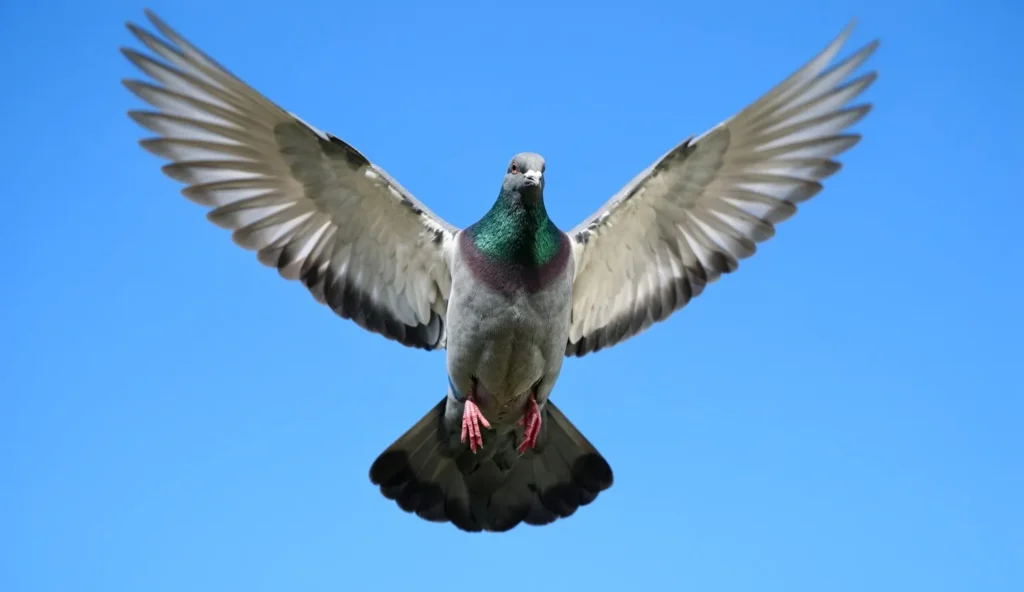
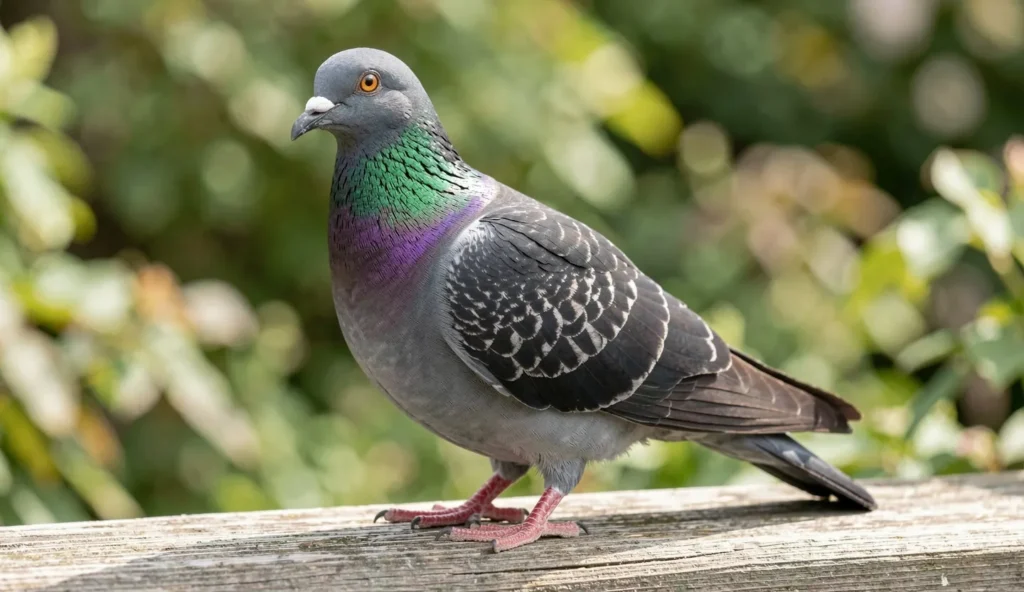
The Saxon Fairy Swallow is a distinct fancy pigeon breed developed in the Saxony region of Germany during the 19th century. This breed is prized for its unique swallow-like color patterns and the iridescent sheen on its neck and wing shields. Enthusiasts admire the Saxon Fairy Swallow for its calm disposition and the variety of color mutations it presents.
Origin and History of the Saxon Fairy Swallow
German breeders in Saxony selectively created this pigeon to mimic the color arrangement of the swallow bird. The goal was a pigeon with white or light underparts while retaining darker wings and back, combined with metallic iridescence. Over decades, the breed gained recognition among fancy pigeon circles in Europe and later worldwide.
Today the Saxon Fairy Swallow is considered a classic exhibition breed. Fanciers appreciate its historic roots and the careful breeding required to maintain its standards.
Why the Saxon Fairy Swallow Stands Out
This breed offers a remarkable range of saxon pigeon colors, including blue, silver, red, yellow, black, and dun. Each color class presents the swallow pattern, with iridescent neck feathers that shift between green, purple, and bronze depending on the light. The medium-sized body and gentle temperament make it a pleasure to keep in an aviary.
Breeders often focus on enhancing the intensity and uniformity of the iridescence. A well-bred Saxon Fairy Swallow is a living gem that changes appearance with the sun.
Appearance and Color Variations
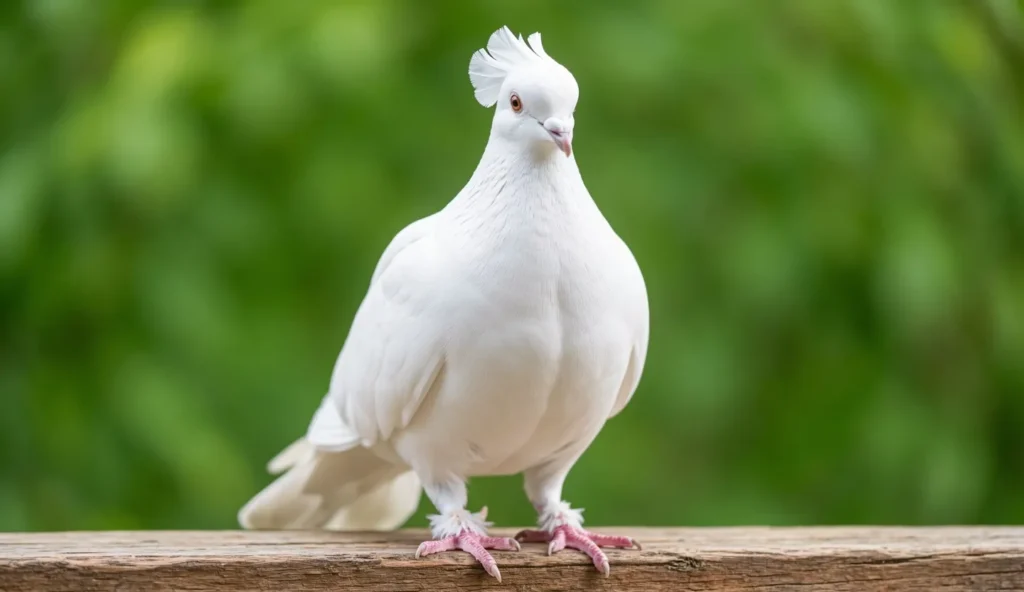
The Saxon Fairy Swallow pigeon has a compact, well-proportioned body with a broad chest and a rounded head. Its short beak and expressive eyes give it a gentle facial expression. Feathered legs and smooth feathering contribute to an overall refined look.
Body Structure and Size
Adults reach a length of about 30 to 35 centimeters and weigh between 350 and 450 grams. The body is not bulky but sturdy, with clean lines and a proud posture. The tail is carried slightly above the horizontal, complementing the bird’s balanced proportions.
Color Classes and Patterns
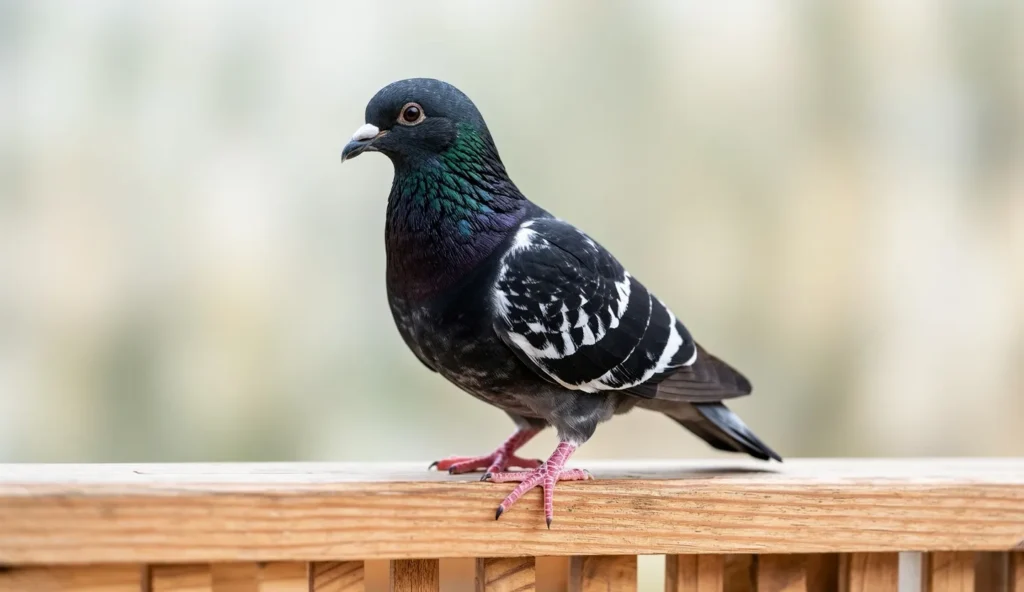
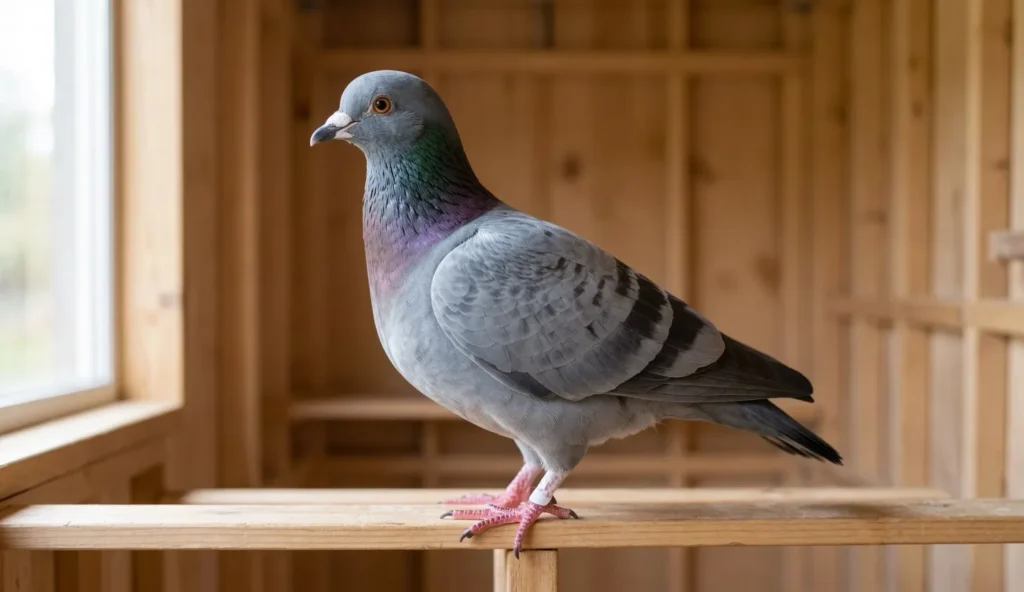
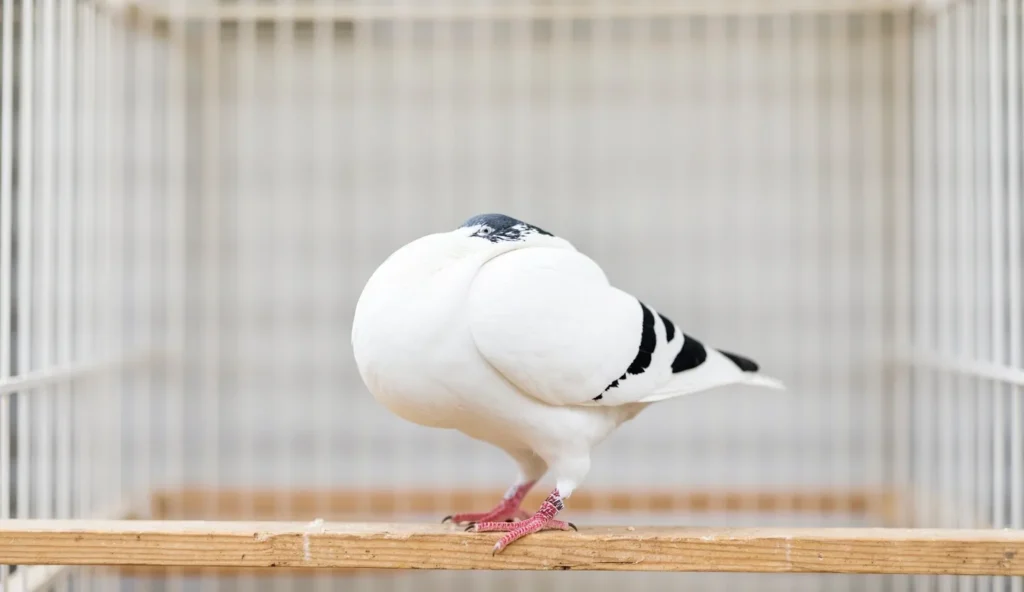
The swallow pattern is the defining feature of the Saxon Fairy Swallow. Base colors include blue, black, red, yellow, silver, and dun. The underparts, from throat to vent, are white or a pale tone, while the wings, back, and tail display the base color. The neck and wing shields exhibit metallic green, purple, or bronze iridescence.
Some individuals show a lighter shield than the rest of the colored areas. Breeders look for clear contrast and even iridescent coverage.
- Blue base with white underparts and green-purple sheen
- Red base with white belly and bronze iridescent neck
- Silver base with pale wings and subtle purple gloss
- Yellow base with creamy white body and gold-green highlights
Iridescent Feather Qualities
The sheen on the neck and wing shields is a structural color caused by light refraction through microscopic feather layers. This effect varies with viewing angle and lighting conditions. Adult males during breeding season show the most intense iridescence, making them stand out in any collection.
Fanciers often compare the Saxon Fairy Swallow to other fancy pigeons such as the saxon shield pigeon, which also exhibits colorful wing markings. However, the swallow pattern and iridescent throat are unique to this breed.
Temperament and Personality
The Saxon Fairy Swallow is a calm, gentle pigeon that rarely shows aggression toward other birds. It tolerates handling well when raised from a young age, making it suitable for fanciers who enjoy close interaction. This breed is not overly active; it prefers perching and sunbathing over constant movement.
General Disposition
These pigeons are quiet and undemanding. They do not startle easily and adapt well to a consistent routine. Their even temperament makes them a good choice for mixed aviaries with other docile breeds.
Social Behavior and Flock Dynamics
Saxon Fairy Swallows thrive in pairs or small groups. They form strong pair bonds and engage in mutual preening and cooing. They can coexist peacefully with other calm fancy pigeon breeds, such as the fantail pigeon, as long as space and resources are adequate.
Avoid housing them with highly active or aggressive breeds that might cause stress.
Housing and Care Requirements
Proper housing is essential for maintaining the health and feather quality of the Saxon Fairy Swallow. The aviary or loft should be clean, dry, and well-ventilated. Drafts and damp conditions must be avoided to prevent respiratory issues.
Aviary and Loft Setup
Each pair requires a minimum of two cubic meters of indoor flight space. Provide sturdy perches, shelves, and nest boxes. Good ventilation is critical; install mesh windows or vents that allow air circulation without direct drafts.
Outdoor aviaries should include a sheltered area to protect from rain and strong sun. The floor should be easy to clean, such as concrete or tile with absorbent bedding.
Cleaning and Maintenance
Remove droppings daily to keep feathers clean and prevent ammonia buildup. Replace nesting material after each clutch to reduce parasite risk. Disinfect water containers weekly with a mild bleach solution, then rinse thoroughly.
Regular cleaning also helps preserve the iridescent sheen by preventing feather soiling.
Environmental Enrichment
Provide shallow bathing dishes two to three times per week. Pigeons will bathe to maintain feather condition. Offer grit and mineral supplements in a separate container for digestion. Allow supervised outdoor exposure for natural sunlight, which supports vitamin D synthesis and enhances feather color.
Avoid placing aviaries in shaded or humid corners of the garden.
Diet and Nutrition
A balanced diet is crucial for the Saxon Fairy Swallow’s health and for preserving its vibrant plumage. The base of the diet should be a mixture of small seeds. Supplements ensure strong feathers and bones.
Staple Seed Mix
Feed a blend of millet, canary seed, and wheat as the main energy source. During molt, increase protein by including peas, lentils, and a small amount of corn. Limit high-fat seeds like sunflower to avoid obesity and fatty liver disease.
Commercial pigeon mixes for fancy breeds are widely available and often balanced for maintenance.
Supplements for Feather Health
Provide cuttlebone and oyster shell grit free-choice for calcium. Add a vitamin and mineral powder to the drinking water once a week. Fresh greens such as spinach, dandelion, or lettuce can be offered two to three times a week for additional micronutrients.
Feeding Schedule and Hydration
Feed twice daily in small portions to reduce waste and spoilage. Fresh water must be available at all times. Change water twice a day during hot weather to prevent bacterial growth. Clean water containers daily.
Monitoring food intake helps detect early signs of illness.
Common Health Issues in Saxon Fairy Swallow Pigeons
With proper care, Saxon Fairy Swallows are generally hardy. However, they are susceptible to several common pigeon ailments. Prevention through hygiene and diet is the best approach.
Respiratory Infections
Symptoms include sneezing, nasal discharge, and labored breathing. Drafts, damp bedding, and poor ventilation are typical causes. Prevent these infections by keeping housing clean and dry, and by quarantining new birds for at least 30 days.
External Parasites
Mites and lice can damage feathers and cause skin irritation. Inspect birds regularly for feather loss, restlessness, or visible parasites on the skin. Use approved dusting powders or sprays designed for pigeons. Rotate treatments to avoid resistance.
Keeping the aviary clean and providing dust baths also reduces parasite loads.
Digestive Disorders
Sour crop or diarrhea often results from spoiled food or dirty water. Ensure all food is fresh and containers are cleaned daily. Probiotic supplements can support gut health, especially after antibiotic treatment.
Avoid sudden changes in diet; introduce new foods gradually.
Egg Binding in Females
Lethargy, straining, and sitting low on the perch are signs of egg binding. Calcium deficiency and lack of exercise are common causes. Provide calcium supplements and ensure nesting privacy. If egg binding occurs, consult an avian veterinarian immediately.
Regular health checks help catch issues early.
Breeding the Saxon Fairy Swallow Pigeon
Breeding this breed requires attention to color genetics and health. Pair selection should focus on vibrant iridescence and correct pattern. Closely related birds should not be paired to avoid genetic defects.
Selecting Breeding Pairs
Choose birds that are at least ten months old and in peak condition. Evaluate the intensity and uniformity of the iridescent neck and wing shields. The swallow pattern must be clear, with well-defined white underparts and rich base color.
Avoid birds with feather deformities or dull sheen.
Nesting and Egg Incubation
Provide a nest bowl with soft hay or straw. Females lay two eggs per clutch. Both parents share incubation for 17 to 19 days. Minimize disturbance during this period.
Mark eggs with a soft pencil to track lay dates.
Rearing Squabs
Parents feed crop milk for the first week. Increase protein and calcium in the parents’ diet during this time. Squabs fledge at about 28 to 30 days. They can stay with parents for another two weeks before separation.
Young birds should be provided with a separate weaning enclosure to reduce stress.
Breeding success often improves when the Saxon Fairy Swallow is housed in a calm environment with minimal disruption. For comparison, the breeding habits of the frillback pigeon are similar, though Frillbacks require extra attention to their curled feathers.
Is a Saxon Fairy Swallow Pigeon Right for You
This breed suits experienced pigeon fanciers who enjoy color breeding and exhibition. Beginners can succeed with a single pair if they commit to consistent care and learning. The breed is not for those seeking highly active or free-flying birds.
Ideal Owner Profile
The best owner has a dedicated indoor or outdoor aviary with proper ventilation and space. A fancier who appreciates subtle color variations and iridescent effects will find the Saxon Fairy Swallow deeply rewarding. Patience for regular cleaning and health monitoring is essential.
Commitments and Considerations
Daily cleaning to keep feathers pristine is necessary. Annual health checks and parasite control should be scheduled. Breeding requires planning for pair selection and chick rearing. The reward is a living work of art that reflects the dedication of its keeper.
If you already keep other fancy breeds like the ice pigeon or the Scandaroon pigeon, the Saxon Fairy Swallow will integrate well into a diverse collection.
Frequently Asked Questions
What colors do Saxon Fairy Swallow pigeons come in?
They come in blue, black, red, yellow, silver, and dun. All show the swallow pattern with lighter underparts and iridescent neck and wing shields in green, purple, or bronze.
Are Saxon Fairy Swallow pigeons good for beginners?
They are calm and handle well, but require consistent hygiene and diet. Beginners should start with a single pair and learn basic care before expanding.
How long do Saxon Fairy Swallow pigeons live?
Average lifespan is 10 to 15 years with proper care. Good nutrition, clean housing, and regular health checks extend longevity.
Do Saxon Fairy Swallow pigeons need a lot of space?
A minimum aviary size of two cubic meters per pair is recommended. They need room for short flights and comfortable perching.
Can Saxon Fairy Swallow pigeons be kept with other pigeon breeds?
Yes, they are docile and get along with other calm fancy breeds. Avoid aggressive or highly active breeds that may cause stress.
A Final Note on the Saxon Fairy Swallow Pigeon
The Saxon Fairy Swallow pigeon is a rewarding breed for those drawn to colorful, calm, and historic fancy pigeons. With proper housing, diet, and attention to feather care, this German beauty will thrive and bring daily visual enjoyment.